


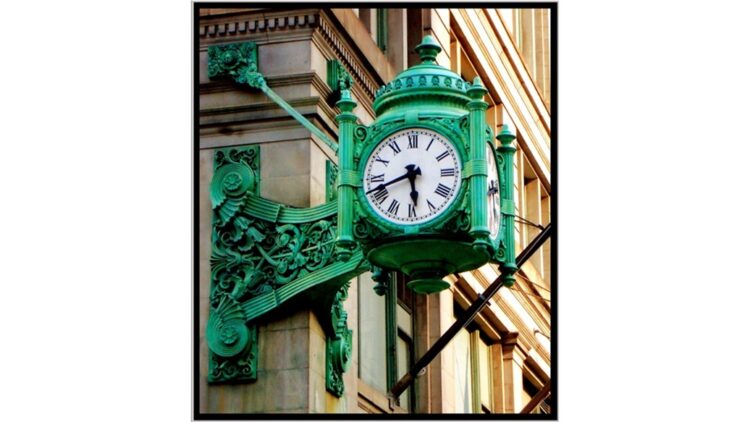
Now?
How can I keep this now as Now?
Past and Future take a bow,
Then crunch each Now like sweet candy.
New Nows are fast, some quite dandy.
How can I keep this now as Now?
What is the future anyhow?
The past was never meant to last.
But how does now fly past so fast?
If Wishes Were Poems
I wish I were an avid free verser:
Not paper nor pen, but screen and cursor;
No need for archaic rhythm or rhyme
I’d certainly be a man of my time
And licensed to write with my MFA;
Poetry would be whatever I say.
O, I’d never hark to some Muse’s call . . .
What?!?
Maybe that life’s not for me at all.
Stephen DiLauro is a wandering bard. You can read his monthly In the Bohemian Continuum column, in print and digitally, in the downtown Manhattan newspaper The Village Star-Revue. Readings of his poems can be found here: https://www.youtube.com/@internetbardtv








Stephen, I always enjoy clever rhyming poems with unorthodox approaches as in your first poem. As for the second poem, I am completely attuned to your thoughts. We need more order to the chaos both from the past in labeling what is true poetry with rhyme and rhythm and with the present that has led so many astray as to be hypocritically mislabeling it as poetry.
Thank you, Roy. I appreciate you reading and taking time to comment; and that you’re in agreement with the spirit of “If Wishes Were Poems”
Much appreciated!
I empathize with the author’s temporal dislocation,
But wouldn’t want anything like it for a lifelong vocation.
Writing good free verse is harder than you think; almost nobody does it. Some tenets are inarguable.
Thank you, Mr. Anderson. I’ll give your thoughts the consideration they deserve.
I know a man of his time with an MFA. Some years ago he shared a Pulitzer Prize for an unoriginal wokie doke screed that nobody read. Thank you Stephen for this humorous and timely poem.
Thank you, Gerard. I’m assembling a series of humorous rhyming epigrammitic verses skewering the woke mentality.
‘Now’ is a word I’m constantly expunging from my prose work (it’s a bit of a weasel word that sneaks its way in), so I was so glad to see the word used to such great effect in your poem ‘Now?’
I seem to not be the sole defender of free verse, today! As CB mentions, good free verse, using rhythm and meter is difficult to write. I sometimes will describe a scene I’m including in a short story or a novel in free verse to find and develop metaphors and similes and examples of alliteration to enrich the drabbest of prose.
Thanks for the reads, Stephen.
Thank you, Paul. I’m not completely sure that you’re talking about free verse if you use rhythm and meter. Isn’t that blank verse? Glad you enjoyed these ditties.
What a sensitive enigma in your first line of “Now?” Stephen! I love the repetition of the question–and additional questions in the second stanza, leading to that wistful final line. Not sorry to have missed the first day of this post for a fabulous Now. The past does last in a well-determined memory, but that consideration wouldn’t suit the slightly downward flow of enjoyable mystery you so well express.
Wow! Thank you, Margaret! I’m glad you liked it. I’m thoroughly enjoying this delving into epigrammatic short forms. Time is something that fascinates me to the point of atemporality. I believe we’re wrongly measuring time for the age in which we now exist. I wrote a sonnet about time’s evolution. It’s in one of my chapbooks. I wrote a newspaper opinion column about time and Y2k that was published on January 1, 2000. Epigrams forming.
Thank you again for reading, and for your generous engagement with the verse.