• Submit Poetry
  • Support SCP
  • About Us
  • Members
  • Join
Monday, October 19, 2026
Society of Classical Poets
  • Poems
    • Beauty
    • Culture
    • Satire
    • Humor
    • Children’s
    • Art
    • Ekphrastic
    • Epic
    • Epigrams and Proverbs
    • Human Rights in China
    • Music
    • Performing Arts
    • Riddles
    • Science
    • Song Lyrics
    • The Environment
    • The Raven
    • Found Poems
    • High School Poets
    • Terrorism
    • Covid-19
  • Poetry Forms
    • Sonnet
    • Haiku
    • Limerick
    • Villanelle
    • Rondeau
    • Pantoum
    • Sestina
    • Triolet
    • Acrostic
    • Alexandroid
    • Alliterative
    • Blank Verse
    • Chant Royal
    • Clerihew
    • Rhupunt
    • Rondeau Redoublé
    • Rondel
    • Rubaiyat
    • Sapphic Verse
    • Shape Poems
    • Terza Rima
  • Great Poets
    • Geoffrey Chaucer
    • Emily Dickinson
    • Homer
    • Henry Wadsworth Longfellow
    • Dante Alighieri
    • John Keats
    • John Milton
    • Edgar Allan Poe
    • William Shakespeare
    • William Wordsworth
    • William Blake
    • Robert Frost
  • Love Poems
  • Contests
  • SCP Academy
    • Educational
    • Teaching Classical Poetry—A Guide for Educators
    • Poetry Forms
    • The SCP Journal
    • Books
No Result
View All Result
Society of Classical Poets
No Result
View All Result
Home Poetry Culture

‘Golf / Flog’ by Raymond Gallucci

June 30, 2019
in Culture, Humor, Poetry
A A
13
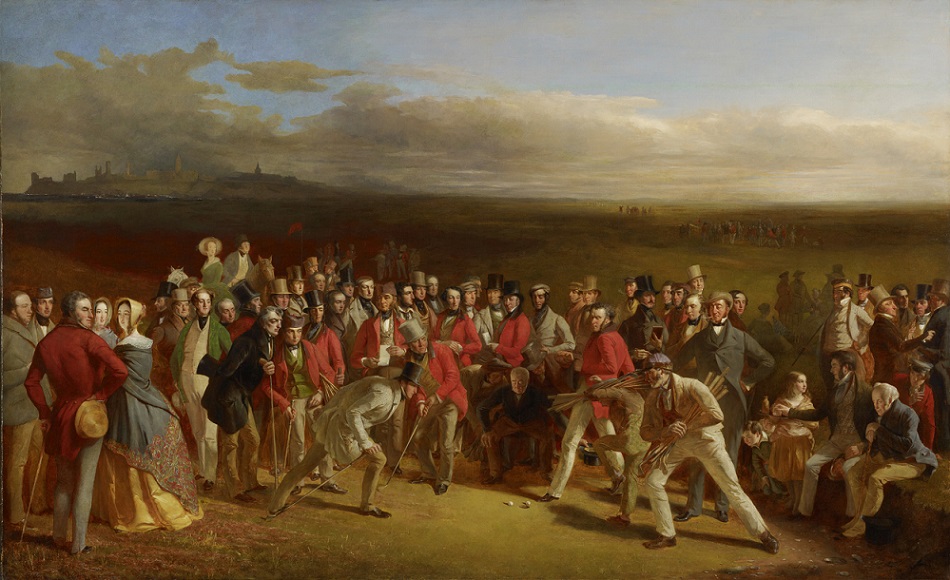
Charles Lees

Charles Lees


It comes as no surprise that “golf”
When backward spelled is “flog.”
For it’s a sport so hard to solve
Leaves many in a fog.

On surface it so simple seems –
Just hit a little ball.
Unhindered by opposing teams,
It doesn’t move at all.

But if when striking you should flinch
And fail to be precise,
Mishit by even half an inch,
Then top, gouge, hook or slice.

For each success, make errors more.
Ends mostly in defeat.
Yet gladly any pain ignore,
Self-flogging you repeat.


Raymond Gallucci is a retired Professional Engineer who has been writing poetry since 1990. 

ShareTweetPin
The Society of Classical Poets does not endorse any views expressed in individual poems or commentary.
Read Our Comments Policy Here

RandomPoems

‘Stepfather’ by Daniel Kemper
Culture

‘Stepfather’ by Daniel Kemper

December 23, 2020

.   The hills that Joseph meditated on were black and just a bit like elephants, but if somehow they...

‘The Carnelian Ring: A Still-Life’ by Joseph S. Salemi, and ‘A Note on the Objective Correlative’
Art

‘The Carnelian Ring: A Still-Life’ by Joseph S. Salemi, and ‘A Note on the Objective Correlative’

June 29, 2021

. The Carnelian Ring: A Still-Life Footfalls echo in the memoryDown the passage which we did not takeTowards the door...

Next Post
A Line of Shakespeare Poetry Contest

Winners Announced: A Line of Shakespeare Poetry Contest

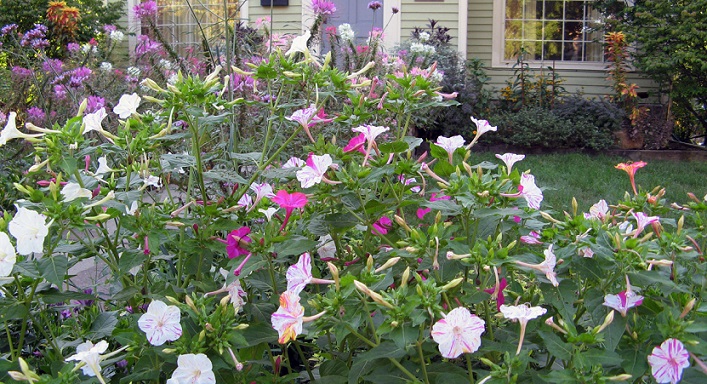
‘The Four O’Clocks of July’ by Alan Sugar

'The Four O’Clocks of July' by Alan Sugar

‘Adiutor Laborantium’ and ‘Noli Pater’ by Colum Cille, Translated by T.M. Moore

'Adiutor Laborantium' and 'Noli Pater' by Colum Cille, Translated by T.M. Moore

Comments 13

  1. Peter Hartley says:
    7 years ago

    Quite a whimsical bit of verse this, and might have been improved only very slightly if golf had rhymed with solve in the first stanza or Rolf Harris had managed a game or two while serving time. But still a pleasant enough and amusing little piece.

    Reply
    • Raymond H Gallucci says:
      7 years ago

      Or maybe Dolph Lundgren. While I always try for perfect rhyme, compromises become necessary.

      Reply
  2. C.B. Anderson says:
    7 years ago

    “F” is a surd (an unvoiced consonant) of “V,” just as “T” is for “D,” “P” for “B,” “C (or “K”) for (hard) “G,” and so forth. So for all practical purposes word endings such as these will serve as elements of a perfect rhyme. Of course, the verb in the primary rhyming syllable needs to be pretty damn close to its mate as well. If you buy this, then “good” should rhyme with “foot,” and “suck” with “mug.” There are many delicious examples of this kind of thing in the canon, and I would like someday to write the definitive article on the subject, but for now I simply wish to uphold Mr. Gallucci’s choice of words.

    Reply
    • Raymond H Gallucci says:
      7 years ago

      Thanks for you insights. As I previously responded, I try for perfect rhyme, but usually fall short. So if I can get close, that usually suffices.

      Reply
  3. James Ph. Kotsybar says:
    7 years ago

    I enjoyed it! I recommended it!
    I might have titled it: Golfing for Duffers.

    Reply
  4. Stephen Hagerman says:
    7 years ago

    I tried golf once. Used muscles I didn’t even know I had, and was sore for about three days. Such a little ball. Such a narrow stick. Lifting weights was easier. This is a cute little ditty, it brought to mind thoughts of Houseman. I’m with C. B. on the rhymes all seem acceptable to me. However using inversion to achieve meter, or rhyme is too forced for my taste. There are a couple of questions on clarity in my mind. Both S2L4, and S4L2 read a little awkward to me. As a whole though, it is a fun little ballad rhythm.

    Reply
    • Raymond H Gallucci says:
      7 years ago

      Glad you enjoyed it. I consider maintaining rhyme and rhythm paramount, so don’t mind word inversion if I find it necessary for both. I recognize it’s not to everyone’s taste, but I write a lot of poems about a lot of topics (I’ve only been sending The Society my humor ones, since that is the only Society category that my poems fit) and would rather go on to a new topic than belabor any one poem too much.

      Reply
      • Monty says:
        7 years ago

        I consider the two assertions you made above:
        “I consider maintaining rhyme and rhythm paramount” . . and “While I always try for perfect rhyme, compromises become necessary” . . to be contradictory; it’s gotta be one or the other.

        Also, I personally feel that poetry is one thing over which compromises should never be made; and over which compromises can never be “necessary”. There was no “necessity” in the above poem to commit the anomaly of trying to rhyme ‘golf’ and ‘solve’.

        You evidently decided: “Well, no word rhymes true with ‘golf’, so I’m gonna have to compromise”. I personally would’ve decided: “No word rhymes true with ‘golf’, I’m not prepared to compromise . . I’ll have to try to change things so that ‘golf’ is not the end-word in that line. And I would’ve eventually come up with something like this:

        It’s no surprise that ‘golf’, when spelt
        From back to front, is ‘flog’.
        To master golf, I’ve always felt,
        Leaves most folk in a fog.

        See? Instead of compromising, ‘twas just a case of placing ‘golf’ somewhere else in the line. On top of which, we (at least on this side of the pond) don’t really refer to golf as “hard to solve”; that term is normally used to describe a puzzle, a riddle or a crime. Golf would normally be described as difficult ‘to learn’; ‘to master’; ‘to get the hang of’. Thus, not only is “solve” a compromise over rhyme; it’s also a compromise over diction . . as in it’s ‘forced’.

        Poetry is its own entity; we only serve it . . it’s not ours to make compromises over.

        Reply
  5. Raymond H Gallucci says:
    7 years ago

    You write your poetry your way, and I’ll write it mine. Since you don’t like my poetry, why bother reading it? You have your own opinions (“it’s gotta be one or the other”), and that’s fine. I have mine (“no, it can be both”), and that’s fine too. At least some readers seem to enjoy them. Perfection is not paramount to me. I have written hundreds of poems, and I don’t pore over each one to make it perfect. I’m much more interested in moving on to another subject. What I’ve published here is the tip of an iceberg, in that the Society’s desired categories fit only my humor poems, not the multitude of other topics on which I write. Doubtless you would not like those either, since I write them the same way. I rhyme and maintain rhythm in all my poems as I deem appropriate.

    Reply
    • Monty says:
      7 years ago

      How touchy are you?
      I never mentioned above whether I liked or disliked your poem; if you’re paranoid enough to assume that one negative comment automatically means the commenter “doesn’t like your poetry” . . that’s your predicament. Another commenter above described the piece as “pleasant and amusing”, yet also highlighted the anomaly of ‘golf’ and ‘solve’; but you didn’t blow a fuse with him. Think about it!

      As opposed to the poem itself, my comment was only in regard to your initial comments above; and how I felt that the golf/solve thing contradicted those comments.

      But it must be said . . your latest comment also contains some undeniable truths: “You’ll write poetry your way” . . “Perfection is not paramount to you” . . “You don’t (won’t?) pore over each poem to make it perfect” . . “You’ll rhyme your poems as you deem appropriate”.

      All of those traits can be clearly seen in one stanza of the above piece.

      Reply
      • Raymond H Gallucci says:
        7 years ago

        My “touchy” reaction stems from your series of comments from my previous entries, “Irrelephant, et al.,” which were anything but gracious or, in my opinion, constructive – I saw this one, not as an isolated comment (as I viewed the other commenter’s, ergo no “touchy” reaction), but as a continuation of that previous series of negative comments, e.g., “it’s so badly written;” “nothing short of pretentious, and has resulted in a mish-mash of lines – many senseless – thrown (or forced) together, lacking the most basic syntax . . and with not the slightest regard to the diction; nor, more importantly, the slightest regard for the reader;” “it sounded like glorified text-messages;” “after seeing your latest abomination;” “your diction is written in the same way . . as a child would write;” “four lines is all I could stomach; I saw within them all that I needed to see, they were disgusting;” “what a disgrace to our language both pieces are.” It was obvious from those that you find my poetry quite distasteful, which is, of course, your right. In retrospect, I probably would have better chosen to use “acceptable” (to me) than “necessary” in my explanation of allowing imperfect rhyme or word inversion – it is clearly a choice (mine), not a general requirement (as “necessary” mis-implied). Regarding the imperfection in “golf” and “solve,” this is far from much of a non-rhyme. Classicists such as Blake (e.g., “eye” and “symmetry”) or Coleridge (e.g., “Khan” and “ran”) imperfectly rhyme as well (and I am not comparing myself to them in any way, merely citing the presence of imperfect rhyme in some “classic” poems). And, while your rewrite of my first stanza maintained perfect rhyme, I would have gone with the imperfection of “spelled” and “felt” rather than the archaic “spelt,” which would have seemed a bit of a stretch to me to maintain perfect rhyme. With the current poetic world being inundated by “free verse,” which I presume we both agree falls short of what we consider poetically satisfactory, we should encourage anyone who makes even a modest attempt to write rhyming (even if imperfect), rhythmic poetry today, as the Society site does. So, let us agree to disagree regarding poetic philosophy and standards and move forward with our own work, encouraging others who also make an honest attempt.

        Reply
  6. Monty says:
    7 years ago

    There’s nothing archaic about ‘spelt’ on this side of the pond; it’s still in everyday-use . . e.g. ‘You’ve spelt it wrong’.
    One kneels or one knelt; one feels or one felt; one deals or one dealt; one spells or one spelt. Standard English-Usage.

    I don’t expect you to believe me when I tell you that I had no recollection of any of your previous poetry when making the above comments.. Now you mention it, I can vaguely recall a poem called “Irrelephant’ on these pages some time ago; but I had no idea that you were the author of that piece. The remembering of names has never been one of my strong-points.

    Reply
    • Raymond H Gallucci says:
      7 years ago

      There is definitely a difference in English between the US and UK (“separated by a common language”). For example, I believe “connection” is the US version and “connexion” acceptable in the UK (and I actually applaud the UK version, as it cuts out a letter). Different pronunciation of “lieutenant” is another prime example. The examples you give (deal, feel, kneel) also are long E words, vs. the short E in spell, hence the perhaps equal usage of “spelled” and “spelt” in the UK vs. the much more common “spelled” in the US, where I reside (likewise, e.g., maybe “smelled” vs. “smelt,” or “dwelled” vs. “dwelt,” more short E words; but not “shelled” vs. “shelt,” another short E word). English definitely has its peculiarities.

      Reply

Leave a Reply Cancel reply

Your email address will not be published. Required fields are marked *


  1. Russel Winick on ‘Their Words, My Fault’ and Other Poems by Russel WinickOctober 19, 2026

    Thank you Adam. I agree with you about the first poem.

  2. Adam Sedia on ‘The River & The Sea’: A Poem by Rohini SunderamOctober 19, 2026

    I was struck by this wonderful narrative that turns a natural phenomenon into a touching love-story. Dramatic narratives like this…

  3. Adam Sedia on ‘One Night in Bangkok’ and Other Poetry by Brian YapkoOctober 19, 2026

    I saw the title "One Night in Bangkok" and my mind immediately went into the gutter, and the poem seemed…

  4. Stephen DiLauro on ‘Biblical? Emblematic?’: A Poem by Stephen DiLauroOctober 19, 2026

    Thank you, Brianna! We think alike.

  5. Stephen DiLauro on ‘Biblical? Emblematic?’: A Poem by Stephen DiLauroOctober 19, 2026

    Thank you, Paul! Your comment is much appreciated.

Subscribe to Daily Poems

Enter your email address to subscribe to this blog and receive notifications of new posts by email.

Join 1,660 other subscribers
No Result
View All Result

Resources

       1. A Guide to Writing Poetry

      2. The Best Poems of 2020      

      3. Poetry and Writing Contests

      4. Journals Accepting Formal Verse

Recent Poems

  • ‘Biblical? Emblematic?’: A Poem by Stephen DiLauro
  • ‘The Valley’: A Poem by Briana Reavis
  • The Blobfish—‘Mr Blobby’: A Poem by Paul A. Freeman
  • ‘Nature’s Family’: A Poem by Margaret Coats
  • ‘The River & The Sea’: A Poem by Rohini Sunderam
  • Poems by Derzhavin, Akhmatova, and Tyutchev, Translated by Kevin Rainbow
  • ‘After-Action Report’: A Poem by Joseph S. Salemi
  • ‘The Walking Wounded’: A Poem by Jeffrey Essmann
  • ‘Their Words, My Fault’ and Other Poems by Russel Winick
  • ‘Lazarus I’: A Poem by Jason Hunt
  • Poetry Challenge: Dictionary Delights
  • ‘In Defense of Rhyme’: An Essay by Euphrates Moss
  • ‘Gun Control’: A Poem by Kevin Ahern
  • ‘Power of a Pen’: A Poem by Janice Stanley
  • The Best Haiku of 2026
  • ‘One Night in Bangkok’ and Other Poetry by Brian Yapko
  • ‘Invocation’: A Poem by D.R. Rainbolt
  • ‘Enjoy the Peace, Prepare for War’: A Poem by Roy E. Peterson
  • Faust Part Two, Act One: ‘A Pleasant Landscape’ by Goethe, Translated by Josh Olson
  • A Song Inspired by Robert Frost’s ‘The Road Not Taken’, by Gunny Markefka
  • ‘Reappraisals of Mortality’: A Poem by C.B. Anderson
  • ‘What Is the Measure of My Days?’: A Poem by Peter Venable
  • ‘Polar Coordinates’: A Poem by Adam Sedia
  • ‘It Never Lies!’: A Poem by Paul A. Freeman
  • ‘The Mahjong Flowers’: A Set of Sonnets by Margaret Coats
  • ‘The Martyrdom of Saint Cassian’: A Poem by Joseph S. Salemi
  • ‘Mind Versus Beauty’: A Poem by Johann Wolfgang von Goethe, Translated by Eric v.d. Luft
  • ‘Summer Sails’: A Poem by Paulette Calasibetta
  • ‘Aquarius’: A Poem by Patricia Rogers Crozier
  • ‘No Body Here on Earth’: A Poem by Gerard Maritato

Categories

  • Acrostic
  • Alexandroid
  • Alliterative
  • Art
  • Best Poems
  • Blank Verse
  • Chant Royal
  • Classical Poets Live
  • Clerihew
  • Covid-19
  • Deconstructing Communism
  • Educational
  • Epic
  • Epigrams and Proverbs
  • Essays
    • Interviews with Poets
    • Poetry Reviews
  • Featured
  • From the Society
  • Great Poets
    • Dante Alighieri
    • Edgar Allan Poe
    • Emily Dickinson
    • Geoffrey Chaucer
    • Henry Wadsworth Longfellow
    • Homer
    • John Keats
    • John Milton
    • Robert Frost
    • William Blake
    • William Shakespeare
    • William Wordsworth
  • Human Rights in China
  • Limerick
  • Love Poems
  • Music
  • Pantoum
  • Performing Arts
  • Poetry
    • Beauty
    • Children's Poems
    • Culture
    • Ekphrastic
    • Found Poems
    • High School Poets
    • Humor
    • Riddles
  • Poetry Challenge
  • Poetry Contests
  • Poetry Forms
    • Curtal Sonnet
    • Haiku
  • Poetry Readings
  • Rhupunt
  • Rondeau
  • Rondeau Redoublé
  • Rondel
  • Rubaiyat
  • Sapphic Verse
  • Satire
  • Science
  • Sestina
  • Shape Poems
  • Short Stories
  • Song Lyrics
  • Sonnet
  • Symposium
  • Terrorism
  • Terza Rima
  • The Environment
  • Translation
  • Triolet
  • Video
  • Villanelle

Quick Links

  • About Us
  • Submit Poetry
  • Become a Member
  • Members List
  • Support the Society
  • Advertisement Placement
  • Comments Policy
  • Terms of Use

Welcome Back!

Login to your account below

Forgotten Password?

Retrieve your password

Please enter your username or email address to reset your password.

Log In
No Result
View All Result
  • Poems
    • Beauty
    • Culture
    • Satire
    • Humor
    • Children’s
    • Art
    • Ekphrastic
    • Epic
    • Epigrams and Proverbs
    • Human Rights in China
    • Music
    • Performing Arts
    • Riddles
    • Science
    • Song Lyrics
    • The Environment
    • The Raven
    • Found Poems
    • High School Poets
    • Terrorism
    • Covid-19
  • Poetry Forms
    • Sonnet
    • Haiku
    • Limerick
    • Villanelle
    • Rondeau
    • Pantoum
    • Sestina
    • Triolet
    • Acrostic
    • Alexandroid
    • Alliterative
    • Blank Verse
    • Chant Royal
    • Clerihew
    • Rhupunt
    • Rondeau Redoublé
    • Rondel
    • Rubaiyat
    • Sapphic Verse
    • Shape Poems
    • Terza Rima
  • Great Poets
    • Geoffrey Chaucer
    • Emily Dickinson
    • Homer
    • Henry Wadsworth Longfellow
    • Dante Alighieri
    • John Keats
    • John Milton
    • Edgar Allan Poe
    • William Shakespeare
    • William Wordsworth
    • William Blake
    • Robert Frost
  • Love Poems
  • Contests
  • SCP Academy
    • Educational
    • Teaching Classical Poetry—A Guide for Educators
    • Poetry Forms
    • The SCP Journal
    • Books

© 2025 SCP. WebDesign by CODEC Prime.