• Submit Poetry
  • Support SCP
  • About Us
  • Members
  • Join
Thursday, November 26, 2026
Society of Classical Poets
  • Poems
    • Beauty
    • Culture
    • Satire
    • Humor
    • Children’s
    • Art
    • Ekphrastic
    • Epic
    • Epigrams and Proverbs
    • Human Rights in China
    • Music
    • Performing Arts
    • Riddles
    • Science
    • Song Lyrics
    • The Environment
    • The Raven
    • Found Poems
    • High School Poets
    • Terrorism
    • Covid-19
  • Poetry Forms
    • Sonnet
    • Haiku
    • Limerick
    • Villanelle
    • Rondeau
    • Pantoum
    • Sestina
    • Triolet
    • Acrostic
    • Alexandroid
    • Alliterative
    • Blank Verse
    • Chant Royal
    • Clerihew
    • Rhupunt
    • Rondeau Redoublé
    • Rondel
    • Rubaiyat
    • Sapphic Verse
    • Shape Poems
    • Terza Rima
  • Great Poets
    • Geoffrey Chaucer
    • Emily Dickinson
    • Homer
    • Henry Wadsworth Longfellow
    • Dante Alighieri
    • John Keats
    • John Milton
    • Edgar Allan Poe
    • William Shakespeare
    • William Wordsworth
    • William Blake
    • Robert Frost
  • Love Poems
  • Contests
  • SCP Academy
    • Educational
    • Teaching Classical Poetry—A Guide for Educators
    • Poetry Forms
    • The SCP Journal
    • Books
No Result
View All Result
Society of Classical Poets
No Result
View All Result
Home Poetry Beauty

Four Poems on the Theme of Lost Love, by James A. Tweedie

April 20, 2021
in Beauty, Love Poems, Poetry
A A
11
poems Four Poems on the Theme of Lost Love, by James A. Tweedie

.

Poet’s Note: These poems are non-autobiographical.

.

When Love is Lost

To see the summer sun and wish for rain;
To smell the springtime flowers and wish for snow;
To wake at dawn and wish for night again;
To trade today for dreams of long ago.

To grieve the present and embrace the past
Remembering the love that worked its way
Into our hearts and bloomed but did not last;
A fallen blossom doomed to fade away.

And what is there to do when love is lost?
When broken promises betray our trust?
When star-crossed lovers’ love is double-crossed
And life’s tomorrows crumble into dust?

The path we choose shall be the path we keep,
To love again or to forever weep?

.

.

Love Betrayed

The scattered shards of shattered hopes and dreams
Lie strewn across the unswept floor of my
Distempered heart. Each splintered fragment screams
In silence, doomed to neither live nor die.

Yet in that silence echo memories
Of what once was and one day might have been,
Ere love’s embrace and night-sung ecstasies
Fell mute before the soul-less scythe of sin.

For failed faithfulness once sown, will reap
A bitter harvest of despair and grief.
And innocence betrayed is left to weep
Insufferable tears of misbelief.

Yet in the midst of suffering and pain
I dare to dream that I shall dream again.

.

.

I Call Your Name

A Mirror Poem

The stillness of the night, I call your name.
I wake from dreams of long ago, and in
The darkness of my brokenness and shame . . .
I weep for what I’ve done, what might have been.

I weep for what I’ve done, what might have been.
The darkness of my brokenness and shame . . .
I wake from dreams of long ago, and in
The stillness of the night, I call your name.

.

.

Eating Dust

“I’m leaving. It’s been fun,” she said. “Goodbye!”
And she was gone. I didn’t say a thing.
I didn’t have the wherewithal to cry:
A ten-count knockout in life’s boxing ring.

As for my towel, I would have thrown it in
A long, long time ago except for pride,
Which filled me with delusions that I’d win
Her back—my love, my life, my self-asundered bride.

But off she went, and left me eating dust—
A sad reward for all the love I had
For her who, in return, betrayed my trust
And ran off with some interloping cad.

She sucker-punched me with a 10-ounce glove;
A low-blow loser in the game of love.

.

.

James A. Tweedie is a retired pastor living in Long Beach, Washington. He has written and published six novels, one collection of short stories, and three collections of poetry including Mostly Sonnets, all with Dunecrest Press. His poems have been published nationally and internationally in The Lyric, Poetry Salzburg (Austria) Review, California Quarterly, Asses of Parnassus, Lighten Up Online, Better than Starbucks, WestWard Quarterly, Society of Classical Poets, and The Chained Muse.
Continue Reading
ShareTweetPin
The Society of Classical Poets does not endorse any views expressed in individual poems or commentary.
Read Our Comments Policy Here

RandomPoems

‘The Graveyard of My Mind’ by Phil S. Rogers
Beauty

‘The Graveyard of My Mind’ by Phil S. Rogers

March 20, 2020

  I pour myself four fingers, or maybe it is five, sit in a broken rocker and slowly close my...

‘The Night’ by Gary Borck
Beauty

‘The Night’ by Gary Borck

September 20, 2022

. . The Night When most have fled the day and sought their beds Pre-empting stealthy onset of the night;...

Next Post
Two Poems on Transgenderism by Susan Jarvis Bryant

Two Poems on Transgenderism by Susan Jarvis Bryant

An Open Letter to Librarian of Congress Carla Hayden, by Dusty Grein

On the George Floyd Verdict and Other Poetry by Richard Lackman

‘The Madcap, Rambler-Driving Poet of Ogden’ by Tonia Kalouria 

'The Madcap, Rambler-Driving Poet of Ogden' by Tonia Kalouria 

Comments 11

  1. Donald McCRORY says:
    6 years ago

    BEAUTIFUL SENTIMENTS THAT ALL CAN RELATE TO AND SHARE: POETRY AT ITS BEST.

    Reply
    • James A. Tweedie says:
      6 years ago

      Thank you Donald. They say “Love is kind and Justice is blind.” But in life, both sometimes fall short of that promise.

      Reply
  2. Julian D. Woodruff says:
    6 years ago

    Very fine, Mr. Tweedie. I especially admire the rhetorical quality of “Lost.”

    Reply
  3. BRIAN YAPKO says:
    6 years ago

    A marvelous quartet, James. My favorite is When Love Is Lost which is infused with such longing. And yet the wit is there — especially in a line like “when star-crossed lovers’ love is double-crossed.” It’s especially pleasing that you explicitly brought Shakespeare into what reads very much like a Shakespearian sonnet.

    Reply
  4. Jeff Eardley says:
    6 years ago

    Mr Tweedie, these read like the lyrics to four great songs of lost love and are crying out for melodies.
    I love “the soul-less scythe of sin” and “a low-blow loser in the game of love.” If these are non-autobiographical, I shudder to think how good the biographical ones could be. As ever, great poetry. Thank you.

    Reply
  5. Paul Freeman says:
    6 years ago

    Enjoyed the poems very much.

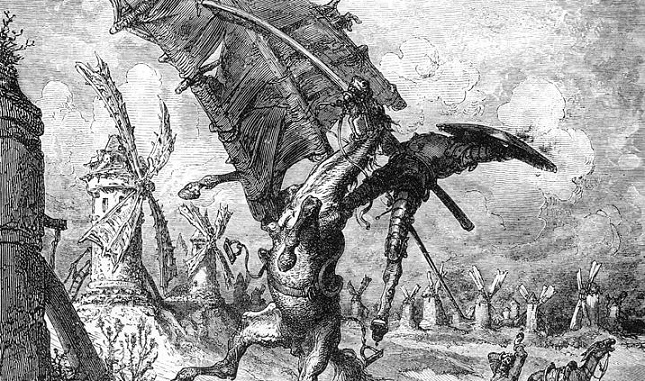
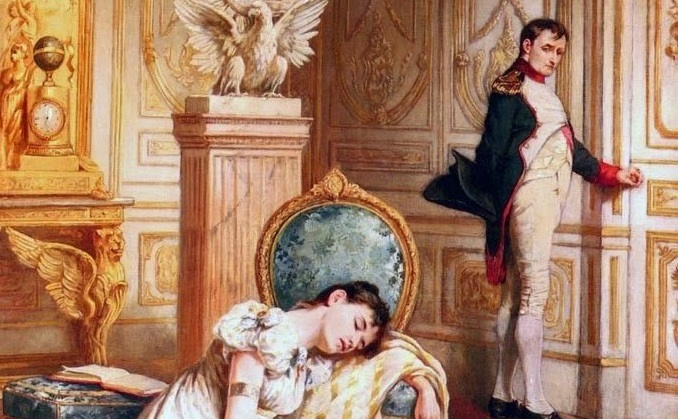
    Perhaps it’s lucky they’re not autobiographical – otherwise (according to the picture) you’d be Napoleon.

    Reply
  6. Margaret Coats says:
    6 years ago

    Last poem first! The last line there is best interpreted as referring to “she” in the previous line. This makes the unfaithful woman the “low-blow loser in the game of love”! That line would ordinarily be in apposition to what comes immediately before–but we can hardly see the glove as loser. The glove, however, is the woman’s means of taking action, and that entire next-to-last line is about nothing but her sucker-punching. The man only shows up as “me,” a barely noticeable two-letter direct object. He may have loved and lost, but he still loves, and she is losing him by walking out. I consider this a great surprise-ending line to the poem.

    The mirror poem is magnificent. I’m putting it in my collection of pattern poems. Young students love this kind of thing–but every sort of pattern poem tends to have some little hitch where the pattern doesn’t work. What you’ve done in “I Call Your Name” is take advantage of the flaw to create a tighter pattern. We notice the flaw in the first line: it should begin with a preposition. But the poem works just fine after that, and when we get to the last line, we see how skillful the set-up was. The hitch at the beginning prepared not just a flawless ending, but a pattern just short of perfect!

    The first two poems are both “betrayed love” poems, rather than ones where love is lost through death, distance, societal pressure, or something else not involving the “scythe of sin.” In “When Love Is Lost,” betrayal lurking in the background only comes out after the turn, in that third quatrain which is simply splendid at making the revelation.

    The illustration caught my attention. Josephine lost her first husband to the guillotine during the Reign of Terror, and she had given him the son she and Napoleon weren’t able to have. That stepson (one of Napoleon’s ablest relatives) had a daughter named Josephine who became Queen of Sweden. The name of Josephine remains traditional in the Swedish royal family, borne at present by more than one princess, including 3-year-old Princess Adrienne Josephine Alice. As well, the deserted Josephine was grandmother of Emperor Napoleon III, who was only a nephew to Napoleon I. In this case, the deserter Napoleon never got the descendants he wanted, but his deserted wife lives on in Europe’s current royalty and in Bonapartist would-be royalty.

    Reply
    • James A. Tweedie says:
      6 years ago

      Thank you, Margaret. As is often the case you ferret out the occasional nuances I work into my poems.

      As in, for example, the last poem where you address the final line at length. The grammar is intentional to allow the reader to apply the final line to both actors in the drama. Each is a “loser” in their own way but the one who threw the “low blow” and KO-ed her partner leaves the scene both discredited and disqualified–the bigger loser in spite of leaving the ring still on her feet.

      I’m glad you liked the mirror poem which does, indeed, have that minor flaw at the beginning so as to lead to an effective ending on the flip side. And you are also right in saying that creating such a poem is more difficult that it looks!

      For me, the concept of “lost love” embraces a number of sub-sets including love lost through death, betrayal, mutually agreed divorce, extended separation, cognitive collapse, etc. In each case there is some measure of loss, grief, and brokenness wherein “echo memories of what once was . . . ”

      Your comments elevate my poetry and for that, I am most grateful.

      Reply
  7. Yael says:
    6 years ago

    Great poems, every one of them. I particularly enjoy When Love Is Lost and the Mirror Poem. All 4 poems are thought provoking and a joy to read, thank you.

    Reply
  8. David Watt says:
    6 years ago

    James, your group of four poems are all well crafted. I particularly enjoyed your expression of the descent from warmth and light into darkness and cold in the first stanza of ‘When Love is Lost’.

    Reply
  9. David Bellemare Gosselin says:
    6 years ago

    Dear James,

    I really like these poems! These are among my favourite of the pieces you’ve written.

    “I Call Your Name” is really beautiful and really shows the power of even the simplest strophic poem, when well composed. I could definitely see this piece set to music beautifully.

    Great stuff.

    Thank you for sharing.

    Reply

Leave a Reply Cancel reply

Your email address will not be published. Required fields are marked *


  1. Margaret Coats on ‘An Old Man’s Thanksgiving’: A Poem by Brian YapkoNovember 26, 2026

    This "Thanksgiving" features all the elements of prayer: worship, contrition, thanksgiving, and petition. Even the touches of biography and memory…

  2. jd on ‘Seasons’: A Poem by T.M. MooreNovember 26, 2026

    A beautiful poem, T.M., made even more beautiful with its interpretations. Your comment about "The Second Coming" makes me think…

  3. Roy Eugene Peterson on ‘Revised with Lies’: A Thanksgiving Poem by Adam WasemNovember 26, 2026

    What a powerful indictment of historic proportions with all the malevolent distortions. The truth contained in your poetry is a…

  4. C.B. Anderson on ‘An Old Man’s Thanksgiving’: A Poem by Brian YapkoNovember 26, 2026

    Aside from a few details, this feels like a poem about me. I love the hook-and-ladder rhyme scheme, which somehow…

  5. Dr Bhairab Barman on ‘You Call It Death’: A Poem by Dr. Bhairab BarmanNovember 26, 2026

    Thank you Martin for your appreciation!

Subscribe to Daily Poems

Enter your email address to subscribe to this blog and receive notifications of new posts by email.

Join 1,672 other subscribers
No Result
View All Result

Recent Poems

  • ‘Revised with Lies’: A Thanksgiving Poem by Adam Wasem
  • ‘An Old Man’s Thanksgiving’: A Poem by Brian Yapko
  • ‘The Manner of Fall’: A Poem by Levi Warren
  • ‘The Prophet’: A Poem by Jeffrey Essmann
  • ‘Sennacherib’s Bad Day (Translated from Lord Byron)’: A Poem by Chris Hart
  • ‘From Geoffrey Chaucer’s Advice Column’: A Poem by Paul A. Freeman
  • ‘Interment’: A Poem by James A. Tweedie
  • ‘You Call It Death’: A Poem by Dr. Bhairab Barman
  • ‘Canzone in Winter’ by Dante Alighieri, Translated by Margaret Coats
  • ‘He Rides the Wind’: A Poem by Rodica Musgrave
  • ‘Seasons’: A Poem by T.M. Moore
  • ‘Victimhood of Biblical Proportions’: A Poem by Susan Jarvis Bryant
  • ‘Down the Narrow Ghetto Streets’ and Other Poetry by Janice Thompson
  • ‘All We Have to Decide’ and Other Tolkien-Inspired Poetry by Brian Yapko
  • ‘Our Toddler’: A Poem by Robert Thomas
  • ‘Poets to Saint Gregory, with Respect’: A Poem by Joseph S. Salemi
  • ‘The Wall of Separation’ and Other Poetry by Roy E. Peterson
  • SCP Poetry Symposium and Public Reading—June 2027
  • ‘A Villanelle from a Hill in Hell’ by C.B. Anderson
  • ‘Truce’: A Sonnet by Vernon Speed
  • ‘As You Leave’: A Poem by Michael Charles Maibach
  • ‘Poetry, Again?’: A Poem by Rachel Christensen 
  • ‘My Salute to Golden Era Thespians’: A Poem by Mark Stellinga
  • ‘After Dante’: Sonnets by James Edward Green
  • ‘Autumn Haunts’: A Poem by Cynthia Erlandson
  • ‘Praying for Patience’: A Poem by Briana Reavis
  • ‘Fractal’: A Poem on Suicidal Depression, by Golan Shahar
  • ‘Laughing’: A Poem by Jeffrey Essmann
  • ‘Childproof Caps’ and Other Poems by Russel Winick
  • ‘Daylight Savings Crime’ and Other Poetry by Jan Mennite

Categories

  • Acrostic
  • Alexandroid
  • Alliterative
  • Art
  • Best Poems
  • Blank Verse
  • Chant Royal
  • Classical Poets Live
  • Clerihew
  • Covid-19
  • Deconstructing Communism
  • Educational
  • Epic
  • Epigrams and Proverbs
  • Essays
    • Interviews with Poets
    • Poetry Reviews
  • Featured
  • From the Society
  • Great Poets
    • Dante Alighieri
    • Edgar Allan Poe
    • Emily Dickinson
    • Geoffrey Chaucer
    • Henry Wadsworth Longfellow
    • Homer
    • John Keats
    • John Milton
    • Robert Frost
    • William Blake
    • William Shakespeare
    • William Wordsworth
  • Human Rights in China
  • Limerick
  • Love Poems
  • Music
  • Pantoum
  • Performing Arts
  • Poetry
    • Beauty
    • Children's Poems
    • Culture
    • Ekphrastic
    • Found Poems
    • High School Poets
    • Humor
    • Riddles
  • Poetry Challenge
  • Poetry Contests
  • Poetry Forms
    • Curtal Sonnet
    • Haiku
  • Poetry Readings
  • Rhupunt
  • Rondeau
  • Rondeau Redoublé
  • Rondel
  • Rubaiyat
  • Sapphic Verse
  • Satire
  • Science
  • Sestina
  • Shape Poems
  • Short Stories
  • Song Lyrics
  • Sonnet
  • Symposium
  • Terrorism
  • Terza Rima
  • The Environment
  • Translation
  • Triolet
  • Video
  • Villanelle

Quick Links

  • About Us
  • Submit Poetry
  • Become a Member
  • Members List
  • Support the Society
  • Advertisement Placement
  • Comments Policy
  • Terms of Use

Welcome Back!

Login to your account below

Forgotten Password?

Retrieve your password

Please enter your username or email address to reset your password.

Log In
No Result
View All Result
  • Poems
    • Beauty
    • Culture
    • Satire
    • Humor
    • Children’s
    • Art
    • Ekphrastic
    • Epic
    • Epigrams and Proverbs
    • Human Rights in China
    • Music
    • Performing Arts
    • Riddles
    • Science
    • Song Lyrics
    • The Environment
    • The Raven
    • Found Poems
    • High School Poets
    • Terrorism
    • Covid-19
  • Poetry Forms
    • Sonnet
    • Haiku
    • Limerick
    • Villanelle
    • Rondeau
    • Pantoum
    • Sestina
    • Triolet
    • Acrostic
    • Alexandroid
    • Alliterative
    • Blank Verse
    • Chant Royal
    • Clerihew
    • Rhupunt
    • Rondeau Redoublé
    • Rondel
    • Rubaiyat
    • Sapphic Verse
    • Shape Poems
    • Terza Rima
  • Great Poets
    • Geoffrey Chaucer
    • Emily Dickinson
    • Homer
    • Henry Wadsworth Longfellow
    • Dante Alighieri
    • John Keats
    • John Milton
    • Edgar Allan Poe
    • William Shakespeare
    • William Wordsworth
    • William Blake
    • Robert Frost
  • Love Poems
  • Contests
  • SCP Academy
    • Educational
    • Teaching Classical Poetry—A Guide for Educators
    • Poetry Forms
    • The SCP Journal
    • Books

© 2025 SCP. WebDesign by CODEC Prime.