• Submit Poetry
  • Support SCP
  • About Us
  • Members
  • Join
Friday, January 9, 2026
Society of Classical Poets
  • Poems
    • Beauty
    • Culture
    • Satire
    • Humor
    • Children’s
    • Art
    • Ekphrastic
    • Epic
    • Epigrams and Proverbs
    • Human Rights in China
    • Music
    • Performing Arts
    • Riddles
    • Science
    • Song Lyrics
    • The Environment
    • The Raven
    • Found Poems
    • High School Poets
    • Terrorism
    • Covid-19
  • Poetry Forms
    • Sonnet
    • Haiku
    • Limerick
    • Villanelle
    • Rondeau
    • Pantoum
    • Sestina
    • Triolet
    • Acrostic
    • Alexandroid
    • Alliterative
    • Blank Verse
    • Chant Royal
    • Clerihew
    • Rhupunt
    • Rondeau Redoublé
    • Rondel
    • Rubaiyat
    • Sapphic Verse
    • Shape Poems
    • Terza Rima
  • Great Poets
    • Geoffrey Chaucer
    • Emily Dickinson
    • Homer
    • Henry Wadsworth Longfellow
    • Dante Alighieri
    • John Keats
    • John Milton
    • Edgar Allan Poe
    • William Shakespeare
    • William Wordsworth
    • William Blake
    • Robert Frost
  • Love Poems
  • Contests
  • SCP Academy
    • Educational
    • Teaching Classical Poetry—A Guide for Educators
    • Poetry Forms
    • The SCP Journal
    • Books
No Result
View All Result
Society of Classical Poets
  • Poems
    • Beauty
    • Culture
    • Satire
    • Humor
    • Children’s
    • Art
    • Ekphrastic
    • Epic
    • Epigrams and Proverbs
    • Human Rights in China
    • Music
    • Performing Arts
    • Riddles
    • Science
    • Song Lyrics
    • The Environment
    • The Raven
    • Found Poems
    • High School Poets
    • Terrorism
    • Covid-19
  • Poetry Forms
    • Sonnet
    • Haiku
    • Limerick
    • Villanelle
    • Rondeau
    • Pantoum
    • Sestina
    • Triolet
    • Acrostic
    • Alexandroid
    • Alliterative
    • Blank Verse
    • Chant Royal
    • Clerihew
    • Rhupunt
    • Rondeau Redoublé
    • Rondel
    • Rubaiyat
    • Sapphic Verse
    • Shape Poems
    • Terza Rima
  • Great Poets
    • Geoffrey Chaucer
    • Emily Dickinson
    • Homer
    • Henry Wadsworth Longfellow
    • Dante Alighieri
    • John Keats
    • John Milton
    • Edgar Allan Poe
    • William Shakespeare
    • William Wordsworth
    • William Blake
    • Robert Frost
  • Love Poems
  • Contests
  • SCP Academy
    • Educational
    • Teaching Classical Poetry—A Guide for Educators
    • Poetry Forms
    • The SCP Journal
    • Books
No Result
View All Result
Society of Classical Poets
No Result
View All Result
Home Poetry Beauty

‘Art’ by Phillip Whidden

August 7, 2018
in Beauty, Culture, Humor, Poetry
A A
14
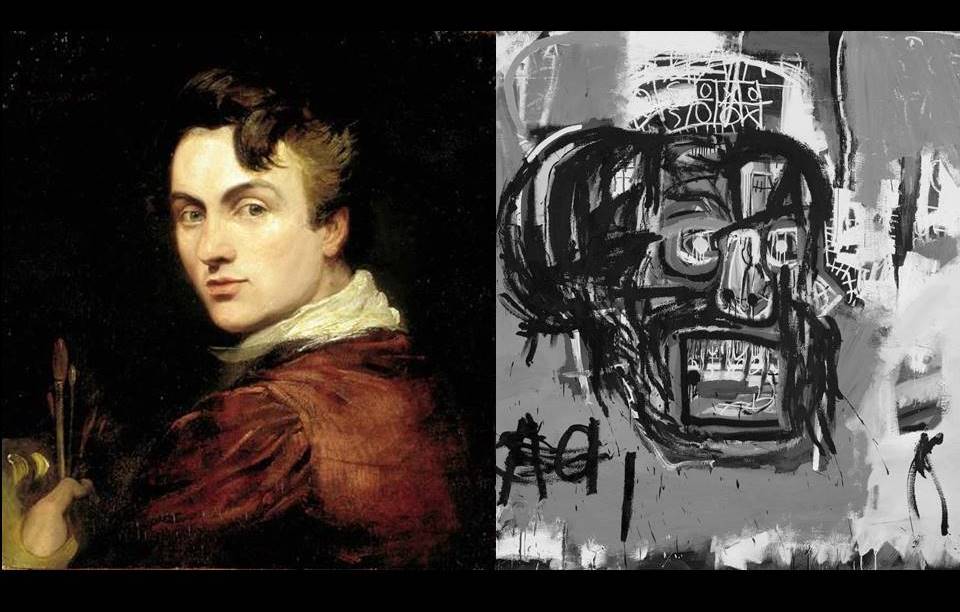
poems 'Art' by Phillip Whidden


Why photograph a fact when you can catch
A nightmare, be a Jackson Pollock or
A Dalí at his Druid weirdest? Snatch
A depth of fanged subconscious and then pour
Some paint of guts across your canvas. Real
Is boring. Ditch it. Art becomes mirage
And mystic queasiness inside a squeal.
Eschew the common or make a collage
Of it that churns up nausea. The key
Trick is to mix up meaning or to ban
It. Spread some purple fantasy and brie
Across a beach. Jesus on a divan
With hydrogen bomb mushroom clouds would do
Or cover some swallows with Elmer’s Glue.


Phillip Whidden is a poet published in America, England, Scotland (and elsewhere) in book form, online, and in journals.  He has also had an article on Wilfred Owen’s “Dulce et Decorum est” published in The New Edinburgh Review.

ShareTweetPin
The Society of Classical Poets does not endorse any views expressed in individual poems or commentary.
Read Our Comments Policy Here
Next Post
‘They Come For One, They Come For All’ by Bruce Dale Wise

'They Come For One, They Come For All' by Bruce Dale Wise

poem/annunciation/Christmas

'Journey to a Smile' by David Watt

The Rise of Conservative Art and Poetry

The Rise of Conservative Art and Poetry

Comments 14

  1. Joseph S. Salemi says:
    7 years ago

    The enjambment here is sustained over most of the sonnet, which is unusual, but it helps drive the insistence of the narration. I would revise the last line, which is metrically deficient and sticks out. Try this:

    Or cover swallows up with Elmer’s Glue.

    Reply
    • Phillip Whidden says:
      7 years ago

      I like your suggestion for smoothing out the meter of the final line and might use when the sonnet is published in my encyclopedia. Competing against this, though, is the overarching thrust of the poem. If I were the devil’s advocate, I might say that since the sonnet is about the degradation of much art in the twentieth century, an iambic pentameter line with a degraded meter might be said to “fit in” with that theme. Still, on balance, I like your suggestion.

      Reply
    • Phillip Whidden says:
      1 year ago

      The Society has asked me to limit my number of submissions of poetry to five per month starting this month, October, 2024.

      Reply
  2. James A. Tweedie says:
    7 years ago

    Hmm . . . I assumed Mr. Whidden was being cheeky, poking fun at the scourge of decadent abstraction in art that–sometimes intentionally–takes reality (including natural beauty) and deconstructs it into a “fanged, subconscious, nightmare.” Not all abstract art points in this direction, of course, but the examples cited by Mr. Whidden seem to be specifically chosen to represent the less redemptive aspects of 20th century art. Perhaps Mr. Whidden can clarify the matter for us?

    Reply
    • Phillip Whidden says:
      7 years ago

      In a sense all art–all forms of art–is/are abstraction. To reduce a three dimensional scene to two dimensions in painting, for instance, is abstraction. I won’t go on and on to prove my point. The sonnet was not an attack on abstraction. It was an attack on the twentieth century’s reductionist approach to art, primarily through obsessing with form instead of meaning and content, and on the resulting diminished power of almost everything–except ugliness. Of course there are exceptions. The sonnet does not attack the exceptions–or mention them. Why would it?

      Reply
      • James A. Tweedie says:
        7 years ago

        Thank you, Mr. Whidden, for your response, which I believe supports much of what I read into (and out of) your finely-crafted sonnet. I am pleased to note that I am in wholehearted agreement with your comment, including the phrase, “Of course there are exceptions.” Dali was a skilled and gifted artist who, in the end, sold his soul for the sake of entrepreneurial self-parody. On the other hand, I have only high praise for Picasso whose mastery of visual art is displayed in virtually everything he ever did. At the moment, my feeling is that the entire spectrum of the so-called modern art movement has run out of ideas with first-year undergraduate art school students producing works indistinguishable in quality and originality from big-name, big-buck, high-society artists. The story of the Emperor’s New Clothes comes to mind . . . Check out the final final scene in the Rocket Loan Super Bowl ad for the final word on the subject https://www.youtube.com/watch?v=bnMnKifbIo4

        Reply
      • Phillip Whidden says:
        7 years ago

        This is a reply to James A. Tweedie’s second comment on “Art.” Thanks for trying to be positive while seemingly disagreeing with the tone of the poem about so much of twentieth-century art, or at least diverting attention away from the ugly grotesquerie of so much of it by defending some of it. Perhaps that was not James A. Tweedie’s purpose. When I mentioned exceptions, I did not have Pablo Picasso in mind. You may have seen on this website my attack on one of his portraits of his unfortunate lover. That portrait is vile. I suppose if he hated her enough, that that might explain why he painted it. Here’s a little piece of verse about this kind of Picasso-ish “portraiture”: Picasso’s portraits are a type of “art”/ As lovely as a putrid-smelling f*rt.” The types of exceptions I did have in mind might be exemplified in two paintings, one in the American Museum of Art (Smithsonian Institute, D. C.), and one in the Musées Royaux des Beaux-Arts de Belgique, Brussels. The first is a group portrait, “Family Group” (1951) by John Koch. The other one is an iteration of “Empire of Light” by René Magritte. I hold back from giving weblinks for these two because, despite the high quality of the e-images available online, the actuality of these two paintings is hypnotically beautiful “in the flesh” but e-images are incapable of conveying that haunting perfection that I have experienced when standing in front of them. In the context of such stunningly lovely twentieth-century paintings such as these, Picasso’s portraits that I can call to mind are obscene. Thus the word “f*rt” above. I have a whizz-bang anecdote I could tell you about an undergraduate’s senior exhibition at a university in the 1970s that fits in well with Mr. Tweedie’s final comments about current such students.

        Reply
    • Phillip Whidden says:
      1 year ago

      The Society has asked me to limit my number of submissions of poetry to five per month starting this month, October, 2024.

      Reply
  3. David Paul Behrens says:
    7 years ago

    The words in this poem achieve wide ranging abstraction while maintaining the overall theme that art should be abstract. Very clever.

    Reply
    • Joseph S. Salemi says:
      7 years ago

      No, you misunderstand. The poem is meant to be sarcastic, and is a generalized attack on modern non-figurative art. Kip Anderson is correct, however — to include Salvador Dali in this poem was an error, since he was a highly accomplished figurative painter, even if he did work as a Surrealist.

      Reply
      • Phillip Whidden says:
        7 years ago

        It was the egregious ugliness in much of Dali’s work that the sonnet pointed to. So to include Dali was far from an error. To employ his impressive figurative talent for ugliness is telling. Of course, sometimes art must be ugly. Why wouldn’t it be? But there is ugliness that is called for and ugliness that is not.

        Reply
      • DPB says:
        7 years ago

        I read the poem again and you are right. This teaches me that one should peruse a poem more than once before judging it.

        Reply
    • Phillip Whidden says:
      1 year ago

      The Society has asked me to limit my number of submissions of poetry to five per month starting this month, October, 2024.

      Reply
  4. C.B. Anderson says:
    7 years ago

    Pollack is a doodler/scribbler, but Dali is sometimes very evocative — a world of difference. Enjambment aside, Joe’s solution for the final line of the poem is masterful. There is virtually no limit to the number of solutions for metrical expression in English. What we lack in rhymes (or so some say) is made up for by the multitude of legitimate ways a line (or a sentence) can be constructed. And end line 13 with a comma.

    Reply

Leave a Reply Cancel reply

Your email address will not be published. Required fields are marked *

  1. Russel Winick on ‘The Measure of a Woman (or a Man)’ and Other Poetry by Paul A. FreemanJanuary 9, 2026

    These are both excellent poems Paul. I especially enjoyed “The Measure,” and agree with its message 1,000 percent. Nicely done!

  2. Brian Yapko on Two Sonnets by Nino Martoglio, Translated by Joseph S. SalemiJanuary 9, 2026

    Joe, I very much enjoyed both of these masterful translations of two enchanting sonnets by a poet unfamiliar to me.…

  3. Paul A. Freeman on ‘Encounter with My Dead Father’: A Poem by Scharlie MeeuwsJanuary 9, 2026

    Forgive the pun, but this is a haunting piece of poetry, full of atmosphere and showing craft and care.

  4. Roy Eugene Peterson on ‘Encounter with My Dead Father’: A Poem by Scharlie MeeuwsJanuary 9, 2026

    Sharlie, this a wonderful personal poem and reflection of your precious relationship with your father. I can identify with that,…

  5. Maria Panayi , nee Solomonides. on ‘King of Poets’: A Poem by Margaret CoatsJanuary 9, 2026

    Dear Margaret, this is such a wonderful poem, perfectly composed and so inspiring as it uplifts and elevates the reader…

Receive Poems in Your Email

Enter your email address to subscribe to this blog and receive notifications of new posts by email.

Join 1,620 other subscribers
Facebook Twitter Youtube

Recent Poems

  • ‘The Measure of a Woman (or a Man)’ and Other Poetry by Paul A. Freeman
  • ‘Encounter with My Dead Father’: A Poem by Scharlie Meeuws
  • Two Sonnets by Nino Martoglio, Translated by Joseph S. Salemi
  • ‘Wall of Ice’ and Other Poetry by James Bontrager
  • ‘King of Poets’: A Poem by Margaret Coats
  • ‘Watercolors’: A Poem by Susan Steele Rives
  • ‘Art and Nature’ and Other Poetry by C.B. Anderson
  • ‘Star of Wonder’: A Poem by James A. Tweedie
  • ‘Yeonmi Park’s Advice to Americans’: A Poem by Warren Bonham
  • ‘Caravaggio’: A Poem by Lisa J. Roberts
  • ‘Refrigerator Bird’ and Other Poetry by Armaan Fatteh-Patil
  • ‘The Oak Trees’: A Poem by Bhikkhu Nyanasobhano
  • ‘A Cardinal on a Snowy Day’: A Poem by Rob Fried
  • Poets Susan Jarvis Bryant and James Sale Respond to Mamdani’s Swearing In as NYC Mayor
  • ‘Single Room Cigarette, 17th Floor Yale Club of Manhattan’: A Poem by Alec Ream
  • ‘Legacy of Light’: A Poem by Martin Briggs
  • ‘The Swarm’ and Other Poetry by Cheryl Corey
  • ‘Lament of a Poet Falsely Accused of Using AI’ and Other Poetry by Paul Buchheit
  • ‘A Gift from the South’: A Poem by Julian Woodruff
  • ‘New Year’s Peeve’: A Poem by Susan Jarvis Bryant
  • ‘Homage to Brigitte Bardot’: A Poem by Joseph S. Salemi
  • ‘Dearth of Emotional Intelligence’ and Other Poems by Russel Winick
  • ‘Fireflies’: A Poem by Mark Stellinga
  • ‘Real Poetry’: A Poem by Eric v.d. Luft
  • ‘Flaws’: A Poem by Joshua Thomas
  • Two Final Poems by Sally Cook
  • ‘Twelve Labors More, Part I’: A Poem by Evan Mantyk
  • ‘A Perfect Match is Found’: A Poem by Roy E. Peterson
  • ‘The Seven Crossings’: A Poem by Ulysses Arlen
  • ‘An Open Book’ and Other Poetry by David McMahon

Categories

  • Acrostic
  • Alexandroid
  • Alliterative
  • Art
  • Best Poems
  • Blank Verse
  • Chant Royal
  • Classical Poets Live
  • Clerihew
  • Covid-19
  • Deconstructing Communism
  • Educational
  • Epic
  • Epigrams and Proverbs
  • Essays
    • Interviews with Poets
    • Poetry Reviews
  • Featured
  • From the Society
  • Great Poets
    • Dante Alighieri
    • Edgar Allan Poe
    • Emily Dickinson
    • Geoffrey Chaucer
    • Henry Wadsworth Longfellow
    • Homer
    • John Keats
    • John Milton
    • Robert Frost
    • William Blake
    • William Shakespeare
    • William Wordsworth
  • Human Rights in China
  • Limerick
  • Love Poems
  • Music
  • Pantoum
  • Performing Arts
  • Poetry
    • Beauty
    • Children's Poems
    • Culture
    • Ekphrastic
    • Found Poems
    • High School Poets
    • Humor
    • Riddles
  • Poetry Challenge
  • Poetry Contests
  • Poetry Forms
    • Haiku
  • Poetry Readings
  • Rhupunt
  • Rondeau
  • Rondeau Redoublé
  • Rondel
  • Rubaiyat
  • Sapphic Verse
  • Satire
  • Science
  • Sestina
  • Shape Poems
  • Short Stories
  • Song Lyrics
  • Sonnet
  • Symposium
  • Terrorism
  • Terza Rima
  • The Environment
  • Translation
  • Triolet
  • Video
  • Villanelle

Quick Links

  • About Us
  • Submit Poetry
  • Become a Member
  • Members List
  • Support the Society
  • Advertisement Placement
  • Comments Policy
  • Terms of Use

Welcome Back!

Login to your account below

Forgotten Password?

Retrieve your password

Please enter your username or email address to reset your password.

Log In
No Result
View All Result
  • Poems
    • Beauty
    • Culture
    • Satire
    • Humor
    • Children’s
    • Art
    • Ekphrastic
    • Epic
    • Epigrams and Proverbs
    • Human Rights in China
    • Music
    • Performing Arts
    • Riddles
    • Science
    • Song Lyrics
    • The Environment
    • The Raven
    • Found Poems
    • High School Poets
    • Terrorism
    • Covid-19
  • Poetry Forms
    • Sonnet
    • Haiku
    • Limerick
    • Villanelle
    • Rondeau
    • Pantoum
    • Sestina
    • Triolet
    • Acrostic
    • Alexandroid
    • Alliterative
    • Blank Verse
    • Chant Royal
    • Clerihew
    • Rhupunt
    • Rondeau Redoublé
    • Rondel
    • Rubaiyat
    • Sapphic Verse
    • Shape Poems
    • Terza Rima
  • Great Poets
    • Geoffrey Chaucer
    • Emily Dickinson
    • Homer
    • Henry Wadsworth Longfellow
    • Dante Alighieri
    • John Keats
    • John Milton
    • Edgar Allan Poe
    • William Shakespeare
    • William Wordsworth
    • William Blake
    • Robert Frost
  • Love Poems
  • Contests
  • SCP Academy
    • Educational
    • Teaching Classical Poetry—A Guide for Educators
    • Poetry Forms
    • The SCP Journal
    • Books

© 2025 SCP. WebDesign by CODEC Prime.

This website uses cookies. By continuing to use this website you are giving consent to cookies being used. Visit our Privacy and Cookie Policy.