


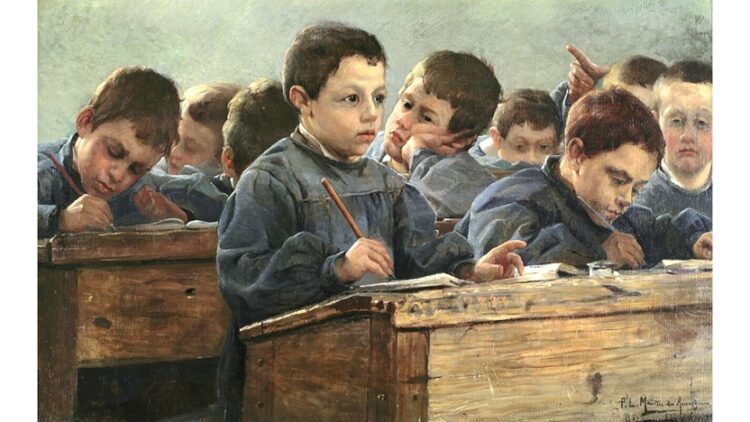
Refrigerator Bird
“Say the word for penguin.” Jen Jen waited.
Silence. Then I guessed: “Refrigerator bird?”
Laughter shook the teacup in her hand.
“Best penguin that I’ve ever heard!”
In the margin of my workbook page
she drew a penguin, waddling, fat.
This is how she teaches. Not by scolding,
but by laughing when I fall down flat.
Ten years now I’ve studied at her table,
mangling tones until she laughs with me.
Once I called my mother “horse” in public.
Mā and mǎ sound close to identically.
People say that languages are serious:
flashcards, grammar drills, and memorize.
Jen Jen turns my failures into stories.
Every stumble earns a laugh, not sighs.
“Why’d you pick that word?” she always asks me,
curious about my crooked logic.
Wrong, she shows me, isn’t really failure.
Wrong means reaching. Wrong means getting at it.
Once I had to give a speech. Competing.
Terrified to speak before a crowd.
“Just pretend that I am sitting with you.
Make them laugh,” she said. “You’ll do me proud.”
So I told the horse-and-mother story.
Laughter swept the nervousness away.
Now I know what she has always given:
permission to be wrong along the way.
Language isn’t grammar, tests, or drilling.
Language is the laughter that we share.
Refrigerator birds and borrowed meanings,
syllables that say: I’m glad you’re there.
What She Wanted
The glasses lay in rows before her eyes:
plus two, plus three, the lenses sorted neat.
I held a pair and gestured: Try these on.
She shook her head. I chose another frame.
The same response. I did not understand.
Through the interpreter her words arrived:
She does not want your help. She wants to go
back home. Thirteen hundred miles away,
her reading glasses wait beside her bed,
still marking where she stopped to flee the war.
What could I offer her? I was sixteen,
armed with good intentions, plastic trays,
and certainty that helping was a gift.
But she had lost her photographs, her walls,
her neighbors’ faces worn into her days.
To take the lenses from a stranger’s hand
meant starting over. Her old life erased.
She was not stubborn. She was holding on
to what remained: the right to want things back,
to say her home still mattered, still was hers.
That evening, after hours upon our feet,
we sat for dinner, tired, the team subdued,
and spoke about the faces we had seen.
I thought about her no, and how it taught
me more than any yes could ever teach.
Sometimes the ones who turn away your help
are asking you to see them as they were
before the world remade them into need.
She wanted home. I could not give her that.
But I could learn that wanting is enough.
Armaan Fatteh-Patil is a twelfth grade student at American Heritage School, in Florida.
















Thought I had posted here already. I found these two poems not
only compelling in their sensitivity but amazing in their maturity.
I’m sure many young people are sympathetic but expressing
it so well seems unusual to me. Thank you for sharing your two beautiful poems.
Everyone loves penguins, and what an endearing, layered poem you’ve written around the ‘refrigerator bird’.
Having had to start over more times than I wish to remember, ‘What She Wanted’ hits hard. It’s true that after losing so much, owning things becomes a liability.
Thanks for the reads, Armaan.
Both poems come across as thoughtful and deeply empathetic to the human condition of being a pilgrim in a strange world. They are both interesting and enjoyable to read. What impresses me the most however is that they demonstrate a maturity of insight and wisdom which is far beyond any 12th grade student I have ever known. Great job!
Both these poems are deft and gentle in their telling. I was so touched by What She Wanted, even with English as my first language, I can connect so strongly with a home that was and is no more. Keep writing, Armaan.
You write some exceptionally fine lines, Armaan. For one example from each poem:
Wrong means reaching. Wrong means getting at it.
Her neighbors’ faces worn into her days
Both poems show great sensitivity to others, and laudable interest in the process of human learning.