• Submit Poetry
  • Support SCP
  • About Us
  • Members
  • Join
Friday, January 9, 2026
Society of Classical Poets
  • Poems
    • Beauty
    • Culture
    • Satire
    • Humor
    • Children’s
    • Art
    • Ekphrastic
    • Epic
    • Epigrams and Proverbs
    • Human Rights in China
    • Music
    • Performing Arts
    • Riddles
    • Science
    • Song Lyrics
    • The Environment
    • The Raven
    • Found Poems
    • High School Poets
    • Terrorism
    • Covid-19
  • Poetry Forms
    • Sonnet
    • Haiku
    • Limerick
    • Villanelle
    • Rondeau
    • Pantoum
    • Sestina
    • Triolet
    • Acrostic
    • Alexandroid
    • Alliterative
    • Blank Verse
    • Chant Royal
    • Clerihew
    • Rhupunt
    • Rondeau Redoublé
    • Rondel
    • Rubaiyat
    • Sapphic Verse
    • Shape Poems
    • Terza Rima
  • Great Poets
    • Geoffrey Chaucer
    • Emily Dickinson
    • Homer
    • Henry Wadsworth Longfellow
    • Dante Alighieri
    • John Keats
    • John Milton
    • Edgar Allan Poe
    • William Shakespeare
    • William Wordsworth
    • William Blake
    • Robert Frost
  • Love Poems
  • Contests
  • SCP Academy
    • Educational
    • Teaching Classical Poetry—A Guide for Educators
    • Poetry Forms
    • The SCP Journal
    • Books
No Result
View All Result
Society of Classical Poets
  • Poems
    • Beauty
    • Culture
    • Satire
    • Humor
    • Children’s
    • Art
    • Ekphrastic
    • Epic
    • Epigrams and Proverbs
    • Human Rights in China
    • Music
    • Performing Arts
    • Riddles
    • Science
    • Song Lyrics
    • The Environment
    • The Raven
    • Found Poems
    • High School Poets
    • Terrorism
    • Covid-19
  • Poetry Forms
    • Sonnet
    • Haiku
    • Limerick
    • Villanelle
    • Rondeau
    • Pantoum
    • Sestina
    • Triolet
    • Acrostic
    • Alexandroid
    • Alliterative
    • Blank Verse
    • Chant Royal
    • Clerihew
    • Rhupunt
    • Rondeau Redoublé
    • Rondel
    • Rubaiyat
    • Sapphic Verse
    • Shape Poems
    • Terza Rima
  • Great Poets
    • Geoffrey Chaucer
    • Emily Dickinson
    • Homer
    • Henry Wadsworth Longfellow
    • Dante Alighieri
    • John Keats
    • John Milton
    • Edgar Allan Poe
    • William Shakespeare
    • William Wordsworth
    • William Blake
    • Robert Frost
  • Love Poems
  • Contests
  • SCP Academy
    • Educational
    • Teaching Classical Poetry—A Guide for Educators
    • Poetry Forms
    • The SCP Journal
    • Books
No Result
View All Result
Society of Classical Poets
No Result
View All Result
Home Poetry Beauty

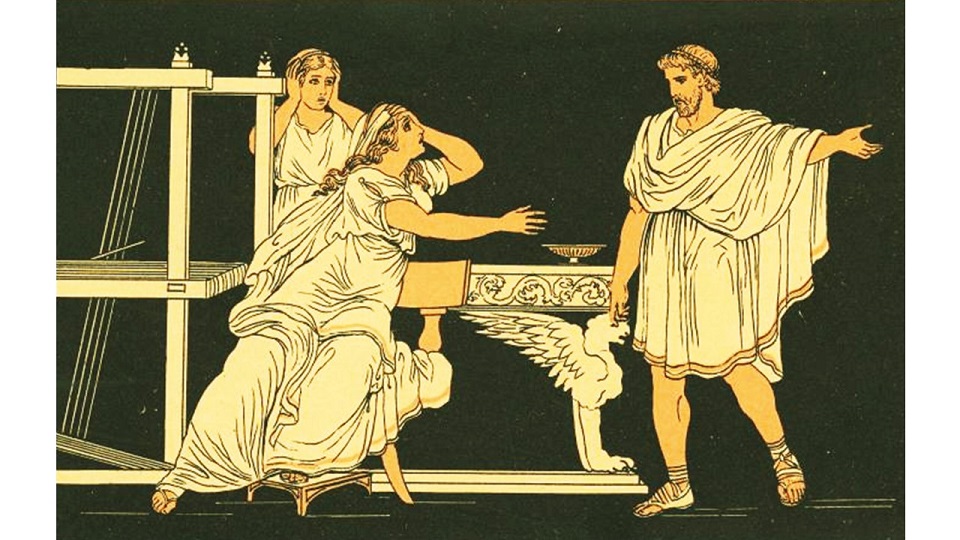
‘Euryalus Describes His Mother’ by Margaret Coats

May 8, 2022
in Beauty, Culture, Poetry
A A
7
poems 'Euryalus Describes His Mother' by Margaret Coats

.

Euryalus Describes His Mother

In Vergil’s Aeneid, the youthful Euryalus volunteers for a
dangerous nighttime raid, asking that his mother not be told
of it before he leaves, but that she be cared for, should he not
return. He is killed when he attracts enemy attention by
making a foolish mistake.

Grim Grecian forces devastated Troy
Ere I could clean out stables as a boy;
She helped my brothers do that work, but made
Me play in winding lanes of dappled shade.
In desperate flight, we lost some who were grown,
But six she led by sea to fates unknown,
And labored to confer civility
On barren, threatening desert property.
The Trojan land that bred our bristly clan
Had been to her far more beloved than
Rough, rustic shores for settlement we found;
She sought out foreign fields for burying ground
While yet she cheered her parents old and weak
As they fell prey to illness and fatigue
And carelessness of slaves unfit to care,
Which she would do unthanked, without a share
In trifles left when earth reclaimed their dust.
We children in strange places had more trust:
Seeing our joy in antics juvenile,
Beyond exasperation, she would smile
When I brought home a hungry, frightened cur,
Or scruffy feline twins reminding her
Of when she birthed my sister and then me,
Rich gifts for our familial company,
Her last of ten in twenty-two years space.
Unfaltering attention taught us grace
In arts she knew, or skills each of us chose.
She was a weaver fashioning fine clothes
For mind and soul and body, mixing hues
In plein air paintings of appealing views
Our ventures promised. Music she could teach,
And let my more ebullient measures reach
Full range. As I learned war, she stayed on guard,
Instructing me with sympathy, though barred
As counselor when my excursions wild
Hindered congenial travel with this child,
Although I always found her by my side.
She never lost the longing to provide
True little treasures I might not disclaim.
How did she know? What brought her? Was it Fame
Or Love who cried that morning, “Pierce me through!”

.

.

Margaret Coats lives in California.  She holds a Ph.D. in English and American Literature and Language from Harvard University.  She has retired from a career of teaching literature, languages, and writing that included considerable work in homeschooling for her own family and others. 
ShareTweetPin
The Society of Classical Poets does not endorse any views expressed in individual poems or commentary.
Read Our Comments Policy Here
Next Post
A Translation and Musical Setting of Victor Hugo’s Poem, ‘Demain, dès l’Aube,’ by James A. Tweedie

A Translation and Musical Setting of Victor Hugo’s Poem, 'Demain, dès l'Aube,' by James A. Tweedie

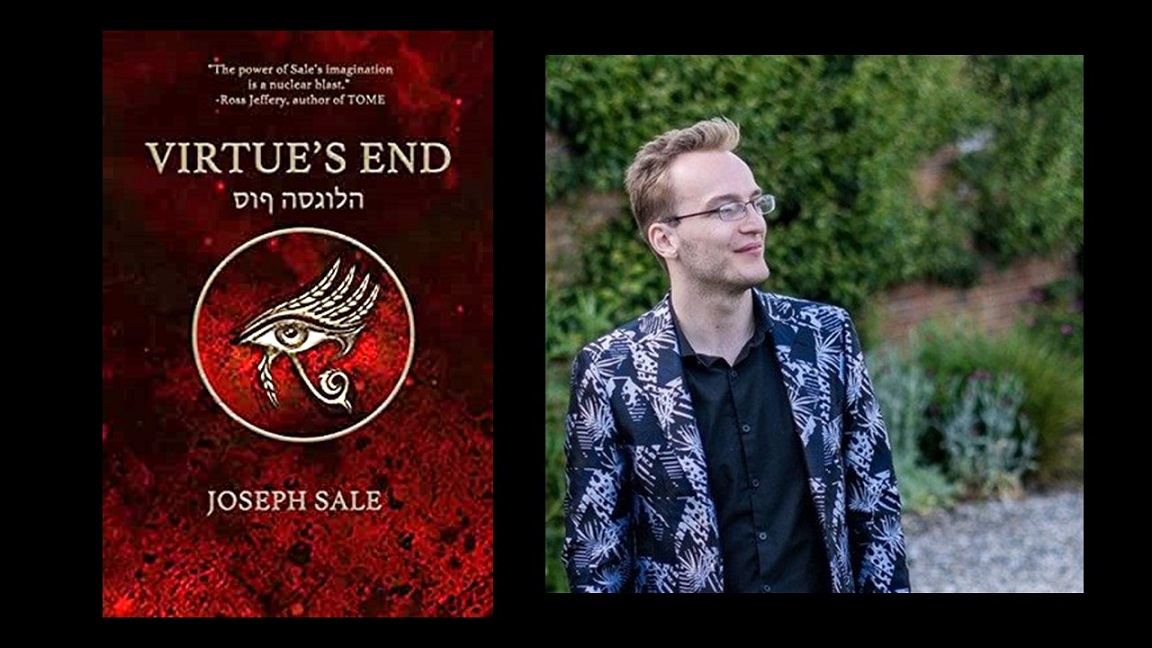
Re-imagining Spenser: A Review of ‘Virtue’s End’ by Joseph Sale

Re-imagining Spenser: A Review of 'Virtue’s End' by Joseph Sale

In Response to the ‘In This House’ Sign: A Poem by Brian Yapko

In Response to the 'In This House' Sign: A Poem by Brian Yapko

Comments 7

  1. Margaret Coats says:
    4 years ago

    Vergil tells very little about Euryalus’ mother. Readers of the Aeneid learn that she refused to be left in a place of safety with other mothers, but instead accompanied the warriors. When her son is killed, she hears the news from Rumor (Fama) before a messenger arrives. During a short burst of “womanly wailing,” she says “Pierce me through.” The many details here are what I imagine from my knowledge of heroic home-schooling mothers.

    Reply
  2. Brian Yapko says:
    4 years ago

    Margaret, this is a marvelous poem for Mother’s Day with as Classical a theme as one could hope for. The couplets work beautifully to give the work an antique flavor and, as you know, I am particularly fond of first person narratives. This one details the rather extraordinary relationship between Euryalus and his mother and their epic journey from Troy to “rough rustic shores.” The “home schooling” that his mother provides is also quite extraordinary. I particularly like the 41st line – after 20 solid couplets you end the poem with a line which, though gracefully phrased, gives the impression of being cut short since there is no matching line. This, of course, makes us consider the life of Euryalus also being prematurely cut short. Wonderful, thoughtful work, Margaret. I hope you had a happy Mother’s Day!

    Reply
    • Margaret Coats says:
      4 years ago

      Thank you very much, Brian. Heroic couplets are the form most English poets of the past use for similar poems. I can scan quantitative Vergilian hexameters, but my attempts at English accentual hexameters have not been very successful. I am really glad you noticed and liked the ending strategy here. The speaker of the poem is in fact the ghost of Euryalus, and the poem has to end abruptly with the last thing he remembers. I am imagining his soul perhaps being the figure of Rumor or Fame that tells his mother he is dead. And for his selection of details about her, I believe you lawyers say that someone’s dying declaration is worth more than the testimony of a living witness. That make this poem a solemn piece for Mothers’ Day, but one claiming great value as indisputable truth about a self-sacrificing mother.

      Reply
      • Clare Tierney says:
        4 years ago

        The imaginary story chooses such specific points to remember whilst Euryalus is dying! Is he the same Euryalus who won a race because his friend tripped another runner? Seems a different person. This story re-creates him.

        Reply
      • Margaret Coats says:
        4 years ago

        Yes, he is the same Euryalus–but he changes while growing up in a state of war and displacement. My poem intends mainly to characterize his mother, but that necessarily gives a fuller view of the son devoted to her. The tender side of him comes out, and I admit this is quite a contrast to the violent and stupid acts in the conflict where he is killed. But his mother, even in Vergil who gives few details, appears to be a strong, active, and competent woman as well as a deeply affectionate one. I see Euryalus as a young man on the way to that kind of character.

        Reply
  3. Tom Rimer says:
    4 years ago

    Margaret, this is such a touching poem and so in keeping with some of the larger themes in the AENEID. I only came to read the AENEID two years ago, in a translation by Robert Fagles that was particularly recommended by a classicist friend in Washington D.C. To the best of my memory, Fagles made no attempt to use any rhythmical devices, and I realize how impressive your work is when you manage the use of the proper rhetorical strategies so skillfully. To be able to read the entire epic translated in this fashion would be quite a different experience. I would be interested to know which translation you would particularly recommend.

    Reply
    • Margaret Coats says:
      4 years ago

      Tom, thank you for your appreciation of this poem. I am sorry to say that I do not remember whose translation of the Aeneid I read in college. But I can say that knowing the poem gave me more valuable background in English literature than any work except the Bible. There are allusions to it everywhere.

      The best method for choosing an Aeneid translation is probably to go to a university library and sample what they have until you find one whose style appeals to you. Still, many readers do not have this luxury. The translation by the 17th century writer John Dryden is available free online. It is in English heroic couplets like my poem above, and Dryden is a master of style. The language may be somewhat archaic, but this suits the ancient Vergilian epic. For names of other English translators, see the Wikipedia article on the Aeneid, and scroll down to “English translations.” Some of these are available online and/or as printed books. Here at the Society of Classical Poets, see a portion of Len Krisak’s translation in English hexameters by putting his name in the search bar.

      Reply

Leave a Reply Cancel reply

Your email address will not be published. Required fields are marked *

  1. Margaret Coats on ‘King of Poets’: A Poem by Margaret CoatsJanuary 8, 2026

    Roy, I am so happy you like this gift! Certainly most of us know David's works in translation as a…

  2. C.B. Anderson on ‘Art and Nature’ and Other Poetry by C.B. AndersonJanuary 8, 2026

    To be perfectly honest, Michael, I never know how what I write will strike a reader. Sometimes things just work…

  3. C.B. Anderson on ‘Art and Nature’ and Other Poetry by C.B. AndersonJanuary 8, 2026

    My wife, Julian, has often asks me why I write poetry when I could be writing songs and making some…

  4. Margaret Coats on ‘Refrigerator Bird’ and Other Poetry by Armaan Fatteh-PatilJanuary 8, 2026

    You write some exceptionally fine lines, Armaan. For one example from each poem: Wrong means reaching. Wrong means getting at…

  5. Margaret Coats on ‘King of Poets’: A Poem by Margaret CoatsJanuary 8, 2026

    Thanks, Margaret B! His inspired words have echoed through the ages, in many languages, and I've memorized Psalm 1 in…

Receive Poems in Your Email

Enter your email address to subscribe to this blog and receive notifications of new posts by email.

Join 1,621 other subscribers
Facebook Twitter Youtube

Recent Poems

  • Two Sonnets by Nino Martoglio, Translated by Joseph S. Salemi
  • ‘Wall of Ice’ and Other Poetry by James Bontrager
  • ‘King of Poets’: A Poem by Margaret Coats
  • ‘Watercolors’: A Poem by Susan Steele Rives
  • ‘Art and Nature’ and Other Poetry by C.B. Anderson
  • ‘Star of Wonder’: A Poem by James A. Tweedie
  • ‘Yeonmi Park’s Advice to Americans’: A Poem by Warren Bonham
  • ‘Caravaggio’: A Poem by Lisa J. Roberts
  • ‘Refrigerator Bird’ and Other Poetry by Armaan Fatteh-Patil
  • ‘The Oak Trees’: A Poem by Bhikkhu Nyanasobhano
  • ‘A Cardinal on a Snowy Day’: A Poem by Rob Fried
  • Poets Susan Jarvis Bryant and James Sale Respond to Mamdani’s Swearing In as NYC Mayor
  • ‘Single Room Cigarette, 17th Floor Yale Club of Manhattan’: A Poem by Alec Ream
  • ‘Legacy of Light’: A Poem by Martin Briggs
  • ‘The Swarm’ and Other Poetry by Cheryl Corey
  • ‘Lament of a Poet Falsely Accused of Using AI’ and Other Poetry by Paul Buchheit
  • ‘A Gift from the South’: A Poem by Julian Woodruff
  • ‘New Year’s Peeve’: A Poem by Susan Jarvis Bryant
  • ‘Homage to Brigitte Bardot’: A Poem by Joseph S. Salemi
  • ‘Dearth of Emotional Intelligence’ and Other Poems by Russel Winick
  • ‘Fireflies’: A Poem by Mark Stellinga
  • ‘Real Poetry’: A Poem by Eric v.d. Luft
  • ‘Flaws’: A Poem by Joshua Thomas
  • Two Final Poems by Sally Cook
  • ‘Twelve Labors More, Part I’: A Poem by Evan Mantyk
  • ‘A Perfect Match is Found’: A Poem by Roy E. Peterson
  • ‘The Seven Crossings’: A Poem by Ulysses Arlen
  • ‘An Open Book’ and Other Poetry by David McMahon
  • A Video Poetry Reading by Paul Erlandson
  • ‘Otto and Octavius at Christmas’: A Children’s Poem by Mary Gardner

Categories

  • Acrostic
  • Alexandroid
  • Alliterative
  • Art
  • Best Poems
  • Blank Verse
  • Chant Royal
  • Classical Poets Live
  • Clerihew
  • Covid-19
  • Deconstructing Communism
  • Educational
  • Epic
  • Epigrams and Proverbs
  • Essays
    • Interviews with Poets
    • Poetry Reviews
  • Featured
  • From the Society
  • Great Poets
    • Dante Alighieri
    • Edgar Allan Poe
    • Emily Dickinson
    • Geoffrey Chaucer
    • Henry Wadsworth Longfellow
    • Homer
    • John Keats
    • John Milton
    • Robert Frost
    • William Blake
    • William Shakespeare
    • William Wordsworth
  • Human Rights in China
  • Limerick
  • Love Poems
  • Music
  • Pantoum
  • Performing Arts
  • Poetry
    • Beauty
    • Children's Poems
    • Culture
    • Ekphrastic
    • Found Poems
    • High School Poets
    • Humor
    • Riddles
  • Poetry Challenge
  • Poetry Contests
  • Poetry Forms
    • Haiku
  • Poetry Readings
  • Rhupunt
  • Rondeau
  • Rondeau Redoublé
  • Rondel
  • Rubaiyat
  • Sapphic Verse
  • Satire
  • Science
  • Sestina
  • Shape Poems
  • Short Stories
  • Song Lyrics
  • Sonnet
  • Symposium
  • Terrorism
  • Terza Rima
  • The Environment
  • Translation
  • Triolet
  • Video
  • Villanelle

Quick Links

  • About Us
  • Submit Poetry
  • Become a Member
  • Members List
  • Support the Society
  • Advertisement Placement
  • Comments Policy
  • Terms of Use

Welcome Back!

Login to your account below

Forgotten Password?

Retrieve your password

Please enter your username or email address to reset your password.

Log In
No Result
View All Result
  • Poems
    • Beauty
    • Culture
    • Satire
    • Humor
    • Children’s
    • Art
    • Ekphrastic
    • Epic
    • Epigrams and Proverbs
    • Human Rights in China
    • Music
    • Performing Arts
    • Riddles
    • Science
    • Song Lyrics
    • The Environment
    • The Raven
    • Found Poems
    • High School Poets
    • Terrorism
    • Covid-19
  • Poetry Forms
    • Sonnet
    • Haiku
    • Limerick
    • Villanelle
    • Rondeau
    • Pantoum
    • Sestina
    • Triolet
    • Acrostic
    • Alexandroid
    • Alliterative
    • Blank Verse
    • Chant Royal
    • Clerihew
    • Rhupunt
    • Rondeau Redoublé
    • Rondel
    • Rubaiyat
    • Sapphic Verse
    • Shape Poems
    • Terza Rima
  • Great Poets
    • Geoffrey Chaucer
    • Emily Dickinson
    • Homer
    • Henry Wadsworth Longfellow
    • Dante Alighieri
    • John Keats
    • John Milton
    • Edgar Allan Poe
    • William Shakespeare
    • William Wordsworth
    • William Blake
    • Robert Frost
  • Love Poems
  • Contests
  • SCP Academy
    • Educational
    • Teaching Classical Poetry—A Guide for Educators
    • Poetry Forms
    • The SCP Journal
    • Books

© 2025 SCP. WebDesign by CODEC Prime.

This website uses cookies. By continuing to use this website you are giving consent to cookies being used. Visit our Privacy and Cookie Policy.