


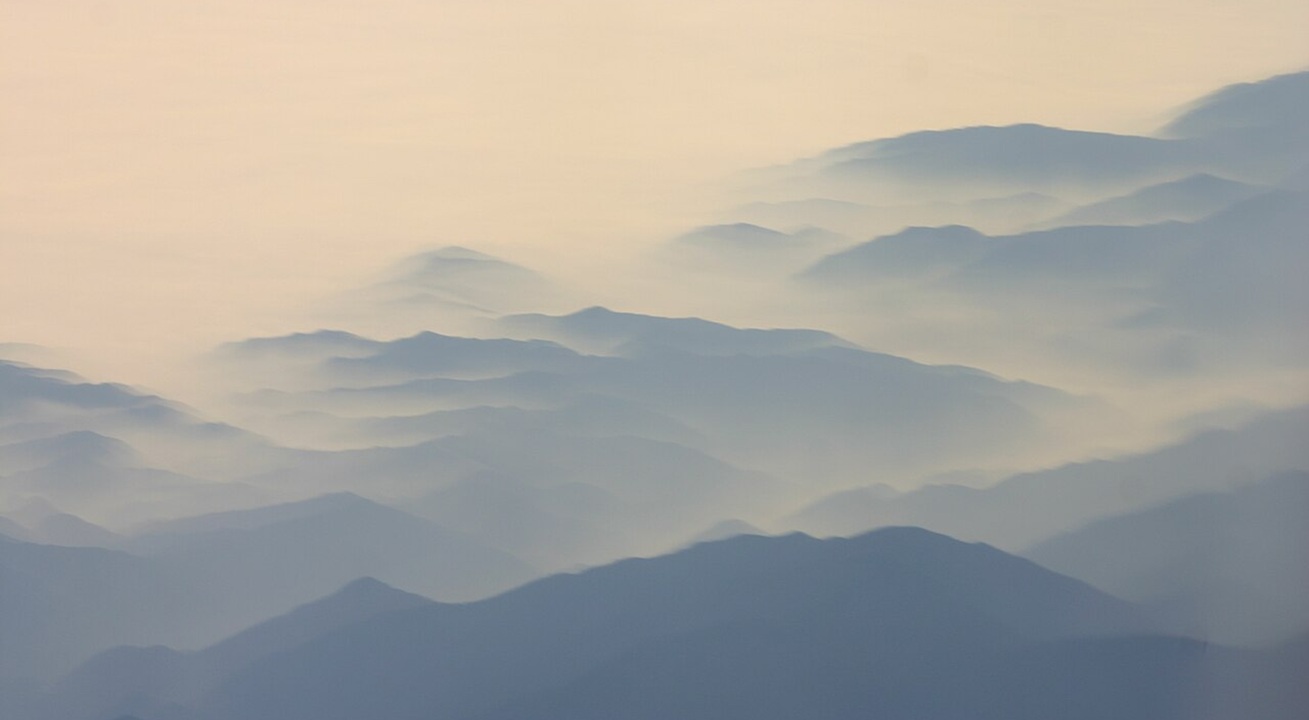
Fog of Confusion
I claim these rolling hills
_Of age-old granite,
And the shadow of their bulk
_Upon my wall.
With sunlight on these hills,
_I sense a Wonder,
But more I feel when fog
_Creates the pall.
O’ swaths of drifting fog
_Will lift and lower,
Expose the chaparral
_And then conceal.
Some boulders will appear,
_But then they vanish—
I ponder what is false
_And what is real.
When challenges in life
_Fog up my vision,
I search my soul in hopes
_The Facts will bear.
Then, gazing on these hills
_So often shrouded,
I wait until the Truth
_Shall clear the air.
Margaret Brinton has lived in San Diego’s inland valley area for over forty years where she taught and tutored. Her poems have recently been published in California Quarterly and Westward Quarterly and The Lyric with upcoming work in the greeting card industry.












Beautiful and so deftly layered..thank you for this gem.
What struck me most was the calm faith in this poem, the sense that truth doesn’t need to be forced, only waited for. The fog feels honest, the hills feel dependable, and that balance made the ending land for me.
An extended metaphor that speaks volumes about the world we inhabit, today.
Thanks for the read, Margaret.
To Rohini and Michael and Paul,
Thank you for your approval, gentlemen!!
from Margaret Brinton
Margaret, your peaceful imagery of the granite hills and life in a fog waiting to clear so the reality/ truth is revealed is a beautiful analogistic poem.
Thank you, Roy, for your supportive comment.
It wasn’t clear to me at any point that the author had any idea of what she was writing about. Perhaps that was the whole point of the poem, but it’s not for me to say. Ordinarily, fog is confusion, but maybe things are different in California, though I think not.
Margaret, the poem subtly points out that seemingly clear images (such as the shadow of hills on a wall) in fact conceal reality (not only those hills’ actual physical shape, but also the emotional response to them, here specified as Wonder). It takes careful reading in a meditative mode to garner the greater significance available from the poem’s central (but by nature unclear!) image of fog.
There’s also a deliberate lack of clarity in “the Facts will bear.” Where is the object for that transitive verb? I read two possibilities. First, the speaker hopes the Facts will bear the search, that is, not disperse, become incomprehensible, and frustrate the searcher. As well, there seems to be a hope the Facts will bear (“give birth to”) the desired Truth.
Good California chaparral contemplation that can work well enough anywhere (including minds) where there are shadows and fog.