


Magic Show, North Country
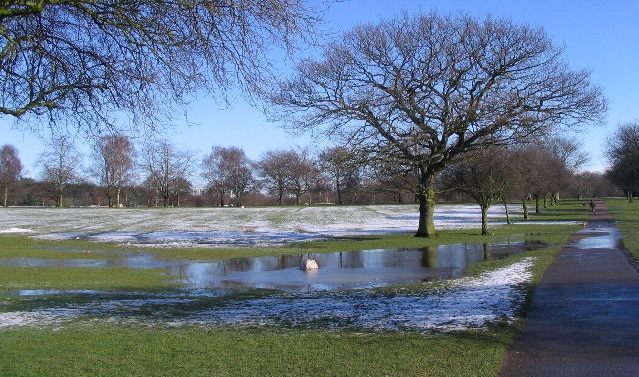
The puddling snowbank spills a silver trace,
its melt a mirror shattered on the earth.
A clutch of clouds wings, birdlike, through blue space
above a garden in the throes of birth.
First come snowdrops, then the bumptious crocus.
Pickets of narcissus will fence tulips’
wine-striped cups of heady hocus-pocus.
(Scilla punctuates in blue ellipsis.)
Yet still a lurking wizardry affects
the temperament and temperature of change.
North wind aloft in willows’ wands elects
to make the winter’s passing drawn and strange.
Pearl paschal moon lights wormholes in the lawn,
no living thing unlovely, come the dawn.
Past winner of the Helen Schaible International Sonnet Competition and the Amy Lowell Poetry Prize, Nancy Brewka-Clark lives on Boston’s North Shore. Her poetry collection Beautiful Corpus was published in 2020. Her most recent work appears in the December 2025 edition of Scientific American Magazine.



















Some kind of wizardry definitely lurks around these words (line 13 may be the most prominent example). Though being a Bostonian, you can give us many scenes of winter well observed before you dismiss it. But if your sonnet is in part wishful thinking, I can understand, having worked door to door along East Boston’s shoreline in 1971.
In any case, thanks for a memorable sonnet, Ms Schaible.
Julian, a wintry sonnet is just what I need to do now, while my fingers can still type. Very nippy here on Boston’s north shore, as you well know. Thank you for the stimulation!
I beg your pardon, Ms Brewka-Clark! The perils of not being able to see the full screen before a cup of coffee in the am …
Nice sonnet, Nancy. Great imagery!
This is a breathtaking sonnet filled with beautiful imagery. So glad to have read it. Very well done, Nancy!
You’ve woven together marvelous descriptions of beautiful images here: your comparisons of melted snow to a shattered mirror, and clouds to birds, are lovely similes. I also, like Julian, love your phrase “Pearl paschal moon”, and your beautiful final line!
Fantastic sonnet, Nancy. The imagery is marvellous, from “its melt a mirror shattered on the earth”, to the worm holes in the lawn.
Thanks for the read.
This being my first poem to be published by the Society of Classical Poets, I am so honored to receive such praise from serious devotees of form and rhyme. Thank you all so much.
Lovely description of Spring… before Winter has even gotten started! Thank you.
What a beautiful poem, Nancy!
I’ll be adding it to my environmental literature unit …maybe with some pictures of Mum’s garden 🙂
What a wonderful use of a poem! Thank you so much, Danielle.
Somehow, and I can’t quite explain it, this poem is a magic show in itself. New England winters can be trying and testy, evoking images of rock salt and snow shovels, but somehow the author comes out in the end with a blast of hope and redemption. She knows what to do with words, for damn sure.
I am so glad that you felt the hope in this poem, despite all the ice and chill. Thank you.
Lovely spring sonnet, Nancy, and I lived in New England long enough to appreciate the order of description (including my favorite (scilla)). Good and characteristic turn back to curious winter wizardry in the sestet.
I think one line should have a comma placed differently:
A clutch of clouds, wings birdlike, through blue space
If you want it to look like that, tell the moderator right here, or [email protected]
Margaret, thank you so much for taking the time to parse that line. Changing the comma would also change ‘wings’ to a noun, and leave the line bereft of a verb. I just had the thought that ‘scuds’ would be an interesting verb, too, but not as ethereal.
Thanks for explaining, Nancy. Now that I see what’s going on, “wings” as a verb makes better sense. The juxtaposition “clouds wings” is an unusual reading. Merry Christmas to you and yours!