• Submit Poetry
  • Support SCP
  • About Us
  • Members
  • Join
Thursday, January 8, 2026
Society of Classical Poets
  • Poems
    • Beauty
    • Culture
    • Satire
    • Humor
    • Children’s
    • Art
    • Ekphrastic
    • Epic
    • Epigrams and Proverbs
    • Human Rights in China
    • Music
    • Performing Arts
    • Riddles
    • Science
    • Song Lyrics
    • The Environment
    • The Raven
    • Found Poems
    • High School Poets
    • Terrorism
    • Covid-19
  • Poetry Forms
    • Sonnet
    • Haiku
    • Limerick
    • Villanelle
    • Rondeau
    • Pantoum
    • Sestina
    • Triolet
    • Acrostic
    • Alexandroid
    • Alliterative
    • Blank Verse
    • Chant Royal
    • Clerihew
    • Rhupunt
    • Rondeau Redoublé
    • Rondel
    • Rubaiyat
    • Sapphic Verse
    • Shape Poems
    • Terza Rima
  • Great Poets
    • Geoffrey Chaucer
    • Emily Dickinson
    • Homer
    • Henry Wadsworth Longfellow
    • Dante Alighieri
    • John Keats
    • John Milton
    • Edgar Allan Poe
    • William Shakespeare
    • William Wordsworth
    • William Blake
    • Robert Frost
  • Love Poems
  • Contests
  • SCP Academy
    • Educational
    • Teaching Classical Poetry—A Guide for Educators
    • Poetry Forms
    • The SCP Journal
    • Books
No Result
View All Result
Society of Classical Poets
  • Poems
    • Beauty
    • Culture
    • Satire
    • Humor
    • Children’s
    • Art
    • Ekphrastic
    • Epic
    • Epigrams and Proverbs
    • Human Rights in China
    • Music
    • Performing Arts
    • Riddles
    • Science
    • Song Lyrics
    • The Environment
    • The Raven
    • Found Poems
    • High School Poets
    • Terrorism
    • Covid-19
  • Poetry Forms
    • Sonnet
    • Haiku
    • Limerick
    • Villanelle
    • Rondeau
    • Pantoum
    • Sestina
    • Triolet
    • Acrostic
    • Alexandroid
    • Alliterative
    • Blank Verse
    • Chant Royal
    • Clerihew
    • Rhupunt
    • Rondeau Redoublé
    • Rondel
    • Rubaiyat
    • Sapphic Verse
    • Shape Poems
    • Terza Rima
  • Great Poets
    • Geoffrey Chaucer
    • Emily Dickinson
    • Homer
    • Henry Wadsworth Longfellow
    • Dante Alighieri
    • John Keats
    • John Milton
    • Edgar Allan Poe
    • William Shakespeare
    • William Wordsworth
    • William Blake
    • Robert Frost
  • Love Poems
  • Contests
  • SCP Academy
    • Educational
    • Teaching Classical Poetry—A Guide for Educators
    • Poetry Forms
    • The SCP Journal
    • Books
No Result
View All Result
Society of Classical Poets
No Result
View All Result
Home Educational

How to Write a Rhupunt (with Example)

March 23, 2017
in Educational, Poetry, Poetry Forms, Rhupunt
A A
9
poems How to Write a Rhupunt (with Example)

By Elizabeth Spencer Spragins

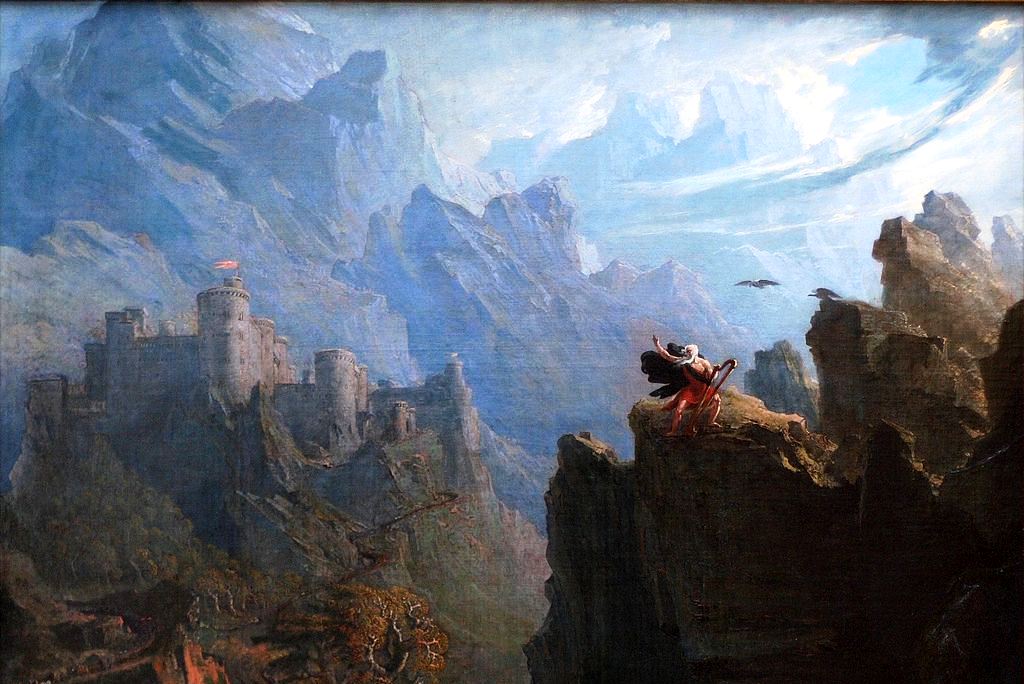
Poetry has been an integral component of Welsh culture for centuries. Indeed, the Welsh word “bardd” (poet) has been traced back to 100 B.C. Depending on their skills, Welsh poets held one of three official ranks, and earning the designation of “chief poet” was a high honor. Every noble house in Wales boasted its own resident bard until the English legal system was imposed on the country in the 16th century. Although English law abolished the position of “chief poet,” the passion for poetry persisted.

Welsh poets demonstrated their skills through competitions with strict structural requirements (forerunners of the modern Welsh Eisteddfod). In the 14th century these poetic forms were codified into 24 official meters with three classes: the englynion, the cywydd meters, and the awdl (ode) meters (which include the rhupunt).

The rhupunt (pronounced hree’-pint), like other members of the awdl class, is stanzaic. Each stanza may have three, four, or five lines, and each line has four syllables. Within each stanza, all lines, with the exception of the last, share a single end rhyme. All of the last lines share a secondary end rhyme. Thus, a rhupunt with four-line stanzas would have the following rhyme scheme:

xxxa
xxxa
xxxa
xxxb

xxxc
xxxc
xxxc
xxxb

xxxd
xxxd
xxxd
xxxb

And so on.

In a variation known as the long rhupunt, each stanza is written as a single line, and the lines are paired in couplets. This format allows greater flexibility with the end rhyme, as illustrated below:

xxxaxxxaxxxaxxxb
xxxcxxxcxxxcxxxb

xxxdxxxdxxxdxxxe
xxxfxxxfxxxfxxxe

When written in the Welsh language, the awdl meters usually adhere to cynhanedd (rules of harmony governing consonance or alliteration). Although a rhupunt written in English does not necessarily follow this tradition, using such techniques to echo sounds within the lines can enhance the musicality of the poem.

My poem “Sedona” illustrates the structure of a rhupunt with four-line stanzas.


Sedona

A Rhupunt

By Elizabeth Spencer Spragins

Deep shadows fade
Red rock cascade
To purpled jade—
Sun sparks ignite.

Stone sentries stare
Sightless through air
At treadless stair
Spanning the height.

No mortals dare
Enter the lair
Or linger where
Spirit meets sprite.

This shrine of stone
And bleached white bone
Hides secrets shown
In the moonlight.


Post your rhupunt in the comments section below.


Elizabeth Spencer Spragins is a linguist, writer, poet, and editor who taught in North Carolina community colleges for more than a decade. Her tanka and bardic verse in the Celtic style have been published in England, Scotland, Canada, Indonesia, and the United States. Recent work has appeared in the Quarterday Review, Skylark, Atlas Poetica, Halcyon Days, and Peacock Journal. She lives in Fredericksburg, Virginia.

ShareTweetPin
The Society of Classical Poets does not endorse any views expressed in individual poems or commentary.
Read Our Comments Policy Here
Next Post
‘Water Music’ and Other Poetry by C.B. Anderson

On Westminster Bridge, March 22, 2017

‘Spring is Coming’ and Other Poetry by Uvin Ko

'Spring is Coming' and Other Poetry by Uvin Ko

‘Peace’ by Ruth Asch

'Peace' by Ruth Asch

Comments 9

  1. Kathy Figueroa says:
    9 years ago

    Thank you for sharing this info about various Welsh poem structures. This has prompted me to try my hand at writing a “rhupunt,” which I’m including below.

    JUNEAU CITY

    Juneau city
    Sights are pretty
    Streets are gritty
    Tramps want spare change

    Ravens chatter
    Footsteps patter
    Small things matter
    Some things are strange

    A port of call
    For one and all
    With mountains tall
    A snow-capped range

    A kind greeting
    Pleasant meeting
    Make time fleeting
    At gold rock grange

    ~Kathy Figueroa

    Reply
  2. Kathy Figueroa says:
    9 years ago

    I’ve revised the above-posted rhupunt, slightly. Because it was written and posted very quickly, it wasn’t as polished as it could’ve been.

    Here’s the revised version:

    JUNEAU CITY

    Juneau city
    Views are pretty
    Streets are gritty
    Tramps want spare change

    Ravens chatter
    Footsteps patter
    Workmen clatter
    Some sights are strange

    A port of call
    For one and all
    With mountains tall
    A snow-capped range

    A kind greeting
    Pleasant meeting
    Make time fleeting
    At gold rock grange

    ~Kathy Figueroa

    Reply
    • Ruth says:
      9 years ago

      Well done for writing a rhupunt! With such short lines and close rhymes it must be difficult. (I confess I’ve not done it myself yet… I’m hoping to do so soon.) Your images, including sounds, create a lively impression of Juneau!
      One point of poetic technicality / sensibility: it is best to have the accent / stressed beat in lines of poetry fall on syllables which would naturally be pronounced with emphasis. In this metre, read in English, there is a natural accent on the last syllable of the line. (Elizabeth Spraggins – please correct me here if I am wrong). In lines 1, 2, and 3 of stanzas 1, 2 and 4 of your piece, that accent falls where it would not, naturally – on the sounds citY, prettY, grittY, chattER, pattER, clattER etc. I don’t know where the emphasis naturally comes in Welsh, but it strikes me that for this poetic form to work well in English, you need to look for words with an accent on the last syllable – which usually means single-syllable words – for your rhymes at the ends of lines.

      Reply
      • Ruth says:
        9 years ago

        The comment above was addressed to Kathy – somehow I missed the first few words in copying and pasting.

        Reply
  3. Ruth says:
    9 years ago

    I decided on the subject of my first attempt below, because the beat to which it is danced is similar to the natural rhythm produced in reading a rhupunt poem.

    Polka

    Up-beat, quick pace,
    with sprightly grace,
    pairs face to face,
    the dancers turn.

    That champagne taste;
    his hand, her waist,
    their fingers laced,
    and flushed cheeks burn.

    Forget your pomp!
    With music, romp!
    Bright eyed, smile, stomp
    round and return.

    Breathe in, breathe out;
    those stiff or stout
    are falling out –
    time to adjourn!

    Reply
  4. Ruth says:
    9 years ago

    Night Walk

    Through shadows – go!
    I must not slow…
    you never know
    what stalkers prowl.

    From darkness, white!
    swoops from a height:
    the silent flight
    of broad-winged owl.

    So quiet, so still.
    Then – flute-like thrill!
    high, rippling trill:
    unseen night-fowl.

    Stand. Do not lose
    rare notes, deep hues:
    the subtle muse.
    I doff my cowl.

    Reply
  5. Kathy Figueroa says:
    9 years ago

    Hi Ruth! Thanks for your comments! I really enjoyed reading your two “rhupunts,” particularly the one about the polka, which I could relate to. 🙂

    Reply
  6. Narendra Rajkumar says:
    8 years ago

    Police and Thief

    Am terrified,
    Surely I tried –
    Stone petrified,
    Escape was late.

    Started to hide,
    Doors opened wide –
    Thief came to hide,
    Now he was caught.

    Police came soon,
    Was almost noon –
    Came with siren,
    Took thief to jail.

    Court was next day,
    Thief tried to pray –
    Hoped Judge would sway,
    Sent behind bars.

    First Serial Rights / Narendra Rajkumar.

    Reply
  7. Paul Kosir says:
    7 years ago

    Sunrise

    The night is done
    New day begun
    First touch of Sun
    Provides us light

    And morning glow
    When Sun is low
    Opens the show
    With lighting slight

    Each solar ray
    Then break the day
    And leads the way
    Within our sight

    The reddish hue
    Next turns to blue
    Starts life anew
    With Future bright

    First Serial Rights / Paul Kosir

    Reply

Leave a Reply Cancel reply

Your email address will not be published. Required fields are marked *

  1. C.B. Anderson on ‘Art and Nature’ and Other Poetry by C.B. AndersonJanuary 8, 2026

    To be perfectly honest, Michael, I never know how what I write will strike a reader. Sometimes things just work…

  2. C.B. Anderson on ‘Art and Nature’ and Other Poetry by C.B. AndersonJanuary 8, 2026

    My wife, Julian, has often asks me why I write poetry when I could be writing songs and making some…

  3. Margaret Coats on ‘Refrigerator Bird’ and Other Poetry by Armaan Fatteh-PatilJanuary 8, 2026

    You write some exceptionally fine lines, Armaan. For one example from each poem: Wrong means reaching. Wrong means getting at…

  4. Margaret Coats on ‘King of Poets’: A Poem by Margaret CoatsJanuary 8, 2026

    Thanks, Margaret B! His inspired words have echoed through the ages, in many languages, and I've memorized Psalm 1 in…

  5. Margaret Coats on ‘King of Poets’: A Poem by Margaret CoatsJanuary 8, 2026

    Thank you for describing my lines with such appreciation, Bhikku Nyanasobhano. The qualities you mention are what I could hope…

Receive Poems in Your Email

Enter your email address to subscribe to this blog and receive notifications of new posts by email.

Join 1,621 other subscribers
Facebook Twitter Youtube

Recent Poems

  • Two Sonnets by Nino Martoglio, Translated by Joseph S. Salemi
  • ‘Wall of Ice’ and Other Poetry by James Bontrager
  • ‘King of Poets’: A Poem by Margaret Coats
  • ‘Watercolors’: A Poem by Susan Steele Rives
  • ‘Art and Nature’ and Other Poetry by C.B. Anderson
  • ‘Star of Wonder’: A Poem by James A. Tweedie
  • ‘Yeonmi Park’s Advice to Americans’: A Poem by Warren Bonham
  • ‘Caravaggio’: A Poem by Lisa J. Roberts
  • ‘Refrigerator Bird’ and Other Poetry by Armaan Fatteh-Patil
  • ‘The Oak Trees’: A Poem by Bhikkhu Nyanasobhano
  • ‘A Cardinal on a Snowy Day’: A Poem by Rob Fried
  • Poets Susan Jarvis Bryant and James Sale Respond to Mamdani’s Swearing In as NYC Mayor
  • ‘Single Room Cigarette, 17th Floor Yale Club of Manhattan’: A Poem by Alec Ream
  • ‘Legacy of Light’: A Poem by Martin Briggs
  • ‘The Swarm’ and Other Poetry by Cheryl Corey
  • ‘Lament of a Poet Falsely Accused of Using AI’ and Other Poetry by Paul Buchheit
  • ‘A Gift from the South’: A Poem by Julian Woodruff
  • ‘New Year’s Peeve’: A Poem by Susan Jarvis Bryant
  • ‘Homage to Brigitte Bardot’: A Poem by Joseph S. Salemi
  • ‘Dearth of Emotional Intelligence’ and Other Poems by Russel Winick
  • ‘Fireflies’: A Poem by Mark Stellinga
  • ‘Real Poetry’: A Poem by Eric v.d. Luft
  • ‘Flaws’: A Poem by Joshua Thomas
  • Two Final Poems by Sally Cook
  • ‘Twelve Labors More, Part I’: A Poem by Evan Mantyk
  • ‘A Perfect Match is Found’: A Poem by Roy E. Peterson
  • ‘The Seven Crossings’: A Poem by Ulysses Arlen
  • ‘An Open Book’ and Other Poetry by David McMahon
  • A Video Poetry Reading by Paul Erlandson
  • ‘Otto and Octavius at Christmas’: A Children’s Poem by Mary Gardner

Categories

  • Acrostic
  • Alexandroid
  • Alliterative
  • Art
  • Best Poems
  • Blank Verse
  • Chant Royal
  • Classical Poets Live
  • Clerihew
  • Covid-19
  • Deconstructing Communism
  • Educational
  • Epic
  • Epigrams and Proverbs
  • Essays
    • Interviews with Poets
    • Poetry Reviews
  • Featured
  • From the Society
  • Great Poets
    • Dante Alighieri
    • Edgar Allan Poe
    • Emily Dickinson
    • Geoffrey Chaucer
    • Henry Wadsworth Longfellow
    • Homer
    • John Keats
    • John Milton
    • Robert Frost
    • William Blake
    • William Shakespeare
    • William Wordsworth
  • Human Rights in China
  • Limerick
  • Love Poems
  • Music
  • Pantoum
  • Performing Arts
  • Poetry
    • Beauty
    • Children's Poems
    • Culture
    • Ekphrastic
    • Found Poems
    • High School Poets
    • Humor
    • Riddles
  • Poetry Challenge
  • Poetry Contests
  • Poetry Forms
    • Haiku
  • Poetry Readings
  • Rhupunt
  • Rondeau
  • Rondeau Redoublé
  • Rondel
  • Rubaiyat
  • Sapphic Verse
  • Satire
  • Science
  • Sestina
  • Shape Poems
  • Short Stories
  • Song Lyrics
  • Sonnet
  • Symposium
  • Terrorism
  • Terza Rima
  • The Environment
  • Translation
  • Triolet
  • Video
  • Villanelle

Quick Links

  • About Us
  • Submit Poetry
  • Become a Member
  • Members List
  • Support the Society
  • Advertisement Placement
  • Comments Policy
  • Terms of Use

Welcome Back!

Login to your account below

Forgotten Password?

Retrieve your password

Please enter your username or email address to reset your password.

Log In
No Result
View All Result
  • Poems
    • Beauty
    • Culture
    • Satire
    • Humor
    • Children’s
    • Art
    • Ekphrastic
    • Epic
    • Epigrams and Proverbs
    • Human Rights in China
    • Music
    • Performing Arts
    • Riddles
    • Science
    • Song Lyrics
    • The Environment
    • The Raven
    • Found Poems
    • High School Poets
    • Terrorism
    • Covid-19
  • Poetry Forms
    • Sonnet
    • Haiku
    • Limerick
    • Villanelle
    • Rondeau
    • Pantoum
    • Sestina
    • Triolet
    • Acrostic
    • Alexandroid
    • Alliterative
    • Blank Verse
    • Chant Royal
    • Clerihew
    • Rhupunt
    • Rondeau Redoublé
    • Rondel
    • Rubaiyat
    • Sapphic Verse
    • Shape Poems
    • Terza Rima
  • Great Poets
    • Geoffrey Chaucer
    • Emily Dickinson
    • Homer
    • Henry Wadsworth Longfellow
    • Dante Alighieri
    • John Keats
    • John Milton
    • Edgar Allan Poe
    • William Shakespeare
    • William Wordsworth
    • William Blake
    • Robert Frost
  • Love Poems
  • Contests
  • SCP Academy
    • Educational
    • Teaching Classical Poetry—A Guide for Educators
    • Poetry Forms
    • The SCP Journal
    • Books

© 2025 SCP. WebDesign by CODEC Prime.

This website uses cookies. By continuing to use this website you are giving consent to cookies being used. Visit our Privacy and Cookie Policy.