• Submit Poetry
  • Support SCP
  • About Us
  • Members
  • Join
Friday, January 9, 2026
Society of Classical Poets
  • Poems
    • Beauty
    • Culture
    • Satire
    • Humor
    • Children’s
    • Art
    • Ekphrastic
    • Epic
    • Epigrams and Proverbs
    • Human Rights in China
    • Music
    • Performing Arts
    • Riddles
    • Science
    • Song Lyrics
    • The Environment
    • The Raven
    • Found Poems
    • High School Poets
    • Terrorism
    • Covid-19
  • Poetry Forms
    • Sonnet
    • Haiku
    • Limerick
    • Villanelle
    • Rondeau
    • Pantoum
    • Sestina
    • Triolet
    • Acrostic
    • Alexandroid
    • Alliterative
    • Blank Verse
    • Chant Royal
    • Clerihew
    • Rhupunt
    • Rondeau Redoublé
    • Rondel
    • Rubaiyat
    • Sapphic Verse
    • Shape Poems
    • Terza Rima
  • Great Poets
    • Geoffrey Chaucer
    • Emily Dickinson
    • Homer
    • Henry Wadsworth Longfellow
    • Dante Alighieri
    • John Keats
    • John Milton
    • Edgar Allan Poe
    • William Shakespeare
    • William Wordsworth
    • William Blake
    • Robert Frost
  • Love Poems
  • Contests
  • SCP Academy
    • Educational
    • Teaching Classical Poetry—A Guide for Educators
    • Poetry Forms
    • The SCP Journal
    • Books
No Result
View All Result
Society of Classical Poets
  • Poems
    • Beauty
    • Culture
    • Satire
    • Humor
    • Children’s
    • Art
    • Ekphrastic
    • Epic
    • Epigrams and Proverbs
    • Human Rights in China
    • Music
    • Performing Arts
    • Riddles
    • Science
    • Song Lyrics
    • The Environment
    • The Raven
    • Found Poems
    • High School Poets
    • Terrorism
    • Covid-19
  • Poetry Forms
    • Sonnet
    • Haiku
    • Limerick
    • Villanelle
    • Rondeau
    • Pantoum
    • Sestina
    • Triolet
    • Acrostic
    • Alexandroid
    • Alliterative
    • Blank Verse
    • Chant Royal
    • Clerihew
    • Rhupunt
    • Rondeau Redoublé
    • Rondel
    • Rubaiyat
    • Sapphic Verse
    • Shape Poems
    • Terza Rima
  • Great Poets
    • Geoffrey Chaucer
    • Emily Dickinson
    • Homer
    • Henry Wadsworth Longfellow
    • Dante Alighieri
    • John Keats
    • John Milton
    • Edgar Allan Poe
    • William Shakespeare
    • William Wordsworth
    • William Blake
    • Robert Frost
  • Love Poems
  • Contests
  • SCP Academy
    • Educational
    • Teaching Classical Poetry—A Guide for Educators
    • Poetry Forms
    • The SCP Journal
    • Books
No Result
View All Result
Society of Classical Poets
No Result
View All Result
Home Poetry Beauty

‘Ilaria Smiles’ by Lawrence Fray

February 8, 2020
in Beauty, Culture, Ekphrastic, Poetry
A A
18
poems 'Ilaria Smiles' by Lawrence Fray

 
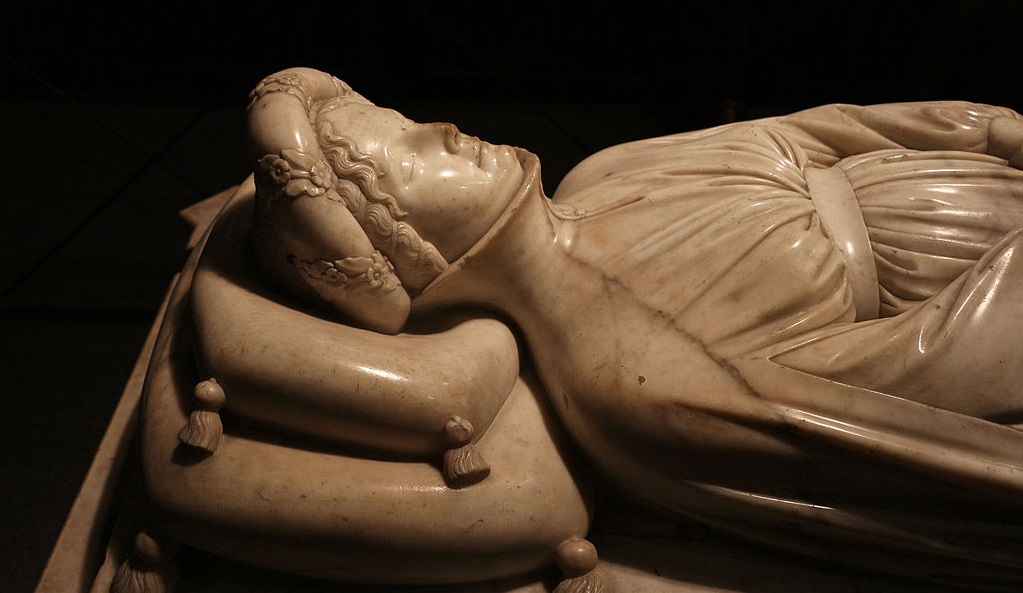
Ilaria Del Carretto was the second wife of Paolo Guinigi of Lucca. Her sepulchre lies in Lucca’s Duomo San Martino and the tall Guinigi tower has a garden in the sky and is crowned with holm oak trees.

Her image wears a mantle and pelisse.
Many have come to gaze on her and marvel
At her grace and beauty, caught in marble—
An early renaissance sculptor’s masterpiece
Although Ilaria never rested here.
The tomb is empty yet its fame had spread.
Her tranquil pose, long after life had fled,
Convinces us that death should hold no fear
If we look beyond with hope that frees.
Yet should you walk a short way to her tower
And climb in silence, at a certain hour
You may see her smile beneath the trees
And, when you leave, you know that you are blest
While flights of angels sing her to her rest.


Lawrence Fray is a retired teacher living in New Delhi and Ranikhet, a hill station of North India, finally finding time to write poetry, short stories and music.
ShareTweetPin
The Society of Classical Poets does not endorse any views expressed in individual poems or commentary.
Read Our Comments Policy Here
Next Post
2017 Poetry Competition

Recommended Poetry Contests of 2020

poems 'The Park' and Other Poetry by Amy Struthers

'The Park' and Other Poetry by Amy Struthers

‘The Absolute and Relative’ by Peter Venable

'The Absolute and Relative' by Peter Venable

Comments 18

  1. Sally Cook says:
    6 years ago

    No rusted, twisted iron bars to see;
    This sculpted marble tribute — mystery
    Among the oaks, her spirit walks above
    A clear expression of undying love.

    Just lovely.
    .

    Reply
    • Lawrence Fray says:
      6 years ago

      That’s a really lovely response.

      Reply
  2. Joe Tessitore says:
    6 years ago

    I’m with Sally – a lovely poem indeed!

    Two technical questions:
    I liked your pairing of “marvel” with “marble”, but found myself wondering if it’s a rhyme in the strict sense of the word. Does the full syllable have to rhyme, or can its last sound suffice?
    I also wondered about your use of “had” in the phrase “its fame had spread.”
    Wouldn’t “has” have been more in line with the timing of your poem? Has the fame of the tomb not spread to us today?

    Reply
    • Lawrence Fray says:
      6 years ago

      Yes…has is probably better; I will amend. As for marble and marvel: it just seemed to work for this poem. I guess we have to take solace from the fact that we can bend rules a little to create atmosphere and effect.

      Reply
  3. Leo Zoutewelle says:
    6 years ago

    I’m just grateful to have learned of what is for me a new icon of beauty. Thank you, Lawrence!

    Reply
    • M. P. Lauretta says:
      6 years ago

      Look up “Guidarello Guidarelli”.

      Very handsome even in death.

      His tomb is called the tomb of 1000 kisses.

      Reply
  4. Zinetta says:
    6 years ago

    This was such a delicate piece…. literally transported me to the time she lived. Lovely indeed.

    Reply
  5. Joseph S. Salemi says:
    6 years ago

    The last line of the sonnet is borrowed almost verbatim from Shakespeare, in the last scene of Hamlet. Such borrowings are OK, as long as they are few and far between.

    “Marvel” and “marble” are a near-rhyme, and perfectly acceptable in traditional verse. What we have to avoid are off-rhymes or merely assonance-based rhymes, which are just the lazy man’s way to avoid rhyming at all.

    It’s a nice sonnet.

    Reply
    • Lawrence Fray says:
      6 years ago

      Thank you. Yes, the last line is from the last act of Hamlet, but I thought it OK here as ‘flights’ connected with climbing the steps of the tower mentioned previously

      Reply
    • M. P. Lauretta says:
      6 years ago

      Well, ‘marble’ is a really tricky word to rhyme.

      The only true rhyme I can think of is ‘garble’, which just wouldn’t suit the subject matter.

      So you either make do with a near-rhyme, or tuck ‘marble’ into the line and end the line a different word.

      Reply
      • M. P. Lauretta says:
        6 years ago

        * So you either make do with a near-rhyme, or tuck ‘marble’ into the line and end the line with a different word.

        Reply
      • Monty says:
        6 years ago

        Exactly that, MP: if one can’t find a proper rhyme, one should, if need be, change the whole line around until one finds a fully-rhyming end-word. When writing poetry, one should always find a way to do the right thing: the sacred discipline of poetry demands it.

        Reply
  6. M. P. Lauretta says:
    6 years ago

    Oh dear.

    First we had “Michelangelo Buonarotti” instead of “Michelangelo Buonarroti”. (It still hasn’t been fixed.)

    Now we have “Ilaria Del Caretta” instead of “Ilaria Del Carretto” and “Paola Guinigi” instead of “Paolo Guinigi”.

    Why be so sloppy?

    Reply
    • C.B. Anderson says:
      6 years ago

      It’s just the nature of the beast. Not every Anglophone can transcribe good Italian well.

      Reply
      • M. P. Lauretta says:
        6 years ago

        C. B., don’t limit yourself.

        Reply
    • The Society says:
      6 years ago

      Dear M.P. Lauretta, my apologies for the typos. These are my fault. They should all be fixed now. Feel free to email [email protected] if I don’t respond quickly. I will try to be more careful with my Italian double consonants and endings. A second pair of eyes is always appreciated. Thank you for reading! -Evan

      Reply
      • M. P. Lauretta says:
        6 years ago

        Dear Evan

        I’m sorry if I overreacted, but to a native Italian speaker these things are almost painful.

        This is because in Italian double consonants really do sound like doubles, and singles like singles (although it gets more complicated when you look at some dialects – but then, fun is often made of those).

        The vowels are also unmistakeable and never blurred. While in English ‘per’ and ‘purr’ may sound the same, Italian vowels always retain their distinctive sounds.

        And then, of course, there is Paolo Guinigi’s unintended sex change…

        I promise, if I spot any more of these I will just email you.

        ATB

        M. P.

        Reply
  7. Patricia Mulholland says:
    6 years ago

    Just a lovely poem

    Reply

Leave a Reply Cancel reply

Your email address will not be published. Required fields are marked *

  1. Susan Steele Rives on ‘Watercolors’: A Poem by Susan Steele RivesJanuary 9, 2026

    Paul, Thank you! I'm glad you enjoyed the poem and that it inspired you to try something new! Susan

  2. Susan Steele Rives on ‘Watercolors’: A Poem by Susan Steele RivesJanuary 9, 2026

    Paul, Thanks so much. Like you, I find that my creative inclinations are better-executed with pens rather than paintbrushes. I…

  3. Lisa J. Roberts on ‘Caravaggio’: A Poem by Lisa J. RobertsJanuary 9, 2026

    Thank you, Paul! I’m glad you like it. Definitely give it a try.

  4. Susan Steele Rives on ‘Watercolors’: A Poem by Susan Steele RivesJanuary 9, 2026

    Mr. Peterson, Thank you for your kind words. I think that some of the most enjoyable moments are the ones…

  5. Susan Steele Rives on ‘Watercolors’: A Poem by Susan Steele RivesJanuary 9, 2026

    Peg, Thanks so much. I'm glad you enjoyed it! Susan

Receive Poems in Your Email

Enter your email address to subscribe to this blog and receive notifications of new posts by email.

Join 1,620 other subscribers
Facebook Twitter Youtube

Recent Poems

  • Two Sonnets by Nino Martoglio, Translated by Joseph S. Salemi
  • ‘Wall of Ice’ and Other Poetry by James Bontrager
  • ‘King of Poets’: A Poem by Margaret Coats
  • ‘Watercolors’: A Poem by Susan Steele Rives
  • ‘Art and Nature’ and Other Poetry by C.B. Anderson
  • ‘Star of Wonder’: A Poem by James A. Tweedie
  • ‘Yeonmi Park’s Advice to Americans’: A Poem by Warren Bonham
  • ‘Caravaggio’: A Poem by Lisa J. Roberts
  • ‘Refrigerator Bird’ and Other Poetry by Armaan Fatteh-Patil
  • ‘The Oak Trees’: A Poem by Bhikkhu Nyanasobhano
  • ‘A Cardinal on a Snowy Day’: A Poem by Rob Fried
  • Poets Susan Jarvis Bryant and James Sale Respond to Mamdani’s Swearing In as NYC Mayor
  • ‘Single Room Cigarette, 17th Floor Yale Club of Manhattan’: A Poem by Alec Ream
  • ‘Legacy of Light’: A Poem by Martin Briggs
  • ‘The Swarm’ and Other Poetry by Cheryl Corey
  • ‘Lament of a Poet Falsely Accused of Using AI’ and Other Poetry by Paul Buchheit
  • ‘A Gift from the South’: A Poem by Julian Woodruff
  • ‘New Year’s Peeve’: A Poem by Susan Jarvis Bryant
  • ‘Homage to Brigitte Bardot’: A Poem by Joseph S. Salemi
  • ‘Dearth of Emotional Intelligence’ and Other Poems by Russel Winick
  • ‘Fireflies’: A Poem by Mark Stellinga
  • ‘Real Poetry’: A Poem by Eric v.d. Luft
  • ‘Flaws’: A Poem by Joshua Thomas
  • Two Final Poems by Sally Cook
  • ‘Twelve Labors More, Part I’: A Poem by Evan Mantyk
  • ‘A Perfect Match is Found’: A Poem by Roy E. Peterson
  • ‘The Seven Crossings’: A Poem by Ulysses Arlen
  • ‘An Open Book’ and Other Poetry by David McMahon
  • A Video Poetry Reading by Paul Erlandson
  • ‘Otto and Octavius at Christmas’: A Children’s Poem by Mary Gardner

Categories

  • Acrostic
  • Alexandroid
  • Alliterative
  • Art
  • Best Poems
  • Blank Verse
  • Chant Royal
  • Classical Poets Live
  • Clerihew
  • Covid-19
  • Deconstructing Communism
  • Educational
  • Epic
  • Epigrams and Proverbs
  • Essays
    • Interviews with Poets
    • Poetry Reviews
  • Featured
  • From the Society
  • Great Poets
    • Dante Alighieri
    • Edgar Allan Poe
    • Emily Dickinson
    • Geoffrey Chaucer
    • Henry Wadsworth Longfellow
    • Homer
    • John Keats
    • John Milton
    • Robert Frost
    • William Blake
    • William Shakespeare
    • William Wordsworth
  • Human Rights in China
  • Limerick
  • Love Poems
  • Music
  • Pantoum
  • Performing Arts
  • Poetry
    • Beauty
    • Children's Poems
    • Culture
    • Ekphrastic
    • Found Poems
    • High School Poets
    • Humor
    • Riddles
  • Poetry Challenge
  • Poetry Contests
  • Poetry Forms
    • Haiku
  • Poetry Readings
  • Rhupunt
  • Rondeau
  • Rondeau Redoublé
  • Rondel
  • Rubaiyat
  • Sapphic Verse
  • Satire
  • Science
  • Sestina
  • Shape Poems
  • Short Stories
  • Song Lyrics
  • Sonnet
  • Symposium
  • Terrorism
  • Terza Rima
  • The Environment
  • Translation
  • Triolet
  • Video
  • Villanelle

Quick Links

  • About Us
  • Submit Poetry
  • Become a Member
  • Members List
  • Support the Society
  • Advertisement Placement
  • Comments Policy
  • Terms of Use

Welcome Back!

Login to your account below

Forgotten Password?

Retrieve your password

Please enter your username or email address to reset your password.

Log In
No Result
View All Result
  • Poems
    • Beauty
    • Culture
    • Satire
    • Humor
    • Children’s
    • Art
    • Ekphrastic
    • Epic
    • Epigrams and Proverbs
    • Human Rights in China
    • Music
    • Performing Arts
    • Riddles
    • Science
    • Song Lyrics
    • The Environment
    • The Raven
    • Found Poems
    • High School Poets
    • Terrorism
    • Covid-19
  • Poetry Forms
    • Sonnet
    • Haiku
    • Limerick
    • Villanelle
    • Rondeau
    • Pantoum
    • Sestina
    • Triolet
    • Acrostic
    • Alexandroid
    • Alliterative
    • Blank Verse
    • Chant Royal
    • Clerihew
    • Rhupunt
    • Rondeau Redoublé
    • Rondel
    • Rubaiyat
    • Sapphic Verse
    • Shape Poems
    • Terza Rima
  • Great Poets
    • Geoffrey Chaucer
    • Emily Dickinson
    • Homer
    • Henry Wadsworth Longfellow
    • Dante Alighieri
    • John Keats
    • John Milton
    • Edgar Allan Poe
    • William Shakespeare
    • William Wordsworth
    • William Blake
    • Robert Frost
  • Love Poems
  • Contests
  • SCP Academy
    • Educational
    • Teaching Classical Poetry—A Guide for Educators
    • Poetry Forms
    • The SCP Journal
    • Books

© 2025 SCP. WebDesign by CODEC Prime.

This website uses cookies. By continuing to use this website you are giving consent to cookies being used. Visit our Privacy and Cookie Policy.