• Submit Poetry
  • Support SCP
  • About Us
  • Members
  • Join
Tuesday, May 12, 2026
Society of Classical Poets
  • Poems
    • Beauty
    • Culture
    • Satire
    • Humor
    • Children’s
    • Art
    • Ekphrastic
    • Epic
    • Epigrams and Proverbs
    • Human Rights in China
    • Music
    • Performing Arts
    • Riddles
    • Science
    • Song Lyrics
    • The Environment
    • The Raven
    • Found Poems
    • High School Poets
    • Terrorism
    • Covid-19
  • Poetry Forms
    • Sonnet
    • Haiku
    • Limerick
    • Villanelle
    • Rondeau
    • Pantoum
    • Sestina
    • Triolet
    • Acrostic
    • Alexandroid
    • Alliterative
    • Blank Verse
    • Chant Royal
    • Clerihew
    • Rhupunt
    • Rondeau Redoublé
    • Rondel
    • Rubaiyat
    • Sapphic Verse
    • Shape Poems
    • Terza Rima
  • Great Poets
    • Geoffrey Chaucer
    • Emily Dickinson
    • Homer
    • Henry Wadsworth Longfellow
    • Dante Alighieri
    • John Keats
    • John Milton
    • Edgar Allan Poe
    • William Shakespeare
    • William Wordsworth
    • William Blake
    • Robert Frost
  • Love Poems
  • Contests
  • SCP Academy
    • Educational
    • Teaching Classical Poetry—A Guide for Educators
    • Poetry Forms
    • The SCP Journal
    • Books
No Result
View All Result
Society of Classical Poets
  • Poems
    • Beauty
    • Culture
    • Satire
    • Humor
    • Children’s
    • Art
    • Ekphrastic
    • Epic
    • Epigrams and Proverbs
    • Human Rights in China
    • Music
    • Performing Arts
    • Riddles
    • Science
    • Song Lyrics
    • The Environment
    • The Raven
    • Found Poems
    • High School Poets
    • Terrorism
    • Covid-19
  • Poetry Forms
    • Sonnet
    • Haiku
    • Limerick
    • Villanelle
    • Rondeau
    • Pantoum
    • Sestina
    • Triolet
    • Acrostic
    • Alexandroid
    • Alliterative
    • Blank Verse
    • Chant Royal
    • Clerihew
    • Rhupunt
    • Rondeau Redoublé
    • Rondel
    • Rubaiyat
    • Sapphic Verse
    • Shape Poems
    • Terza Rima
  • Great Poets
    • Geoffrey Chaucer
    • Emily Dickinson
    • Homer
    • Henry Wadsworth Longfellow
    • Dante Alighieri
    • John Keats
    • John Milton
    • Edgar Allan Poe
    • William Shakespeare
    • William Wordsworth
    • William Blake
    • Robert Frost
  • Love Poems
  • Contests
  • SCP Academy
    • Educational
    • Teaching Classical Poetry—A Guide for Educators
    • Poetry Forms
    • The SCP Journal
    • Books
No Result
View All Result
Society of Classical Poets
No Result
View All Result
Home Poetry Beauty

‘Lament to the Passing of Paper’: A Poem by Paul A. Freeman

February 6, 2025
in Beauty, Culture, Poetry
A A
29
poems 'Lament to the Passing of Paper': A Poem by Paul A. Freeman

.

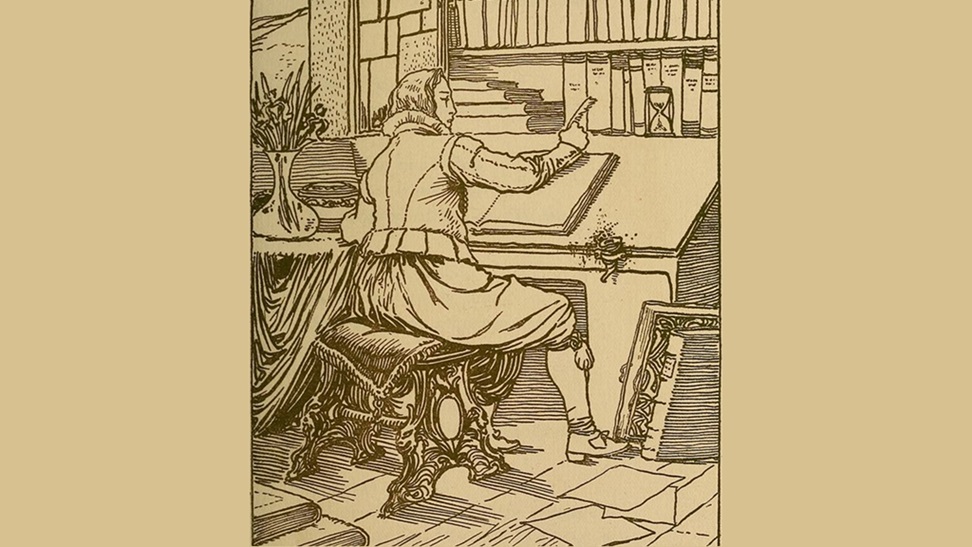
Lament to the Passing of Paper

I learned to write my A-B-Cs
and form my shapely 1-2-3s
on paper, when I was a lad;
but now, since I’ve become a dad,
the era of the written word
is passing like the dodo bird.

The whisper of the turning page,
the musty, dusty smell of age,
or freshness off the printing press!
Oh, how those volumes eased life’s stress
with fact and fancy on each leaf—
their dying out’s akin to grief.

The thinness of a Bible sheet,
a thicker, picture-page to meet
approval from a child at night,
read to them till their eyes shut tight;
or else a book past curfew’s hour,
beneath the blankets to devour.

Those screens and keyboards aren’t much fun.
How shall I fare now paper’s done?

.

.

Paul A. Freeman is the author of Rumours of Ophir, a crime novel which was taught in Zimbabwean high schools and has been translated into German. In addition to having two novels, a children’s book and an 18,000-word narrative poem (Robin Hood and Friar Tuck: Zombie Killers!) commercially published, Paul is the author of hundreds of published short stories, poems and articles.

ShareTweetPin
The Society of Classical Poets does not endorse any views expressed in individual poems or commentary.
Read Our Comments Policy Here

RandomPoems

Three Poems after Ecclesiastes 9, by Jeff Kemper
Beauty

Three Poems after Ecclesiastes 9, by Jeff Kemper

May 2, 2021

. One Fate Ecclesiastes 9:1-6 Shall I portend, and shall I explicate What eyes can see themselves, ere they go...

‘The Settlers’: A Poem by Martin Rizley
Beauty

‘The Settlers’: A Poem by Martin Rizley

January 29, 2025

. The Settlers —to my forefathers, and all the intrepid men and womenwho settled the Oklahoma panhandle. Across these barren...

Next Post
‘Piazza della Signoria, Florence: February 7, 1497’: A Villanelle by Tom Wehtje

'Piazza della Signoria, Florence: February 7, 1497': A Villanelle by Tom Wehtje

‘Reflections on Still Waters’: A Collection of Poems by James A. Tweedie

'Reflections on Still Waters': A Collection of Poems by James A. Tweedie

‘Splendid Majesty’: A Poem by Warren Bonham

'Splendid Majesty': A Poem by Warren Bonham

Comments 29

  1. Bruce Phenix says:
    1 year ago

    Thank you, Paul – so charmingly written and so true!

    Reply
    • Paul A. Freeman says:
      1 year ago

      Thanks for reading and commenting so positively, Bruce.

      Reply
  2. T. M. says:
    1 year ago

    Paul: Very well written. I have felt those same sentiments, but I could never have expressed them so well. I am learning to appreciate digital reading, though, so I don’t have any regrets about leaving paper behind. Well OK, some. Thanks for this delightful and nostalgic verse. T. M.

    Reply
    • Paul A. Freeman says:
      1 year ago

      The library where I work now is somewhat sparse, but the positive is I’m finally reading all those classics I’ve put off for a lifetime. That said, on the bus to work I’ve sometimes used the Kindle my daughter decided she didn’t like.

      Thanks for reading, T.M.

      Reply
  3. Julian D. Woodruff says:
    1 year ago

    Face it, Paul, the world is just crazy.
    Haven’t we got vegan salami?
    Why not paperless e-ragami?

    Reply
    • Paul A. Freeman says:
      1 year ago

      …as I reach for my decaffeinated coffee!

      Thanks for reading and commenting, Julian.

      Reply
    • Margaret Coats says:
      1 year ago

      Julian, thank you for thinking of papercraft too! The colors and patterns of origami paper are amazing, to say nothing of creations completed by fingers more skilled than mine.

      Reply
  4. Michael Pietrack says:
    1 year ago

    Convenience is not always better, is it?

    Reply
    • Cynthia Erlandson says:
      1 year ago

      Good iambic pentameter line, Michael; you should do something with that. 🙂

      Reply
    • Paul A. Freeman says:
      1 year ago

      I was one of the last typewriter users, too! I’m just not organised enough to have my life in docs and computer files, although if I write a short story or article over 500 words, it’s done on a screen. Perhaps that’s why I prefer poetry these days.

      Reply
  5. Warren Bonham says:
    1 year ago

    I’m glad to see I’m not the only one. Despite my best efforts, my kids could not have cared less but at least they were exposed to paper books. Their kids aren’t likely to know anything other than words stored in digital form. I guess that’s progress.

    Reply
    • Paul A. Freeman says:
      1 year ago

      I managed to instill a love of books in my kids, but these days availability factors in alongside convenience.

      Thanks for reading and commenting, Warren.

      Reply
  6. Roy Eugene Peterson says:
    1 year ago

    I join in lamenting the passing of paper that one could caress while turning the pages, savor the soft leather binding, and store in studies and libraries. As for that, cursive writing has also gone through a devaluation and devolution while currency is being replaced by digital forms of cash. We must beware that AI does not replace humans completely in the scheme of things.

    Reply
    • Cheryl A Corey says:
      1 year ago

      Roy, I got my great-nephew a cursive instruction book for Xmas. He’s being home-schooled, so hopefully he’ll learn the skill.

      Reply
    • Paul A. Freeman says:
      1 year ago

      Alas, my handwriting is difficult to read. If I write something, I need to type it up within 24 hours, or I won’t be able to decipher it all.

      Reply
  7. Joseph S. Salemi says:
    1 year ago

    A great poem, Paul. Real paper, made from old linen and cotton rags, is now almost impossible to find, and all early books were printed on it. I have books from the 1500s, the paper of which is as fine and sturdy as the day those books came off the press.

    Reply
    • Julian D. Woodruff says:
      1 year ago

      Good point, Joseph. Although the users of old thought of paper, ink, & beeswax as simple tools, they were valuable ones, not to be treated lightly. Repurposing of paper probably began when it was invented, and repurposing as a practice may have begun before the emergence of homo sapiens. Modern sophistication or higher consciousness it is not.

      Reply
    • Paul A. Freeman says:
      1 year ago

      It’s difficult to get books, especially in English, where I am now, so I’ll be taking a half-empty suitcase with me to the UK this year, bringing back my favourite books and semi-retiring the Kindle. I envy you having some 16th century books.

      Reply
      • Julian D. Woodruff says:
        1 year ago

        I don’t have such, but have had opportunities to study a few pubs & mss. from the 18th c. and earlier.

        Reply
      • Joseph S. Salemi says:
        1 year ago

        I started collecting at the age of twelve, and I have had some amazing luck in the acquisition of rare books. I own the Latin edition of Ovid that belonged to William Wordsworth.

        Reply
  8. Cynthia Erlandson says:
    1 year ago

    So well expressed, Paul, thanks. I agree. The smell of old books is one of my favorites — they are so fragrant. Also, I’ve read that learning to write cursive is better for brain development than typing.

    Reply
    • Paul A. Freeman says:
      1 year ago

      Thanks for reading and commenting, Cynthia.

      Yep, those old books certainly fill the senses.

      I recall that my first ‘O’ level exam, which was English Language, I wrote using a fountain pen.

      I have found that these days I can write half a poem on paper and then transfer it and write the other half on a computer screen – though it has to be of a certain length. Also, with short stories, I tend to write a plan on paper, and then go to screen, though again, it has to be a short length of story.

      Reply
  9. Cheryl A Corey says:
    1 year ago

    The history of paper is an interesting topic. Imagine the early monks and scribes, working on vellum. As long as there are people who love to hold books, newspapers, etc. to read, I don’t think that paper will disappear. Call me a Luddite, but I always begin my poems by putting pen to paper. There’s a freedom in being able to quickly scribble words, lines, rhymes, etc. – to make use of the paper front and back, something you can’t do sitting in front of a screen.

    Reply
    • Joseph S. Salemi says:
      1 year ago

      You can repurpose paper by pulping it again in hot water, and making new sheets from the mash. When paper was made of linen and cotton rags, this was simple and effective. Today a lot of paper is made from wood pulp, and it can be recycled but it has to be done differently.

      You can also repurpose vellum and parchment, but it involves scraping off the ink on each sheet (which is a solid animal hide) and then writing anew on the sheet. A piece of vellum or parchment that has been used in this way is called a palimpsest.

      Reply
    • Paul A. Freeman says:
      1 year ago

      I hope this link comes out okay and doesn’t become a whole page. Below is a link to a comedy skit where books are a new technology, replacing scrolls. It always makes me laugh.

      https://www.youtube.com/watch?v=0Cd7Bsp3dDo

      Thanks for reading and commenting, Cheryl.

      Reply
  10. Margaret Coats says:
    1 year ago

    Ah, yes, Paul! Not only books and notebooks and greeting cards, but beautiful stationery–of course complemented by handsome handwriting. You’ve lamented what is wonderful to remember. Not that it will do you much good at your present residence, but libraries are in the process of giving away their riches to anyone who will carry off free loot. The screen and keyboards, on the other hand, lead to emotional outbursts and regrettable ruptures on social media because persons post faster than reason dictates. Would that typed temper tantrums might turn out illegible! I do think poetry is one practice where both new and old forms of writing are valuable– for free and easy composition followed by quick presentation online or in a book. Thanks for bringing up the topic and thinking through some of paper’s attractions!

    Reply
    • Paul A. Freeman says:
      1 year ago

      That’s so sad to hear about the demise of library books in your part of the world, Margaret. Sitting in front of me are two origami boxes I made to hold paper clips and numbered cards I use for students to draw lots, so I guess there will always be origami paper!

      On the topic of social media outbursts, your own Abraham Lincoln used to ‘sleep on it’ if he had the urge to write a ‘hot letter’, as he put it. I do try to do the same these days (really!).

      I recall at primary school we had a yearly handwriting competition, always won by ‘GW’, a big lass who was famous for chasing after boys literally) and giving them unsolicited, unwanted kisses – though I guess a few years later they wouldn’t have been unwanted.

      Thanks for reading and unlocking some long dormant memories.

      Reply
  11. Ann Aufderheide says:
    1 year ago

    Not only book and paper, but pencils! I still prefer the friction of a pencil to the smoothness of pen. I homeschooled my five older children and the three boys are all dyslexic. Writing, not printing or typing, helps tremendously with reading and spelling! My oldest boy, now 21, is severely dyslexic, but because of my reading aloud and audiobooks, he has no fear or loathing for the printed word and he loves to visit bookstores. He’s the best-read person in the family.

    Reply
    • Paul A. Freeman says:
      1 year ago

      You’ll be glad to know, Ann, that I make my students write during class time (to avoid AI-fed assignments), give them spelling tests (I have a list of 500 somehow tricky words), and that I make them use pencils when writing exams.

      That said, I feel like King Canute battling against a tide that will wipe out the skill of writing.

      I’ve always believed (and discovered from experience) that if you make you weakness your strength, you’ll succeed in life.

      Thanks for reading and commenting.

      Reply

Leave a Reply Cancel reply

Your email address will not be published. Required fields are marked *

  1. Susan Jarvis Bryant on ‘Spontaneous Conjugal Combustion’ and Other Poems by Susan Jarvis BryantMay 12, 2026

    Yael, it's always lovely to hear from you. I'm thrilled you enjoyed the poems. I did have people in mind…

  2. Susan Jarvis Bryant on ‘Spontaneous Conjugal Combustion’ and Other Poems by Susan Jarvis BryantMay 12, 2026

    James, I'm hoping you enjoyed the villanelle and it hasn't worried you too much. Mike often suffers for my art…

  3. Susan Jarvis Bryant on ‘Spontaneous Conjugal Combustion’ and Other Poems by Susan Jarvis BryantMay 12, 2026

    C.B. I just love the Queen Elizabeth II and Welsh Corgis scene... I would have claimed that one had I…

  4. Susan Jarvis Bryant on ‘Spontaneous Conjugal Combustion’ and Other Poems by Susan Jarvis BryantMay 12, 2026

    Brian, thank you so much for this extremely generous and perceptive reading. I thoroughly appreciate your take on my quirky…

  5. Susan Jarvis Bryant on ‘Spontaneous Conjugal Combustion’ and Other Poems by Susan Jarvis BryantMay 12, 2026

    Awww, what a beautiful comment, Mark. It's lovely to hear of the joys of marital bliss after 53 years. Congratulations!…

Subscribe to Daily Poems

Enter your email address to subscribe to this blog and receive notifications of new posts by email.

Join 1,593 other subscribers

Recent Poems

  • A Poem on Coach “Black Mike” Castronis from Athens Y Camp, by Alec Ream
  • A Poem on the Zambian National Park Mosi-oa-Tunya, by Paul A. Freeman
  • ‘Creation of Mom’: A Mother’s Day Poem by Roy E. Peterson
  • ‘Spontaneous Conjugal Combustion’ and Other Poems by Susan Jarvis Bryant
  • ‘The Man in the Moon Was a Very Round Man’: A Poem by Lauren V. Leon
  • ‘Fibromytrauma’: A Poem by Golan Shahar
  • ‘A Lonely Sliver’: A Poem by Katie Tencza
  • ‘Higher Gas Prices Are a Small Price to Pay’: An Iran War Poem by Mark F. Stone
  • ‘Always Ahead’: A Poem by Scharlie Meeuws
  • ‘Hamlet’s Lawyer’ and Other Poetry by Brian Yapko
  • ‘On An Old Photograph’: A Poem by Joseph S. Salemi
  • ‘Faust Foresees His End’: A Poem by Martin Briggs
  • ‘À la Carte’ and Other Poetry by C.B. Anderson
  • ‘Where the Sweet Bluebonnets Bloom’: A Poem by Roy E. Peterson
  • ‘The Waters’: A Poem by Margaret Brinton
  • ‘The Pinnacle of Poetry’ and Other Poems by Russel Winick
  • The First American Sonnets: An Essay on David Humphreys, by Margaret Coats
  • ‘The Holy Rollers on Poetry’: A Poem by Joseph S. Salemi
  • Sappho’s ‘Poem 1’ Translated by Bruce Phenix
  • ‘The Cautionary Tale of Phone Addicted Mimi’: A Poem by Paul A. Freeman
  • ‘Look Away’: A Poem for America’s 250th Anniversary, by Roger Crane
  • ‘Sunday Morning in Canada’: A Poem by Jeffrey Essmann
  • ‘Bean’: A Poem by Jan Mennite
  • ‘The Swan’s Song ’: A Poem for Shakespeare’s Birthday, by Susan Jarvis Bryant
  • ‘The Gravedigger’: A Poem by Marie Burdett
  • ‘Waiting for the Perfect Man’: A Poem by Janice Canerdy
  • ‘The George-A-Saurus’ and Other Poetry by Brian Yapko
  • ‘When Asked: What’s Your Favorite Season?’: A Poem by Paul Millan  
  • ‘The Last At-Bat of Lyndon Braun’: A Poem by Michael Pietrack
  • ‘The Perpetual Battle’ and Other Poetry by Adam Sedia

Categories

  • Acrostic
  • Alexandroid
  • Alliterative
  • Art
  • Best Poems
  • Blank Verse
  • Chant Royal
  • Classical Poets Live
  • Clerihew
  • Covid-19
  • Deconstructing Communism
  • Educational
  • Epic
  • Epigrams and Proverbs
  • Essays
    • Interviews with Poets
    • Poetry Reviews
  • Featured
  • From the Society
  • Great Poets
    • Dante Alighieri
    • Edgar Allan Poe
    • Emily Dickinson
    • Geoffrey Chaucer
    • Henry Wadsworth Longfellow
    • Homer
    • John Keats
    • John Milton
    • Robert Frost
    • William Blake
    • William Shakespeare
    • William Wordsworth
  • Human Rights in China
  • Limerick
  • Love Poems
  • Music
  • Pantoum
  • Performing Arts
  • Poetry
    • Beauty
    • Children's Poems
    • Culture
    • Ekphrastic
    • Found Poems
    • High School Poets
    • Humor
    • Riddles
  • Poetry Challenge
  • Poetry Contests
  • Poetry Forms
    • Curtal Sonnet
    • Haiku
  • Poetry Readings
  • Rhupunt
  • Rondeau
  • Rondeau Redoublé
  • Rondel
  • Rubaiyat
  • Sapphic Verse
  • Satire
  • Science
  • Sestina
  • Shape Poems
  • Short Stories
  • Song Lyrics
  • Sonnet
  • Symposium
  • Terrorism
  • Terza Rima
  • The Environment
  • Translation
  • Triolet
  • Video
  • Villanelle

Quick Links

  • About Us
  • Submit Poetry
  • Become a Member
  • Members List
  • Support the Society
  • Advertisement Placement
  • Comments Policy
  • Terms of Use

Welcome Back!

Login to your account below

Forgotten Password?

Retrieve your password

Please enter your username or email address to reset your password.

Log In
No Result
View All Result
  • Poems
    • Beauty
    • Culture
    • Satire
    • Humor
    • Children’s
    • Art
    • Ekphrastic
    • Epic
    • Epigrams and Proverbs
    • Human Rights in China
    • Music
    • Performing Arts
    • Riddles
    • Science
    • Song Lyrics
    • The Environment
    • The Raven
    • Found Poems
    • High School Poets
    • Terrorism
    • Covid-19
  • Poetry Forms
    • Sonnet
    • Haiku
    • Limerick
    • Villanelle
    • Rondeau
    • Pantoum
    • Sestina
    • Triolet
    • Acrostic
    • Alexandroid
    • Alliterative
    • Blank Verse
    • Chant Royal
    • Clerihew
    • Rhupunt
    • Rondeau Redoublé
    • Rondel
    • Rubaiyat
    • Sapphic Verse
    • Shape Poems
    • Terza Rima
  • Great Poets
    • Geoffrey Chaucer
    • Emily Dickinson
    • Homer
    • Henry Wadsworth Longfellow
    • Dante Alighieri
    • John Keats
    • John Milton
    • Edgar Allan Poe
    • William Shakespeare
    • William Wordsworth
    • William Blake
    • Robert Frost
  • Love Poems
  • Contests
  • SCP Academy
    • Educational
    • Teaching Classical Poetry—A Guide for Educators
    • Poetry Forms
    • The SCP Journal
    • Books

© 2025 SCP. WebDesign by CODEC Prime.