• Submit Poetry
  • Support SCP
  • About Us
  • Members
  • Join
Thursday, January 8, 2026
Society of Classical Poets
  • Poems
    • Beauty
    • Culture
    • Satire
    • Humor
    • Children’s
    • Art
    • Ekphrastic
    • Epic
    • Epigrams and Proverbs
    • Human Rights in China
    • Music
    • Performing Arts
    • Riddles
    • Science
    • Song Lyrics
    • The Environment
    • The Raven
    • Found Poems
    • High School Poets
    • Terrorism
    • Covid-19
  • Poetry Forms
    • Sonnet
    • Haiku
    • Limerick
    • Villanelle
    • Rondeau
    • Pantoum
    • Sestina
    • Triolet
    • Acrostic
    • Alexandroid
    • Alliterative
    • Blank Verse
    • Chant Royal
    • Clerihew
    • Rhupunt
    • Rondeau Redoublé
    • Rondel
    • Rubaiyat
    • Sapphic Verse
    • Shape Poems
    • Terza Rima
  • Great Poets
    • Geoffrey Chaucer
    • Emily Dickinson
    • Homer
    • Henry Wadsworth Longfellow
    • Dante Alighieri
    • John Keats
    • John Milton
    • Edgar Allan Poe
    • William Shakespeare
    • William Wordsworth
    • William Blake
    • Robert Frost
  • Love Poems
  • Contests
  • SCP Academy
    • Educational
    • Teaching Classical Poetry—A Guide for Educators
    • Poetry Forms
    • The SCP Journal
    • Books
No Result
View All Result
Society of Classical Poets
  • Poems
    • Beauty
    • Culture
    • Satire
    • Humor
    • Children’s
    • Art
    • Ekphrastic
    • Epic
    • Epigrams and Proverbs
    • Human Rights in China
    • Music
    • Performing Arts
    • Riddles
    • Science
    • Song Lyrics
    • The Environment
    • The Raven
    • Found Poems
    • High School Poets
    • Terrorism
    • Covid-19
  • Poetry Forms
    • Sonnet
    • Haiku
    • Limerick
    • Villanelle
    • Rondeau
    • Pantoum
    • Sestina
    • Triolet
    • Acrostic
    • Alexandroid
    • Alliterative
    • Blank Verse
    • Chant Royal
    • Clerihew
    • Rhupunt
    • Rondeau Redoublé
    • Rondel
    • Rubaiyat
    • Sapphic Verse
    • Shape Poems
    • Terza Rima
  • Great Poets
    • Geoffrey Chaucer
    • Emily Dickinson
    • Homer
    • Henry Wadsworth Longfellow
    • Dante Alighieri
    • John Keats
    • John Milton
    • Edgar Allan Poe
    • William Shakespeare
    • William Wordsworth
    • William Blake
    • Robert Frost
  • Love Poems
  • Contests
  • SCP Academy
    • Educational
    • Teaching Classical Poetry—A Guide for Educators
    • Poetry Forms
    • The SCP Journal
    • Books
No Result
View All Result
Society of Classical Poets
No Result
View All Result
Home Poetry Beauty

Sibylline Sonnets for Eastertide, by Margaret Coats

May 26, 2022
in Beauty, Culture, Poetry
A A
15
poems Sibylline Sonnets for Eastertide, by Margaret Coats

.

Sibylline Sonnets for Eastertide

See an explanation on what Sibyls are here.

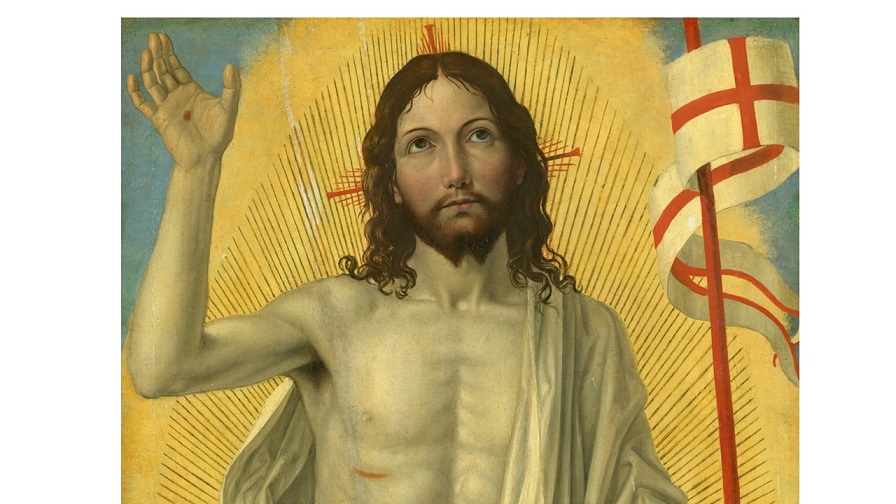
The Phrygian Sibyl Speaks

portrayed with the resurrection banner or the words
“Velum templi scindetur”

Jesus, again crying out with a loud voice, yielded up his
spirit. The veil of the temple was rent in two from top to
bottom, and the earth quaked and the rocks were rent,
and the graves opened, and many bodies of the saints
that had slept arose, and coming out of the tombs after
his resurrection, came into the holy city and appeared
to many. —Matthew 27:50–53

Hear ye the instantaneous victory!
The Temple veil slashed downward signifies
Christ’s opening wide God’s gracious armory
Of alms empowering friends who die to rise.
Saints yet unsaved re-enter history,
And during forty hours their force outvies
Abaddon and his lifeless revelry
On earth. A healing purpose underlies
Their early resurrection, augury
Of needed care the risen Lord applies.
Jerusalem their golden hostelry
Soon sees disciples mightily baptize
Uncounted forebears who with Christ advance
As scouts exemplifying His commands.

Alive, Christ rears the cross that bought fair freedom:
Its flag, the Temple veil forever rent,
Showing the King stands with His men, to lead them.
The conqueror of death cannot relent,
But with His troops triumphantly confronts
Sin’s present hell with power beneficent.
Armed with His Truth, the faithful soldier blunts
Whatever blade foes, fiends, and flesh may flaunt,
Well knowing ghastly death was slaughtered once
For all, on Golgotha and at the font.
My warlike music in the Phrygian mode
Sings service that can satisfy all want:
Christ, victor, pays more joy than earned or owed,
In life beyond the body’s dreams bestowed.

.

.

The Delphian Sibyl

whose attributes are the crown of thorns and the cornucopia

“The crown of grass, made from plants growing in the field of
battle, was never conferred except at a crisis of supreme
desperation, and never except by acclamation of the whole
army saved and indebted for its preservation to the valor of
a single individual.” —Pliny the Elder, Natural History

I speak outside the temple, from my rock,
Concerning nettles on earth’s battleground
Accursed by Adam’s sin that held men bound
To labor fruitlessly with field and flock.
Christ Jesus rips out hell’s weeds to unblock
Good land for cultivation, being crowned
Exultantly with thorns and thistles found
Crushed under foot, then changed for sweet white stock,
Mint, basil, yarrow, phlomis, lime-green spurge,
With which figs, peaches, plums, and cherries merge,
Crowding the cornucopia I bear
To trumpet, “He is risen, and draws nigh:
The Lord of all the nations, Judge most high,
By conquest as by sonship God’s sole heir.”

.

Poet’s note on sonnet forms: The Phrygian sibyl employs early kinds of the English sonnet, used by Henry Howard, Earl of Surrey, inventor of the Shakespearean type. The Delphian sibyl uses the sonnet rhyme scheme most characteristic of French poets.

.

.

Margaret Coats lives in California.  She holds a Ph.D. in English and American Literature and Language from Harvard University.  She has retired from a career of teaching literature, languages, and writing that included considerable work in homeschooling for her own family and others. 

ShareTweetPin
The Society of Classical Poets does not endorse any views expressed in individual poems or commentary.
Read Our Comments Policy Here
Next Post
‘Press On, Regardless’ and Other Poetry by C.B. Anderson

'Press On, Regardless' and Other Poetry by C.B. Anderson

Review of Modern Art: An Exhibition in Criticism, a Book of Poetry by Michael Curtis

Review of Modern Art: An Exhibition in Criticism, a Book of Poetry by Michael Curtis

‘Karl Barth Platz’ and Other Poetry by Adam Wasem

'Karl Barth Platz' and Other Poetry by Adam Wasem

Comments 15

  1. Paul Freeman says:
    4 years ago

    I particularly like ‘The Delphian Sibyl’ – it literally soars and to my ears sounds like a soliloquy being preached to the crowd, but a soliloquy not in blank verse, but a seamless sonnet!

    I was reminded of some of the vivid descriptions in ‘A Christmas Carol’ (around the time the Ghost of Christmas Present is introduced) of the seasonal foods on sale, and the wide-eyed wonder the imagery creates in the readers.

    Thanks for the reads, Margaret.

    Reply
    • Margaret Coats says:
      4 years ago

      Thanks, Paul! The sibyl at Delphi was not the same person as the priestess of Apollo who delivered oracles, but she had her own sacred place at a nearby rock that was enough of a pulpit to enable preaching. Her catalogue of field plants goes beyond the universal thorns and thistles as consequences of Adam’s sin, to feature herbs, flowers, and fruits of the Mediterranean area.

      Reply
    • Margaret Coats says:
      4 years ago

      That is, seasonal beauties for wide-eyed wonder at Easter have as framework the pliable stems of thorn and thistle, readily available on the field to be made into crown and cornucopia!

      Reply
  2. Brian Yapko says:
    4 years ago

    Margaret, this exquisitely literate set of Biblical-focused poetry is quite impressive. Although only two sibyls speak, the number of sonnets totals three thus, I believe, paying respect to the Trinity. The two Phrygian sonnets may potentially stand alone – especially since their rhyme schemes differ – yet they are clearly related and stronger when read together. Your invocation of the resurrection of the saints is most powerful both thematically and in your powerful martial words. Your ability to rhyme very difficult words is especially enviable as is all of those “–ry”rhymes. The ultimate affect of these ababab… rhymes through sonnet one is to build suspense up to a crescendo which is satisfied by the second sonnet.

    The botanical symbolism of the Delphian sibyl is beautiful and bucolic in comparison to the martial tones of the Phrygian. I’m quite certain much of the symbolism is over my head, but I admire how you go from the Garden of Eden and Adam’s sin to the Great Redeemer who restores all that was lost, crowding out the sybil’s cornucopia with the exuberant promise of Creation. I especially love the gardening image of Christ “ripping out hell’s weeds to unblock good land for cultivation.” This is religious imagery I’ve never encountered before and I love it. So very well done.

    Reply
    • Margaret Coats says:
      4 years ago

      Thank you, Brian, for everything you’ve said. The passage on the resurrection of others, at the moment of Christ’s death, and their coming out of graves after His resurrection, isn’t much discussed. An interpretation from the Phrygian sibyl, who is closely associated with the passage, seems suitable. Mine depends on what Jesus says to Nicodemus about the need to be born again of water and spirit, in order to enter heaven. As well, the crown of thorns is usually seen as a crowning insult, rather than an indication of victory over original sin–but it can belong to the victor considering the custom described by Pliny. And the parable of good soil needed for the growth of the Gospel in souls suggested to me that Christ himself needs to clear the land. I am glad that all of this worked out rationally and reverently in your opinion!

      Reply
  3. Phyllis Schabow says:
    4 years ago

    I agree with both Brian and Paul whose comments are above mine. The scope of Margaret’s understanding of Holy Scripture and her ability to lift the reader to experience the glorious day of the Resurrection is a gift beyond description. One feels as if she must have been present herself, and is eager to inspire all others to experience the joy of the Easter Season – all 50 days of it. Thank you Margaret and thank God for this wonderful gift He has given to you.

    Reply
    • Margaret Coats says:
      4 years ago

      Thanks for your gracious comment, Phyllis, and especially for noticing that we are still in this wonderfully long season of Easter!

      Reply
  4. Cynthia Erlandson says:
    4 years ago

    I agree with all of the above comments, Margaret; these are truly beautiful and inspiring!

    Reply
    • Margaret Coats says:
      4 years ago

      Thank you, Cynthia! I very much appreciate the high compliment of calling these sonnets “inspiring.”

      Reply
      • Jonicis Bulalacao says:
        4 years ago

        Thanks, Margaret!
        Once again your beautiful poems are a great help in entering into the Easter Mysteries.

        Reply
      • Margaret Coats says:
        4 years ago

        And thank you, Joni, for what your music does to elevate the sacred rites. Music, art, poetry, social gatherings, and personal devotions do much to instill the liturgical seasons in all of us.

        Reply
  5. Tom Rimer says:
    4 years ago

    Margaret — you have a number of trenchant comments above, all of which are so appropriate. As for me, I am struck by the effective contrast in atmosphere between the two. You point out your use of two contrasting sonnet forms, and these differences direct the general emotional tenor of each poem as well. The Phrygian sonnets have the kind of powerful sacred energy that I find in Milton (one of my favorite poets), while the Delphian sonnet is softer, green, and earthy, and presented with such effective details. The contrast gives deeper meaning for me to both categories.

    Reply
    • Margaret Coats says:
      4 years ago

      Thanks so much, Tom. It’s a real challenge for me as author to give differing voices to the different sibyls, especially as I have to maintain their common character as voices of admonition or warning. Most difficult, I think, in this group foretelling the resurrection of Christ our Lord. The theme is one of exultant joy, but a sibyl does not get carried away by that. I am so glad you found deep meaning in both approaches I was able to take here. Of course, the distinction does not derive ultimately from my artistic choices, but from the multifaceted aspects of this inexhaustible mystery!

      Reply
  6. R M Moore says:
    4 years ago

    I quite agree with the others ,Margaret. Your poetry here brings into focus Truth, Beauty and Goodness.
    And this quote from The Phrygian, is what I would end my comment with:
    Christ, victor, pays more joy than earned or owed,
    In life beyond the body’s dreams bestowed.

    Reply
    • Margaret Coats says:
      4 years ago

      Thank you so much, Mrs. Moore. In the sonnet you quote, the focus is on Christ as both commander and victor. And in those final lines, there is both His justice and His generosity. Your comment helps me to focus again on the words I wrote, and the particular truths they express in a small way. As an artist yourself, you know the satisfaction that can come from expressing truth and goodness in a beautiful way. I recall your telling me that when a face you paint does not satisfactorily represent the person you are portraying, you paint over it and try again. I do something of the same in working over the words in my poems.

      Reply

Leave a Reply Cancel reply

Your email address will not be published. Required fields are marked *

  1. C.B. Anderson on ‘Art and Nature’ and Other Poetry by C.B. AndersonJanuary 8, 2026

    To be perfectly honest, Michael, I never know how what I write will strike a reader. Sometimes things just work…

  2. C.B. Anderson on ‘Art and Nature’ and Other Poetry by C.B. AndersonJanuary 8, 2026

    My wife, Julian, has often asks me why I write poetry when I could be writing songs and making some…

  3. Margaret Coats on ‘Refrigerator Bird’ and Other Poetry by Armaan Fatteh-PatilJanuary 8, 2026

    You write some exceptionally fine lines, Armaan. For one example from each poem: Wrong means reaching. Wrong means getting at…

  4. Margaret Coats on ‘King of Poets’: A Poem by Margaret CoatsJanuary 8, 2026

    Thanks, Margaret B! His inspired words have echoed through the ages, in many languages, and I've memorized Psalm 1 in…

  5. Margaret Coats on ‘King of Poets’: A Poem by Margaret CoatsJanuary 8, 2026

    Thank you for describing my lines with such appreciation, Bhikku Nyanasobhano. The qualities you mention are what I could hope…

Receive Poems in Your Email

Enter your email address to subscribe to this blog and receive notifications of new posts by email.

Join 1,621 other subscribers
Facebook Twitter Youtube

Recent Poems

  • Two Sonnets by Nino Martoglio, Translated by Joseph S. Salemi
  • ‘Wall of Ice’ and Other Poetry by James Bontrager
  • ‘King of Poets’: A Poem by Margaret Coats
  • ‘Watercolors’: A Poem by Susan Steele Rives
  • ‘Art and Nature’ and Other Poetry by C.B. Anderson
  • ‘Star of Wonder’: A Poem by James A. Tweedie
  • ‘Yeonmi Park’s Advice to Americans’: A Poem by Warren Bonham
  • ‘Caravaggio’: A Poem by Lisa J. Roberts
  • ‘Refrigerator Bird’ and Other Poetry by Armaan Fatteh-Patil
  • ‘The Oak Trees’: A Poem by Bhikkhu Nyanasobhano
  • ‘A Cardinal on a Snowy Day’: A Poem by Rob Fried
  • Poets Susan Jarvis Bryant and James Sale Respond to Mamdani’s Swearing In as NYC Mayor
  • ‘Single Room Cigarette, 17th Floor Yale Club of Manhattan’: A Poem by Alec Ream
  • ‘Legacy of Light’: A Poem by Martin Briggs
  • ‘The Swarm’ and Other Poetry by Cheryl Corey
  • ‘Lament of a Poet Falsely Accused of Using AI’ and Other Poetry by Paul Buchheit
  • ‘A Gift from the South’: A Poem by Julian Woodruff
  • ‘New Year’s Peeve’: A Poem by Susan Jarvis Bryant
  • ‘Homage to Brigitte Bardot’: A Poem by Joseph S. Salemi
  • ‘Dearth of Emotional Intelligence’ and Other Poems by Russel Winick
  • ‘Fireflies’: A Poem by Mark Stellinga
  • ‘Real Poetry’: A Poem by Eric v.d. Luft
  • ‘Flaws’: A Poem by Joshua Thomas
  • Two Final Poems by Sally Cook
  • ‘Twelve Labors More, Part I’: A Poem by Evan Mantyk
  • ‘A Perfect Match is Found’: A Poem by Roy E. Peterson
  • ‘The Seven Crossings’: A Poem by Ulysses Arlen
  • ‘An Open Book’ and Other Poetry by David McMahon
  • A Video Poetry Reading by Paul Erlandson
  • ‘Otto and Octavius at Christmas’: A Children’s Poem by Mary Gardner

Categories

  • Acrostic
  • Alexandroid
  • Alliterative
  • Art
  • Best Poems
  • Blank Verse
  • Chant Royal
  • Classical Poets Live
  • Clerihew
  • Covid-19
  • Deconstructing Communism
  • Educational
  • Epic
  • Epigrams and Proverbs
  • Essays
    • Interviews with Poets
    • Poetry Reviews
  • Featured
  • From the Society
  • Great Poets
    • Dante Alighieri
    • Edgar Allan Poe
    • Emily Dickinson
    • Geoffrey Chaucer
    • Henry Wadsworth Longfellow
    • Homer
    • John Keats
    • John Milton
    • Robert Frost
    • William Blake
    • William Shakespeare
    • William Wordsworth
  • Human Rights in China
  • Limerick
  • Love Poems
  • Music
  • Pantoum
  • Performing Arts
  • Poetry
    • Beauty
    • Children's Poems
    • Culture
    • Ekphrastic
    • Found Poems
    • High School Poets
    • Humor
    • Riddles
  • Poetry Challenge
  • Poetry Contests
  • Poetry Forms
    • Haiku
  • Poetry Readings
  • Rhupunt
  • Rondeau
  • Rondeau Redoublé
  • Rondel
  • Rubaiyat
  • Sapphic Verse
  • Satire
  • Science
  • Sestina
  • Shape Poems
  • Short Stories
  • Song Lyrics
  • Sonnet
  • Symposium
  • Terrorism
  • Terza Rima
  • The Environment
  • Translation
  • Triolet
  • Video
  • Villanelle

Quick Links

  • About Us
  • Submit Poetry
  • Become a Member
  • Members List
  • Support the Society
  • Advertisement Placement
  • Comments Policy
  • Terms of Use

Welcome Back!

Login to your account below

Forgotten Password?

Retrieve your password

Please enter your username or email address to reset your password.

Log In
No Result
View All Result
  • Poems
    • Beauty
    • Culture
    • Satire
    • Humor
    • Children’s
    • Art
    • Ekphrastic
    • Epic
    • Epigrams and Proverbs
    • Human Rights in China
    • Music
    • Performing Arts
    • Riddles
    • Science
    • Song Lyrics
    • The Environment
    • The Raven
    • Found Poems
    • High School Poets
    • Terrorism
    • Covid-19
  • Poetry Forms
    • Sonnet
    • Haiku
    • Limerick
    • Villanelle
    • Rondeau
    • Pantoum
    • Sestina
    • Triolet
    • Acrostic
    • Alexandroid
    • Alliterative
    • Blank Verse
    • Chant Royal
    • Clerihew
    • Rhupunt
    • Rondeau Redoublé
    • Rondel
    • Rubaiyat
    • Sapphic Verse
    • Shape Poems
    • Terza Rima
  • Great Poets
    • Geoffrey Chaucer
    • Emily Dickinson
    • Homer
    • Henry Wadsworth Longfellow
    • Dante Alighieri
    • John Keats
    • John Milton
    • Edgar Allan Poe
    • William Shakespeare
    • William Wordsworth
    • William Blake
    • Robert Frost
  • Love Poems
  • Contests
  • SCP Academy
    • Educational
    • Teaching Classical Poetry—A Guide for Educators
    • Poetry Forms
    • The SCP Journal
    • Books

© 2025 SCP. WebDesign by CODEC Prime.

This website uses cookies. By continuing to use this website you are giving consent to cookies being used. Visit our Privacy and Cookie Policy.