• Submit Poetry
  • Support SCP
  • About Us
  • Members
  • Join
Friday, January 9, 2026
Society of Classical Poets
  • Poems
    • Beauty
    • Culture
    • Satire
    • Humor
    • Children’s
    • Art
    • Ekphrastic
    • Epic
    • Epigrams and Proverbs
    • Human Rights in China
    • Music
    • Performing Arts
    • Riddles
    • Science
    • Song Lyrics
    • The Environment
    • The Raven
    • Found Poems
    • High School Poets
    • Terrorism
    • Covid-19
  • Poetry Forms
    • Sonnet
    • Haiku
    • Limerick
    • Villanelle
    • Rondeau
    • Pantoum
    • Sestina
    • Triolet
    • Acrostic
    • Alexandroid
    • Alliterative
    • Blank Verse
    • Chant Royal
    • Clerihew
    • Rhupunt
    • Rondeau Redoublé
    • Rondel
    • Rubaiyat
    • Sapphic Verse
    • Shape Poems
    • Terza Rima
  • Great Poets
    • Geoffrey Chaucer
    • Emily Dickinson
    • Homer
    • Henry Wadsworth Longfellow
    • Dante Alighieri
    • John Keats
    • John Milton
    • Edgar Allan Poe
    • William Shakespeare
    • William Wordsworth
    • William Blake
    • Robert Frost
  • Love Poems
  • Contests
  • SCP Academy
    • Educational
    • Teaching Classical Poetry—A Guide for Educators
    • Poetry Forms
    • The SCP Journal
    • Books
No Result
View All Result
Society of Classical Poets
  • Poems
    • Beauty
    • Culture
    • Satire
    • Humor
    • Children’s
    • Art
    • Ekphrastic
    • Epic
    • Epigrams and Proverbs
    • Human Rights in China
    • Music
    • Performing Arts
    • Riddles
    • Science
    • Song Lyrics
    • The Environment
    • The Raven
    • Found Poems
    • High School Poets
    • Terrorism
    • Covid-19
  • Poetry Forms
    • Sonnet
    • Haiku
    • Limerick
    • Villanelle
    • Rondeau
    • Pantoum
    • Sestina
    • Triolet
    • Acrostic
    • Alexandroid
    • Alliterative
    • Blank Verse
    • Chant Royal
    • Clerihew
    • Rhupunt
    • Rondeau Redoublé
    • Rondel
    • Rubaiyat
    • Sapphic Verse
    • Shape Poems
    • Terza Rima
  • Great Poets
    • Geoffrey Chaucer
    • Emily Dickinson
    • Homer
    • Henry Wadsworth Longfellow
    • Dante Alighieri
    • John Keats
    • John Milton
    • Edgar Allan Poe
    • William Shakespeare
    • William Wordsworth
    • William Blake
    • Robert Frost
  • Love Poems
  • Contests
  • SCP Academy
    • Educational
    • Teaching Classical Poetry—A Guide for Educators
    • Poetry Forms
    • The SCP Journal
    • Books
No Result
View All Result
Society of Classical Poets
No Result
View All Result
Home Poetry Beauty

‘The Number 207: The Road to Nowhere’: A Poem by Paul Martin Freeman

June 17, 2023
in Beauty, Culture, Poetry
A A
18
poem/freeman/beauty

.

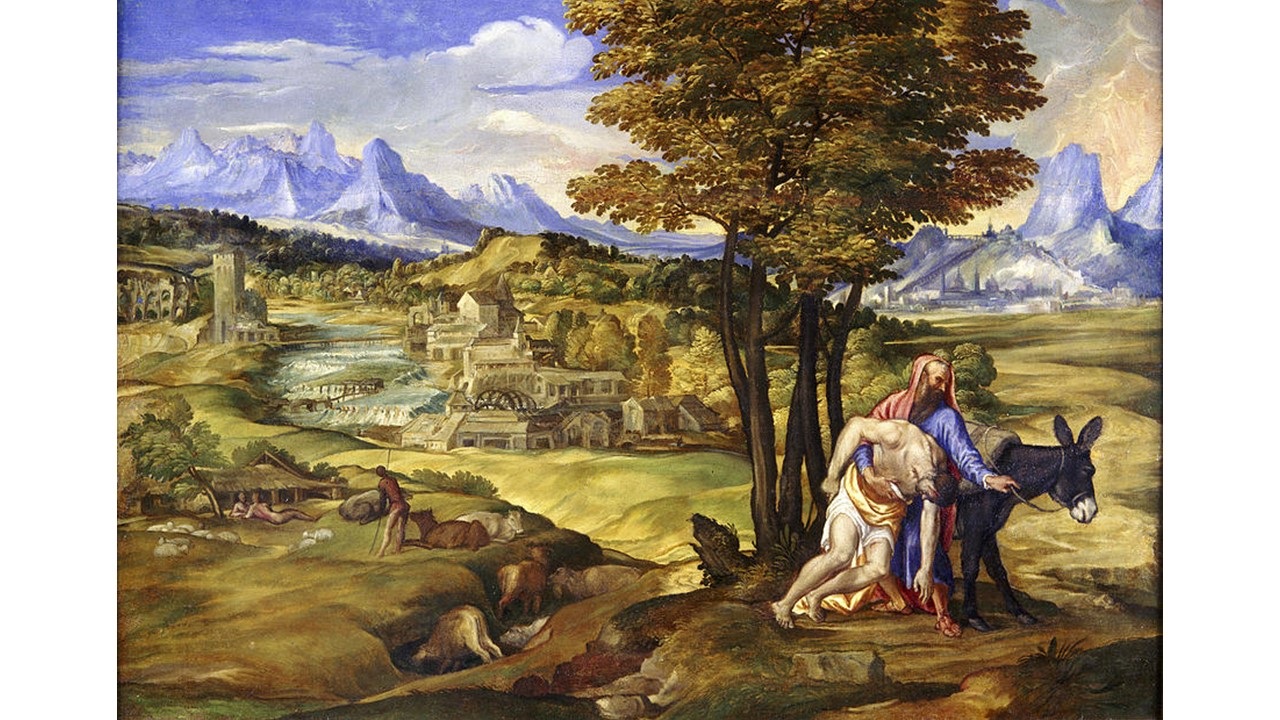
The Number 207: The Road
to Nowhere

Oh once along the Road to Nowhere
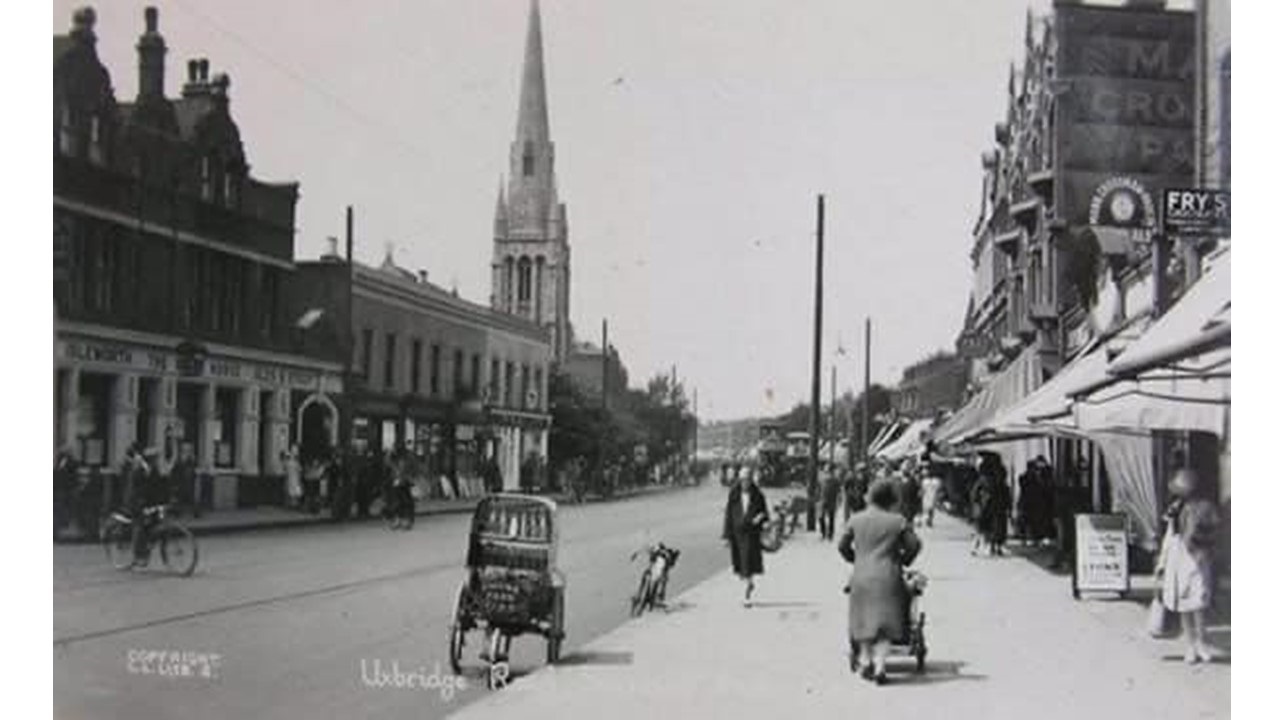
That used to be the Uxbridge Road
You’d board and pay the tuppenny bus fare
And go where milk and honey flowed.

For this was then a demi-Eden
Where gentlefolk would take their ease.
With Adam in an English season
You’d walk content beneath the trees.

And everyone was someone’s neighbour:
You knew the other’s name to chat.
When Mrs. Jones went into labour
You’d go around and feed her cat.

You shared a common English language;
And history, too, to make you proud.
You’d take to work for lunch a sandwich
And never play your records loud.

You’d listen to the radio;
You’d tune the dial to hear the news.
You’d dream of buying a bungalow,
Or save to get some natty shoes.

And when in love you’d whisper shyly,
And as a child play hide and seek.
When grown-ups talked you’d listen quietly:
You’d wait your turn for when to speak.

Your world possessed a settled order
Where all belonged and had a place,
And being deprived or someone’s boarder
Was never thought to bring disgrace.

You had a shared identity
Which bound you in a common cause.
Secure from foreign tyranny,
Your rulers ruled through ancient laws.

And you were England, born and bred,
Aware of all the debt you owed.
For many souls you knew had bled
To live in you on Uxbridge Road.

But that was then and this is now,
And all such halcyon days are passed.
There is though this, if you’ll allow:
For traffic jams it’s unsurpassed.

.

.

Paul Martin Freeman is an art dealer in London. The poem is from The Bus Poems: A Tale of the Devil, currently in preparation. His recent book, A Chocolate Box Menagerie, is published by New English Review Press on whose website the current poem first appeared.
ShareTweetPin
The Society of Classical Poets does not endorse any views expressed in individual poems or commentary.
Read Our Comments Policy Here
Next Post
poem/steinle/culture

'The Test' and Other Poetry by Alan Steinle

poem/salemi/beauty

'The House on 58th Street': A Poem for Father's Day, by Joseph S. Salemi

poem/anderson/satire

'Distant Thoughts from Nearby' and Other Poetry by C.B. Anderson

Comments 18

  1. Paul Freeman says:
    3 years ago

    Oh, yes. Many’s the time I caught the 207 on the Uxbridge Road. You’d wait hours and they would usually come in threes.

    Reply
    • James A. Tweedie says:
      3 years ago

      Lol Same thing with the #32 on Edinburgh’s Princess Street back in 1978. Always late, always in threes, and because everyone boarded the first and second bus the third one always made the rounds empty.

      Reply
  2. James A. Tweedie says:
    3 years ago

    Paul,

    A non-maudlin mini-masterpiece of pithy, witty, melancholy retrospective reminiscence.

    “Gee our old LaSalle ran great. Those were the days.”

    Reply
    • Paul Martin Freeman says:
      3 years ago

      Thank you. That’s very kind.

      Reply
  3. Roy Eugene Peterson says:
    3 years ago

    That seems like the road to somewhere idyllic, but as with all such places that linger in our memory, those days are gone with urbanization and unpleasant social changes. Your poem was an enjoyable read that gave me insight into a more tranquil time and place that I would like to have personally known. Wonderful cadence and rhyme.

    Reply
    • Paul Martin Freeman says:
      3 years ago

      As always, thank you, Roy, for your encouraging comment.

      Reply
  4. Cheryl Corey says:
    3 years ago

    This poem brought back memories of neighborhoods I grew up in; places where you did know your neighbors and spoke to each other. In many ways we’ve lost that sense of community. Today you can live on the same street, yet never engage with the people who live just two houses down.

    Reply
    • Paul Freeman says:
      3 years ago

      Back in the day, I get the feeling we needed each other more. For instance, our neighbour two doors down, a plumber, fixed our blocked drains one summer, and my dad and he cut down the elm tree in his garden that was suffering from Dutch elm disease (my dad felled infected trees for a living during a period of unemployment).

      I wrote a short story a little while back about two neighbours living in poverty in council flats who end up helping each other out through English lessons for a child in exchange for a meal. On the one hand it was depressing because of the poverty, but on the other hand there was the inkling of a budding romance between the lonely neighbours. It was interesting to see the readers’ take on that story.

      So maybe, with today’s economic climate, the feeling of community will come back again through mutual need.

      Reply
      • Paul Martin Freeman says:
        3 years ago

        Humanity, like a little flower growing out of a wall, often manages to break through in the most unlikely of circumstances.

        Reply
    • Paul Martin Freeman says:
      3 years ago

      Indeed, Cheryl. I suspect it’s got worse for those of us who live in big cities. But I don’t feel for many it was ever as rosy or as simple a picture as I’ve drawn. I think I was trying to create a myth, albeit one rooted in our common experience.

      Thank you for commenting.

      Reply
  5. Warren Bonham says:
    3 years ago

    Very well done. We seem to worship change as a society but most change doesn’t seem to be for the better.

    Reply
    • Paul Martin Freeman says:
      3 years ago

      Thank you, Warren. I think you’re right, we do worship change, which is not always for the better. Certainly, as a confirmed stick-in-the mud, any change which requires me changing is NEVER for the better!

      Reply
  6. Joseph S. Salemi says:
    3 years ago

    It’s remarkable how a remembered place from the past can persist, and serve to inspire composition. Our strongest memories are from childhood, and the neighborhoods and locales where we dwelt. This is why the older “memory systems” (patterns for mnemonic devices) depended heavily on a person’s recollection of the rooms of a house, a series of streets or lanes, or the sections of a village. These “place memories” were deeply imprinted in the visual recall of one’s childhood, and could serve as a structure on which to attach things to be memorized.

    In this poem, the “place” is used to summon up remembrance of a different mode of living.

    Reply
    • Paul Martin Freeman says:
      3 years ago

      Thank you for your comment. The main story in the book describes the visit to London of the Devil, bringing Milton’s story up to date. In this and one or two other poems, that mythical England which later lost its identity is intended as a metaphor for Eden.

      At least, I think that’s what I was doing!

      Reply
  7. Margaret Coats says:
    3 years ago

    Paul Martin, I think you’re doing more than you know. An anthropologist, from whom I have learned a great deal, says that human beings have a nostalgia for paradise as part of the human condition. However different paradise may be from reality, it is the only place to live a fully human life. Therefore every culture has its rituals of remembering and reconstructing or rediscovering Eden, even if only in a small way (tea in a beautiful back garden, observing a holiday, visiting a shop with a friendly proprietor, cheerfully helping one’s neighbors–as in your story). Your delightful poem offers paradise to the minds of readers. It renews my ideals in thinking of England, even though I have visited numerous times and seen the “now” up close. I can live in that England like your little flowers growing out of the wall. The real tragedy of modern inhuman life is that so many prefer bitterness, resentment, badmouthing paradise, destroying whatever bits of it they find, and screaming at others that it is unattainable. Even these individuals still look for it, usually in some form of unhappy and unhealthy tyranny. You paint a picture of it, easy enough to find by reading a book, or maybe riding a bus. Good for you!

    Reply
    • Paul Martin Freeman says:
      3 years ago

      Thank you for your very interesting comment, Margaret. We must indeed keep hope alive as without it we are lost.

      I hope you will come to England again.

      Reply
  8. David Whippman says:
    3 years ago

    Well written. Of course there is always a tendency to idealise the past: but as a fellow Brit, I too miss a lot about the UK of decades ago. And I’m heartily fed up with being told that there is nothing in Britain’s history except slavery, racism, etc.

    Reply
  9. Paul Martin Freeman says:
    3 years ago

    Thank you for your comment, David. As I’ve indicated above, in the book of which it is part the poem is intended to mythologize England’s past into a metaphor for lost Eden. I probably had in my head somewhere John of Gaunt’s speech.

    Reply

Leave a Reply Cancel reply

Your email address will not be published. Required fields are marked *

  1. Joseph S. Salemi on Two Sonnets by Nino Martoglio, Translated by Joseph S. SalemiJanuary 9, 2026

    Thanks, Brian -- I'm very pleased that you like the work. The first non-English poetry I ever came in contact…

  2. Paul A. Freeman on ‘The Measure of a Woman (or a Man)’ and Other Poetry by Paul A. FreemanJanuary 9, 2026

    Thanks, Warren. I'm glad 'The Measure' is getting a positive reaction. As I mentioned above, it was one of those…

  3. Paul A. Freeman on ‘The Measure of a Woman (or a Man)’ and Other Poetry by Paul A. FreemanJanuary 9, 2026

    By using 'pitt-er', the syllables split and on different lines, I was hoping to get the effect of the type…

  4. Paul A. Freeman on ‘The Measure of a Woman (or a Man)’ and Other Poetry by Paul A. FreemanJanuary 9, 2026

    Thanks, Russell. 'The Measure' was written to a prompt and I was pleasantly pleased with the result. If only that…

  5. Paul A. Freeman on ‘The Measure of a Woman (or a Man)’ and Other Poetry by Paul A. FreemanJanuary 9, 2026

    Thanks for commenting, Bhikkhu. Yes, we do often find ourselves wrapped up in our own worlds, our own problems and…

Receive Poems in Your Email

Enter your email address to subscribe to this blog and receive notifications of new posts by email.

Join 1,620 other subscribers
Facebook Twitter Youtube

Recent Poems

  • ‘The Measure of a Woman (or a Man)’ and Other Poetry by Paul A. Freeman
  • ‘Encounter with My Dead Father’: A Poem by Scharlie Meeuws
  • Two Sonnets by Nino Martoglio, Translated by Joseph S. Salemi
  • ‘Wall of Ice’ and Other Poetry by James Bontrager
  • ‘King of Poets’: A Poem by Margaret Coats
  • ‘Watercolors’: A Poem by Susan Steele Rives
  • ‘Art and Nature’ and Other Poetry by C.B. Anderson
  • ‘Star of Wonder’: A Poem by James A. Tweedie
  • ‘Yeonmi Park’s Advice to Americans’: A Poem by Warren Bonham
  • ‘Caravaggio’: A Poem by Lisa J. Roberts
  • ‘Refrigerator Bird’ and Other Poetry by Armaan Fatteh-Patil
  • ‘The Oak Trees’: A Poem by Bhikkhu Nyanasobhano
  • ‘A Cardinal on a Snowy Day’: A Poem by Rob Fried
  • Poets Susan Jarvis Bryant and James Sale Respond to Mamdani’s Swearing In as NYC Mayor
  • ‘Single Room Cigarette, 17th Floor Yale Club of Manhattan’: A Poem by Alec Ream
  • ‘Legacy of Light’: A Poem by Martin Briggs
  • ‘The Swarm’ and Other Poetry by Cheryl Corey
  • ‘Lament of a Poet Falsely Accused of Using AI’ and Other Poetry by Paul Buchheit
  • ‘A Gift from the South’: A Poem by Julian Woodruff
  • ‘New Year’s Peeve’: A Poem by Susan Jarvis Bryant
  • ‘Homage to Brigitte Bardot’: A Poem by Joseph S. Salemi
  • ‘Dearth of Emotional Intelligence’ and Other Poems by Russel Winick
  • ‘Fireflies’: A Poem by Mark Stellinga
  • ‘Real Poetry’: A Poem by Eric v.d. Luft
  • ‘Flaws’: A Poem by Joshua Thomas
  • Two Final Poems by Sally Cook
  • ‘Twelve Labors More, Part I’: A Poem by Evan Mantyk
  • ‘A Perfect Match is Found’: A Poem by Roy E. Peterson
  • ‘The Seven Crossings’: A Poem by Ulysses Arlen
  • ‘An Open Book’ and Other Poetry by David McMahon

Categories

  • Acrostic
  • Alexandroid
  • Alliterative
  • Art
  • Best Poems
  • Blank Verse
  • Chant Royal
  • Classical Poets Live
  • Clerihew
  • Covid-19
  • Deconstructing Communism
  • Educational
  • Epic
  • Epigrams and Proverbs
  • Essays
    • Interviews with Poets
    • Poetry Reviews
  • Featured
  • From the Society
  • Great Poets
    • Dante Alighieri
    • Edgar Allan Poe
    • Emily Dickinson
    • Geoffrey Chaucer
    • Henry Wadsworth Longfellow
    • Homer
    • John Keats
    • John Milton
    • Robert Frost
    • William Blake
    • William Shakespeare
    • William Wordsworth
  • Human Rights in China
  • Limerick
  • Love Poems
  • Music
  • Pantoum
  • Performing Arts
  • Poetry
    • Beauty
    • Children's Poems
    • Culture
    • Ekphrastic
    • Found Poems
    • High School Poets
    • Humor
    • Riddles
  • Poetry Challenge
  • Poetry Contests
  • Poetry Forms
    • Haiku
  • Poetry Readings
  • Rhupunt
  • Rondeau
  • Rondeau Redoublé
  • Rondel
  • Rubaiyat
  • Sapphic Verse
  • Satire
  • Science
  • Sestina
  • Shape Poems
  • Short Stories
  • Song Lyrics
  • Sonnet
  • Symposium
  • Terrorism
  • Terza Rima
  • The Environment
  • Translation
  • Triolet
  • Video
  • Villanelle

Quick Links

  • About Us
  • Submit Poetry
  • Become a Member
  • Members List
  • Support the Society
  • Advertisement Placement
  • Comments Policy
  • Terms of Use

Welcome Back!

Login to your account below

Forgotten Password?

Retrieve your password

Please enter your username or email address to reset your password.

Log In
No Result
View All Result
  • Poems
    • Beauty
    • Culture
    • Satire
    • Humor
    • Children’s
    • Art
    • Ekphrastic
    • Epic
    • Epigrams and Proverbs
    • Human Rights in China
    • Music
    • Performing Arts
    • Riddles
    • Science
    • Song Lyrics
    • The Environment
    • The Raven
    • Found Poems
    • High School Poets
    • Terrorism
    • Covid-19
  • Poetry Forms
    • Sonnet
    • Haiku
    • Limerick
    • Villanelle
    • Rondeau
    • Pantoum
    • Sestina
    • Triolet
    • Acrostic
    • Alexandroid
    • Alliterative
    • Blank Verse
    • Chant Royal
    • Clerihew
    • Rhupunt
    • Rondeau Redoublé
    • Rondel
    • Rubaiyat
    • Sapphic Verse
    • Shape Poems
    • Terza Rima
  • Great Poets
    • Geoffrey Chaucer
    • Emily Dickinson
    • Homer
    • Henry Wadsworth Longfellow
    • Dante Alighieri
    • John Keats
    • John Milton
    • Edgar Allan Poe
    • William Shakespeare
    • William Wordsworth
    • William Blake
    • Robert Frost
  • Love Poems
  • Contests
  • SCP Academy
    • Educational
    • Teaching Classical Poetry—A Guide for Educators
    • Poetry Forms
    • The SCP Journal
    • Books

© 2025 SCP. WebDesign by CODEC Prime.

This website uses cookies. By continuing to use this website you are giving consent to cookies being used. Visit our Privacy and Cookie Policy.