• Submit Poetry
  • Support SCP
  • About Us
  • Members
  • Join
Thursday, January 8, 2026
Society of Classical Poets
  • Poems
    • Beauty
    • Culture
    • Satire
    • Humor
    • Children’s
    • Art
    • Ekphrastic
    • Epic
    • Epigrams and Proverbs
    • Human Rights in China
    • Music
    • Performing Arts
    • Riddles
    • Science
    • Song Lyrics
    • The Environment
    • The Raven
    • Found Poems
    • High School Poets
    • Terrorism
    • Covid-19
  • Poetry Forms
    • Sonnet
    • Haiku
    • Limerick
    • Villanelle
    • Rondeau
    • Pantoum
    • Sestina
    • Triolet
    • Acrostic
    • Alexandroid
    • Alliterative
    • Blank Verse
    • Chant Royal
    • Clerihew
    • Rhupunt
    • Rondeau Redoublé
    • Rondel
    • Rubaiyat
    • Sapphic Verse
    • Shape Poems
    • Terza Rima
  • Great Poets
    • Geoffrey Chaucer
    • Emily Dickinson
    • Homer
    • Henry Wadsworth Longfellow
    • Dante Alighieri
    • John Keats
    • John Milton
    • Edgar Allan Poe
    • William Shakespeare
    • William Wordsworth
    • William Blake
    • Robert Frost
  • Love Poems
  • Contests
  • SCP Academy
    • Educational
    • Teaching Classical Poetry—A Guide for Educators
    • Poetry Forms
    • The SCP Journal
    • Books
No Result
View All Result
Society of Classical Poets
  • Poems
    • Beauty
    • Culture
    • Satire
    • Humor
    • Children’s
    • Art
    • Ekphrastic
    • Epic
    • Epigrams and Proverbs
    • Human Rights in China
    • Music
    • Performing Arts
    • Riddles
    • Science
    • Song Lyrics
    • The Environment
    • The Raven
    • Found Poems
    • High School Poets
    • Terrorism
    • Covid-19
  • Poetry Forms
    • Sonnet
    • Haiku
    • Limerick
    • Villanelle
    • Rondeau
    • Pantoum
    • Sestina
    • Triolet
    • Acrostic
    • Alexandroid
    • Alliterative
    • Blank Verse
    • Chant Royal
    • Clerihew
    • Rhupunt
    • Rondeau Redoublé
    • Rondel
    • Rubaiyat
    • Sapphic Verse
    • Shape Poems
    • Terza Rima
  • Great Poets
    • Geoffrey Chaucer
    • Emily Dickinson
    • Homer
    • Henry Wadsworth Longfellow
    • Dante Alighieri
    • John Keats
    • John Milton
    • Edgar Allan Poe
    • William Shakespeare
    • William Wordsworth
    • William Blake
    • Robert Frost
  • Love Poems
  • Contests
  • SCP Academy
    • Educational
    • Teaching Classical Poetry—A Guide for Educators
    • Poetry Forms
    • The SCP Journal
    • Books
No Result
View All Result
Society of Classical Poets
No Result
View All Result
Home Poetry Culture

‘Unjust Trade’: A Double Sonnet by James A. Tweedie

October 1, 2025
in Culture, Human Rights in China, Poetry, Sonnet
A A
9
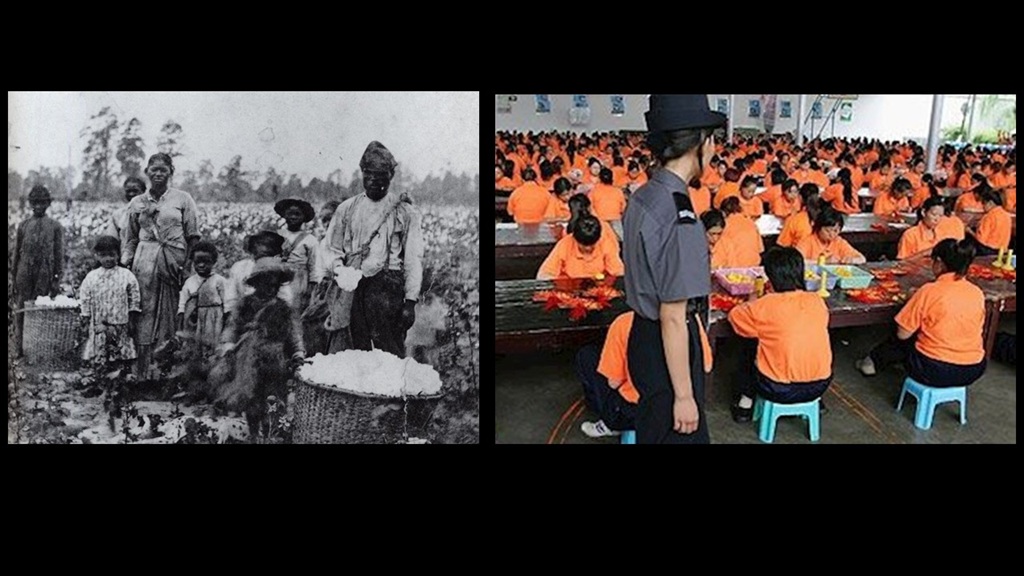
slave labor in the American South and in China today (public domain)

slave labor in the American South and in China today (public domain)

Unjust Trade


I.

An endless wet: Earth’s gathered sea-salt tears
Wept-swept before a rising, darkening gale,
As dim horizon fades and disappears
Behind a slave ship’s squared tri-masted sail.

Her hold full-filled with human suffering,
With chain-torn flesh sustained by lice-laced gruel,
To serve the needs of cotton, cane and king;
A blood-sweat trade in souls both cursed and cruel.

As Trade winds, Gulf Stream, doldrums, hurricane
Compete both for-against the seaman’s hand
To tack attack the bounding wave-tossed main
On sea chart dotted lines from land to land.

While slavers and their clients profit from
The sacrifice of human life for rum.


II.

And sadly, what once was, is still today,
As women, men and children without name,
Like cattle–bought and sold the same old way–
Abused and used by traders dead to shame.

Such wretched refuse, culled from distant shores,
Vast huddled masses, yearning to breathe free;
In hopeless hope, ensnared by drug-turfed wars,
Stripped bare of both their lives and liberty.

The darkness falls, horizons disappear,
While endless sea-salt tears are wept and shed,
And cries and prayers that God alone can hear
Are uttered as if uttered by the dead.

And as before and more, the slavers sell
Their souls for sex and money, power . . . and hell.


James A. Tweedie is a retired pastor living in Long Beach, Washington. He has written and published six novels, one collection of short stories, and four collections of poetry including Sidekicks, Mostly Sonnets, and Laughing Matters, all with Dunecrest Press. His poems have been published nationally and internationally in both print and online media. He was honored with being chosen as the winner of the 2021 SCP International Poetry Competition.

ShareTweetPin
The Society of Classical Poets does not endorse any views expressed in individual poems or commentary.
Read Our Comments Policy Here
Next Post
‘The Attempt to Curse J.K. Rowling’ by Brian Yapko

'J.K. Rowling’s Response to the Assassination of Charlie Kirk': A Poem by Warren Bonham

‘Ambience’ and Other Poetry by Anna J. Arredondo

'Autumn Air': A Poem by Jeffrey Essmann

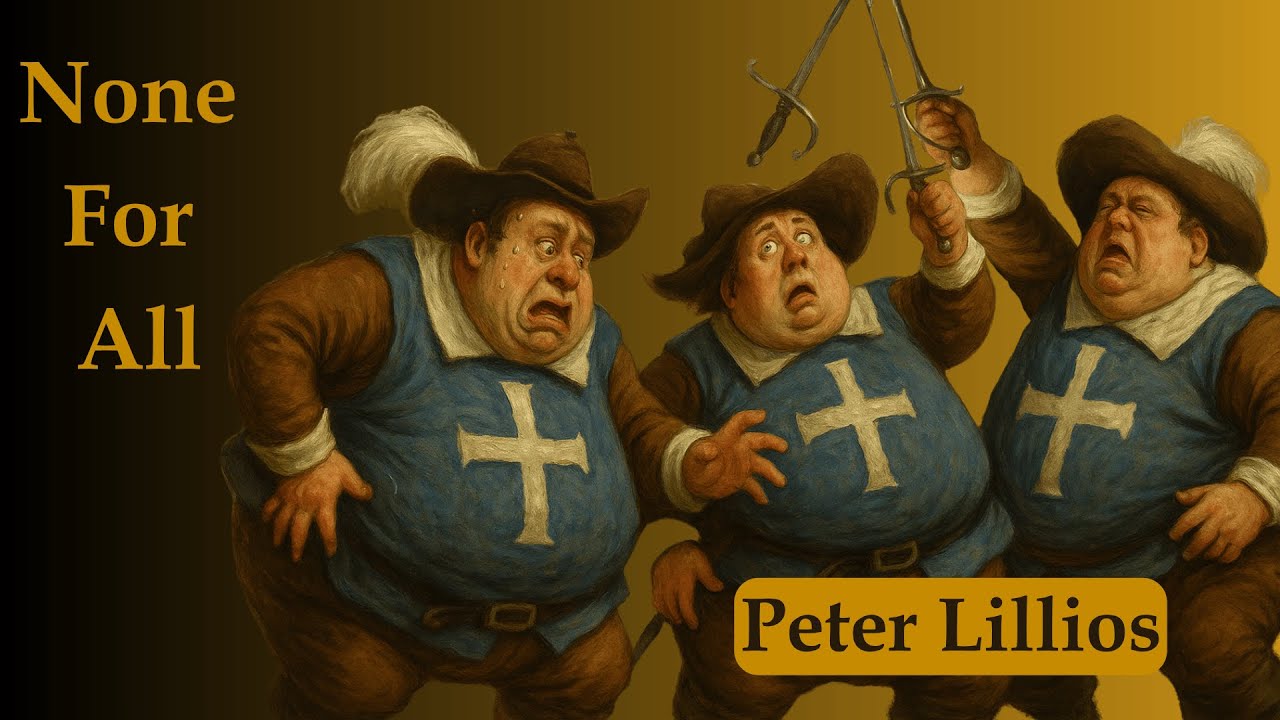
A Video Reading of the Poem ‘None for All’ by Peter Lillios

A Video Reading of the Poem 'None for All' by Peter Lillios

Comments 9

  1. Paul Freeman says:
    3 months ago

    Two timely pieces, James. I’ve just returned from the Gulf (not the Gulf of Mexico, the Arabian Gulf), where often the line between slavery, bonded Labour and legitimate employment is razor thin.

    Thanks for the reads.

    Reply
  2. Roy Eugene Peterson says:
    3 months ago

    Such a sad morose poem reflecting reality then and now. I was fascinated by your inner use of bonded words with a hyphen. Creative and unusual.

    Reply
    • James A. Tweedie says:
      3 months ago

      Roy, Hyphenating/juxtaposing words is something I do often to create Pseudo-compound words that (hopefully) create an effect that intensifies what the words may represent separately. In a way, it is a sort of shorthand so as to say more with less, especially where poetic form strictly limits the number of words and syllables available. Some have criticized me for overdoing this and I suppose that is a matter of taste or adherence to grammar that I prefer to stretch when it suits my needs. I’m glad you noticed and commented on it.

      Reply
  3. Cynthia L Erlandson says:
    3 months ago

    Very powerful, especially the last four lines of II.

    Reply
  4. Theresa Werba says:
    3 months ago

    Jim, these are such heartfelt and finely-crafted sonnets. I really like the idea of a “double sonnet”– this opens up myriad possibilities for greater exploration of a topic or sentiment, either by complement or by contrast! Were this an Old English poem, the word kenning would be applied to your compound words such as “wept-swept”, “cattle-bought”, and “chain-torn”… but modern uses are equally as valid and powerful. You are definitely in keeping with the history of the English language in your excellent use of kennings!! Very well done!!

    Reply
  5. James A. Tweedie says:
    3 months ago

    Theresa,

    I had not heard of “kennings” before but after doing a little research on the subject have decided that you are spot on in making a connection between Jennings and my use of hyphenated words. Old kennings such as “whale-road” for “sea” or “battle-sweat” for “blood” could easily have found their way into one of my poems. I wonder if the word, “kennings” is related to the Scots word “ken,” which means “to know?” That would make sense to me, but I’ll leave the thought as merely speculation. Thanks for the intriguing comment.

    Reply
    • Theresa Werba says:
      3 months ago

      Jim, you’re so right about the work “kenning”!! I asked Chat GPT about it, and it gave me the following information:

      From Old Norse “kenna” meaning “to know,” “to perceive,” or “to name.”
      Related to Old English “cennan” (to make known, declare; also to beget), and “cunnian” (to know by experience or try).
      Related to the word “ken” (still used in Scots and Northern English dialects), meaning “to know” or “understand.”
      All of these trace back to Proto-Germanic “kannjaną” (“to make known”) and “kunnaną” (“to know”).

      So your instincts about the word “kenning” were spot on! I love how Indo-European languages have these interesting connections in their related words!!!

      Reply
  6. C.B. Anderson says:
    3 months ago

    Now I know how the ocean was created. May I never set foot in it again. Sometimes it seems that we haven’t come as far as we thought we had.

    Reply
  7. Adam Sedia says:
    3 months ago

    Very good craftsmanship in both sonnets. I especially like the vivid depiction of the turbid seas in the first sonnet. You present an effective juxtaposition of the trans-Atlantic slave trade with present-day traffickers, and you do it through showing, not arguing — true poetry.

    Reply

Leave a Reply Cancel reply

Your email address will not be published. Required fields are marked *

  1. C.B. Anderson on ‘Art and Nature’ and Other Poetry by C.B. AndersonJanuary 8, 2026

    To be perfectly honest, Michael, I never know how what I write will strike a reader. Sometimes things just work…

  2. C.B. Anderson on ‘Art and Nature’ and Other Poetry by C.B. AndersonJanuary 8, 2026

    My wife, Julian, has often asks me why I write poetry when I could be writing songs and making some…

  3. Margaret Coats on ‘Refrigerator Bird’ and Other Poetry by Armaan Fatteh-PatilJanuary 8, 2026

    You write some exceptionally fine lines, Armaan. For one example from each poem: Wrong means reaching. Wrong means getting at…

  4. Margaret Coats on ‘King of Poets’: A Poem by Margaret CoatsJanuary 8, 2026

    Thanks, Margaret B! His inspired words have echoed through the ages, in many languages, and I've memorized Psalm 1 in…

  5. Margaret Coats on ‘King of Poets’: A Poem by Margaret CoatsJanuary 8, 2026

    Thank you for describing my lines with such appreciation, Bhikku Nyanasobhano. The qualities you mention are what I could hope…

Receive Poems in Your Email

Enter your email address to subscribe to this blog and receive notifications of new posts by email.

Join 1,621 other subscribers
Facebook Twitter Youtube

Recent Poems

  • Two Sonnets by Nino Martoglio, Translated by Joseph S. Salemi
  • ‘Wall of Ice’ and Other Poetry by James Bontrager
  • ‘King of Poets’: A Poem by Margaret Coats
  • ‘Watercolors’: A Poem by Susan Steele Rives
  • ‘Art and Nature’ and Other Poetry by C.B. Anderson
  • ‘Star of Wonder’: A Poem by James A. Tweedie
  • ‘Yeonmi Park’s Advice to Americans’: A Poem by Warren Bonham
  • ‘Caravaggio’: A Poem by Lisa J. Roberts
  • ‘Refrigerator Bird’ and Other Poetry by Armaan Fatteh-Patil
  • ‘The Oak Trees’: A Poem by Bhikkhu Nyanasobhano
  • ‘A Cardinal on a Snowy Day’: A Poem by Rob Fried
  • Poets Susan Jarvis Bryant and James Sale Respond to Mamdani’s Swearing In as NYC Mayor
  • ‘Single Room Cigarette, 17th Floor Yale Club of Manhattan’: A Poem by Alec Ream
  • ‘Legacy of Light’: A Poem by Martin Briggs
  • ‘The Swarm’ and Other Poetry by Cheryl Corey
  • ‘Lament of a Poet Falsely Accused of Using AI’ and Other Poetry by Paul Buchheit
  • ‘A Gift from the South’: A Poem by Julian Woodruff
  • ‘New Year’s Peeve’: A Poem by Susan Jarvis Bryant
  • ‘Homage to Brigitte Bardot’: A Poem by Joseph S. Salemi
  • ‘Dearth of Emotional Intelligence’ and Other Poems by Russel Winick
  • ‘Fireflies’: A Poem by Mark Stellinga
  • ‘Real Poetry’: A Poem by Eric v.d. Luft
  • ‘Flaws’: A Poem by Joshua Thomas
  • Two Final Poems by Sally Cook
  • ‘Twelve Labors More, Part I’: A Poem by Evan Mantyk
  • ‘A Perfect Match is Found’: A Poem by Roy E. Peterson
  • ‘The Seven Crossings’: A Poem by Ulysses Arlen
  • ‘An Open Book’ and Other Poetry by David McMahon
  • A Video Poetry Reading by Paul Erlandson
  • ‘Otto and Octavius at Christmas’: A Children’s Poem by Mary Gardner

Categories

  • Acrostic
  • Alexandroid
  • Alliterative
  • Art
  • Best Poems
  • Blank Verse
  • Chant Royal
  • Classical Poets Live
  • Clerihew
  • Covid-19
  • Deconstructing Communism
  • Educational
  • Epic
  • Epigrams and Proverbs
  • Essays
    • Interviews with Poets
    • Poetry Reviews
  • Featured
  • From the Society
  • Great Poets
    • Dante Alighieri
    • Edgar Allan Poe
    • Emily Dickinson
    • Geoffrey Chaucer
    • Henry Wadsworth Longfellow
    • Homer
    • John Keats
    • John Milton
    • Robert Frost
    • William Blake
    • William Shakespeare
    • William Wordsworth
  • Human Rights in China
  • Limerick
  • Love Poems
  • Music
  • Pantoum
  • Performing Arts
  • Poetry
    • Beauty
    • Children's Poems
    • Culture
    • Ekphrastic
    • Found Poems
    • High School Poets
    • Humor
    • Riddles
  • Poetry Challenge
  • Poetry Contests
  • Poetry Forms
    • Haiku
  • Poetry Readings
  • Rhupunt
  • Rondeau
  • Rondeau Redoublé
  • Rondel
  • Rubaiyat
  • Sapphic Verse
  • Satire
  • Science
  • Sestina
  • Shape Poems
  • Short Stories
  • Song Lyrics
  • Sonnet
  • Symposium
  • Terrorism
  • Terza Rima
  • The Environment
  • Translation
  • Triolet
  • Video
  • Villanelle

Quick Links

  • About Us
  • Submit Poetry
  • Become a Member
  • Members List
  • Support the Society
  • Advertisement Placement
  • Comments Policy
  • Terms of Use

Welcome Back!

Login to your account below

Forgotten Password?

Retrieve your password

Please enter your username or email address to reset your password.

Log In
No Result
View All Result
  • Poems
    • Beauty
    • Culture
    • Satire
    • Humor
    • Children’s
    • Art
    • Ekphrastic
    • Epic
    • Epigrams and Proverbs
    • Human Rights in China
    • Music
    • Performing Arts
    • Riddles
    • Science
    • Song Lyrics
    • The Environment
    • The Raven
    • Found Poems
    • High School Poets
    • Terrorism
    • Covid-19
  • Poetry Forms
    • Sonnet
    • Haiku
    • Limerick
    • Villanelle
    • Rondeau
    • Pantoum
    • Sestina
    • Triolet
    • Acrostic
    • Alexandroid
    • Alliterative
    • Blank Verse
    • Chant Royal
    • Clerihew
    • Rhupunt
    • Rondeau Redoublé
    • Rondel
    • Rubaiyat
    • Sapphic Verse
    • Shape Poems
    • Terza Rima
  • Great Poets
    • Geoffrey Chaucer
    • Emily Dickinson
    • Homer
    • Henry Wadsworth Longfellow
    • Dante Alighieri
    • John Keats
    • John Milton
    • Edgar Allan Poe
    • William Shakespeare
    • William Wordsworth
    • William Blake
    • Robert Frost
  • Love Poems
  • Contests
  • SCP Academy
    • Educational
    • Teaching Classical Poetry—A Guide for Educators
    • Poetry Forms
    • The SCP Journal
    • Books

© 2025 SCP. WebDesign by CODEC Prime.

This website uses cookies. By continuing to use this website you are giving consent to cookies being used. Visit our Privacy and Cookie Policy.