• Submit Poetry
  • Support SCP
  • About Us
  • Members
  • Join
Friday, January 9, 2026
Society of Classical Poets
  • Poems
    • Beauty
    • Culture
    • Satire
    • Humor
    • Children’s
    • Art
    • Ekphrastic
    • Epic
    • Epigrams and Proverbs
    • Human Rights in China
    • Music
    • Performing Arts
    • Riddles
    • Science
    • Song Lyrics
    • The Environment
    • The Raven
    • Found Poems
    • High School Poets
    • Terrorism
    • Covid-19
  • Poetry Forms
    • Sonnet
    • Haiku
    • Limerick
    • Villanelle
    • Rondeau
    • Pantoum
    • Sestina
    • Triolet
    • Acrostic
    • Alexandroid
    • Alliterative
    • Blank Verse
    • Chant Royal
    • Clerihew
    • Rhupunt
    • Rondeau Redoublé
    • Rondel
    • Rubaiyat
    • Sapphic Verse
    • Shape Poems
    • Terza Rima
  • Great Poets
    • Geoffrey Chaucer
    • Emily Dickinson
    • Homer
    • Henry Wadsworth Longfellow
    • Dante Alighieri
    • John Keats
    • John Milton
    • Edgar Allan Poe
    • William Shakespeare
    • William Wordsworth
    • William Blake
    • Robert Frost
  • Love Poems
  • Contests
  • SCP Academy
    • Educational
    • Teaching Classical Poetry—A Guide for Educators
    • Poetry Forms
    • The SCP Journal
    • Books
No Result
View All Result
Society of Classical Poets
  • Poems
    • Beauty
    • Culture
    • Satire
    • Humor
    • Children’s
    • Art
    • Ekphrastic
    • Epic
    • Epigrams and Proverbs
    • Human Rights in China
    • Music
    • Performing Arts
    • Riddles
    • Science
    • Song Lyrics
    • The Environment
    • The Raven
    • Found Poems
    • High School Poets
    • Terrorism
    • Covid-19
  • Poetry Forms
    • Sonnet
    • Haiku
    • Limerick
    • Villanelle
    • Rondeau
    • Pantoum
    • Sestina
    • Triolet
    • Acrostic
    • Alexandroid
    • Alliterative
    • Blank Verse
    • Chant Royal
    • Clerihew
    • Rhupunt
    • Rondeau Redoublé
    • Rondel
    • Rubaiyat
    • Sapphic Verse
    • Shape Poems
    • Terza Rima
  • Great Poets
    • Geoffrey Chaucer
    • Emily Dickinson
    • Homer
    • Henry Wadsworth Longfellow
    • Dante Alighieri
    • John Keats
    • John Milton
    • Edgar Allan Poe
    • William Shakespeare
    • William Wordsworth
    • William Blake
    • Robert Frost
  • Love Poems
  • Contests
  • SCP Academy
    • Educational
    • Teaching Classical Poetry—A Guide for Educators
    • Poetry Forms
    • The SCP Journal
    • Books
No Result
View All Result
Society of Classical Poets
No Result
View All Result
Home Poetry Beauty

‘Where Are the Leaves?’: A Late Autumn Rondeau by Jeff Kemper

November 25, 2020
in Beauty, Poetry, Rondeau
A A
22
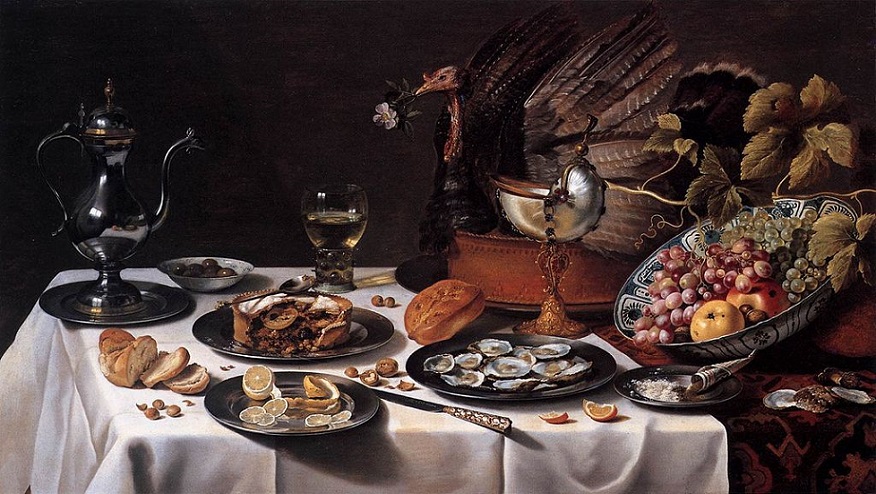
Öèôðîâàÿ ðåïðîäóêöèÿ íàõîäèòñÿ â èíòåðíåò-ìóçåå Gallerix.ru

Öèôðîâàÿ ðåïðîäóêöèÿ íàõîäèòñÿ â èíòåðíåò-ìóçåå Gallerix.ru


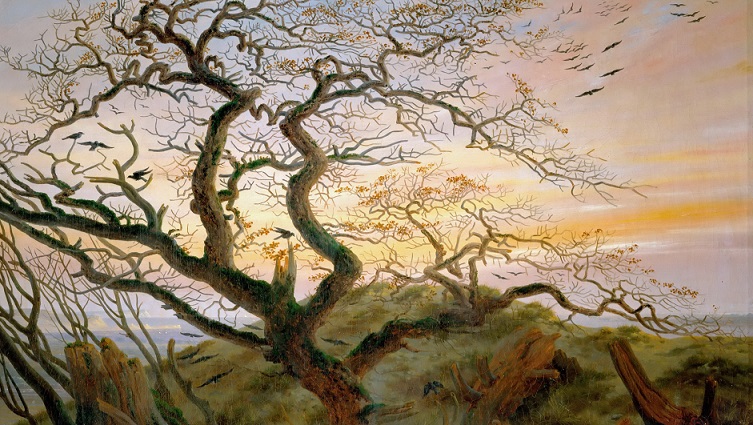
Where are the leaves that branches bore?
They’re falling fast on forest floor,
A cornucopia outspread,
Of orange, yellow, brown, and red:
Reminders of a settled score.

Ah this, my gloomy guarantor
Henceforth of what I must endure:
The dull, the dormant, and the dead.
___Where are the leaves?

The autumn breath that some adore
And gaudy foliage galore
Beget a harvest not for bread
But for decaying forest bed.
I yearn for sylvan green décor.
___Where are the leaves?


Jeff Kemper has been a biology teacher, biblical studies instructor, editor, and painting contractor. He lives with his wife, Sue, in York County, Pennsylvania.

ShareTweetPin
The Society of Classical Poets does not endorse any views expressed in individual poems or commentary.
Read Our Comments Policy Here
Next Post
‘The Cracks of Doom’ by James A. Tweedie

'The Cracks of Doom' by James A. Tweedie

A Covid Thanksgiving Poem and Other Poetry by Susan Jarvis Bryant

A Covid Thanksgiving Poem and Other Poetry by Susan Jarvis Bryant

A Poem for Thanksgiving Day: ‘Gathered Together’ by C.B. Anderson

'Crying Fowl': A Thanksgiving Day Poem by C.B. Anderson

Comments 22

  1. Allen Ireland says:
    5 years ago

    Love it! It’s Robert Frostean but not. Any poem that makes you want to read it over and over again is a great one. Look forward to more!

    Reply
    • Jeff Kemper says:
      5 years ago

      Thank you, Allen.

      Reply
  2. Susan Jarvis Bryant says:
    5 years ago

    Jeff, the rondeau is one of my favorite forms and you have done it every justice. I love the repeating line and your yearning “for sylvan green décor”, though here in Texas I’m longing for a “cornucopia” (great word) of “orange, yellow, brown, and red”. My backyard is going from summer green to winter bare… no gaudily and giddily-beautiful in between. Thank you for fond memories of blazing Autumn days.

    Reply
    • Jeff Kemper says:
      5 years ago

      Thanks, Susan. I have a strong dislike for winter, to put it mildly, and Autumn is its harbinger. If I could have my way, the year would consist of 12 June’s. But I doubt that eternal June would work in Texas!

      Reply
  3. Yael says:
    5 years ago

    That’s so beautiful, I love it!
    It also happens to capture perfectly what late fall feels and looks like to me here in eastern Tennessee.

    Reply
    • Jeff Kemper says:
      5 years ago

      Thank you for your kind words!

      Reply
  4. Cynthia Erlandson says:
    5 years ago

    I love your alliterations, and the -or rhymes, especially guarantor/endure/galore.

    Reply
    • Jeff Kemper says:
      5 years ago

      Thank you, Cynthia.

      Reply
  5. Margaret Coats says:
    5 years ago

    This really speaks to a precise moment of the year! Even in places where the seasons aren’t quite the same as in York County, we understand the plaintive repetition of the rondeau question. Where I live, autumn colors are still coming in and won’t go down to be “a decaying forest bed” for some time yet. By the way, I added the “a” there to suggest a slight metrical variation to your music.

    Reply
    • Jeff Kemper says:
      5 years ago

      Thanks, Margaret. Out of curiosity, an “a” adds, as you said, “metrical variation.” I’m wondering what is its purpose and when to employ such variation.

      Reply
      • Mike Bryant says:
        5 years ago

        Jeff, Adam Sedia wrote a great essay on metrical variation here:
        https://classicalpoets.org/2020/07/13/the-spice-of-life-metric-variation-in-formal-verse-an-essay/

        Reply
      • Jeff Kemper says:
        5 years ago

        Thank you, Mike, for the link. I’ll read it soon as time allows. The only training I have had in writing poetry was William Baer’s book Writing Metrical Poetry. Again, thanks.

        Reply
  6. Theresa Rodriguez says:
    5 years ago

    A beautifully constructed poem, thank you Jeff!

    Reply
  7. Jeff Kemper says:
    5 years ago

    Thank you, Theresa.

    Reply
  8. Jeff Kemper says:
    5 years ago

    Sorry about the errant apostrophe.

    Reply
  9. C.B. Anderson says:
    5 years ago

    You know damn well where the leaves are, Jeff. You’ve probably already raked them up and piled them in some far corner. It took me a while to like this poem, but at last I do. It’s hard to write an autumn poem that isn’t trite, but you have put a new spin on the subject, and for that alone you should be congratulated — as you have been. As far as inserting the article “a” goes (as Dr. Coasts discusses above), the metrical variation consists of substituting an anapest for an iamb. This, in itself, is not a great idea, but you will notice that the added article can be elided so readily that the meter doesn’t really change; instead, what you’ve got is a little twist in the vocal or the mental enunciation. The are a number of things in Sedia’s essay with which I disagree, and if only I would make every idea an ideal, then you already might have read what I have to say on this subject.

    Reply
    • Jeff Kemper says:
      5 years ago

      Well, C.B., I’m glad you read it more than once! Thanks for your input.
      I do not normally rake leaves, for I have a spruce in my back yard and further back an oak and a walnut, but I don’t care about the distant deciduous trees’ dead leaves. Where the leaves fall, there they lie (to spin a line from Ecclesiastes). As for me, when I look ahead or up, I lament their absence.
      As for the anapest, or any metrical variation, I suppose I might employ it in a poem and see how it sounds. I was just wondering if poets employ it for emphasis, or for any other functional effect besides for variation’s sake.

      Reply
      • C.B. Anderson says:
        5 years ago

        As far as I am concerned, Jeff, metrical variations do little to make a poem more interesting or spice things up. The best reason for such variations is to expand the range of possible expression. Variation for variation’s sake is folly. Let’s say we begin a poem with:

        In the dark days ahead we’ll make new plans.

        Here we have a pyrrhic and a spondee substituting for the first two iambs. The idea is clear, but to express the idea using two iambs at the beginning of the line is not easy and might require an adjustable wrench to make that happen.

        Another example:

        Often at night I look into the sky.

        This is a choriambic substitution for the first two iambs, or, to make it simpler, a trochee substituted for the first iamb. Here, too, you should see that without this possibility expressing the idea might be a problem, especially if you are committed to keeping “sky” as an end rhyme.

        Back to your leaves: If you don’t have a lawn you want to preserve, then there is no pressing reason to rake leaves.

        Reply
      • Jeff Kemper says:
        5 years ago

        I gather from what you’re saying is that the goal of metric variation is simply greater ease of expression, i.e., more naturally flowing verse, when the metrical constraints become too stringent for the available lexical tools. Is that correct? Is that all?

        Reply
      • C.B. Anderson says:
        5 years ago

        Jeff, I never said anything like “naturally flowing.” There is no such thing in poetry. Every word ever expressed in poetry has come about by dint of effort applied by authors willing exert a bit of elbow grease. And no, that’s not all. Elaboration of existing modes and experimental endeavors are always in play, but it’s a good idea to cleave to the norm unless you have a damn good theory or praxis by which you imagine you might supplant that norm. Everybody wants to be Dylan Thomas, but, God knows, there was only one Dylan Thomas. Keep to the straight and narrow and use “legal” substitutions as necessary, but don’t go crazy unless you consider yourself the second coming of W.B. Yeats.

        Reply
  10. David Watt says:
    5 years ago

    Jeff, I also appreciated your original treatment of the autumnal theme. I am one of those readers who have read your well written poem more than once.

    Reply
    • Jeff Kemper says:
      5 years ago

      Thanks, David, for taking the time and for your kind words.

      Reply

Leave a Reply Cancel reply

Your email address will not be published. Required fields are marked *

  1. Susan Steele Rives on ‘Watercolors’: A Poem by Susan Steele RivesJanuary 9, 2026

    Peg, Thanks so much. I'm glad you enjoyed it! Susan

  2. Susan Steele Rives on ‘Watercolors’: A Poem by Susan Steele RivesJanuary 9, 2026

    Joseph, Thank you for your thoughts and perspective on this poem. As you stated, watercolors and canvas are not the…

  3. Susan Steele Rives on ‘Watercolors’: A Poem by Susan Steele RivesJanuary 9, 2026

    Joshua, Thank you! Yes, I think bravery is required, first to overcome our own hesitations or obstacles, and then again…

  4. Susan Steele Rives on ‘Watercolors’: A Poem by Susan Steele RivesJanuary 9, 2026

    Margaret, Thank you for your kind words. I think you're correct! I imagine that most creatives experience something similar -…

  5. Paul A. Freeman on ‘Star of Wonder’: A Poem by James A. TweedieJanuary 9, 2026

    Some profound messages within the well-known nativity. This is a poem to help keep our honest resolutions on track. Let's…

Receive Poems in Your Email

Enter your email address to subscribe to this blog and receive notifications of new posts by email.

Join 1,621 other subscribers
Facebook Twitter Youtube

Recent Poems

  • Two Sonnets by Nino Martoglio, Translated by Joseph S. Salemi
  • ‘Wall of Ice’ and Other Poetry by James Bontrager
  • ‘King of Poets’: A Poem by Margaret Coats
  • ‘Watercolors’: A Poem by Susan Steele Rives
  • ‘Art and Nature’ and Other Poetry by C.B. Anderson
  • ‘Star of Wonder’: A Poem by James A. Tweedie
  • ‘Yeonmi Park’s Advice to Americans’: A Poem by Warren Bonham
  • ‘Caravaggio’: A Poem by Lisa J. Roberts
  • ‘Refrigerator Bird’ and Other Poetry by Armaan Fatteh-Patil
  • ‘The Oak Trees’: A Poem by Bhikkhu Nyanasobhano
  • ‘A Cardinal on a Snowy Day’: A Poem by Rob Fried
  • Poets Susan Jarvis Bryant and James Sale Respond to Mamdani’s Swearing In as NYC Mayor
  • ‘Single Room Cigarette, 17th Floor Yale Club of Manhattan’: A Poem by Alec Ream
  • ‘Legacy of Light’: A Poem by Martin Briggs
  • ‘The Swarm’ and Other Poetry by Cheryl Corey
  • ‘Lament of a Poet Falsely Accused of Using AI’ and Other Poetry by Paul Buchheit
  • ‘A Gift from the South’: A Poem by Julian Woodruff
  • ‘New Year’s Peeve’: A Poem by Susan Jarvis Bryant
  • ‘Homage to Brigitte Bardot’: A Poem by Joseph S. Salemi
  • ‘Dearth of Emotional Intelligence’ and Other Poems by Russel Winick
  • ‘Fireflies’: A Poem by Mark Stellinga
  • ‘Real Poetry’: A Poem by Eric v.d. Luft
  • ‘Flaws’: A Poem by Joshua Thomas
  • Two Final Poems by Sally Cook
  • ‘Twelve Labors More, Part I’: A Poem by Evan Mantyk
  • ‘A Perfect Match is Found’: A Poem by Roy E. Peterson
  • ‘The Seven Crossings’: A Poem by Ulysses Arlen
  • ‘An Open Book’ and Other Poetry by David McMahon
  • A Video Poetry Reading by Paul Erlandson
  • ‘Otto and Octavius at Christmas’: A Children’s Poem by Mary Gardner

Categories

  • Acrostic
  • Alexandroid
  • Alliterative
  • Art
  • Best Poems
  • Blank Verse
  • Chant Royal
  • Classical Poets Live
  • Clerihew
  • Covid-19
  • Deconstructing Communism
  • Educational
  • Epic
  • Epigrams and Proverbs
  • Essays
    • Interviews with Poets
    • Poetry Reviews
  • Featured
  • From the Society
  • Great Poets
    • Dante Alighieri
    • Edgar Allan Poe
    • Emily Dickinson
    • Geoffrey Chaucer
    • Henry Wadsworth Longfellow
    • Homer
    • John Keats
    • John Milton
    • Robert Frost
    • William Blake
    • William Shakespeare
    • William Wordsworth
  • Human Rights in China
  • Limerick
  • Love Poems
  • Music
  • Pantoum
  • Performing Arts
  • Poetry
    • Beauty
    • Children's Poems
    • Culture
    • Ekphrastic
    • Found Poems
    • High School Poets
    • Humor
    • Riddles
  • Poetry Challenge
  • Poetry Contests
  • Poetry Forms
    • Haiku
  • Poetry Readings
  • Rhupunt
  • Rondeau
  • Rondeau Redoublé
  • Rondel
  • Rubaiyat
  • Sapphic Verse
  • Satire
  • Science
  • Sestina
  • Shape Poems
  • Short Stories
  • Song Lyrics
  • Sonnet
  • Symposium
  • Terrorism
  • Terza Rima
  • The Environment
  • Translation
  • Triolet
  • Video
  • Villanelle

Quick Links

  • About Us
  • Submit Poetry
  • Become a Member
  • Members List
  • Support the Society
  • Advertisement Placement
  • Comments Policy
  • Terms of Use

Welcome Back!

Login to your account below

Forgotten Password?

Retrieve your password

Please enter your username or email address to reset your password.

Log In
No Result
View All Result
  • Poems
    • Beauty
    • Culture
    • Satire
    • Humor
    • Children’s
    • Art
    • Ekphrastic
    • Epic
    • Epigrams and Proverbs
    • Human Rights in China
    • Music
    • Performing Arts
    • Riddles
    • Science
    • Song Lyrics
    • The Environment
    • The Raven
    • Found Poems
    • High School Poets
    • Terrorism
    • Covid-19
  • Poetry Forms
    • Sonnet
    • Haiku
    • Limerick
    • Villanelle
    • Rondeau
    • Pantoum
    • Sestina
    • Triolet
    • Acrostic
    • Alexandroid
    • Alliterative
    • Blank Verse
    • Chant Royal
    • Clerihew
    • Rhupunt
    • Rondeau Redoublé
    • Rondel
    • Rubaiyat
    • Sapphic Verse
    • Shape Poems
    • Terza Rima
  • Great Poets
    • Geoffrey Chaucer
    • Emily Dickinson
    • Homer
    • Henry Wadsworth Longfellow
    • Dante Alighieri
    • John Keats
    • John Milton
    • Edgar Allan Poe
    • William Shakespeare
    • William Wordsworth
    • William Blake
    • Robert Frost
  • Love Poems
  • Contests
  • SCP Academy
    • Educational
    • Teaching Classical Poetry—A Guide for Educators
    • Poetry Forms
    • The SCP Journal
    • Books

© 2025 SCP. WebDesign by CODEC Prime.

This website uses cookies. By continuing to use this website you are giving consent to cookies being used. Visit our Privacy and Cookie Policy.