• Submit Poetry
  • Support SCP
  • About Us
  • Members
  • Join
Wednesday, August 5, 2026
Society of Classical Poets
  • Poems
    • Beauty
    • Culture
    • Satire
    • Humor
    • Children’s
    • Art
    • Ekphrastic
    • Epic
    • Epigrams and Proverbs
    • Human Rights in China
    • Music
    • Performing Arts
    • Riddles
    • Science
    • Song Lyrics
    • The Environment
    • The Raven
    • Found Poems
    • High School Poets
    • Terrorism
    • Covid-19
  • Poetry Forms
    • Sonnet
    • Haiku
    • Limerick
    • Villanelle
    • Rondeau
    • Pantoum
    • Sestina
    • Triolet
    • Acrostic
    • Alexandroid
    • Alliterative
    • Blank Verse
    • Chant Royal
    • Clerihew
    • Rhupunt
    • Rondeau Redoublé
    • Rondel
    • Rubaiyat
    • Sapphic Verse
    • Shape Poems
    • Terza Rima
  • Great Poets
    • Geoffrey Chaucer
    • Emily Dickinson
    • Homer
    • Henry Wadsworth Longfellow
    • Dante Alighieri
    • John Keats
    • John Milton
    • Edgar Allan Poe
    • William Shakespeare
    • William Wordsworth
    • William Blake
    • Robert Frost
  • Love Poems
  • Contests
  • SCP Academy
    • Educational
    • Teaching Classical Poetry—A Guide for Educators
    • Poetry Forms
    • The SCP Journal
    • Books
No Result
View All Result
Society of Classical Poets
  • Poems
    • Beauty
    • Culture
    • Satire
    • Humor
    • Children’s
    • Art
    • Ekphrastic
    • Epic
    • Epigrams and Proverbs
    • Human Rights in China
    • Music
    • Performing Arts
    • Riddles
    • Science
    • Song Lyrics
    • The Environment
    • The Raven
    • Found Poems
    • High School Poets
    • Terrorism
    • Covid-19
  • Poetry Forms
    • Sonnet
    • Haiku
    • Limerick
    • Villanelle
    • Rondeau
    • Pantoum
    • Sestina
    • Triolet
    • Acrostic
    • Alexandroid
    • Alliterative
    • Blank Verse
    • Chant Royal
    • Clerihew
    • Rhupunt
    • Rondeau Redoublé
    • Rondel
    • Rubaiyat
    • Sapphic Verse
    • Shape Poems
    • Terza Rima
  • Great Poets
    • Geoffrey Chaucer
    • Emily Dickinson
    • Homer
    • Henry Wadsworth Longfellow
    • Dante Alighieri
    • John Keats
    • John Milton
    • Edgar Allan Poe
    • William Shakespeare
    • William Wordsworth
    • William Blake
    • Robert Frost
  • Love Poems
  • Contests
  • SCP Academy
    • Educational
    • Teaching Classical Poetry—A Guide for Educators
    • Poetry Forms
    • The SCP Journal
    • Books
No Result
View All Result
Society of Classical Poets
No Result
View All Result
Home Poetry

A Genuine Petrarchan Note on Wordsworth’s Ecclesiastical Sonnets, by Tom Riley

December 1, 2025
in Poetry, Culture, Sonnet, William Wordsworth
A A
9
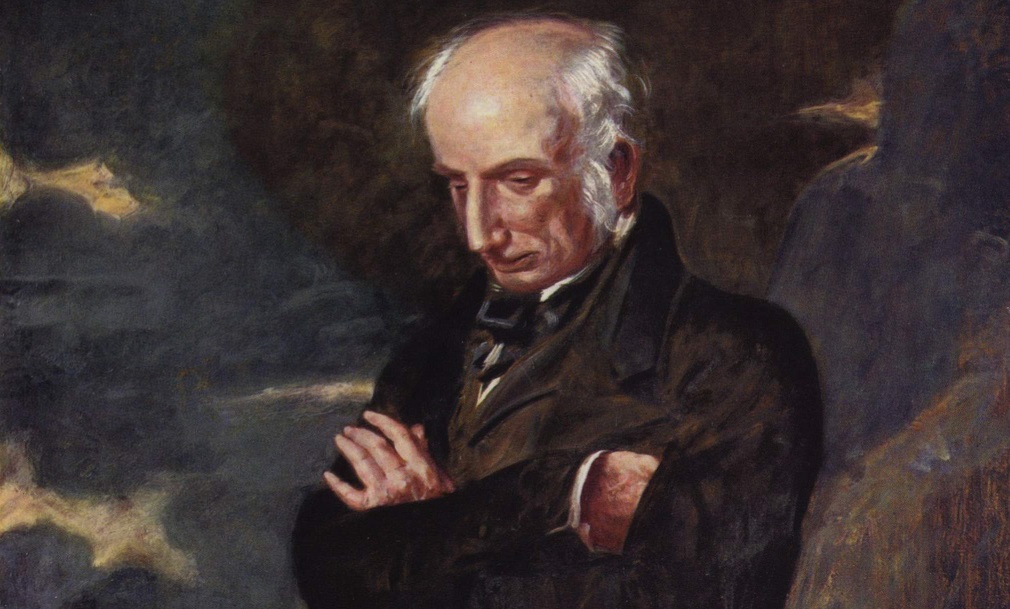
a portrait of William Wordsworth by Benjamin Robert Haydon

a portrait of William Wordsworth by Benjamin Robert Haydon


A Genuine Petrarchan Note on William
Wordsworth’s Ecclesiastical Sonnets

How did it end, then, for Romantic Bill?
He labored long on Church-of-England lines—
Which had to be, fans thought, of all designs
The most surprising. He pursued it still.
Octave and sestet he worked hard to fill
With pious thoughts to please serene divines
While, after supper, they enjoyed port wines
As Englishmen in their own climate will.
It wasn’t “Tintern Abbey”—for the force
Of transcendental winds just wasn’t there.
Those former gusts, perhaps, had drained the source.
Now only quiet breezes touched the air.
What result followed on this altered course?
A rhymed gloss on The Book of Common Prayer.


Tom Riley was born in 1958 and grew up in Western New York. He was educated at Hartwick College and at the University of Notre Dame. He has been a teacher but now earns a living as a copywriter in Napa, California. 
ShareTweetPin
The Society of Classical Poets does not endorse any views expressed in individual poems or commentary.
Read Our Comments Policy Here

RandomPoems

poetry/benson brown/readings
Classical Poets Live

CPL: ChatGPT Poetry Quiz, Lillian-Yvonne Betram, Interview with James A. Tweedie, and More

June 11, 2023

. Classical Poets Live with Andrew Benson Brown Episode 4: Poetry in the Age of AI If you enjoy this video,...

‘The Day the Roofers Came’ and Other Poems by Susan Jarvis Bryant
Humor

‘The Day the Roofers Came’ and Other Poems by Susan Jarvis Bryant

June 19, 2024

. The Day the Roofers Came He fled the day the roofers came. His fur was fluffed and frizzy. He...

Next Post
‘The Mission’: A Poem by Paul A. Freeman

'The Mission': A Poem by Paul A. Freeman

A Video Reading from ‘Legends of Liberty, Vol. 3,’ by Andrew Benson Brown

A Video Reading from 'Legends of Liberty, Vol. 3,' by Andrew Benson Brown

A Video Reading from ‘Legends of Liberty, Vol. 3,’ by Andrew Benson Brown

A Video Reading by Poet Mark F. Stone

Comments 9

  1. Michael Curtis says:
    8 months ago

    Succinct and comprehensive. Well done, Mr. Riley.

    Reply
    • Tom Riley says:
      8 months ago

      Thanks.

      Reply
  2. Margaret Coats says:
    8 months ago

    A fine satiric sonnet, Tom, competently employing the most Petrarchan of rhyme schemes. I can’t recall any of Wordsworth’s Ecclesiastical Sonnets, but when I looked for titles, it appears he starts with the Druids. That could offer promising material for Romantic treatment. But I do like your critique of “transcendental winds” breezily blown away because of “port wines” poured by “serene divines.”

    Reply
    • Tom Riley says:
      8 months ago

      Glad you appreciated the fine points. I have to confess here a certain weakness for port wines on my own part.

      Reply
  3. Joseph S. Salemi says:
    8 months ago

    Wordsworth’s Ecclesiastical Sonnets were never taken quite as seriously by the critics as were his youthful earlier works, and much of that indifference (and sometimes disdain) was due to political bias. When the poet ceased to be a wholehearted radical and revolutionary, and began to take a solidly sensible and conservative view of reality, many of his contemporaries felt betrayed. Many critics of his time (and some contemporary critics of ours) were not immune to this feeling.

    But the poem (which went through several editions and expansions) is surely more than just “a rhymed gloss on the Book of Common Prayer.” It is a detailed historical account (in verse) of the re-establishment of the Church in Britain after the barbarian invasions, and a record of its development right up to the time of the poem’s composition. Wordsworth spent years in doing the requisite research, and his condensing it into more than 100 sonnets was a truly herculean labor. There were so many persons and events to consider that he necessarily had to omit some material, and focus on transitions in the narrative flow.

    Is it pietistic? Sure, to some extent. But how else would a religious believer write on such a subject? Is it skewed towards Anglicanism? Yes, of course — it was written by an Anglican. I wouldn’t depend on it solely for historical analysis, but after all, it is an extended poem. And we judge poems not on truth and accuracy, but on their aesthetic success and architecture.

    Wordsworth is not my favorite poet — he can go on for excessive length and detail, he has a sentimental streak a mile wide, and he caused a major disaster with that Preface to the Lyrical Ballads. But the man did have major talent, and his work on the Ecclesiastical Sonnets was ably done in terms of craftsmanship, and were by no means a scholarly embarrassment.

    I don’t think the Left has ever forgiven Wordsworth for changing his mind about the French Revolution, and becoming a Tory. His Ecclesiastical Sonnets may be somewhat heavy and overly “curious” (in the older sense of minutely detailed), but they are a work of tremendous skill and study.

    By the way, Tom Riley’s Petrarchan sonnet is absolutely perfect, and a model for exquisite composition, no matter how we may disagree about the value of Wordsworth’s book.

    Reply
    • Tom Riley says:
      8 months ago

      Well, you know me, Dr. Salemi. I am nothing if not oblique. I’m not really reviewing the “Ecclesiastical Sonnets” as a whole, and don’t really disagree with you about their value. The key is in the phrase “genuine Petrarchan.” Wordsworth, in my view, frequently cheats: abbaacca… etc., abandoning the original shape of the octave. Incidentally, I prefer but do not demand the Sicilian sestet. Sadly, I am a sonnet snob. That’s what my little piece is really about. On the side, I’m commenting on the strengths and weaknesses of Anglicanism. And not just the weaknesses. I happen to regard The Book of Common Prayer as a work of liturgical genius — as did my fellow Papist Hilaire Belloc.

      Reply
  4. C.B. Anderson says:
    8 months ago

    I’ve been reading Riley’s works for what seems like decades, often in what I might call the Yankevich/Salemi stream. Lately I’ve found him disturbing the placid pages of The Lyric, and I couldn’t be happier. If nothing else, Tom Riley has a knack for riling a reader, and I hope he now regards this venue as his new vacation home. His grin is crooked, but his talk is straight.

    Reply
    • Tom Riley says:
      8 months ago

      That means a lot, C.B. Anderson, coming from you.

      Reply
  5. Adam Sedia says:
    8 months ago

    An erudite and well-crafted dialogue (or riposte) to a poet of the past. Knowing the background of the “Ecclesiastical Sonnets” is helpful, but not necessary to appreciating your sonnet. You offer a legitimate critique not of a poet grown stodgy, but grown eager to please the entrenched and hypocritical hierarchy (with a humorously vivid critique of English aristocratic vices). Your point is well-taken: “Tintern” was genuine, sprung from philosophical inquiry; the “Ecclesiastical Sonnets” were written with a blatantly political motive — to attack Catholic emancipation and defend an established institution that had grown indefensible (and from my perspective, had never been defensible). So I appreciate your work both for its craft and its message.

    (I write this as a fellow Papist with a similar weakness for Port wine.)

    Reply

Leave a Reply Cancel reply

Your email address will not be published. Required fields are marked *


  1. Roy Eugene Peterson on ‘Good and Evil, a True Story’: A Poem by Roy E. PetersonAugust 5, 2026

    You put your finger on the regrettable present-day condition of our culture.

  2. Joseph S. Salemi on ‘Good and Evil, a True Story’: A Poem by Roy E. PetersonAugust 5, 2026

    OK, LTC Peterson, I won't continue the argument. But I must correct one thing contained in your quote from Nietzsche.…

  3. MaryJane Myers on ‘The Ballad of the Ghost Mountain Boys’: A Poem by Rachel LottAugust 5, 2026

    Rachel Brava! What a wonderful poem. I’m in tears. The ballad form is perfect for this material. The five Parts…

  4. Joseph S. Salemi on ‘Rasputina Confers with Her Cohorts’: A Poem by Joseph S. SalemiAugust 5, 2026

    The character "Rasputina" in my poem is meant to be a representative of fake religion or a "cult," of the…

  5. Adam Sedia on ‘People Forget’: A Poem by James SaleAugust 5, 2026

    This is one of my favorite poetic styles: meditative, plaintive, tragic yet stoic. You master the tone, mourning the inherent…

Subscribe to Daily Poems

Enter your email address to subscribe to this blog and receive notifications of new posts by email.

Join 1,604 other subscribers

Recent Poems

  • ‘People Forget’: A Poem by James Sale
  • ‘Good and Evil, a True Story’: A Poem by Roy E. Peterson
  • ‘The Royal Arse Hortillery’: A Poem on the Spoonerism, by Jeff Eardley
  • ‘Who Hears a Robot’s Prayer?’ and Other Poetry by Brian Yapko
  • The Society of Classical Poets 2026 Haiku Competition
  • Four Love Sonnets by Adam Sedia
  • ‘Rasputina Confers with Her Cohorts’: A Poem by Joseph S. Salemi
  • ‘Warfare by Remote Control’: A Poem by Paul A. Freeman
  • ‘The Passing’: A Poem by Margaret Brinton
  • ‘Of Webs and Whispers’: A Poem by Susan Jarvis Bryant
  • Poetry Book Review: Petrarch’s Canzoniere, Translated by A.M. Juster
  • ‘What Folly Dares’ and Other Love Poems by James A. Tweedie
  • ‘Allegrezza’ and Other Poetry by Rob Griffith
  • ‘The Lessons of Lot’: A Poem by Adam Wasem
  • ‘Prophecy and Divine Intervention in Virgil’s Aeneid’: An Essay by Kaitlyn Brown
  • ‘The Last Voyage of Barnaby Bear’: A Poem by Tashvi Reddy
  • ‘Impressions’ and Other Poems by Russel Winick
  • ‘The Reveal of the Rocks’: A Poem by Kyle Fiske
  • ‘Art Work’: A Poem by T.M. Moore
  • ‘A Strange Sun’: A Poem by Patricia Rogers Crozier
  • ‘Shave Off Those Whiskers’: A Poem by Roy E. Peterson
  • ‘The Man from China’: A Poem by Evan Mantyk
  • ‘The Ballad of the Ghost Mountain Boys’: A Poem by Rachel Lott
  • ‘The Threat of Virtue’: A Poem by Zumwalt
  • ‘A Poet at the Tower’ and Other Poetry by Michael C. Paul
  • ‘Florence Foster Jenkins’ and Other Poetry by Brian Yapko
  • Winners and Rankings of The Great American Poetry Competition
  • ‘The Gold Star Mother’: A Poem by Gerard Maritato
  • ‘An American Dash’: A Poem by Linda Ellis
  • ‘The Anonymous Soldier’: A Poem by Lucy Lind

Categories

  • Acrostic
  • Alexandroid
  • Alliterative
  • Art
  • Best Poems
  • Blank Verse
  • Chant Royal
  • Classical Poets Live
  • Clerihew
  • Covid-19
  • Deconstructing Communism
  • Educational
  • Epic
  • Epigrams and Proverbs
  • Essays
    • Interviews with Poets
    • Poetry Reviews
  • Featured
  • From the Society
  • Great Poets
    • Dante Alighieri
    • Edgar Allan Poe
    • Emily Dickinson
    • Geoffrey Chaucer
    • Henry Wadsworth Longfellow
    • Homer
    • John Keats
    • John Milton
    • Robert Frost
    • William Blake
    • William Shakespeare
    • William Wordsworth
  • Human Rights in China
  • Limerick
  • Love Poems
  • Music
  • Pantoum
  • Performing Arts
  • Poetry
    • Beauty
    • Children's Poems
    • Culture
    • Ekphrastic
    • Found Poems
    • High School Poets
    • Humor
    • Riddles
  • Poetry Challenge
  • Poetry Contests
  • Poetry Forms
    • Curtal Sonnet
    • Haiku
  • Poetry Readings
  • Rhupunt
  • Rondeau
  • Rondeau Redoublé
  • Rondel
  • Rubaiyat
  • Sapphic Verse
  • Satire
  • Science
  • Sestina
  • Shape Poems
  • Short Stories
  • Song Lyrics
  • Sonnet
  • Symposium
  • Terrorism
  • Terza Rima
  • The Environment
  • Translation
  • Triolet
  • Video
  • Villanelle

Quick Links

  • About Us
  • Submit Poetry
  • Become a Member
  • Members List
  • Support the Society
  • Advertisement Placement
  • Comments Policy
  • Terms of Use

Welcome Back!

Login to your account below

Forgotten Password?

Retrieve your password

Please enter your username or email address to reset your password.

Log In
No Result
View All Result
  • Poems
    • Beauty
    • Culture
    • Satire
    • Humor
    • Children’s
    • Art
    • Ekphrastic
    • Epic
    • Epigrams and Proverbs
    • Human Rights in China
    • Music
    • Performing Arts
    • Riddles
    • Science
    • Song Lyrics
    • The Environment
    • The Raven
    • Found Poems
    • High School Poets
    • Terrorism
    • Covid-19
  • Poetry Forms
    • Sonnet
    • Haiku
    • Limerick
    • Villanelle
    • Rondeau
    • Pantoum
    • Sestina
    • Triolet
    • Acrostic
    • Alexandroid
    • Alliterative
    • Blank Verse
    • Chant Royal
    • Clerihew
    • Rhupunt
    • Rondeau Redoublé
    • Rondel
    • Rubaiyat
    • Sapphic Verse
    • Shape Poems
    • Terza Rima
  • Great Poets
    • Geoffrey Chaucer
    • Emily Dickinson
    • Homer
    • Henry Wadsworth Longfellow
    • Dante Alighieri
    • John Keats
    • John Milton
    • Edgar Allan Poe
    • William Shakespeare
    • William Wordsworth
    • William Blake
    • Robert Frost
  • Love Poems
  • Contests
  • SCP Academy
    • Educational
    • Teaching Classical Poetry—A Guide for Educators
    • Poetry Forms
    • The SCP Journal
    • Books

© 2025 SCP. WebDesign by CODEC Prime.