


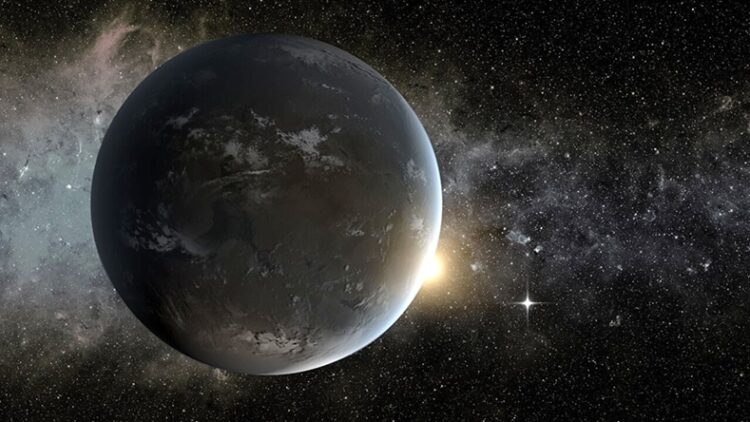
The Mission
Our mission—to discover signs of life
amongst the stars—seemed destined to succeed;
for though our sun-strewn galaxy was rife
with barren orbs, our probe commenced to feed
our mother ship with data that portrayed
a double-planet’s larger sibling as
a place where fast-evolving beasts once stayed
before their air was radioactive gas—
a toxin-laden, stormy atmosphere,
through which a ruined cityscape we viewed,
till heat and rads destroyed our spacecraft’s gear.
We saw no blue, nor green that life imbued.
Our captain was uncertain if this proof
of aliens would be accepted by
our home-world leadership as gospel truth,
or else dismiss it, labelling it a lie.
To guarantee our bonuses, we scanned
the lesser of those planets, where a thing
of manufactured metal graced its bland
grey airlessness. We made a vow to bring
this artifact back with us, which would prove
our honesty and quash the envious claim
of fakery, to finally remove
all doubt we’re not alone—and seal our fame.
The vessel sent, brought back a steely plaque
that creatures from the big world left behind
upon their moon, while pledging to the black
of space, “We came in peace for all mankind.”
previously published in Songs of Eretz Poetry
Review, Spring Issue, 2025
Paul A. Freeman is the author of Rumours of Ophir, a crime novel which was taught in Zimbabwean high schools and has been translated into German. In addition to having two novels, a children’s book and an 18,000-word narrative poem (Robin Hood and Friar Tuck: Zombie Killers!) commercially published, Paul is the author of hundreds of published short stories, poems and articles.

















The truth is out there, and we are not alone, summarizes this interesting sci-fi poem.
Yet, if the aliens are humans, returning millennia after fleeing their nuclear-war-ravaged world, the aliens question is still open.
Thanks for reading and commenting, Roy.
Is humanity so depraved as to actually allow nuclear annihilation, Paul?
Alas, world leaders put their egos first and would see pressing that metaphorical red button as a matter of pride, personal and national.
Thanks for reading and commenting, Margaret.
An effective change of perspective for you, Paul–looking forward to the time we can no longer be discoverers, but will be discoverable in what we’ve left behind. The reader is not surprised there are many orbs out there with no green or blue to suggest life and the water needed for it. But in the technological search for life somewhere else, researchers firmly based on earth are always viewing something they hope will guarantee them fame and fortune. Your story seems to suppose we’ve gotten off the ground again and into the galaxy. But we know exactly where to find that final line, “We came in peace for all mankind.” It was left on our moon by a couple of famous Americans in 1969. Having grown up in the Floridian vicinity of the lunar landing program, I am more aware than most of all the trash jettisoned onto the moon’s surface. I’m surprised that your alien explorers find (and can read!) the small plaque with words meant for other earthlings. A grim view you provide of our earth without life in the future–and so toxic it can ruin the alien spacecraft’s gear. Just maybe the crew will get back to where they came from, and receive their bonuses and celebrity. They seem rather similar to ourselves in motivation, but you imagine aliens who have at least learned lessons about preserving a favorable habitat. A tale well-imagined!
Thanks for reading and making such a considered reply, Margaret. The reason that the aliens can read the plaque and that their behaviour is so like ours, is because they are us not aliens. They’re humans who left Earth in the past and have rediscovered their original planet. I guess I should have made this clearer.
This poem, by the way, is from a short story I wrote back in 1985, was not able to sell, and was lost for decades. Last year, I wrote it up in verse.
Paul, thanks for the explanation–and let me say why I didn’t get it from the poem. The first stanza does seem like “us” exploring as we’ve wanted to do in search of life elsewhere. But the second and third stanzas look like earth dead and ruined–and there’s been no hint that some earthlings left long ago and are now returning. The discoverers describe the place as strange. They refer to the probable former inhabitants as “fast-evolving beasts.” This seems like an outsider’s clinical comment, and unlike what we know of ourselves–namely that evolution is not fast at all, but takes forever (billions of years) because there are countless improbabilities for time to overcome if a beast is to become a man and build cities. We can make a new breed of dogs in a few years, but the result remains a dog with slightly different characteristics–no abilities beyond those of dogs in general. The fourth stanza has the captain of the exploring craft refer to former earth dwellers as “aliens.” Therefore it must be that these explorers are alien to us, with the intent of taking proof of our former existence back to their “home-world.” They don’t show any indication of recognizing that the newly discovered place is their home-world. Sorry to read without finding your story plan, but for me it needed more clues!
This is a very useful analysis, Margaret, and what is needed to improve the piece. I wanted to keep the big reveal to the end, but the problem them occurs, how many pointers? Obviously more are needed, and the job of injecting a fix is now much easier. This is what comments and feedback should be about – improvement and clarity. Thanks, again.
An intriguing adventure here, solemn enough, but not without a touch of (grim) humor–the explorers wondering about their bonuses. How human that is! But maybe characteristic of all advanced life? If so, what a universe, where humans, or their close relatives, are continually disappointed with what they find, which is only evidence of familiar old mistakes. Can those mistakes be avoided? The poet does not speculate, does not supply comforting explanations. The poem just ends, and that seems to me exactly right. We are left to brood as we look out at the stars. Nicely done!
Thanks for reading and commenting, Bhikkhu. I was hoping the reader would assume the ‘explorers’ were human, then realise at the end they had rediscovered their planet of origin.
The obsession with bonuses is a theme in the first two ‘Alien’ films, where greed constantly overrides crew safety.
Thanks for reading and commenting.
You’ve got Carl Sagan standing on his head, which is the proper way to view an upside-down world. Mutual Assured Destruction is not a great idea, and preemptive strikes leave the Queen hanging. Blessed are the peacemakers.
In this upside down world (though beyond Earth there is no up or down, it’s purely a gravity-induced perspective) many of the world’s worst warmongers and perpetuators of war crimes and genocide paint themselves as peacemakers. Using what Orwell termed doublethink (these days termed ‘cognitive dissonance’), humans can square any action done by themselves or others, without suffering any associated guilt. I look at this as a form of gaslighting, in this case gaslighting oneself, often achieved by doing ‘research’, i.e. going only to online, fringe and conspiracy sites that you know will say what you want to believe. A throwaway line like ‘Blessed are the peacemakers’ unfortunately isn’t a winner, despite its origin.
The sidearms, Paul, worn by town marshals in the Old American West were often referred to as peacemakers. Go figure. There is peace and then there is peace. Sometimes the best one can hope for is a sort of Pax Romana.
I’m old enough to remember what a galvanizing event the first moon landing was. Every so often, something happens that unites big chunks of humanity, but then we quickly descend back into the tribalism and chaos that is likely to end as you prophesy here. Before that happens, I will go back and watch the Alien movies again.
Thanks for reading and commenting, Warren. I vaguely recall my Dad getting me out of bed to watch Neil Armstrong moonwalk. I’m not even sure a voyage to Mars would be a uniting force with the growing and ever more manipulated division these days. And I’m with you with the Alien movies – the first two, at least.