• Submit Poetry
  • Support SCP
  • About Us
  • Members
  • Join
Friday, January 9, 2026
Society of Classical Poets
  • Poems
    • Beauty
    • Culture
    • Satire
    • Humor
    • Children’s
    • Art
    • Ekphrastic
    • Epic
    • Epigrams and Proverbs
    • Human Rights in China
    • Music
    • Performing Arts
    • Riddles
    • Science
    • Song Lyrics
    • The Environment
    • The Raven
    • Found Poems
    • High School Poets
    • Terrorism
    • Covid-19
  • Poetry Forms
    • Sonnet
    • Haiku
    • Limerick
    • Villanelle
    • Rondeau
    • Pantoum
    • Sestina
    • Triolet
    • Acrostic
    • Alexandroid
    • Alliterative
    • Blank Verse
    • Chant Royal
    • Clerihew
    • Rhupunt
    • Rondeau Redoublé
    • Rondel
    • Rubaiyat
    • Sapphic Verse
    • Shape Poems
    • Terza Rima
  • Great Poets
    • Geoffrey Chaucer
    • Emily Dickinson
    • Homer
    • Henry Wadsworth Longfellow
    • Dante Alighieri
    • John Keats
    • John Milton
    • Edgar Allan Poe
    • William Shakespeare
    • William Wordsworth
    • William Blake
    • Robert Frost
  • Love Poems
  • Contests
  • SCP Academy
    • Educational
    • Teaching Classical Poetry—A Guide for Educators
    • Poetry Forms
    • The SCP Journal
    • Books
No Result
View All Result
Society of Classical Poets
  • Poems
    • Beauty
    • Culture
    • Satire
    • Humor
    • Children’s
    • Art
    • Ekphrastic
    • Epic
    • Epigrams and Proverbs
    • Human Rights in China
    • Music
    • Performing Arts
    • Riddles
    • Science
    • Song Lyrics
    • The Environment
    • The Raven
    • Found Poems
    • High School Poets
    • Terrorism
    • Covid-19
  • Poetry Forms
    • Sonnet
    • Haiku
    • Limerick
    • Villanelle
    • Rondeau
    • Pantoum
    • Sestina
    • Triolet
    • Acrostic
    • Alexandroid
    • Alliterative
    • Blank Verse
    • Chant Royal
    • Clerihew
    • Rhupunt
    • Rondeau Redoublé
    • Rondel
    • Rubaiyat
    • Sapphic Verse
    • Shape Poems
    • Terza Rima
  • Great Poets
    • Geoffrey Chaucer
    • Emily Dickinson
    • Homer
    • Henry Wadsworth Longfellow
    • Dante Alighieri
    • John Keats
    • John Milton
    • Edgar Allan Poe
    • William Shakespeare
    • William Wordsworth
    • William Blake
    • Robert Frost
  • Love Poems
  • Contests
  • SCP Academy
    • Educational
    • Teaching Classical Poetry—A Guide for Educators
    • Poetry Forms
    • The SCP Journal
    • Books
No Result
View All Result
Society of Classical Poets
No Result
View All Result
Home Poetry Culture

A Sonnet for the 100th Anniversary of the Leopold and Loeb Case, by Adam Sedia

May 31, 2024
in Culture, Poetry, Sonnet
A A
22
poems A Sonnet for the 100th Anniversary of the Leopold and Loeb Case, by Adam Sedia

.

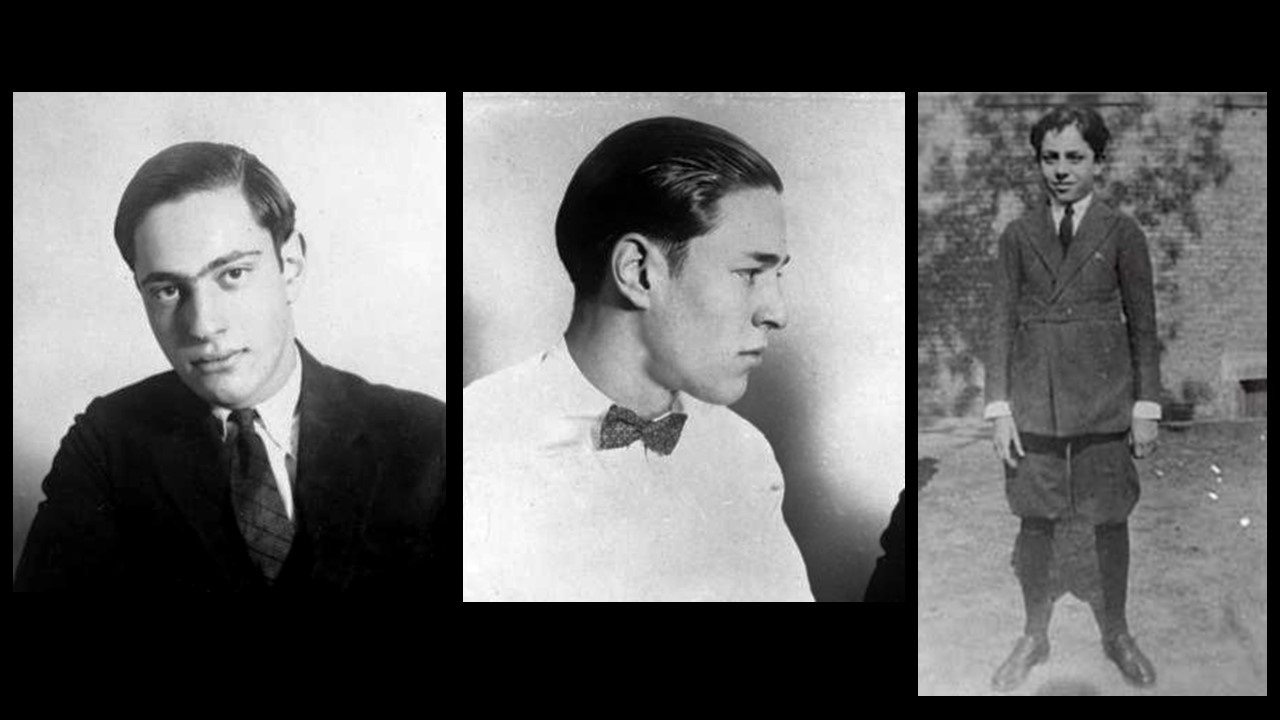
Leopold and Loeb

Or, the Consequences of Ideas

A Frenchman’s thought-experiments
Argued by Englishmen until
A German stripped pure thought from sense;
A second then conceived the will;

And last, a third who said God died,
Made will his god and from it sought
The superman he prophesied—
Three hundred years of Western thought.

But in the land ideas shaped,
Across the ocean, thought escaped
The realm of scholarly dispute.

A life snuffed out that scarce began
By youths who would be superman
Proved disputation’s poisoned fruit.

.

Poet’s Note: On May 21, 1924, two University of Chicago students, Nathan Leopold and Richard Loeb, abducted and murdered 14-year-old Bobby Franks solely to prove themselves “supermen,” or superior beings, capable of committing the “perfect crime.” Franks’ body was found on May 31, 1924. Both were convicted of the murder. The “Frenchman” referenced is Descartes; the “Englishmen” are Locke and Berkeley; and the three Germans are Kant, Schopenhauer, and Nietzsche, whose idea of the “superman” inspired Leopold and Loeb.

.

.

Adam Sedia (b. 1984) lives in his native Northwest Indiana and practices law as a civil and appellate litigator. In addition to the Society’s publications, his poems and prose works have appeared in The Chained Muse Review, Indiana Voice Journal, and other literary journals. He is also a composer, and his musical works may be heard on his YouTube channel.

ShareTweetPin
The Society of Classical Poets does not endorse any views expressed in individual poems or commentary.
Read Our Comments Policy Here
Next Post
The Day After Trump’s Conviction: ‘God Knows’ by Susan Jarvis Bryant

The Day After Trump's Conviction: 'God Knows' by Susan Jarvis Bryant

‘Phone Home’: A Poem on the Jodrell Bank Observatory, by Jeff Eardley

'Phone Home': A Poem on the Jodrell Bank Observatory, by Jeff Eardley

‘Upon Learning of Trump’s Conviction’ by UK Poet James Sale

'Upon Learning of Trump's Conviction' by UK Poet James Sale

Comments 22

  1. Paul A. Freeman says:
    2 years ago

    It amazes me sometimes what people can be convinced to believe and how easily manipulated a vulnerable mind can be.

    A timely reminder, Adam.

    Reply
  2. Roy Eugene Peterson says:
    2 years ago

    Demonic ideas destroy, as you perfectly pointed out. This is a sad story and inherent warning to beware of our own thoughts and to use reason and logic tempered by considering all alternatives to the thoughts of others and even of ourselves.

    Reply
  3. Mary Gardner says:
    2 years ago

    Adam, your sonnet is perfect and sobering.
    The study of philosophy should not be undertaken until the age of twenty, when the student has acquired at least a modicum of life experience and maturity.

    Reply
    • Adam Sedia says:
      2 years ago

      Not a bad idea — except twenty is still somewhat stunted in this age of extended childhood.

      Reply
  4. James Sale says:
    2 years ago

    Very powerfully and concisely expressed. One of the three epigraphs to my HellWard epic is: ‘I suspect that intellectual error is at the root of most evil’ – Theodore Dalrymple. This is so true, as your poem demonstrates, but then and today people seem reckless about the stupidity of their ideas and the evil that these lead them into. Great work.

    Reply
    • Adam Sedia says:
      2 years ago

      Thank you! Theodore Dalrymple is one of my favorite authors.

      Reply
  5. Joseph S. Salemi says:
    2 years ago

    Richard Weaver wrote a brilliant book in 1948, titled “Ideas Have Consequences.” He traced the problem ever further back, to the nominalism of the 14th century.

    Reply
  6. Cynthia Erlandson says:
    2 years ago

    This is really well-expressed. One “conceived the will”; another “who said God died made will his god”. True and needed understanding of the profound consequences of ideas.

    Reply
  7. Drilon Bajrami says:
    2 years ago

    This chilling and great poem reminds me of Dostoyevsky’s “Crime and Punishment”, where the novel’s protagonist, Rodion Raskolnikov, does the exact same thing: murders someone to prove to himself that he a “superior being” or in his thoughts, that he was a “Napoleon” among average men.

    It is interesting how some people can read the same texts, and interpret them completely differently. Nietzsche has been one of the most influential writers for myself and his “Übermensch” is the guide that I use to live my own life by.

    Superior beings don’t murder. They lead nations. They lead revolutions. They create art. They uplift humanity. They exemplify the impossibility of our position, evolved from single celled life forms into what we are now.

    Reply
    • Adam Sedia says:
      2 years ago

      “Crime and Punishment” is a fantastic novel — one of the few I “couldn’t put down” when I read it.

      Nietzsche is one of the most misunderstood philosophers. I believe it is wrong to attempt to understand him without first understanding the genealogy of his ideas, going back to Descartes — and even before that. He was massively popular in the years around World War I, and was unfortunately bound to have his words taken beyond their meaning.

      My intent here was not to indict Nietzsche specifically as much to illustrate what happens when an idea is translated into action — misconstrued or not.

      Reply
      • Drilon Bajrami says:
        2 years ago

        I agree that he is one of the most misunderstood philosophers. And I think you’re correct, my understanding of Nietzsche grew after reading his “On the Genealogy of Morality” and “Beyond Good and Evil”. It gets into the nitty, gritty of how morality developed and gives deep insight into Nietzsche’s ideals. Many people skip these works and solely focus on “Thus Spoke Zarathustra”, which makes sense as that was his magnum opus and most profound book but ignoring his other works isn’t wise.

        And all of what you’ve said is true about Nietzsche but I’m glad you recognise it’s not the writer’s fault if his words get misconstrued. It’s clear that Nietzsche was always a rebel at heart, going against the “slave morality” and “well-trodden paths” and was a champion of individual will and for the will to power, the actualising of one’s will into the real world results. I can see how these ideas can be hijacked by disingenous characters.

        Reply
      • Joseph S. Salemi says:
        2 years ago

        Nietzsche may have been misunderstood in some respects, but his contempt for slave-morality and the ways in which it has crushed and suppressed the heroic energy of the West is very clearly and unmistakably expressed in his late work, The Antichrist. (There is an excellent translation of this small book by H.L. Mencken, done in the early 20th century.)

        The original German edition was published in 1895, after Nietzsche’s death, and his embarrassed sister tried her best to downplay the book’s importance and its ferocious anti-Christianity (she was a daughter of a Lutheran pastor). But as Mencken writes, The Antichrist “is as necessary to the completeness of the whole of Nietzsche’s system as the keystone is to the arch.”

        Reply
    • Drilon Bajrami says:
      2 years ago

      Joe, I’ve been debating which of Nietzsche’s works to read next and your comment has steered me towards the Antichrist. That’s probably my next read of his.

      Nietzsche has always had an interesting relationship with religion, as you mentioned his father was a Christian pastor. During his early and teenage years, he was religious and even planned to become a pastor himself but during his late teenage years, he had a change of mind and became a philologist. I can understand where he comes from as I was a muslim in my earlier years (by birth) and later became an atheist, though I do believe in a form of God, it’s quite abstract and easier for me to say I’m an atheist.

      Reply
  8. Brian A. Yapko says:
    2 years ago

    A fascinating and consumately well-written poem on what strikes me as a loathsome and fearsome subject. I’m reminded of the proverb “Be carful about what you think. Your thoughts run your life.”

    Reply
    • Adam Sedia says:
      2 years ago

      Thank you! I thought it was a century-old lesson well worth remembering in these days. When theory gets translated into practice, things tend to fly off the rails.

      Reply
  9. Adam Sedia says:
    2 years ago

    I should also expand on my footnote: Leopold and Loeb both pled guilty. What was dubbed as a “trial of the century” was actually their prolonged sentencing hearing. Both were spared the death penalty, but were sentenced to life plus 99 years. Loeb was killed in prison and Leopold was released on parole in 1958.

    Reply
  10. Margaret Coats says:
    2 years ago

    An excellent summary and commentary poem on a legal case you must have studied, Adam. During the 300 years of Western thought you summarize, there was certainly a tendency to divorce thought from action–as well as divorcing it from its antecedent culture in ancient Greece and Rome, and in the Christian centuries. Thus disputes over thought and will, when popularized, could indeed bear poisoned fruit. I am only surprised that the two student murderers did not receive the death penalty. That was probably more due to their own youth (maybe 5 or 6 years older than their 14-year-old victim) as to any excuse that their studies had led to crime. And I am not surprised that Loeb was killed in prison, for even guilty prisoners seem to retain a horror for unnatural acts like the abduction of a child for the purpose of murder.

    Reply
    • Joseph S. Salemi says:
      2 years ago

      Child murderers and pedophiles are called “short-eyes” by other inmates, who hate them with a passion. As Leo Yankevich once told me, “Short-eyes don’t last long in the prison population.”

      Reply
  11. Adam Wasem says:
    2 years ago

    Your structure, bouncing in brief around the Continent to settle in the systematic progression of the Germans–Hegel, Schopenhauer, and Nietzsche? Forgive me, most of my meager reading in philosophy is years behind me–establishes a suitably ominous inexorable tone that is well paid off in the final verses. The radical abbreviation in these summaries, just this side of glib, is a daring gambit that feels like it pays off, accentuating how ideas can affect youthful, rash, unsophisticated minds. The poem almost asks for a companion piece, tracing how the practical application of such ideas in “the land ideas shape” might redound back across the Atlantic.

    Reply
    • Adam Sedia says:
      2 years ago

      I’m glad you appreciated the “daring gambit.” This was pared down from a much longer initial draft that had me thinking, “I’m not trying to teach philosophy,’ so I took the dive and compressed three centuries of epistemological discourse into a quatrain. Nietzsche had to get his own quatrain due to the subject.

      On consideration, a good epigram would have been from Alexander Pope: “A little knowledge is a dangerous thing.”

      I like your suggestion for a companion piece — I think I owe philosophy a vindication after this poem.

      Reply
  12. Daniel Kemper says:
    2 years ago

    I appreciated the compression of this poem. A marvelous economy of the language for certain. The poem made me think how all thoughts and endings are bad when sans Jesus. For example, a person similarly motivated, antisocial personality disorder and worse, who tried to kill his father with a hammer to the head, came to Christ and is a potent apologist.

    https://www.youtube.com/watch?v=jb2ggj9mKM0&t=1s

    Reply
  13. Susan Jarvis Bryant says:
    2 years ago

    Mike and I have just watched the Alfred Hitchcock film “Rope” and as I was watching, it put me in mind of your well-crafted, thought-provoking poem – I had no idea this film was based on this case when I chose it for entertaining Father’s Day viewing. I’ve just returned to your poem… and wow! Words not only matter, they tap into the very depths of the soul… for good or for evil. Your closing stanza is powerful and poignant, and I thank you for bringing this remarkable case to our attention – it is most relevant in these times.

    Reply

Leave a Reply Cancel reply

Your email address will not be published. Required fields are marked *

  1. Roy Eugene Peterson on ‘Encounter with My Dead Father’: A Poem by Scharlie MeeuwsJanuary 9, 2026

    Sharlie, this a wonderful personal poem and reflection of your precious relationship with your father. I can identify with that,…

  2. Maria Panayi , nee Solomonides. on ‘King of Poets’: A Poem by Margaret CoatsJanuary 9, 2026

    Dear Margaret, this is such a wonderful poem, perfectly composed and so inspiring as it uplifts and elevates the reader…

  3. Susan Steele Rives on ‘Watercolors’: A Poem by Susan Steele RivesJanuary 9, 2026

    Paul, Thank you! I'm glad you enjoyed the poem and that it inspired you to try something new! Susan

  4. Susan Steele Rives on ‘Watercolors’: A Poem by Susan Steele RivesJanuary 9, 2026

    Paul, Thanks so much. Like you, I find that my creative inclinations are better-executed with pens rather than paintbrushes. I…

  5. Lisa J. Roberts on ‘Caravaggio’: A Poem by Lisa J. RobertsJanuary 9, 2026

    Thank you, Paul! I’m glad you like it. Definitely give it a try.

Receive Poems in Your Email

Enter your email address to subscribe to this blog and receive notifications of new posts by email.

Join 1,620 other subscribers
Facebook Twitter Youtube

Recent Poems

  • ‘Encounter with My Dead Father’: A Poem by Scharlie Meeuws
  • Two Sonnets by Nino Martoglio, Translated by Joseph S. Salemi
  • ‘Wall of Ice’ and Other Poetry by James Bontrager
  • ‘King of Poets’: A Poem by Margaret Coats
  • ‘Watercolors’: A Poem by Susan Steele Rives
  • ‘Art and Nature’ and Other Poetry by C.B. Anderson
  • ‘Star of Wonder’: A Poem by James A. Tweedie
  • ‘Yeonmi Park’s Advice to Americans’: A Poem by Warren Bonham
  • ‘Caravaggio’: A Poem by Lisa J. Roberts
  • ‘Refrigerator Bird’ and Other Poetry by Armaan Fatteh-Patil
  • ‘The Oak Trees’: A Poem by Bhikkhu Nyanasobhano
  • ‘A Cardinal on a Snowy Day’: A Poem by Rob Fried
  • Poets Susan Jarvis Bryant and James Sale Respond to Mamdani’s Swearing In as NYC Mayor
  • ‘Single Room Cigarette, 17th Floor Yale Club of Manhattan’: A Poem by Alec Ream
  • ‘Legacy of Light’: A Poem by Martin Briggs
  • ‘The Swarm’ and Other Poetry by Cheryl Corey
  • ‘Lament of a Poet Falsely Accused of Using AI’ and Other Poetry by Paul Buchheit
  • ‘A Gift from the South’: A Poem by Julian Woodruff
  • ‘New Year’s Peeve’: A Poem by Susan Jarvis Bryant
  • ‘Homage to Brigitte Bardot’: A Poem by Joseph S. Salemi
  • ‘Dearth of Emotional Intelligence’ and Other Poems by Russel Winick
  • ‘Fireflies’: A Poem by Mark Stellinga
  • ‘Real Poetry’: A Poem by Eric v.d. Luft
  • ‘Flaws’: A Poem by Joshua Thomas
  • Two Final Poems by Sally Cook
  • ‘Twelve Labors More, Part I’: A Poem by Evan Mantyk
  • ‘A Perfect Match is Found’: A Poem by Roy E. Peterson
  • ‘The Seven Crossings’: A Poem by Ulysses Arlen
  • ‘An Open Book’ and Other Poetry by David McMahon
  • A Video Poetry Reading by Paul Erlandson

Categories

  • Acrostic
  • Alexandroid
  • Alliterative
  • Art
  • Best Poems
  • Blank Verse
  • Chant Royal
  • Classical Poets Live
  • Clerihew
  • Covid-19
  • Deconstructing Communism
  • Educational
  • Epic
  • Epigrams and Proverbs
  • Essays
    • Interviews with Poets
    • Poetry Reviews
  • Featured
  • From the Society
  • Great Poets
    • Dante Alighieri
    • Edgar Allan Poe
    • Emily Dickinson
    • Geoffrey Chaucer
    • Henry Wadsworth Longfellow
    • Homer
    • John Keats
    • John Milton
    • Robert Frost
    • William Blake
    • William Shakespeare
    • William Wordsworth
  • Human Rights in China
  • Limerick
  • Love Poems
  • Music
  • Pantoum
  • Performing Arts
  • Poetry
    • Beauty
    • Children's Poems
    • Culture
    • Ekphrastic
    • Found Poems
    • High School Poets
    • Humor
    • Riddles
  • Poetry Challenge
  • Poetry Contests
  • Poetry Forms
    • Haiku
  • Poetry Readings
  • Rhupunt
  • Rondeau
  • Rondeau Redoublé
  • Rondel
  • Rubaiyat
  • Sapphic Verse
  • Satire
  • Science
  • Sestina
  • Shape Poems
  • Short Stories
  • Song Lyrics
  • Sonnet
  • Symposium
  • Terrorism
  • Terza Rima
  • The Environment
  • Translation
  • Triolet
  • Video
  • Villanelle

Quick Links

  • About Us
  • Submit Poetry
  • Become a Member
  • Members List
  • Support the Society
  • Advertisement Placement
  • Comments Policy
  • Terms of Use

Welcome Back!

Login to your account below

Forgotten Password?

Retrieve your password

Please enter your username or email address to reset your password.

Log In
No Result
View All Result
  • Poems
    • Beauty
    • Culture
    • Satire
    • Humor
    • Children’s
    • Art
    • Ekphrastic
    • Epic
    • Epigrams and Proverbs
    • Human Rights in China
    • Music
    • Performing Arts
    • Riddles
    • Science
    • Song Lyrics
    • The Environment
    • The Raven
    • Found Poems
    • High School Poets
    • Terrorism
    • Covid-19
  • Poetry Forms
    • Sonnet
    • Haiku
    • Limerick
    • Villanelle
    • Rondeau
    • Pantoum
    • Sestina
    • Triolet
    • Acrostic
    • Alexandroid
    • Alliterative
    • Blank Verse
    • Chant Royal
    • Clerihew
    • Rhupunt
    • Rondeau Redoublé
    • Rondel
    • Rubaiyat
    • Sapphic Verse
    • Shape Poems
    • Terza Rima
  • Great Poets
    • Geoffrey Chaucer
    • Emily Dickinson
    • Homer
    • Henry Wadsworth Longfellow
    • Dante Alighieri
    • John Keats
    • John Milton
    • Edgar Allan Poe
    • William Shakespeare
    • William Wordsworth
    • William Blake
    • Robert Frost
  • Love Poems
  • Contests
  • SCP Academy
    • Educational
    • Teaching Classical Poetry—A Guide for Educators
    • Poetry Forms
    • The SCP Journal
    • Books

© 2025 SCP. WebDesign by CODEC Prime.

This website uses cookies. By continuing to use this website you are giving consent to cookies being used. Visit our Privacy and Cookie Policy.