• Submit Poetry
  • Support SCP
  • About Us
  • Members
  • Join
Tuesday, May 12, 2026
Society of Classical Poets
  • Poems
    • Beauty
    • Culture
    • Satire
    • Humor
    • Children’s
    • Art
    • Ekphrastic
    • Epic
    • Epigrams and Proverbs
    • Human Rights in China
    • Music
    • Performing Arts
    • Riddles
    • Science
    • Song Lyrics
    • The Environment
    • The Raven
    • Found Poems
    • High School Poets
    • Terrorism
    • Covid-19
  • Poetry Forms
    • Sonnet
    • Haiku
    • Limerick
    • Villanelle
    • Rondeau
    • Pantoum
    • Sestina
    • Triolet
    • Acrostic
    • Alexandroid
    • Alliterative
    • Blank Verse
    • Chant Royal
    • Clerihew
    • Rhupunt
    • Rondeau Redoublé
    • Rondel
    • Rubaiyat
    • Sapphic Verse
    • Shape Poems
    • Terza Rima
  • Great Poets
    • Geoffrey Chaucer
    • Emily Dickinson
    • Homer
    • Henry Wadsworth Longfellow
    • Dante Alighieri
    • John Keats
    • John Milton
    • Edgar Allan Poe
    • William Shakespeare
    • William Wordsworth
    • William Blake
    • Robert Frost
  • Love Poems
  • Contests
  • SCP Academy
    • Educational
    • Teaching Classical Poetry—A Guide for Educators
    • Poetry Forms
    • The SCP Journal
    • Books
No Result
View All Result
Society of Classical Poets
  • Poems
    • Beauty
    • Culture
    • Satire
    • Humor
    • Children’s
    • Art
    • Ekphrastic
    • Epic
    • Epigrams and Proverbs
    • Human Rights in China
    • Music
    • Performing Arts
    • Riddles
    • Science
    • Song Lyrics
    • The Environment
    • The Raven
    • Found Poems
    • High School Poets
    • Terrorism
    • Covid-19
  • Poetry Forms
    • Sonnet
    • Haiku
    • Limerick
    • Villanelle
    • Rondeau
    • Pantoum
    • Sestina
    • Triolet
    • Acrostic
    • Alexandroid
    • Alliterative
    • Blank Verse
    • Chant Royal
    • Clerihew
    • Rhupunt
    • Rondeau Redoublé
    • Rondel
    • Rubaiyat
    • Sapphic Verse
    • Shape Poems
    • Terza Rima
  • Great Poets
    • Geoffrey Chaucer
    • Emily Dickinson
    • Homer
    • Henry Wadsworth Longfellow
    • Dante Alighieri
    • John Keats
    • John Milton
    • Edgar Allan Poe
    • William Shakespeare
    • William Wordsworth
    • William Blake
    • Robert Frost
  • Love Poems
  • Contests
  • SCP Academy
    • Educational
    • Teaching Classical Poetry—A Guide for Educators
    • Poetry Forms
    • The SCP Journal
    • Books
No Result
View All Result
Society of Classical Poets
No Result
View All Result
Home Poetry Beauty

‘Culloden, April 16, 1746’ by Jeff Eardley

May 19, 2022
in Beauty, Culture, Poetry
A A
18
poems 'Culloden, April 16, 1746' by Jeff Eardley

.

Culloden, April 16, 1746

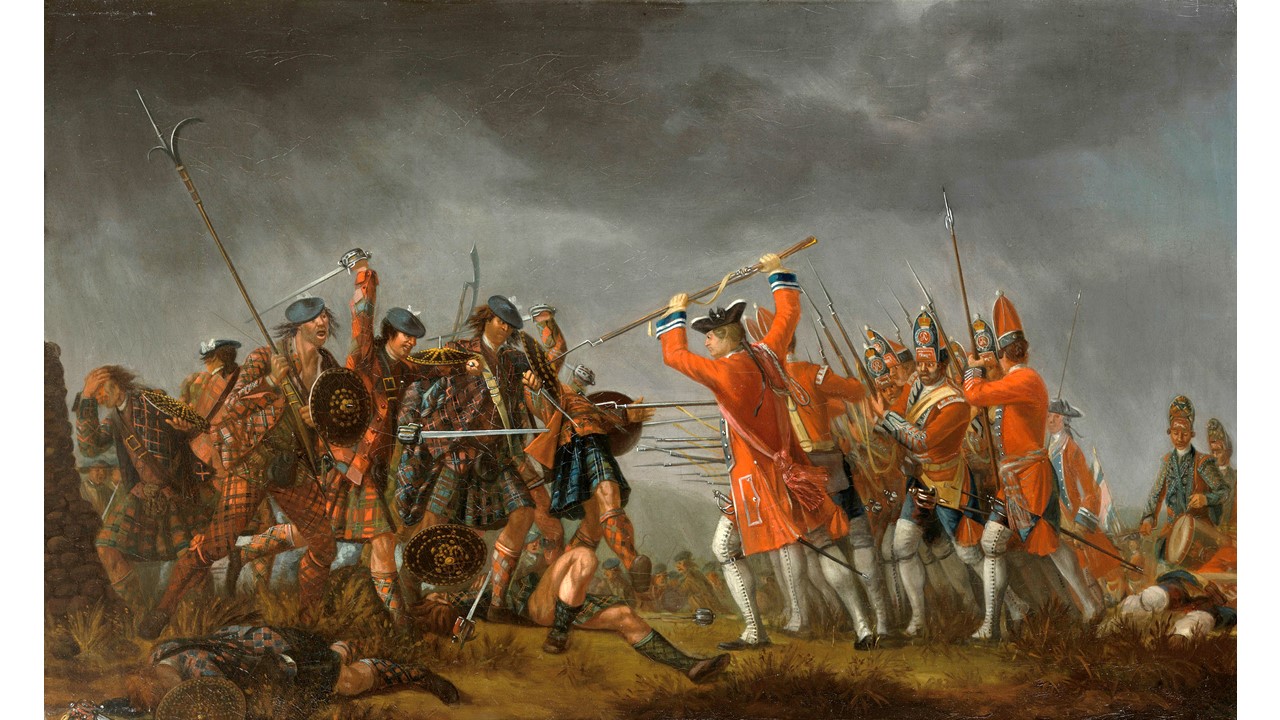
In the Winter of 1745, the Jacobite army of Bonnie Prince Charlie passed through my town of Leek on the way to Derby. This was as far as they got before retreating back to the highlands, chased by the Duke of Cumberland, all the way to the slaughter of Culloden. The surrounding Moorlands can be quite spooky in Winter and many folk have heard the sound of bagpipes, particularly when misty.

In the deepest, dark December,
Far beneath our Moorland sky
See a band of soldiers marching,
Pipes are playing, banners fly.
Hear the cry for Caledonia,
Snow is gently falling down.
See the ragged Highland army,
Make its passage through our town.

See the English Redcoat soldier,
Hardened to his task in hand.
Cumberland, he’ll give no quarter,
Heading north across the land.
Hear the cry of desperation,
Lost, the prize of England’s crown.
See the ragged Highland army,
Running swiftly from our town.

See them on the field of battle,
Highland lads, they stand so proud.
Many miles they’ve shared together,
Nothing can divide them now.
Hear the mighty crash of cannon,
Loud the plaintive battle-cry.
Blood is mingled with the heather,
‘Neath a dark and dreary sky.

Now if you go Winter walking,
On our misty moorland wide.
When the stars of bold Orion,
March across the evening sky.
Hear the sad, lamenting piper,
On the wind that gently moans.
Leading out the Highland army,
Ever marching, marching home.

.

.

Jeff Eardley lives in the heart of England near to the Peak District National Park and is a local musician playing guitar, mandolin and piano steeped in the music of America, including the likes of Ry Cooder, Paul Simon, and particularly Hank Williams.
ShareTweetPin
The Society of Classical Poets does not endorse any views expressed in individual poems or commentary.
Read Our Comments Policy Here

RandomPoems

‘Poor Minnesota’: A Poem by Warren Bonham
Poetry

‘Poor Minnesota’: A Poem by Warren Bonham

December 10, 2025

  Poor Minnesota Normal people have an issue recreating Mogadishu, while destroying each iota of what once was Minnesota. Minnesota...

‘Flushing with Anger in a Rest Room’ by Frank De Canio    
Humor

‘Flushing with Anger in a Rest Room’ by Frank De Canio    

August 27, 2017

I may as well be hired as his maid, the way I’m made to clean his toilet seat. Still worse,...

Next Post
‘Shanghai’s Robo Dogs’ by Maura H. Harrison

'Shanghai's Robo Dogs' by Maura H. Harrison

‘Now Once Again’ by Leland James

'Now Once Again' by Leland James

‘Formal Poetry Against Free Verse’ and Other Poetry by Phillip Whidden

'Formal Poetry Against Free Verse' and Other Poetry by Phillip Whidden

Comments 18

  1. David Watt says:
    4 years ago

    This is a wonderfully atmospheric historical narrative Jeff.
    The repetition of the word ‘marching’ in the final stanza is a clever way of emphasizing the perpetual ghostly procession.

    Reply
    • Jeff Eardley says:
      4 years ago

      David, thank you so much for your interest. We have an isolated ale house high up in the moorlands called “The Royal Cottage” with a sign featuring the Bonnie Prince himself. On my last visit, the landlady told me that the bench that I was sitting on was from that time and was, “ At least a hundred years old” which reminded me of the Billy Connolly joke that the Jacobites should never have put their trust in a man named after three sheep dogs.

      Reply
      • David Watt says:
        4 years ago

        I hadn’t heard that joke before. It’s a ripper!

        Reply
  2. Brian Yapko says:
    4 years ago

    I enjoyed this poem very much, Jeff. A very interesting slice of history seen through the lens of a ghostly encounter and appropriately set to militarily rhythmic iambic tetrameter. I would not want to visit those Moorlands during a misty winter but I have a soft spot for bagpipes. Well done!

    Reply
  3. Jeff Eardley says:
    4 years ago

    Brian, I am sure that you can get counselling to deal with your bagpipe affliction. The great English conductor, Sir Thomas Beecham regarded the bagpipes as the easiest of instruments to learn in that they sound just as bad when you can play them as when you can’t. I once heard the phantom pipes myself but closer inspection revealed the noise to be a sheep that had rolled onto its back. I helped the poor creature onto its feet only to be rewarded by a kick in the goolies, an example of the Old English expression, “It’s as much use as a sheep’s thank you.”
    Thank you for your kind and graceful comment.

    Reply
  4. Yael says:
    4 years ago

    Yet another nice example of how history should be taught in order to be memorable and enjoyable. Thanks for a great poem.

    Reply
    • Jeff Eardley says:
      4 years ago

      Thanks Yael, you are very kind.

      Reply
  5. Paul Freeman says:
    4 years ago

    What’s everyone got against the redcoats? They get such a bad press.

    Thanks for the read, Jeff – and a little bit of history that till now’s passed me by.

    Reply
    • Jeff Eardley says:
      4 years ago

      Thanks Paul. I guess the Redcoat was adopted as to hide any bloodstains in battle. I read that when faced with a formidable foe, most of them asked for their brown trousers.

      Reply
  6. Julian D. Woodruff says:
    4 years ago

    Great, Brian.
    Am I wrong in hearing something of the tone and manner of Kipling in these lines–at least his clarity and forthrightness?

    Reply
    • Jeff Eardley says:
      4 years ago

      Julian, thank you for your kind words. I love Kipling but fear that he is being air-brushed out of our consciousness by the anti-colonial woke brigade.

      Reply
  7. Margaret Coats says:
    4 years ago

    Jeff, I had been hoping for a Scottish poem–and this is an excellent one beyond your usual tone and oeuvre. It domesticates the militant and ghostly battle right outside your town (a great way for the poet to get close to his subject).
    Caledonian pride is heartshakingly strong in the third stanza with “Nothing can divide them now” even as they run. But the march returns with force in the final stanza, as David Watt noted. This is the march of Scots who are often defeated but never give up, and you turn it into the march of stars across the sky. On behalf of everyone proud of Scottish descent, thank you for this poem on one of our most inspiring losses.

    On that redcoat issue of what fighting men wore, recall that Culloden led to the banning of traditional Highland dress for a generation. That is, the usurping British government (for the sake of national security, of course) told free Scots what to wear, leading one to complain of confinement in breeches. The historical painting that heads this post was done by an artist who died before the ban was lifted.

    Reply
  8. Jeff Eardley says:
    4 years ago

    Margaret, I have a fascination for this slice of history that took place here, from the annual Highland games in the Derbyshire town of Ashbourne, to the small hamlet of Tompkin, derived from, “Tam’s skin” where a local farmer flayed the skin from the back of a Jacobite soldier intent on sheep rustling. I recall a visit we once made to Edinburgh where a hotel manager showed us a painted image of the Bonnie Prince that could only be viewed in the reflection onto a candlestick. We also have a most isolated ale-house, The Royal Cottage, so named after hosting a party of Jacobites. Thank you for your comments on highland attire of which I was unaware. Best wishes to you and yours.

    Reply
    • Sally Cook says:
      4 years ago

      Jeff, When I was trying to say… this evocative poem seems made for a lyric, I stepped away for a cup of coffee. When I returned, my unfinished post had disappeared

      I assumed I’d lost it, but now I see the blasted computer had sent it off, full of mistakes and attributed to a mysterious “S “.– Here it is again:
      Not only is your poem full of lyrical qualities, I find your references to the winds on the moors constant drumbeat and ghostly companion to soldiers on both sides. Thank you for sharing this.

      Reply
  9. Susan Jarvis Bryant says:
    4 years ago

    Jeff, I love everything about this poem – the rhyme, the rhythm, the eerie atmosphere, the images – especially: ‘Blood is mingled with the heather, / ‘Neath a dark and dreary sky.’ I can see it all! I’m with Yael on the history lesson front. If maths lessons were taught in limerick form, I would have been a rich accountant instead of a poor poet. Great stuff!

    Reply
  10. Jeff Eardley says:
    4 years ago

    Oh, Susan, thank you for your kind comment. I don’t think I am alone in thinking that your work, and your encouragement to so many on SCP is like a sprinkle of gold dust on these sometimes depressing days. I have a space on my bookshelf next to Peter’s well-thumbed anthology that is awaiting yours. You should not be a poor poet. (Maths lessons in Limerick form would be a great poetic challenge by the way) Best wishes to you and Mike.

    Reply
  11. Sally Cook says:
    4 years ago

    Jeff, this evocative poem seems made for a lyric. Thank you for sharing it.

    Reply
    • Jeff Eardley says:
      4 years ago

      And thank you Sally for your kind comment. You are right, it is also a song that I have performed a few times.

      Reply

Leave a Reply Cancel reply

Your email address will not be published. Required fields are marked *

  1. Joseph S. Salemi on ‘Spontaneous Conjugal Combustion’ and Other Poems by Susan Jarvis BryantMay 12, 2026

    When I was in the U.K. I heard that "poodle" could mean a henpecked or subservient husband, and by extension…

  2. Susan Jarvis Bryant on ‘Spontaneous Conjugal Combustion’ and Other Poems by Susan Jarvis BryantMay 12, 2026

    Yael, it's always lovely to hear from you. I'm thrilled you enjoyed the poems. I did have people in mind…

  3. Susan Jarvis Bryant on ‘Spontaneous Conjugal Combustion’ and Other Poems by Susan Jarvis BryantMay 12, 2026

    James, I'm hoping you enjoyed the villanelle and it hasn't worried you too much. Mike often suffers for my art…

  4. Susan Jarvis Bryant on ‘Spontaneous Conjugal Combustion’ and Other Poems by Susan Jarvis BryantMay 12, 2026

    C.B. I just love the Queen Elizabeth II and Welsh Corgis scene... I would have claimed that one had I…

  5. Susan Jarvis Bryant on ‘Spontaneous Conjugal Combustion’ and Other Poems by Susan Jarvis BryantMay 12, 2026

    Brian, thank you so much for this extremely generous and perceptive reading. I thoroughly appreciate your take on my quirky…

Subscribe to Daily Poems

Enter your email address to subscribe to this blog and receive notifications of new posts by email.

Join 1,593 other subscribers

Recent Poems

  • A Poem on Coach “Black Mike” Castronis from Athens Y Camp, by Alec Ream
  • A Poem on the Zambian National Park Mosi-oa-Tunya, by Paul A. Freeman
  • ‘Creation of Mom’: A Mother’s Day Poem by Roy E. Peterson
  • ‘Spontaneous Conjugal Combustion’ and Other Poems by Susan Jarvis Bryant
  • ‘The Man in the Moon Was a Very Round Man’: A Poem by Lauren V. Leon
  • ‘Fibromytrauma’: A Poem by Golan Shahar
  • ‘A Lonely Sliver’: A Poem by Katie Tencza
  • ‘Higher Gas Prices Are a Small Price to Pay’: An Iran War Poem by Mark F. Stone
  • ‘Always Ahead’: A Poem by Scharlie Meeuws
  • ‘Hamlet’s Lawyer’ and Other Poetry by Brian Yapko
  • ‘On An Old Photograph’: A Poem by Joseph S. Salemi
  • ‘Faust Foresees His End’: A Poem by Martin Briggs
  • ‘À la Carte’ and Other Poetry by C.B. Anderson
  • ‘Where the Sweet Bluebonnets Bloom’: A Poem by Roy E. Peterson
  • ‘The Waters’: A Poem by Margaret Brinton
  • ‘The Pinnacle of Poetry’ and Other Poems by Russel Winick
  • The First American Sonnets: An Essay on David Humphreys, by Margaret Coats
  • ‘The Holy Rollers on Poetry’: A Poem by Joseph S. Salemi
  • Sappho’s ‘Poem 1’ Translated by Bruce Phenix
  • ‘The Cautionary Tale of Phone Addicted Mimi’: A Poem by Paul A. Freeman
  • ‘Look Away’: A Poem for America’s 250th Anniversary, by Roger Crane
  • ‘Sunday Morning in Canada’: A Poem by Jeffrey Essmann
  • ‘Bean’: A Poem by Jan Mennite
  • ‘The Swan’s Song ’: A Poem for Shakespeare’s Birthday, by Susan Jarvis Bryant
  • ‘The Gravedigger’: A Poem by Marie Burdett
  • ‘Waiting for the Perfect Man’: A Poem by Janice Canerdy
  • ‘The George-A-Saurus’ and Other Poetry by Brian Yapko
  • ‘When Asked: What’s Your Favorite Season?’: A Poem by Paul Millan  
  • ‘The Last At-Bat of Lyndon Braun’: A Poem by Michael Pietrack
  • ‘The Perpetual Battle’ and Other Poetry by Adam Sedia

Categories

  • Acrostic
  • Alexandroid
  • Alliterative
  • Art
  • Best Poems
  • Blank Verse
  • Chant Royal
  • Classical Poets Live
  • Clerihew
  • Covid-19
  • Deconstructing Communism
  • Educational
  • Epic
  • Epigrams and Proverbs
  • Essays
    • Interviews with Poets
    • Poetry Reviews
  • Featured
  • From the Society
  • Great Poets
    • Dante Alighieri
    • Edgar Allan Poe
    • Emily Dickinson
    • Geoffrey Chaucer
    • Henry Wadsworth Longfellow
    • Homer
    • John Keats
    • John Milton
    • Robert Frost
    • William Blake
    • William Shakespeare
    • William Wordsworth
  • Human Rights in China
  • Limerick
  • Love Poems
  • Music
  • Pantoum
  • Performing Arts
  • Poetry
    • Beauty
    • Children's Poems
    • Culture
    • Ekphrastic
    • Found Poems
    • High School Poets
    • Humor
    • Riddles
  • Poetry Challenge
  • Poetry Contests
  • Poetry Forms
    • Curtal Sonnet
    • Haiku
  • Poetry Readings
  • Rhupunt
  • Rondeau
  • Rondeau Redoublé
  • Rondel
  • Rubaiyat
  • Sapphic Verse
  • Satire
  • Science
  • Sestina
  • Shape Poems
  • Short Stories
  • Song Lyrics
  • Sonnet
  • Symposium
  • Terrorism
  • Terza Rima
  • The Environment
  • Translation
  • Triolet
  • Video
  • Villanelle

Quick Links

  • About Us
  • Submit Poetry
  • Become a Member
  • Members List
  • Support the Society
  • Advertisement Placement
  • Comments Policy
  • Terms of Use

Welcome Back!

Login to your account below

Forgotten Password?

Retrieve your password

Please enter your username or email address to reset your password.

Log In
No Result
View All Result
  • Poems
    • Beauty
    • Culture
    • Satire
    • Humor
    • Children’s
    • Art
    • Ekphrastic
    • Epic
    • Epigrams and Proverbs
    • Human Rights in China
    • Music
    • Performing Arts
    • Riddles
    • Science
    • Song Lyrics
    • The Environment
    • The Raven
    • Found Poems
    • High School Poets
    • Terrorism
    • Covid-19
  • Poetry Forms
    • Sonnet
    • Haiku
    • Limerick
    • Villanelle
    • Rondeau
    • Pantoum
    • Sestina
    • Triolet
    • Acrostic
    • Alexandroid
    • Alliterative
    • Blank Verse
    • Chant Royal
    • Clerihew
    • Rhupunt
    • Rondeau Redoublé
    • Rondel
    • Rubaiyat
    • Sapphic Verse
    • Shape Poems
    • Terza Rima
  • Great Poets
    • Geoffrey Chaucer
    • Emily Dickinson
    • Homer
    • Henry Wadsworth Longfellow
    • Dante Alighieri
    • John Keats
    • John Milton
    • Edgar Allan Poe
    • William Shakespeare
    • William Wordsworth
    • William Blake
    • Robert Frost
  • Love Poems
  • Contests
  • SCP Academy
    • Educational
    • Teaching Classical Poetry—A Guide for Educators
    • Poetry Forms
    • The SCP Journal
    • Books

© 2025 SCP. WebDesign by CODEC Prime.