• Submit Poetry
  • Support SCP
  • About Us
  • Members
  • Join
Sunday, December 21, 2025
Society of Classical Poets
  • Poems
    • Beauty
    • Culture
    • Satire
    • Humor
    • Children’s
    • Art
    • Ekphrastic
    • Epic
    • Epigrams and Proverbs
    • Human Rights in China
    • Music
    • Performing Arts
    • Riddles
    • Science
    • Song Lyrics
    • The Environment
    • The Raven
    • Found Poems
    • High School Poets
    • Terrorism
    • Covid-19
  • Poetry Forms
    • Sonnet
    • Haiku
    • Limerick
    • Villanelle
    • Rondeau
    • Pantoum
    • Sestina
    • Triolet
    • Acrostic
    • Alexandroid
    • Alliterative
    • Blank Verse
    • Chant Royal
    • Clerihew
    • Rhupunt
    • Rondeau Redoublé
    • Rondel
    • Rubaiyat
    • Sapphic Verse
    • Shape Poems
    • Terza Rima
  • Great Poets
    • Geoffrey Chaucer
    • Emily Dickinson
    • Homer
    • Henry Wadsworth Longfellow
    • Dante Alighieri
    • John Keats
    • John Milton
    • Edgar Allan Poe
    • William Shakespeare
    • William Wordsworth
    • William Blake
    • Robert Frost
  • Love Poems
  • Contests
  • SCP Academy
    • Educational
    • Teaching Classical Poetry—A Guide for Educators
    • Poetry Forms
    • The SCP Journal
    • Books
No Result
View All Result
Society of Classical Poets
  • Poems
    • Beauty
    • Culture
    • Satire
    • Humor
    • Children’s
    • Art
    • Ekphrastic
    • Epic
    • Epigrams and Proverbs
    • Human Rights in China
    • Music
    • Performing Arts
    • Riddles
    • Science
    • Song Lyrics
    • The Environment
    • The Raven
    • Found Poems
    • High School Poets
    • Terrorism
    • Covid-19
  • Poetry Forms
    • Sonnet
    • Haiku
    • Limerick
    • Villanelle
    • Rondeau
    • Pantoum
    • Sestina
    • Triolet
    • Acrostic
    • Alexandroid
    • Alliterative
    • Blank Verse
    • Chant Royal
    • Clerihew
    • Rhupunt
    • Rondeau Redoublé
    • Rondel
    • Rubaiyat
    • Sapphic Verse
    • Shape Poems
    • Terza Rima
  • Great Poets
    • Geoffrey Chaucer
    • Emily Dickinson
    • Homer
    • Henry Wadsworth Longfellow
    • Dante Alighieri
    • John Keats
    • John Milton
    • Edgar Allan Poe
    • William Shakespeare
    • William Wordsworth
    • William Blake
    • Robert Frost
  • Love Poems
  • Contests
  • SCP Academy
    • Educational
    • Teaching Classical Poetry—A Guide for Educators
    • Poetry Forms
    • The SCP Journal
    • Books
No Result
View All Result
Society of Classical Poets
No Result
View All Result
Home Poetry

‘Summer’s End’: An Alfred Dorn Sonnet by Cheryl Corey

December 16, 2025
in Poetry, Beauty, Sonnet
A A
14
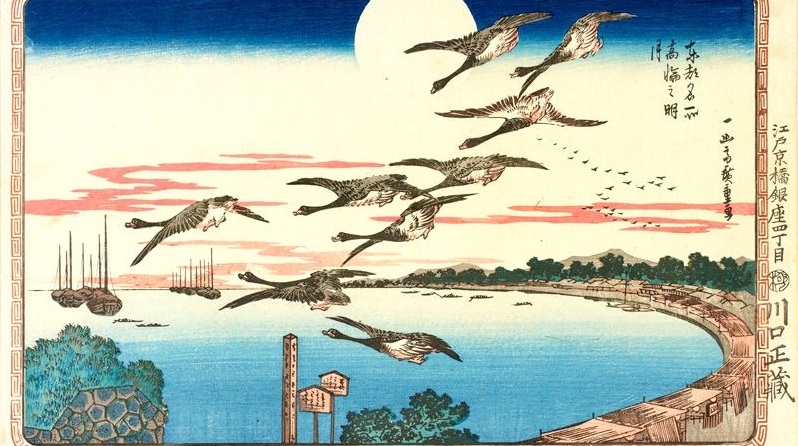
Japanese painting of geese, Edo period (public domain)

Japanese painting of geese, Edo period (public domain)


Summer’s End

—an Alfred Dorn sonnet

It must have been a dream: the nodding boughs
Of loveliness, midsummer nights of calm,
The days festooned in floral spray finespunned;
But seasons change, and now the plaintive soughs
Of sadness rustle through the trees. What balm
Is there for coming days grown moribund?

If only you could grant that longer lease!
Instead, I hear the chevron’s honking geese,

While hummingbirds and warblers wing away.
They know that it’s the time of equinox,
And ought to take their leave without delay,
According to their inner secret clocks.
Today may feel just like a summer day,
But “Mother Nature” mocks—oh how she mocks!


Cheryl Corey is a poet who lives in Connecticut. “Three Sisters,” her trio of poems about the sisters of Fate which were first published by the Society of Classical Poets, are featured in “Gods and Monsters,” an anthology of mythological poems (MacMillan Children’s Books, 2023).

ShareTweetPin
The Society of Classical Poets does not endorse any views expressed in individual poems or commentary.
Read Our Comments Policy Here
Next Post
‘Advice to a Cigar Aficionado’ and Other Poems by Joseph S. Salemi

'Advice to a Cigar Aficionado' and Other Poems by Joseph S. Salemi

A Video Poetry Reading by Adam Sedia

A Video Poetry Reading by Adam Sedia

‘PTSD in Ilium’ and Other Poetry on Forgetfulness, by C.B. Anderson

'PTSD in Ilium' and Other Poetry on Forgetfulness, by C.B. Anderson

Comments 14

  1. Joseph S. Salemi says:
    5 days ago

    This is a beautiful Dorn sonnet. Dr. Dorn was my poetic mentor for many years, and he would have loved this example of the form he invented.

    He would also have appreciated the poetic license of creating an alternate form of the past participle of the verb “to spin.” The form “spunned” (in the word “finespunned”) is the kind of liberty that Dorn occasionally took.

    Reply
    • Cheryl Corey says:
      5 days ago

      Your compliment means so much. For quite some time, I’ve been wanting to write a Dorn sonnet – at the very least, one – to honor Dr. Dorn. I hope to write more in the future.

      Reply
  2. Rob Fried says:
    5 days ago

    A lovely sonnet, indeed! It’s my first exposure to the Dorn sonnet form, and I think it is rich with possibility. One slight suggestion: given “Mother Nature’s” role in the final line, perhaps line 7 might read, “if only she . . .”

    Reply
    • Cheryl Corey says:
      5 days ago

      Thank you, Rob. Try writing your own – Give it a go!

      Reply
  3. Jeff Minick says:
    5 days ago

    What a beautiful sonnet! Loved the final lines.

    Reply
    • Cheryl Corey says:
      5 days ago

      Thanks, Jeff. What I had in mind was one of those balmy, early autumn days when it’s over 80 degrees. You feel like it’s still summer, but Nature has a rude awakening in store.

      Reply
  4. Cynthia L Erlandson says:
    5 days ago

    This is really beautiful, Cheryl! I hadn’t seen this form before, but I love it! The last six lines are my favorite stanza; using equinox/clocks/mocks is lovely (especially the double use of “mocks” in the same line for emphasis), and the phrase “their inner secret clocks” is delightful.

    Reply
    • Cheryl Corey says:
      5 days ago

      Cynthia, over the past few years I’ve set a goal to challenge myself to study and compose poetry in a greater variety of forms; also, over the coming year, to incorporate greater poetic devices.

      Reply
  5. Paul Buchheit says:
    5 days ago

    Great sonnet, Cheryl: expressive, thought-provoking.

    Reply
  6. jd says:
    5 days ago

    Love the form and the poem. Thank you for writing
    such a beautiful example.

    Reply
  7. Russel Winick says:
    4 days ago

    Cheryl — Cynthia (above) said everything that I had planned to say, so please take this as my seconding her remarks. This poem was one fun read indeed!

    Reply
  8. Margaret Coats says:
    4 days ago

    Cheryl, this is fascinating to read. You treat the subject in a way that never becomes easy to define–with a surprisingly emphatic final line. I wonder too if you have one (or more than one) idea about how the Dorn sonnet form works. With the only rhyming couplet in the center, that could be a divider splitting the sonnet into two equal parts where the couplet “floats” or stands apart from both. But in “Summer’s End,” it seems to go with the latter six lines to make an “upside-down sonnet” of proportion 6/8 rather than 8/6. I have seen other Dorn examples in which the couplet seems to sink unobtrusively into the 14 lines, or where the division is clearly 3 + 3 + 2 + 3 + 3. Lots of potential.

    The most common rhyme scheme for French sonnets is abbaabba cc deed, which might look a little like Dorn with that noticeable cc often serving as an extended volta. But the French form (a variation on the Italian) is actually jampacked with rhyming couplets–five of them! And it is like both the Petrarchan and like Dorn in allowing no rhyming couplet to conclude. You seem to overcome that restriction with the in-line repetition you use for conclusion. Interesting work indeed.

    Reply
    • Cheryl Corey says:
      4 days ago

      My rudimentary understanding of the form is that the lone rhyming couplet should serve as the volta. If only Dr. Dorn was still with us to offer his critique! As always, thank you for your analysis.

      Reply
  9. Paul A. Freeman says:
    3 days ago

    That is a wonderful sonnet, Cheryl. The chevron geese is one of several endearing images.

    Thanks for the read.

    Reply

Leave a Reply Cancel reply

Your email address will not be published. Required fields are marked *

  1. Martin Briggs on ‘Fog of Confusion’: A Poem by Margaret BrintonDecember 21, 2025

    I don't find any confusion or unclarity here. For me, this piece is about the sometimes fugitive distinction between the…

  2. Paul Freeman on ‘Safer?’ and Other Poetry by Gigi RyanDecember 21, 2025

    Sorry for the double post. The first one got, er, lost in the cloud!

  3. Margaret Coats on ‘The Burglars’ Ball’: A Children’s Book in Poetry by Leslie Lippincott Hidley and Peter BellwoodDecember 21, 2025

    A charming, and yes, classical, children's book in verse. I want to read it in book form myself before I…

  4. Margaret Coats on ‘Canzone at Evening’ by Francesco Petrarch, Translated by Margaret CoatsDecember 20, 2025

    Thank you so much, Mary Jane, for special attention to the canzone form. You've discovered, in this example, its major…

  5. Margaret Coats on ‘Fog of Confusion’: A Poem by Margaret BrintonDecember 20, 2025

    Margaret, the poem subtly points out that seemingly clear images (such as the shadow of hills on a wall) in…

Receive Poems in Your Email

Enter your email address to subscribe to this blog and receive notifications of new posts by email.

Join 1,621 other subscribers
Facebook Twitter Youtube

Archive

Categories

Quick Links

  • About Us
  • Submit Poetry
  • Become a Member
  • Members List
  • Support the Society
  • Advertisement Placement
  • Comments Policy
  • Terms of Use

Welcome Back!

Login to your account below

Forgotten Password?

Retrieve your password

Please enter your username or email address to reset your password.

Log In
No Result
View All Result
  • Poems
    • Beauty
    • Culture
    • Satire
    • Humor
    • Children’s
    • Art
    • Ekphrastic
    • Epic
    • Epigrams and Proverbs
    • Human Rights in China
    • Music
    • Performing Arts
    • Riddles
    • Science
    • Song Lyrics
    • The Environment
    • The Raven
    • Found Poems
    • High School Poets
    • Terrorism
    • Covid-19
  • Poetry Forms
    • Sonnet
    • Haiku
    • Limerick
    • Villanelle
    • Rondeau
    • Pantoum
    • Sestina
    • Triolet
    • Acrostic
    • Alexandroid
    • Alliterative
    • Blank Verse
    • Chant Royal
    • Clerihew
    • Rhupunt
    • Rondeau Redoublé
    • Rondel
    • Rubaiyat
    • Sapphic Verse
    • Shape Poems
    • Terza Rima
  • Great Poets
    • Geoffrey Chaucer
    • Emily Dickinson
    • Homer
    • Henry Wadsworth Longfellow
    • Dante Alighieri
    • John Keats
    • John Milton
    • Edgar Allan Poe
    • William Shakespeare
    • William Wordsworth
    • William Blake
    • Robert Frost
  • Love Poems
  • Contests
  • SCP Academy
    • Educational
    • Teaching Classical Poetry—A Guide for Educators
    • Poetry Forms
    • The SCP Journal
    • Books

© 2025 SCP. WebDesign by CODEC Prime.

This website uses cookies. By continuing to use this website you are giving consent to cookies being used. Visit our Privacy and Cookie Policy.