


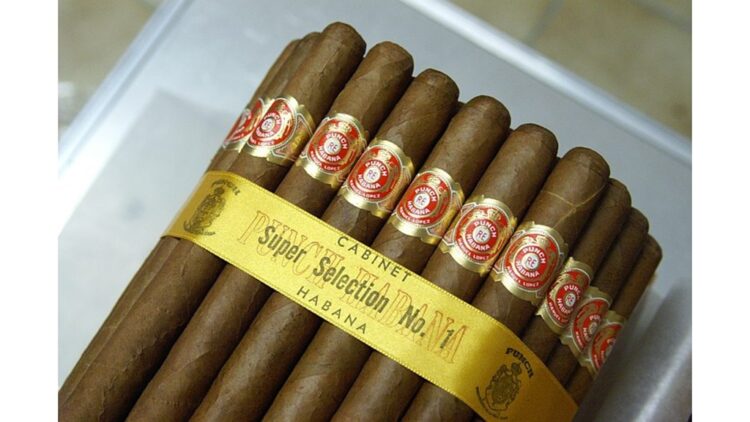
Advice to a Cigar Aficionado
If you smoke a cheap cigar
You may get severe catarrh,
For a poor grade of tobacco
Can drive your bronchial system wacko.
Stick to stogies from Havana
Which are like angelic manna.
Even though they are illicit
(Yes, the law is quite explicit)
Disregard this regulation
And buy them in some foreign nation.
Next time that you go to Europe
And you take a motor tour up
France’s coast or the Loire valley,
Seek out some small rue or alley
And find le marchand de tabac—
He will sell you what you lack.
Secrete them in a large valise
Thus eluding the police.
Swagger through the Customs portal
As if you were Jove immortal.
This way you will have them handy
For postprandial use, with brandy.
On the Lais of Marie de France
Damoiselle Marie de France,
Did you never feel a lance?
Surely some young cavalier
Made you quintain for his spear—
Did no knight in love’s sweet lists
Pinion you by legs and wrists?
I think not—your verse exudes
Maiden-modest platitudes.
Had you undone your mail chemise
Forbidding as chevaux de frise,
If you once had put aside
Your high honor’s crusty pride
Maybe—I mean no dispraise—
We all might have had better lais.
The Pilgrim Fathers and Mothers
“The eatinge of much meate doth provoke
carnall desire.” —Elizabethan commonplace
The folks at Massachusetts Bay
Sat half-starved before their fires
Wondering, from day to day,
How to get what flesh requires.
And though they were the Lord’s elect,
Scripture-sure and doubly graced,
They seemed more like a petty sect
A-perishing in heathen wastes.
For pilgrims in their broad-brimmed hats,
Buckled shoes and pantaloons,
Seldom grew immensely fat
On oysters, squash, and macaroons.
A friendly Pequot Indian
Provided them with maize and cod,
But since they were true Englishmen
Raised on meat and Calvin’s God,
They knew their little settlement
Could not consume just plants and fish.
The pilgrims needed nourishment
That satisfied a carnal wish.
And so they went forth after prey,
Each carrying a blunderbuss,
To seek out turkey, quail, or stray
Quadrupeds herbivorous.
Soon their larders were replete
With game of every sort and size;
The pilgrims had sufficient meat
To give them strength to sermonize.
Nevertheless, real men would scorn
To feast without a cup of cheer,
So someone took a sack of corn
And brewed up plain but potent beer.
Fortified for living life
By having been so amply fed,
Each pilgrim turned to his good wife
And pulled her towards the nuptial bed.
And thus New England grew and thrived—
Red meat and liquor manned the breach,
Insuring that the girls were swived
(Despite what ministers may preach).
—all poems from Nonsense Couplets (1999)
Joseph S. Salemi has published five books of poetry, and his poems, translations and scholarly articles have appeared in over one hundred publications world-wide. He is the editor of the literary magazine TRINACRIA and writes for Expansive Poetry On-line. He teaches in the Department of Humanities at New York University and in the Department of Classical Languages at Hunter College.
















Thank you, Joseph. These rhymes made me laugh a lot!
I’m glad you were pleased, Cynthia.
Mercy, Dr. Salemi. Now I know how the rich have Cuban cigars made in Havana. I looked up “lais” in French and it translates to unsightly or ugly. Your tongue must have been in your cheek. Then I looked up “chevaux de frise” and it translated to a mobile military spiked device to stop horses from proceeding. Great rhyme and image. Now I wonder who taught whom to make beer from corn (I remember that the English also used the word “corn” for barley, although it was generally generic as in other cereal grains like wheat and oat, as well.) European barley/corn was native to North Africa and other places in the Middle East, but another type of barley was also native to North America. Corn in America replaced the word for maize. I am certain you know these things, but others may not know them. As always, your poems are fascinating, entertaining, and beautifully rhymed.
You’re mostly right, LTC Peterson. But in French a “lai” (plural “lais’) is a short narrative poem. The word that you want for ugly or unsightly is “laid” (feminine “laide”) in French. What I aimed at was to make a play on the English slang word “lay,” meaning the act of sexual intercourse, as a peg on which to hang my criticism of Marie de France’s “maiden-modest platitudes.” The final line “We all might have had better lais” was meant to be Rochesterian, conflating the French medieval “lais” (narrative poems) with the English modern slang “lays” (acts of coition).
You’re correct about the corn-maize distinction. “Corn” in Brit-speak is a general term for various grains, whereas we Yanks use the word for corn-on-the-cob. The word “scorn” forced me to use the British “corn” to make my rhyme. I figured the Pilgrims all came from England, so what the hell.
Many thanks for your appreciative comments!
I am much amused, most especially by the ‘Quadrupeds herbivorous’, for some reason.
Thanks for cheering up an otherwise seriously busy day.
Thank you, Paul. There aren’t many rhymes for blunderbuss!
Sounds like some one needs a very cold shower, Joe! All 3 are cleverly composed and down right funny,
and I don’t laugh easy. Thanks for the forgivably-spicy ‘smilers’. 🙂 & Merry Christmas
Mark, every guy needs a cold shower once in a while. Ask any woman who has had dealings with men.
I’m glad you liked the poems.
In the first poem, rhymes such as cigar with catarrh, tobacco with wacko, tabac with lack, and valise with police are great examples of the unique possibilities to be found in formal poetry. You just need to use your noggin and imagination!
Cheryl, I have often thought that the people who say English is poor in rhyme possibilities simply don’t know enough vocabulary, or fail to see how coinages and compounds and elisions and foreign words can produce rhymes that are unexpected. I suspect that it’s the free-verse partisans who push the story that English is rhyme-poor, as a way to justify their own work, or to satisfy the Plain Language Police who hate any unusual or strange diction in a poem.
These were great to cheer me up. The “Lais” is a master study in double entendre, with the added benefit of being a “dialogue across centuries” with past poets, one of the richest poetic genres (and too seldomly explored, in my opinion). “To a Cigar Aficionado” works with some great rhymes and gives some amusing advice — although I will say as a former cigar aficionado that although Cuban tobacco is the best, Cuban cigars are poorly rolled because . . . well, communism. I’ll settle for a good Macanudo. “Pilgrim Fathers and Mothers” breaks through the mythology of early New England and gives a sobering picture of the realities of founding a settlement, made engaging through the lens of humor.
Thanks, Adam. I’m sure the Cuban cigars were much better prior to 1959. But you know what they say about any kind of socialism — if you established it in the Sahara, pretty soon they’d declare a shortage of sand.
The risk you take, Joseph, is that no one will take you seriously when you publish a somber poem. Your benefit is that even your most outlandish productions will generate grave interpretations. In sum, you are always working close to the fulcrum and know exactly where leverage should be applied. Hammer on, smithy!
Well, you know me, Kip — I really don’t give a damn about reader response. I just hammer away at the forge and anvil.
Your period piece on cigars, Joe, brings to mind the era just previous, when I entered first grade in a Florida public school, required to bring an empty cigar box as pencil case. My gorgeous King Edward brand box was contributed by my grandfather. That was, I believe, the last year for cigar boxes at school, as cigar culture began to decline while hostility to Castro developed. Cigars were still sold in the dime store near the bubble gum and candy, and I recall talk of where they came from (“Carolina”). My grandfather gave up smoking and my dad’s generation went to cigarettes if anything. By the time I was in eighth grade, we were being lectured to have nothing to do with tobacco, and shortly thereafter other illicit indulgences began to abound. Time moves fast. Your poem represents a sweet moment in one strand of cultural history.
Thank you for your comments, Margaret. There still is a market for cigars, but it is now very upscale and class-conscious, and the smoking usually takes place in men’s clubs, private parties, executive meetings, and even some special venues designed just for men who are aficionados of the practice. The cheaper kind of cigar (which was associated in the past with working-class guys) is what has faded away.
Very expensive cigars are still made in Hispanic countries other than Cuba, and sold in the finer tobacconist shops. The up-and-coming yuppie males climbing the corporate ladder vie with each other over their choice of brands, and their expertise in judging the various types of cigars by quality, aroma, taste, shape, and wrapper. The telltale mark of one of these affluent young cigar aficionados is his personal tip-clipper: a small hand-operated device (about 2.5 inches) that functions like a miniature guillotine to slice off the tip of a cigar neatly before lighting up. The old working-class habit of just biting off the tip is unheard of, and this shows you the way in which cigar culture has been gentrified.
Joseph – I especially liked “Advice…”, it brought back memories of illicit smokes! But didn’t all the good makers flee Cuba when Castro took over? I understood most went to Dominican Republic so Santo Domingo should be recommended instead of Habana? :<)
Well, that was true for H. Upmann cigars, and several other high quality brands. But in poetry we don’t pay strict attention to facts, as we have to do in a legal deposition or on an income tax form. “Havana” rhymes with “manna,” and that’s all that is important.
Poetry is “fictive mimesis.” And that means we are free to disregard facts, truths, minor details, morals, ethical imperatives, or any of the rest of that Puritan-Platonic chickenshit. As in a drama, you can say whatever the hell you want.
I’m glad you liked the poem.
Completely agree with you Joseph, just a poor attempt at humor.
Magnificent, Joe, to see ‘swived’ revived! Keep it up – is all I can say!
Thanks, Jim. I teach the verb “to swive” every semester to my language class, so that they have a way to say “fuck” without getting into trouble.
In The Sot-weed Factor the author (John Barth) often uses the phrase: Swive ’em from whipple to Whitsuntide.
I enjoyed reading these when I got your book and I enjoyed re-reading them now, too. I thought the cigar poem was familiar while reading it. I’ve smoked cuban cigars before and while they’re the only cigars I have smoked, they were a good experience. I’m not a huge tobacco guy but I can imagine trying out a few more.
Dear Drilon, thank you for your kind words.
With over 10 years of experience in the cigar business at Chơi xì gà, I find this piece spot-on: satirical without being shallow. Cigars aren’t just smokes—they’re experiences, memories, and stories. You laugh, then realize you’ve been there too.
Dear Xi ga —
I am very happy to have the response of someone in the cigar business! Many thanks.