• Submit Poetry
  • Support SCP
  • About Us
  • Members
  • Join
Sunday, September 6, 2026
Society of Classical Poets
  • Poems
    • Beauty
    • Culture
    • Satire
    • Humor
    • Children’s
    • Art
    • Ekphrastic
    • Epic
    • Epigrams and Proverbs
    • Human Rights in China
    • Music
    • Performing Arts
    • Riddles
    • Science
    • Song Lyrics
    • The Environment
    • The Raven
    • Found Poems
    • High School Poets
    • Terrorism
    • Covid-19
  • Poetry Forms
    • Sonnet
    • Haiku
    • Limerick
    • Villanelle
    • Rondeau
    • Pantoum
    • Sestina
    • Triolet
    • Acrostic
    • Alexandroid
    • Alliterative
    • Blank Verse
    • Chant Royal
    • Clerihew
    • Rhupunt
    • Rondeau Redoublé
    • Rondel
    • Rubaiyat
    • Sapphic Verse
    • Shape Poems
    • Terza Rima
  • Great Poets
    • Geoffrey Chaucer
    • Emily Dickinson
    • Homer
    • Henry Wadsworth Longfellow
    • Dante Alighieri
    • John Keats
    • John Milton
    • Edgar Allan Poe
    • William Shakespeare
    • William Wordsworth
    • William Blake
    • Robert Frost
  • Love Poems
  • Contests
  • SCP Academy
    • Educational
    • Teaching Classical Poetry—A Guide for Educators
    • Poetry Forms
    • The SCP Journal
    • Books
No Result
View All Result
Society of Classical Poets
  • Poems
    • Beauty
    • Culture
    • Satire
    • Humor
    • Children’s
    • Art
    • Ekphrastic
    • Epic
    • Epigrams and Proverbs
    • Human Rights in China
    • Music
    • Performing Arts
    • Riddles
    • Science
    • Song Lyrics
    • The Environment
    • The Raven
    • Found Poems
    • High School Poets
    • Terrorism
    • Covid-19
  • Poetry Forms
    • Sonnet
    • Haiku
    • Limerick
    • Villanelle
    • Rondeau
    • Pantoum
    • Sestina
    • Triolet
    • Acrostic
    • Alexandroid
    • Alliterative
    • Blank Verse
    • Chant Royal
    • Clerihew
    • Rhupunt
    • Rondeau Redoublé
    • Rondel
    • Rubaiyat
    • Sapphic Verse
    • Shape Poems
    • Terza Rima
  • Great Poets
    • Geoffrey Chaucer
    • Emily Dickinson
    • Homer
    • Henry Wadsworth Longfellow
    • Dante Alighieri
    • John Keats
    • John Milton
    • Edgar Allan Poe
    • William Shakespeare
    • William Wordsworth
    • William Blake
    • Robert Frost
  • Love Poems
  • Contests
  • SCP Academy
    • Educational
    • Teaching Classical Poetry—A Guide for Educators
    • Poetry Forms
    • The SCP Journal
    • Books
No Result
View All Result
Society of Classical Poets
No Result
View All Result
Home Poetry

‘Rachel’s Bawbee’: A Poem by Morrison Handley-Schachler

November 26, 2025
in Poetry, Satire
A A
17
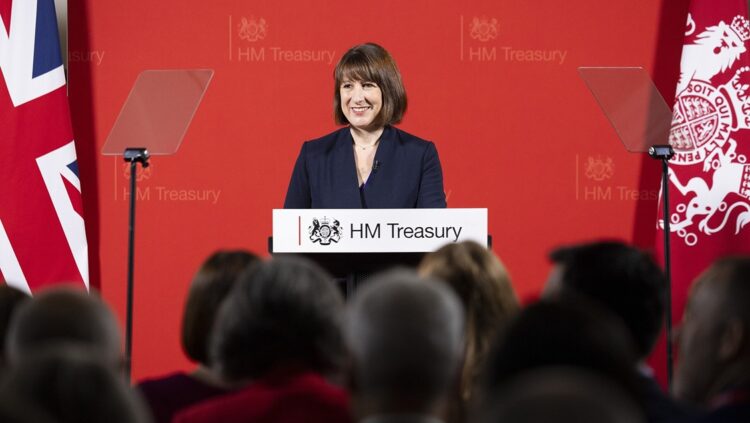
photo of Chancellor Rachel Reeves (HM Treasure)

photo of Chancellor Rachel Reeves (HM Treasure)


Rachel’s Bawbee

Rachel: Chancellor Rachel Reeves who will present
His Majesty’s Government’s budget on Nov. 26, 2025

“ae bawbee”: Scottish phrase for a single halfpenny

NHS: National Health Service

OBR: Office for Budget Responsibility,

The only thing that Rachel had,
That Rachel had, that Rachel had,
The only thing that Rachel had
__Was ae bawbee.
’Twas hers ’cause HM Treasury
Extorted it from you and me
And gave it her incautiously
__In custody.

The doctors from the NHS
Came up to Rachel to express
Their philanthropic caringness
__As sweetly as can be:
“Though we’ve the skills to cure your ills,
We’ll take away your happy pills
Unless you’ll kindly pay our bills
__With your bawbee.”

Then the pipes piped in the brigadiers
Wi’ their muskets, nukes and shining spears
To drum upon her tender ears
__This, their stirring plea:
“Our hormones won’t wait any more;
We valiant lads are off to war,
So we’ll needs buy bombs and bullets for
__Your ae bawbee.”

Then came a clown dressed up with flair
In threadbare rags and crazy hair,
Like a beggar or a billionaire,
__And so bargained he:
“I are the master from the school;
I teaches children to be cool;
But you can buy a wiser fool
__With your bawbee.”

And then came forth a motley band
Of neighbours from throughout the land
Approaching her with outstretched hand
__Imploringly
For pensions, sickness pay, outdoor
Relief and bread to feed the poor
And children’s benefits and more
__From her bawbee.

Now Rachel cannot be reproved
For flintiness; for she was moved
To seek how all could be improved
__And thus responded she:
“With all your charms my heart’s in thrall;
I’m mad in Love with one and all;
I’ll go buy sweets for great and small
__With my bawbee.”

But her mother and the OBR
Jumped in her bedroom door to bar
__And cried,
_“You’ll not be going far
__With your bawbee.
Whatever foolish vows you’ll make,
Your promises are ours to break.
Shut up your purse for virtue’s sake
__With your bawbee.”


Poet’s Note: Based on Jenny’s Bawbee by Alexander Boswell (1775-1822) and written to fit the traditional tune first published by Archibald Duff (c.1770-1840). A variety of performances of the arrangement by Franz-Joseph Haydn (1732-1809), with Boswell’s words, can be readily found on YouTube.

HM Treasury: His Majesty’s Treasury, a magical empty box created by King Henry I of England in 1126


Morrison Handley-Schachler is a retired Chartered Public Finance Accountant and Lecturer in Accounting. He has a doctorate in Ancient History and has published articles on ancient Persian history, accounting history, financial crime, auditing and financial risk management. He lives in South Queensferry, on the outskirts of Edinburgh, Scotland.


ShareTweetPin
The Society of Classical Poets does not endorse any views expressed in individual poems or commentary.
Read Our Comments Policy Here

RandomPoems

An Appeal to Activist Athletes at the Olympic Games, by Jeff Kemper
Culture

An Appeal to Activist Athletes at the Olympic Games, by Jeff Kemper

July 23, 2021

. A Little Respect an appeal to activist athletes at the Olympic games You have the right to speak of...

‘Sonnet II: Liu Xitong’ and Other Poetry by Evan Mantyk
Beauty

‘Sonnet II: Liu Xitong’ and Other Poetry by Evan Mantyk

January 19, 2019

. Sonnet II: Liu Xitong Liu Xitong (pronounced Leo She-tong) recently spoke on Capitol Hill about the persecution he faced...

Next Post
‘Cetus and Jonah’s Lament’: A Poem by James Sale (Updated with Music)

'Cetus and Jonah’s Lament': A Poem by James Sale (Updated with Music)

‘The Keeper’s Wife’: A Poem by Cheryl Corey

'The Keeper’s Wife': A Poem by Cheryl Corey

‘The Time to Give Him Thanks’: A Poem by Roger Crane

'The Time to Give Him Thanks': A Poem by Roger Crane

Comments 17

  1. Margaret Coats says:
    9 months ago

    Morrison, as I was reading this flaunting strut with so much Scots, I thought, “I must ask the poet if he has a particular tune in mind.” Thanks for anticipating the question. There’s music to the piece indeed, but not much jingling of coin!

    Reply
    • Morrison Handley-Schachler says:
      9 months ago

      Thank you very much for your comment, Margaret. The music and Boswell’s original, with its memorable lines and characters, such as the soldier “Wi’ skull ill-lined, but back weel-clad,” were as much an inspiration as our current Chancellor.

      Reply
  2. James A. Tweedie says:
    9 months ago

    Margaret likely referring to Jinglin’ Geordie humming this on his way to work. Funny and well told, Morrison. Please give us more.

    Reply
    • Morrison Handley-Schachler says:
      9 months ago

      Thanks, James, I will seek to publish more in the near future. It will be remembered that Jinglin’ Geordie (George Heriot), the Scottish goldsmith noted for his generosity and foundation of George Heriot’s school, made much of his fortune from the personal extravagance of Anne, Queen consort of James VI and I of Scotland and England. Maybe there is a lesson there.

      Reply
  3. Warren Bonham says:
    9 months ago

    Very entertaining. A large proportion of my kin hail from Scotland (Glasgow). Sadly, I am led to believe that many are likely to be supporters of Rachel Reeves. Perhaps this poem can open some eyes.

    Reply
    • Morrison Handley-Schachler says:
      9 months ago

      Thank you for your comment Warren. Rachel’s supporters might be in a bit of a minority in the UK as a whole. It seems that Rachel’s largesse is in large part to be funded by freezing tax thresholds for many years, which means that people on modest earnings will be more heavily affected, relative to their income, than people on high earnings, but wealth creation does not seem to be a priority for the present government.

      Reply
  4. Paul Freeman says:
    9 months ago

    In mitigation, Chancellor of the Exchequer is a bit of a poison chalice. That said, when you’ve nowt but two farthings to rub together, no one’s likely to be happy.

    Thanks for an entertaining, truly satirical piece, Morrison, from Rebus country.

    Reply
    • Morrison Handley-Schachler says:
      9 months ago

      Thanks, Paul. I agree, it’s not a job that I would like to do. Of course, everyone would like everyone else to contribute more farthings.

      Reply
  5. Roy Eugene Peterson says:
    9 months ago

    Morrison, I enjoyed reading your poem and learned something in the process. I also caught up to your Nostalgia Challenge poem today and commented on how well done that was about the crown/half crown.

    Reply
    • Morrison Handley-Schachler says:
      9 months ago

      Thanks for both your comments. I’m glad you enjoyed reading both. I also had fun writing them.

      Reply
  6. Adam Sedia says:
    9 months ago

    This is a clever piece, true to the traditions of great poetry. It is timely, incisive, and gives a few good laughs (the clown’s appearance and discourse was my favorite scene). Your adaptation of an eighteenth-century piece and faithfulness to the political satire of that period makes this a worthy standard-bearer of a living British tradition.

    Reply
    • Morrison Handley-Schachler says:
      9 months ago

      Thanks for your appreciation, Adam. I’m glad you enjoyed reading it. The characters and their pleas were fun to write and partly inspired by Boswell’s, while Rachel’s response is rather different from the original Jenny’s. Satire is a great tradition which should be maintained.

      Reply
  7. C.B. Anderson says:
    9 months ago

    I don’t pretend to know much of anything about British politics, but now that I’ve gotten a taste of it, it reminds me of some of chicanery, hypocrisy and mendacity that goes on all the time in the marmoreal halls of our federal and state seats of government in the USA. I guess the apple doesn’t fall far from the tree. Most of us here are pleased to have inherited a proclivity and a knack with respect to writing and reading poetry, but less pleased with our inheritance of Anglo-Saxon pigheaded recalcitrance, and it’s no use blaming the Danes.

    Reply
  8. Morrison Handley-Schachler says:
    9 months ago

    A belated Happy Thanksgiving, C.B. Maybe these political vices are something that the Romans left behind for us to pick up when we Anglo-Saxons (and Scots) arrived. The UK is also plagued with unelected quangos, the Office for Budget Responsibility included, who are often effectively charged with making policy, which is supposed to the job of our elected MPs and Councillors. I am led to understand that in the USA at least those in charge are largely elected and answerable to the people.

    Reply
    • C.B. Anderson says:
      9 months ago

      For sure, You have it worse than We do, for the time being, at least.

      Reply
    • C.B. Anderson says:
      9 months ago

      Then let’s just call it the Roman Disease. I’m not sure what “quangos” are, but I’m sure they’re less pleasant than mangos. Everybody’s got a Deep State somewhere.

      Reply
      • Morrison Handley-Schachler says:
        9 months ago

        Perhaps the Roman Disease is the appropriate term. A quango is a quasi-autonomous national governmental body (sometimes construed as quasi-autonomous non-governmental body but this does not accurately reflect their status), also referred to in the UK as a Non-Departmental Public Body. They are essentially unelected groups of people who are given powers and authority, sometimes well-defined and sometimes not, to supervise or regulate what everyone, including the government does. The doctors’ happy pills, for example, will have to be approved by the National Institute for Healthcare and Excellence (NICE) and the clown schoolmaster might have to brace himself for a visit from the Office for Standards in Education (Ofsted). Although the term was first coined in the 20th century, quangos have been around for a very long time and some of them do necessary work, including the oldest, the National Audit Office, with roots going back to the Auditor of the Exchequer, known to exist in Scotland in 1314. Others, such as the Metropolitan Board of Works (“Metropolitan Board of Perks”) in 19th Century London became notorious for incompetence and corruption or for providing jobs for the boys for associates of whichever party is in power.

        Reply

Leave a Reply Cancel reply

Your email address will not be published. Required fields are marked *


  1. Margaret Coats on ‘The Cristero Centennial’: A Poem by Margaret CoatsSeptember 6, 2026

    Cynthia, thanks for your response. We need those cardinal virtues.

  2. Margaret Coats on ‘The Cristero Centennial’: A Poem by Margaret CoatsSeptember 6, 2026

    Thanks for your comment, Margaret B. You're right that those mid-20th century decades seemed innocent to us, and I think…

  3. Margaret Coats on ‘Victory’: A Poem by Jonathan GraverSeptember 6, 2026

    Jonathan, you wave the red, white, and blue well in this stirring patriotic lyric. The colors appear symbolic, among which…

  4. Jonathan Graver on ‘Victory’: A Poem by Jonathan GraverSeptember 6, 2026

    Jason, thank you for your kind words. - JG

  5. Margaret Coats on ‘The Cristero Centennial’: A Poem by Margaret CoatsSeptember 6, 2026

    Thank you so much, Paul, for finding the poem inspiring. Its method is much more "outline history" than Greene's absorbing…

Subscribe to Daily Poems

Enter your email address to subscribe to this blog and receive notifications of new posts by email.

Join 1,637 other subscribers

Recent Poems

  • ‘Serenade’ and Other Poetry by Adam Sedia
  • ‘Self-Exploration’ and Other Poems by Paul Millan
  • ‘Victory’: A Poem by Jonathan Graver
  • ‘The Cristero Centennial’: A Poem by Margaret Coats
  • ‘A Potpourri of Aphoristic Verses’ by C.B. Anderson
  • ‘The Estuary’: A Poem by Jeff Eardley
  • ‘A World Without the Wednesday Child’: A Poem by Kimberly Fore
  • The 2026 Society of Classical Poets International Poetry Competition
  • The 2026 SCP International High School Poetry Competition
  • ‘Realistic Reflections’ and Other Poetry by Anna J. Arredondo
  • ‘China Made’: A Poem by Theresa Werba
  • ‘The Savage Moon’ and Other Poetry by Brian Yapko
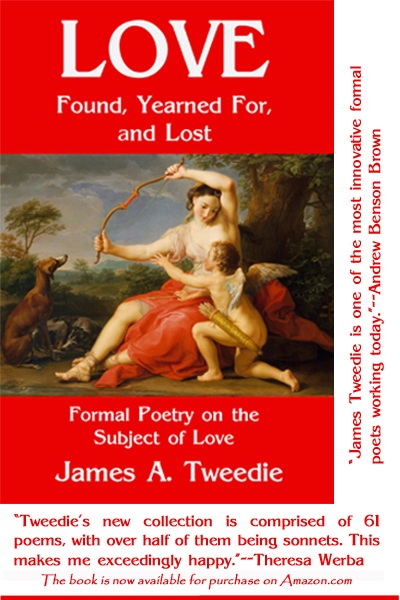
  • Poetry Book Review: Love Found, Yearned For, and Lost by James A. Tweedie
  • ‘When Opportunity Knocks’: A Poem by Roy E. Peterson
  • ‘Legend of the Griffin’: A Poem by Iryna Hall
  • ‘Government Issue’ and Other Poems by Joseph S. Salemi
  • ‘Chaucer Announces His Desire to Retire’: A Poem by Paul A. Freeman
  • ‘Advantages of Restaurants’ and Other Poems by Russel Winick
  • ‘Bone China’: A Poem by Mary Gardner
  • ‘On the Death of One Too Young to Die’: A Poem by Jeffrey Essmann
  • ‘This Too Shall Pass’ and Other Poetry by Justin Dasher
  • ‘Humdrum and Harum-Scarum’: A Lecture on Free Verse, by Robert Bridges (1922)
  • ‘Unrest On the Floodplain’: A Poem by Bhikkhu Nyanasobhano
  • ‘Latitude and Loss’: A Poem by Martin Briggs
  • ‘Act III’ and Other Poetry by C.B. Anderson
  • ‘God’s Funeral’: A Poem by James Sale
  • ‘Star Festival’: A Poem by Margaret Coats
  • ‘Song of the Frog Princess’: A Poem by Scharlie Meeuws
  • ‘The Odyssey: Nolan and Solot Compared’: An Essay by Michael Curtis
  • ‘Solitude’ and Other Poems by Mary Jane Myers

Categories

  • Acrostic
  • Alexandroid
  • Alliterative
  • Art
  • Best Poems
  • Blank Verse
  • Chant Royal
  • Classical Poets Live
  • Clerihew
  • Covid-19
  • Deconstructing Communism
  • Educational
  • Epic
  • Epigrams and Proverbs
  • Essays
    • Interviews with Poets
    • Poetry Reviews
  • Featured
  • From the Society
  • Great Poets
    • Dante Alighieri
    • Edgar Allan Poe
    • Emily Dickinson
    • Geoffrey Chaucer
    • Henry Wadsworth Longfellow
    • Homer
    • John Keats
    • John Milton
    • Robert Frost
    • William Blake
    • William Shakespeare
    • William Wordsworth
  • Human Rights in China
  • Limerick
  • Love Poems
  • Music
  • Pantoum
  • Performing Arts
  • Poetry
    • Beauty
    • Children's Poems
    • Culture
    • Ekphrastic
    • Found Poems
    • High School Poets
    • Humor
    • Riddles
  • Poetry Challenge
  • Poetry Contests
  • Poetry Forms
    • Curtal Sonnet
    • Haiku
  • Poetry Readings
  • Rhupunt
  • Rondeau
  • Rondeau Redoublé
  • Rondel
  • Rubaiyat
  • Sapphic Verse
  • Satire
  • Science
  • Sestina
  • Shape Poems
  • Short Stories
  • Song Lyrics
  • Sonnet
  • Symposium
  • Terrorism
  • Terza Rima
  • The Environment
  • Translation
  • Triolet
  • Video
  • Villanelle

Quick Links

  • About Us
  • Submit Poetry
  • Become a Member
  • Members List
  • Support the Society
  • Advertisement Placement
  • Comments Policy
  • Terms of Use

Welcome Back!

Login to your account below

Forgotten Password?

Retrieve your password

Please enter your username or email address to reset your password.

Log In
No Result
View All Result
  • Poems
    • Beauty
    • Culture
    • Satire
    • Humor
    • Children’s
    • Art
    • Ekphrastic
    • Epic
    • Epigrams and Proverbs
    • Human Rights in China
    • Music
    • Performing Arts
    • Riddles
    • Science
    • Song Lyrics
    • The Environment
    • The Raven
    • Found Poems
    • High School Poets
    • Terrorism
    • Covid-19
  • Poetry Forms
    • Sonnet
    • Haiku
    • Limerick
    • Villanelle
    • Rondeau
    • Pantoum
    • Sestina
    • Triolet
    • Acrostic
    • Alexandroid
    • Alliterative
    • Blank Verse
    • Chant Royal
    • Clerihew
    • Rhupunt
    • Rondeau Redoublé
    • Rondel
    • Rubaiyat
    • Sapphic Verse
    • Shape Poems
    • Terza Rima
  • Great Poets
    • Geoffrey Chaucer
    • Emily Dickinson
    • Homer
    • Henry Wadsworth Longfellow
    • Dante Alighieri
    • John Keats
    • John Milton
    • Edgar Allan Poe
    • William Shakespeare
    • William Wordsworth
    • William Blake
    • Robert Frost
  • Love Poems
  • Contests
  • SCP Academy
    • Educational
    • Teaching Classical Poetry—A Guide for Educators
    • Poetry Forms
    • The SCP Journal
    • Books

© 2025 SCP. WebDesign by CODEC Prime.