• Submit Poetry
  • Support SCP
  • About Us
  • Members
  • Join
Saturday, July 18, 2026
Society of Classical Poets
  • Poems
    • Beauty
    • Culture
    • Satire
    • Humor
    • Children’s
    • Art
    • Ekphrastic
    • Epic
    • Epigrams and Proverbs
    • Human Rights in China
    • Music
    • Performing Arts
    • Riddles
    • Science
    • Song Lyrics
    • The Environment
    • The Raven
    • Found Poems
    • High School Poets
    • Terrorism
    • Covid-19
  • Poetry Forms
    • Sonnet
    • Haiku
    • Limerick
    • Villanelle
    • Rondeau
    • Pantoum
    • Sestina
    • Triolet
    • Acrostic
    • Alexandroid
    • Alliterative
    • Blank Verse
    • Chant Royal
    • Clerihew
    • Rhupunt
    • Rondeau Redoublé
    • Rondel
    • Rubaiyat
    • Sapphic Verse
    • Shape Poems
    • Terza Rima
  • Great Poets
    • Geoffrey Chaucer
    • Emily Dickinson
    • Homer
    • Henry Wadsworth Longfellow
    • Dante Alighieri
    • John Keats
    • John Milton
    • Edgar Allan Poe
    • William Shakespeare
    • William Wordsworth
    • William Blake
    • Robert Frost
  • Love Poems
  • Contests
  • SCP Academy
    • Educational
    • Teaching Classical Poetry—A Guide for Educators
    • Poetry Forms
    • The SCP Journal
    • Books
No Result
View All Result
Society of Classical Poets
  • Poems
    • Beauty
    • Culture
    • Satire
    • Humor
    • Children’s
    • Art
    • Ekphrastic
    • Epic
    • Epigrams and Proverbs
    • Human Rights in China
    • Music
    • Performing Arts
    • Riddles
    • Science
    • Song Lyrics
    • The Environment
    • The Raven
    • Found Poems
    • High School Poets
    • Terrorism
    • Covid-19
  • Poetry Forms
    • Sonnet
    • Haiku
    • Limerick
    • Villanelle
    • Rondeau
    • Pantoum
    • Sestina
    • Triolet
    • Acrostic
    • Alexandroid
    • Alliterative
    • Blank Verse
    • Chant Royal
    • Clerihew
    • Rhupunt
    • Rondeau Redoublé
    • Rondel
    • Rubaiyat
    • Sapphic Verse
    • Shape Poems
    • Terza Rima
  • Great Poets
    • Geoffrey Chaucer
    • Emily Dickinson
    • Homer
    • Henry Wadsworth Longfellow
    • Dante Alighieri
    • John Keats
    • John Milton
    • Edgar Allan Poe
    • William Shakespeare
    • William Wordsworth
    • William Blake
    • Robert Frost
  • Love Poems
  • Contests
  • SCP Academy
    • Educational
    • Teaching Classical Poetry—A Guide for Educators
    • Poetry Forms
    • The SCP Journal
    • Books
No Result
View All Result
Society of Classical Poets
No Result
View All Result
Home Poetry Beauty

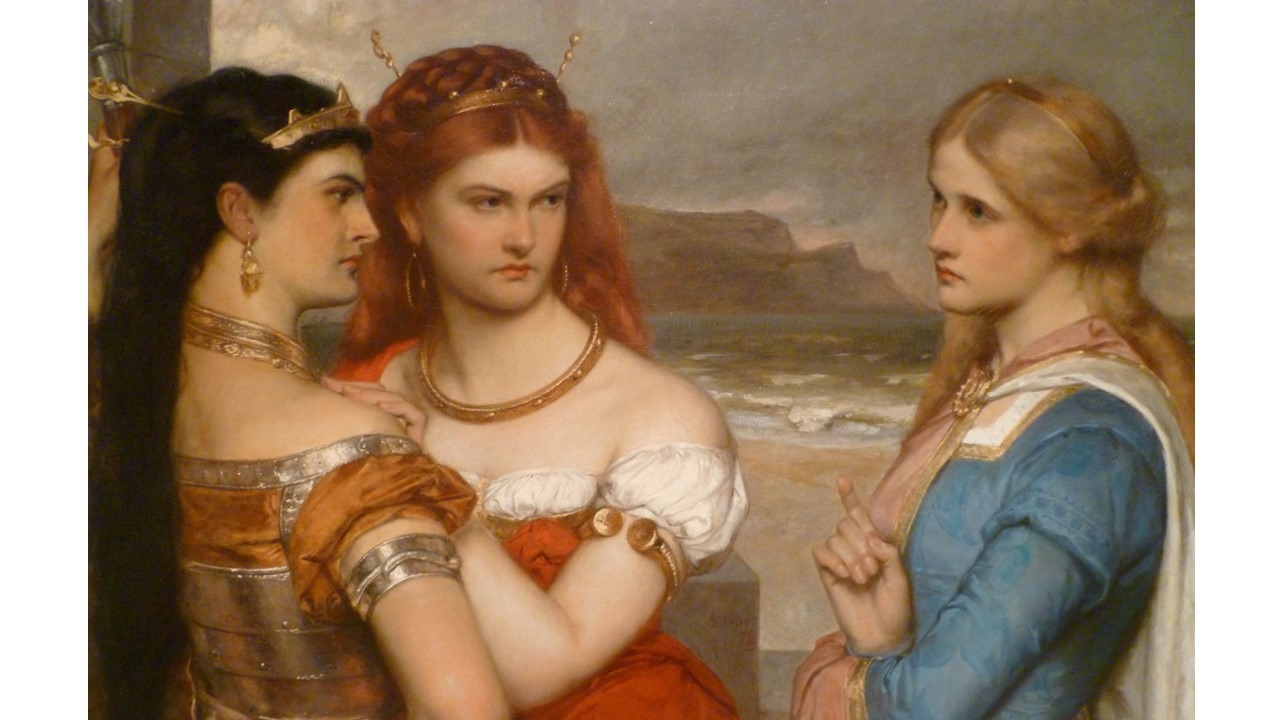
‘Cordelia’s Choice’ by Brian Yapko

July 28, 2022
in Beauty, Poetry, William Shakespeare
A A
18
poems 'Cordelia's Choice' by Brian Yapko

.

Cordelia’s Choice

Ye gods, what should I do with such ill news?
My father, once the king, is now insane
And stripped of dignity. What must I choose
To set things right? Yet, pray, why should I fain

Raise up this man who banished me from sight
And left me shamed and tongue-tied, dowerless,
A paupered princess? Still, through bleakest night
In dreams I hear him storming, powerless.

No less than his, my bruiséd heart is broken
For pity’s sake as much as for my own.
He wanted honey in his ear, some token
Of ostentatious love with blandished tone.

I spoke with deep sincerity of right
Affection owed according to my bond.
But peevishly, he took this as a slight
Although no daughter could have been more fond.

Ruled o’er by vanity the king preferred
My scheming sisters’ flattery and lies.
And now he’s homeless, mad, his howling heard
From Kent to France. O gods, relieve his cries!

I’ve married well. I need not be involved.
‘Twas he who in his dotage caused great wrong.
Ensuing that, was not our bond dissolved?
Yet he grows weak while my sure heart stays strong.

Despite rejection can I him disown?
I can’t! My conscience will not brook the sight!
Though destiny is never clearly known
I’m certain now of how to set things right:

I shall return to Britain. When we meet
Our eyes will shine with reconciled love.
Forgiveness given and our joy complete,
We’ll share long lives beneath the stars above!

.

.

Brian Yapko is a lawyer who also writes poetry. He lives in Santa Fe, New Mexico.

ShareTweetPin
The Society of Classical Poets does not endorse any views expressed in individual poems or commentary.
Read Our Comments Policy Here

RandomPoems

A Sonnet for the Feast of the Three Kings (with Audio) by Joseph Charles MacKenzie
Beauty

A Sonnet for the Feast of the Three Kings (with Audio) by Joseph Charles MacKenzie

January 6, 2018

Sonnet XLI - Gifts of the Magi A grander throne than Solomon’s of old, Though wrought of rough-hewn wood and...

Poems on the English Moors, by Peter Hartley
Beauty

Poems on the English Moors, by Peter Hartley

August 20, 2021

. Geese on the Moor On Laddow Moss the April air is cold And still. A single pair of wayward...

Next Post
‘The Photograph’ and Other Poetry by Chantal LaFortune

'The Photograph' and Other Poetry by Chantal LaFortune

‘Dog Tired, Cat on Top’ by Damian Robin

'Dog Tired, Cat on Top' by Damian Robin

‘To Winter’ and Other Poetry by James Sale

'To Winter' and Other Poetry by James Sale

Comments 18

  1. Michael Pietrack says:
    4 years ago

    Brilliam Yapspeare

    Reply
    • Brian Yapko says:
      4 years ago

      Thank you very much, Michael!

      Reply
  2. jd says:
    4 years ago

    Enjoyed your poem, Brian, for all its technical attributes
    but also for its heartwarming story. In my ignorance I looked
    up the narrative. What I read portrayed Cordelia as too good
    to be true. I had to strongly disagree as I know of at least two
    acquaintances who suffered a lifetime of misery from a parent
    but returned to care for them in their final time of need.

    Reply
    • Brian Yapko says:
      4 years ago

      Thank you, jd. Cordelia is often portrayed as too good to be true. I wanted my poem to suggest a little bit of her internal struggle and that perhaps she did wrestle with the idea of not returning to help her father. Relationships between parents and children can be very complex indeed. And the ironic last line of the poem is meant to suggest that even when we do the right thing happy endings can be elusive. That is the risk we take when we love.

      Reply
  3. Morrison Handley-Schachler says:
    4 years ago

    Brilliant poetry, Brian, with tremendous feeling. Cordelia is one of Shakespeare’s best female characters. It’s interesting that Shakespeare (whose fellow actors were all male, of course) adapted Geoffrey of Monmouth’s original story in the Historia Regum Britanniae, where Cordelia is a major noble and tragic figure into the tragedy of King Lear, who, I believe dies peacefully and happily in Geoffrey’s story. Otherwise, we could have had a Shakespearian tragedy with a sole female lead role. The last lines of your poem are of course, very much in keeping with what the characters – and perhaps the first Shakespearian audience – are expecting might happen.

    Reply
    • Brian Yapko says:
      4 years ago

      Thank you very much, Morrison. Cordelia is one of my favorite characters in all of Shakespeare. Yes, the final quatrain is what an audience would have wanted to see. It’s still the ending I want to see! But mostly, I wanted that last line to provide a sucker-punch to anyone familiar with the play.

      Reply
  4. Roy E. Peterson says:
    4 years ago

    Wonderful rendition of the Cordelia condition and one that projects to the modern scene and times of complex familial relationships.

    Reply
    • Brian Yapko says:
      4 years ago

      Thank you very much, Roy.

      Reply
  5. Joseph S. Salemi says:
    4 years ago

    These are beautifully crafted quatrains, and they give a picture of Cordelia’s interior state that only a dramatic monologue can do. The last quatrain is particularly poignant for readers who know that Cordelia’s trip to Britain will result only in despair, death, and destruction.

    Reply
    • Brian Yapko says:
      4 years ago

      Thank you very much, Joseph. I hoped to elicit an emotional reaction with that last quatrain and am glad it worked.

      Reply
  6. Jeff Eardley says:
    4 years ago

    Brian, as ever, your poetry inspires me to delve deeper into the subject matter. Lear was always a blank space in my education, but no longer. Thank you for the insight into the Cordelia condition that I recognise in my own family.

    Reply
    • Brian Yapko says:
      4 years ago

      Thank you, Jeff. Cordelia is often seen as an idealized character but I find her to be quite recognizably human. And humane.

      Reply
  7. Margaret Coats says:
    4 years ago

    Brian, I am impressed by your correct usage of rare words to give Cordelia’s speech an archaic feel. “Fain” is usually an adjective, but can be an adverb, as here; “ensue” is usually an intransitive verb but can be transitive, as here; “blandished” is very rare as a past participle adjective, although there is no reason in grammar why it cannot be one. The poem sounds as if Cordelia may be stretching language in her distraught thought, but when I look up those words, I see she is a most intelligent thinker fully aware of her vocabulary and logic.

    As several other commenters have remarked, her dilemma is one of particular interest today. It is not just the stresses of modern life that tempt adult children to abandon the bond with parents because of actual or perceived mistreatment. There is a brand of false counseling that encourages persons to avoid anything that might cause them discomfort, even if it is such a universally acknowledged bond as duty to parents. Your poem is therefore quite timely. The hope expressed at the end goes beyond what nearly all such children would say; still, I think it’s good to acknowledge the hope, as well as to recognize (in the reader’s knowledge of the Shakespeare tale), that the worst may occur. In actual experiences, whether the child makes a loving or a selfish choice, the situation rarely turns out so good or so bad–but it does notably mark one’s life.

    Reply
    • Brian Yapko says:
      4 years ago

      Thank you so much for this comment, Margaret. You’ve given me much to think about in terms of language and relationships! I appreciate your in-depth analysis of the language I used. Yes, I was deliberately going for a Shakespearian feel which you explain well. In addition to the word choices you noted, I used inverted syntax in “him disown,” the accented “bruiséd,” the apostraphe’d “o’er” in the hope of at least capturing some of the linguistic flavor of King Lear. The themes, too, hence the poem’s ending invocation of “the stars above” since the stars (as well as the pagan gods) are repeatedly shown to dominate men’s fates. And the reference to “Kent” is something of an Easter egg since Kent is a character in addition to being a place name.

      I’m especially glad you see the contemporary application of Cordelia’s dilemma here and its concern with the destruction of the family. That she is torn between helping and not helping — and that this is dilemma is quite understandable in her case because she was treated so wretchedly by Lear. In the end, she goes with her conscience and heart and helps him only to face the worst possible ending as a result. But, even though the setting of the play is pre-Christian Britain, there is an almost Christic goodness, unselfishness and forgivingness to her that has appealed to audiences through the centuries. We get the sense that despite her tragic ending, she made the right choice. She is loved. There is a reason we weep with Lear when she is killed.

      Reply
  8. Susan Jarvis Bryant says:
    4 years ago

    Brian, you have done what you do so well, and the way you have climbed inside the head of Cordelia and spoken from her heart is admirable. Although the language has a Shakespearean feel, you have made Cordelia’s voice accessible and relatable. I love the rhymes ‘dowerless / powerless’, and although you have afforded attention to the authenticity of the rhymes, your skillful employment of enjambment gives your words a conversational feel that draws the reader in. I also love the happy-ever-after touch everyone craves having read King Lear. I’d like to think such an ending is possible in real life… something I hope for myself.

    I was lucky enough to see the great Derek Jacobi play King Lear at the Donmar Warehouse in Covent Garden back in 2009, and your words have brought that wonderful experience back… only I’m smiling instead of handwringing after your insightful and beautiful poem. Thank you very much!

    Reply
    • Brian Yapko says:
      4 years ago

      Susan, I’m very grateful for this comment — especially since it’s not easy to climb inside the head of anyone let alone a fictional character! And I’m especially pleased that you liked this poem because I consider your various poems on Shakespeare’s women to be the gold standard. If memory serves you’ve done incredible poems on Lady Macbeth, Portia, Ophelia and others. But Cordelia as a Shakespearian character is one of my very favorites even though her goodness is obviously idealized. I fully understand your personal desire for that happy ending and I hope very much that you do find it. But probably not by channeling Cordelia! I think most fall in somewhere in between Regan and Goneril on the selfish/villainous side of the spectrum and Cordelia on the too-good-to-be-true side.

      I’m quite envious that you saw Derek Jacobi as Lear. Along with Hamlet, it’s probably the most iconic role that a Shakespearian actor can aspire to. I’ve never seen a live production, only an old film version with Orson Wells, a new version with Ian McKellan and (maybe you and Mike will appreciate this) a bizarre resetting in Texas with Patrick Stewart as “John Lear” a cattle baron. Anthony Hopkins played Lear in a recent movie but I haven’t seen it. I would wager that his performance was magnificent so I will now have to seek it out. Thank you for commenting, Susan. You brought a smile to me as well!

      Reply
  9. Paul Freeman says:
    4 years ago

    ‘A paupered princess…’ Love it!

    I have the Anthony Hopkins ‘King Lear’ recorded, with Florence Pugh as Cordelia (Emily Watson and Emma Thompson play Regan and Goneril), and feel tempted to give it a watch after perusing this monologue in verse, Brian.

    Thanks for the read.

    Reply
    • Brian Yapko says:
      4 years ago

      Thank you, Paul. That’s quite a cast! Now I have to see the Hopkins version! Ordering from Amazon today.

      Reply

Leave a Reply Cancel reply

Your email address will not be published. Required fields are marked *

  1. Joseph S. Salemi on Three Brief Poems by Luxorius, Translated by Joseph S. SalemiJuly 18, 2026

    Kip, don't leave them there! Get them out to an audience. Too many "conservative" and "Christian" websites are clogged with…

  2. C.B. Anderson on Three Brief Poems by Luxorius, Translated by Joseph S. SalemiJuly 18, 2026

    I don't know whether or not I should I should be pissed-off at you for showing that my own attempts…

  3. Russel Winick on ‘When the Phone Rings’ and Other Short Poems by Russel WinickJuly 18, 2026

    Margaret — I see that I somehow missed this comment earlier, and for that I must —- apologize! I always…

  4. Russel Winick on ‘When the Phone Rings’ and Other Short Poems by Russel WinickJuly 18, 2026

    Thank you Marguerite. The quest continues.

  5. Karen Rodgers on ‘The Gold Star Mother’: A Poem by Gerard MaritatoJuly 18, 2026

    Thanks Gerry, Nick Dixon says it in one line; Publishing Censorship Has Gone Insane https://www.nickreads.com/p/publishing-censorship-has-gone-insane >they can cancel culture all…

Subscribe to Daily Poems

Enter your email address to subscribe to this blog and receive notifications of new posts by email.

Join 1,594 other subscribers

Recent Poems

  • Winners and Rankings of The Great American Poetry Competition
  • ‘The Gold Star Mother’: A Poem by Gerard Maritato
  • ‘An American Dash’: A Poem by Linda Ellis
  • ‘The Anonymous Soldier’: A Poem by Lucy Lind
  • ‘For Those We Never Meet’: A Poem by Aneesh Agarwal
  • ‘Ben Franklin’s Copper Fugio Cent’: A Poem by Geoffrey Smagacz
  • Three Brief Poems by Luxorius, Translated by Joseph S. Salemi
  • ‘The American Spirit’: A Poem by Dusty Grein
  • ‘The Ballad of Zebulon Pike’: A Poem by M.D. Skeen
  • ‘We Are the Ones’ and Other Poetry by Cheryl Corey
  • ‘My Pyjamas!’ and Other Poems by Susan Jarvis Bryant
  • ‘A Snowy Egret’: A Poem by Bruce Dale Wise
  • ‘The Swearing-in of Calvin Coolidge’: A Sonnet by Robert W. Crawford
  • ‘Ballad of the Sequoia’: A Poem by Lauren V. Leon
  • ‘The 51st State’: A Poem by James Sale
  • ‘La Uva’ (The Grape): A Poem by Michael Pietrack
  • ‘There’s Blood that Flows Within the Stripes’: A Poem by Lauren V. Leon
  • ‘Birdsong’: A Poem by Jeffrey Essmann
  • ‘The Melody That Lingers On’ and Other Poetry by John McPherson
  • ‘American Dreams’: A Poem by Adam Sedia
  • ‘An American Fabius’: A Poem by John Hernandez
  • ‘Vernal Clinic’ and Other Poetry by C.B. Anderson
  • ‘Omaha Beach’ and Other Poetry by Bradford Skow
  • ‘Music to Part the Veil’: A Poem by T.M. Moore
  • ‘A Gentleman’s Guide to Losing a War’ and Other Poetry by Arnon Peterson
  • ‘Black Shuck’: A Poem by Martin Briggs
  • ‘When the Last World War II Veteran Passes Away’: A Poem by N.S. Boone
  • ‘A Fallow Year at Worthy Farm’: A Poem by Paul A. Freeman
  • ‘Outstanding in Afghanistan’: A Poem by Jared S. Chang
  • ‘250 More’: A Poem by Miguel Moreno

Categories

  • Acrostic
  • Alexandroid
  • Alliterative
  • Art
  • Best Poems
  • Blank Verse
  • Chant Royal
  • Classical Poets Live
  • Clerihew
  • Covid-19
  • Deconstructing Communism
  • Educational
  • Epic
  • Epigrams and Proverbs
  • Essays
    • Interviews with Poets
    • Poetry Reviews
  • Featured
  • From the Society
  • Great Poets
    • Dante Alighieri
    • Edgar Allan Poe
    • Emily Dickinson
    • Geoffrey Chaucer
    • Henry Wadsworth Longfellow
    • Homer
    • John Keats
    • John Milton
    • Robert Frost
    • William Blake
    • William Shakespeare
    • William Wordsworth
  • Human Rights in China
  • Limerick
  • Love Poems
  • Music
  • Pantoum
  • Performing Arts
  • Poetry
    • Beauty
    • Children's Poems
    • Culture
    • Ekphrastic
    • Found Poems
    • High School Poets
    • Humor
    • Riddles
  • Poetry Challenge
  • Poetry Contests
  • Poetry Forms
    • Curtal Sonnet
    • Haiku
  • Poetry Readings
  • Rhupunt
  • Rondeau
  • Rondeau Redoublé
  • Rondel
  • Rubaiyat
  • Sapphic Verse
  • Satire
  • Science
  • Sestina
  • Shape Poems
  • Short Stories
  • Song Lyrics
  • Sonnet
  • Symposium
  • Terrorism
  • Terza Rima
  • The Environment
  • Translation
  • Triolet
  • Video
  • Villanelle

Quick Links

  • About Us
  • Submit Poetry
  • Become a Member
  • Members List
  • Support the Society
  • Advertisement Placement
  • Comments Policy
  • Terms of Use

Welcome Back!

Login to your account below

Forgotten Password?

Retrieve your password

Please enter your username or email address to reset your password.

Log In
No Result
View All Result
  • Poems
    • Beauty
    • Culture
    • Satire
    • Humor
    • Children’s
    • Art
    • Ekphrastic
    • Epic
    • Epigrams and Proverbs
    • Human Rights in China
    • Music
    • Performing Arts
    • Riddles
    • Science
    • Song Lyrics
    • The Environment
    • The Raven
    • Found Poems
    • High School Poets
    • Terrorism
    • Covid-19
  • Poetry Forms
    • Sonnet
    • Haiku
    • Limerick
    • Villanelle
    • Rondeau
    • Pantoum
    • Sestina
    • Triolet
    • Acrostic
    • Alexandroid
    • Alliterative
    • Blank Verse
    • Chant Royal
    • Clerihew
    • Rhupunt
    • Rondeau Redoublé
    • Rondel
    • Rubaiyat
    • Sapphic Verse
    • Shape Poems
    • Terza Rima
  • Great Poets
    • Geoffrey Chaucer
    • Emily Dickinson
    • Homer
    • Henry Wadsworth Longfellow
    • Dante Alighieri
    • John Keats
    • John Milton
    • Edgar Allan Poe
    • William Shakespeare
    • William Wordsworth
    • William Blake
    • Robert Frost
  • Love Poems
  • Contests
  • SCP Academy
    • Educational
    • Teaching Classical Poetry—A Guide for Educators
    • Poetry Forms
    • The SCP Journal
    • Books

© 2025 SCP. WebDesign by CODEC Prime.