• Submit Poetry
  • Support SCP
  • About Us
  • Members
  • Join
Saturday, July 18, 2026
Society of Classical Poets
  • Poems
    • Beauty
    • Culture
    • Satire
    • Humor
    • Children’s
    • Art
    • Ekphrastic
    • Epic
    • Epigrams and Proverbs
    • Human Rights in China
    • Music
    • Performing Arts
    • Riddles
    • Science
    • Song Lyrics
    • The Environment
    • The Raven
    • Found Poems
    • High School Poets
    • Terrorism
    • Covid-19
  • Poetry Forms
    • Sonnet
    • Haiku
    • Limerick
    • Villanelle
    • Rondeau
    • Pantoum
    • Sestina
    • Triolet
    • Acrostic
    • Alexandroid
    • Alliterative
    • Blank Verse
    • Chant Royal
    • Clerihew
    • Rhupunt
    • Rondeau Redoublé
    • Rondel
    • Rubaiyat
    • Sapphic Verse
    • Shape Poems
    • Terza Rima
  • Great Poets
    • Geoffrey Chaucer
    • Emily Dickinson
    • Homer
    • Henry Wadsworth Longfellow
    • Dante Alighieri
    • John Keats
    • John Milton
    • Edgar Allan Poe
    • William Shakespeare
    • William Wordsworth
    • William Blake
    • Robert Frost
  • Love Poems
  • Contests
  • SCP Academy
    • Educational
    • Teaching Classical Poetry—A Guide for Educators
    • Poetry Forms
    • The SCP Journal
    • Books
No Result
View All Result
Society of Classical Poets
  • Poems
    • Beauty
    • Culture
    • Satire
    • Humor
    • Children’s
    • Art
    • Ekphrastic
    • Epic
    • Epigrams and Proverbs
    • Human Rights in China
    • Music
    • Performing Arts
    • Riddles
    • Science
    • Song Lyrics
    • The Environment
    • The Raven
    • Found Poems
    • High School Poets
    • Terrorism
    • Covid-19
  • Poetry Forms
    • Sonnet
    • Haiku
    • Limerick
    • Villanelle
    • Rondeau
    • Pantoum
    • Sestina
    • Triolet
    • Acrostic
    • Alexandroid
    • Alliterative
    • Blank Verse
    • Chant Royal
    • Clerihew
    • Rhupunt
    • Rondeau Redoublé
    • Rondel
    • Rubaiyat
    • Sapphic Verse
    • Shape Poems
    • Terza Rima
  • Great Poets
    • Geoffrey Chaucer
    • Emily Dickinson
    • Homer
    • Henry Wadsworth Longfellow
    • Dante Alighieri
    • John Keats
    • John Milton
    • Edgar Allan Poe
    • William Shakespeare
    • William Wordsworth
    • William Blake
    • Robert Frost
  • Love Poems
  • Contests
  • SCP Academy
    • Educational
    • Teaching Classical Poetry—A Guide for Educators
    • Poetry Forms
    • The SCP Journal
    • Books
No Result
View All Result
Society of Classical Poets
No Result
View All Result
Home Poetry Beauty

‘Flora’s England’: A Poem by Isabella Simmonds

September 11, 2024
in Beauty, Culture, Poetry
A A
18
poems 'Flora's England': A Poem by Isabella Simmonds

.

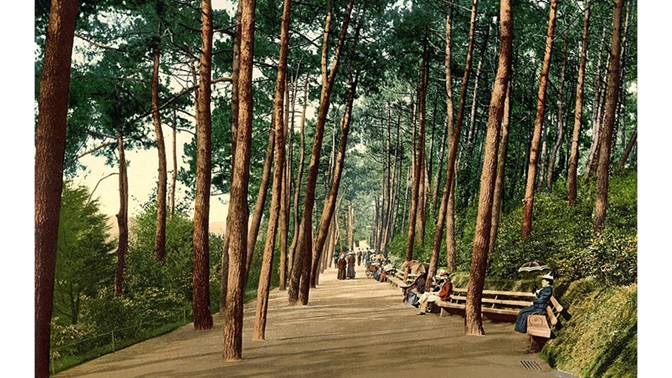
Flora’s England

The hedgerows droop with bulbous berries black
As feathers of the Raven in the sun
Of August, glowing hot upon his back.
He soars above the corn, its growing done.
While Lammas songs are sung in hamlet fields,
The sickles swing and slice a background beat
That helps the sweating men bring home the yields,
To bake the harvest loaves from yellow wheat.
Across enlarging towns the Raven flies,
Away from country folk and fading skills.
To bread unblessed where folklore shrinks and dies,
And factories replace the wind-fed mills.
Today a raven bathes in drying brooks;
I sit and watch, and read from Flora’s books.

.

Poet’s Note: This poem is inspired by Flora Jane Thompson, an English novelist and poet best known for her semi-autobiographical trilogy Lark Rise to Candleford. She captured and recorded the rural rituals and life, in and around the Oxfordshire countryside, which was rapidly declining in the 1890s.

.

.

Isabella Simmonds is a British musician and piano teacher living in London. 
ShareTweetPin
The Society of Classical Poets does not endorse any views expressed in individual poems or commentary.
Read Our Comments Policy Here

RandomPoems

‘The World’s Greatest Love’ by Roy E. Peterson
Beauty

‘The World’s Greatest Love’ by Roy E. Peterson

September 8, 2021

. from Eternal Spring Once upon a time in space God contrived the human race, Gave two things to help...

‘Not a Sparrow Falls’ by Peter Hartley
Beauty

‘Not a Sparrow Falls’ by Peter Hartley

May 16, 2021

. A portent for our loss, this bird, so nigh Its end. The slowly creeping dusk had dared It to...

Next Post
‘Boasted Viridian’ and Other Poetry by Alec Ream

'Over the Hill': A Trimeter Villanelle and Other Poetry by Cheryl Corey

‘There Are Masters and Then There Are Masters’ and Other Poetry by Phillip Whidden

'There Are Masters and Then There Are Masters' and Other Poetry by Phillip Whidden

‘Solitaire’ and Other Poetry by Stephen M. Dickey

'Solitaire' and Other Poetry by Stephen M. Dickey

Comments 18

  1. Bruce Phenix says:
    2 years ago

    Thank you, Isabella. A lovely and poignant sonnet, skilfully constructed. I like the way the Raven loses his capital letter and becomes merely ‘a raven’ in the penultimate line, I think to mark the transition to the modern world.

    Reply
    • Isabella says:
      2 years ago

      Thank you so much Bruce! I’m so pleased you enjoyed it. Yes exactly; the Raven’s loss of his capital letter did indeed mark the transition to the modern world.

      Reply
  2. Martin Rizley says:
    2 years ago

    A beautiful sonnet lamenting the loss of blessings belonging to an age when life was simpler and people lived closer to nature and to one another than is generally the case in our fast paced, modern, industrialized society.

    I find particularly touching the description in the third stanza of what lies below in the “enlarging towns” over which the raven flies. The “bread unblessed” seems to symbolize the secular character of the modern world, and the “drying brooks” seem to speak of changes, not only to the physical landscape, but to the spiritual and cultural landscape, as well.

    The poem brought to mind a classic documentary on the changing face of England’s landscape produced years ago by the BBC entitled “The Vanishing Hedgerows.” You can watch it for free on YouTube. It has beautiful photography and a lovely musical score, pastoral and poignant, by composer Paul Lewis.

    Reply
    • Isabella says:
      2 years ago

      Thank you so much Martin for your wonderful and insightful comment! Yes indeed the “unblessed bread” referred to the secular character of the changing world and attitudes in which food is produced. It was also a reference following on from Lammas in L5 the first harvest festival, celebrated at the start of August where the first harvest loaf is blessed in church. Lammas coming from an old English phrase loaf-mass.
      Thank you also for the recommendation of “The vanishing hedgerows” I shall definitely watch that. It sounds delightful.

      Reply
  3. Mary Gardner says:
    2 years ago

    Isabella, your sonnet captures well the dignity and freedom afforded by hard, even backbreaking, work. Cities and factories are good things, but as the poem cautions, Man can lose his soul in them.

    Reply
    • Isabella says:
      2 years ago

      Thank you very much Mary! I am so pleased that my sonnet conveyed these messages to you.

      Reply
  4. Roy Eugene Peterson says:
    2 years ago

    You beautifully captured the transition from the fading countryside with its blessings and work ethic to the encroaching factories and towns that swallowed the souls of mankind. This resonates with me, since my family made such a transition, and I felt the loss of freedom and feeling blessed with the harvests for our hard work. I really liked the alliteration in the first line and was thankful for the poet note after the ending to put things in perspective.

    Reply
    • Isabella says:
      2 years ago

      Thank you so much Roy! I am absolutely delighted that my poem resonated with you; someone who has experienced first-hand, that which I have tried to capture in my poem.

      Reply
  5. Paul A. Freeman says:
    2 years ago

    I love the way you linked the past and the present with the raven imagery, Isabella. Your poem reminded me of later Thomas Hardy novels, particularly Tess of the d’Urbervilles, where the old country life was rapidly changing due to rural-urban migration.

    Thanks for the read.

    Reply
    • Isabella says:
      2 years ago

      Thank you so much Paul! I am thrilled beyond measure that my poem has reminded you of Hardy’s writing! He is one of my favourite authors.

      Reply
  6. Joseph S. Salemi says:
    2 years ago

    This is such a sad poem — lovely and melancholy at the same time. It pains me to think of all the traditional rituals and practices that have died out in such a comparatively short period since the start of the Industrial Revolution.

    But your sad sonnet ends on a positive note: we can read Flora Thompson’s work and catch a glimpse of what once was.

    Reply
  7. Isabella says:
    2 years ago

    Thank you so much Joseph! I am glad you found my poem lovely, albeit sad; but it is very sad to think of all that has been lost with industrialization.
    There is a BBC series “Lark rise to Candleford” which is very charming. More light-hearted in tone than the books. I think it ran for four seasons and was very popular here in the UK.

    Reply
  8. Cynthia Erlandson says:
    2 years ago

    I am impressed with the way you have been able to compress so much beautiful imagery, and such meaningful content, into the form of this sonnet, particularly allowing the image of the raven to be carried throughout the poem. Your musical gifts have doubtless played a part in the inclusion of the songs being sung, the sickles providing a rhythm, and your lovely alliterations. I love musical-sounding poems, and this is definitely one!

    Reply
    • Isabella says:
      2 years ago

      Thank you Cynthia for your lovely comment! I am delighted that you found my poem musical! I too enjoy the flow and movement of a musical-sounding poem.

      Reply
  9. Margaret Coats says:
    2 years ago

    “If you want a new idea, read an old book.” Isabella, your poem about the lost spirit and values of working the land is tender and realistic, just as Flora Thompson’s depictions are. I’m delighted to hear from someone who has read “Lark Rise to Candelford.” You make me wonder where my copy has gone, as I would love to pick it up and join you. Before you get to that happy end of your sonnet, you show what the turn of a sonnet means. “The Raven” overseeing country life has become “a raven” endangered because that life of care for the land has disappeared from the perspective of most human beings. Perhaps a new “Flee to the Fields” movement is in order.

    Reply
    • Isabella says:
      2 years ago

      Thank you so much Margaret for your wonderful comment. To know that you have read “Lark rise to Candleford” and have enjoyed my sonnet and found it tender and realistic,makes me very happy!
      Yes a new “flee to the fields” movement may well be in order, although it would doubtless be exploited and its true essence lost, like most things these days.

      Reply
  10. Shamik Banerjee says:
    2 years ago

    You’ve packed so many images into this sonnet, Isabella. It’s sad how old skills are fading at an unimaginable rate and open fields, are getting converted to jam-packed roads, cramped with chains of tall and pompous buildings. The Raven analogy blows life into this poem.

    Reply
  11. Isabella says:
    2 years ago

    Thank you Shamik for your lovely comment. Yes indeed it is very sad when true and honest skills are lost. The human-touch goes and the world becomes very impersonal. Inevitable unfortunately.

    Reply

Leave a Reply Cancel reply

Your email address will not be published. Required fields are marked *

  1. BDW on ‘For Those We Never Meet’: A Poem by Aneesh AgarwalJuly 18, 2026

    Mr. Agawal has generalized the largest labour insurrection in America from the early 20th century—1921, that cost the lives of…

  2. Ganga Unnikrishnan on National Poetry Month Limerick ChallengeJuly 18, 2026

    Urzsula

  3. Ganga Unnikrishnan on National Poetry Month Limerick ChallengeJuly 18, 2026

    Thank you so much Ursula

  4. Geoffrey Smagacz on ‘Ben Franklin’s Copper Fugio Cent’: A Poem by Geoffrey SmagaczJuly 18, 2026

    Thank you, Margaret

  5. Margaret Coats on ‘The Anonymous Soldier’: A Poem by Lucy LindJuly 18, 2026

    Good questions, Lucy. As the sestet to your sonnet, they help evoke honor for fallen warriors named and for the…

Subscribe to Daily Poems

Enter your email address to subscribe to this blog and receive notifications of new posts by email.

Join 1,596 other subscribers

Recent Poems

  • Winners and Rankings of The Great American Poetry Competition
  • ‘The Gold Star Mother’: A Poem by Gerard Maritato
  • ‘An American Dash’: A Poem by Linda Ellis
  • ‘The Anonymous Soldier’: A Poem by Lucy Lind
  • ‘For Those We Never Meet’: A Poem by Aneesh Agarwal
  • ‘Ben Franklin’s Copper Fugio Cent’: A Poem by Geoffrey Smagacz
  • Three Brief Poems by Luxorius, Translated by Joseph S. Salemi
  • ‘The American Spirit’: A Poem by Dusty Grein
  • ‘The Ballad of Zebulon Pike’: A Poem by M.D. Skeen
  • ‘We Are the Ones’ and Other Poetry by Cheryl Corey
  • ‘My Pyjamas!’ and Other Poems by Susan Jarvis Bryant
  • ‘A Snowy Egret’: A Poem by Bruce Dale Wise
  • ‘The Swearing-in of Calvin Coolidge’: A Sonnet by Robert W. Crawford
  • ‘Ballad of the Sequoia’: A Poem by Lauren V. Leon
  • ‘The 51st State’: A Poem by James Sale
  • ‘La Uva’ (The Grape): A Poem by Michael Pietrack
  • ‘There’s Blood that Flows Within the Stripes’: A Poem by Lauren V. Leon
  • ‘Birdsong’: A Poem by Jeffrey Essmann
  • ‘The Melody That Lingers On’ and Other Poetry by John McPherson
  • ‘American Dreams’: A Poem by Adam Sedia
  • ‘An American Fabius’: A Poem by John Hernandez
  • ‘Vernal Clinic’ and Other Poetry by C.B. Anderson
  • ‘Omaha Beach’ and Other Poetry by Bradford Skow
  • ‘Music to Part the Veil’: A Poem by T.M. Moore
  • ‘A Gentleman’s Guide to Losing a War’ and Other Poetry by Arnon Peterson
  • ‘Black Shuck’: A Poem by Martin Briggs
  • ‘When the Last World War II Veteran Passes Away’: A Poem by N.S. Boone
  • ‘A Fallow Year at Worthy Farm’: A Poem by Paul A. Freeman
  • ‘Outstanding in Afghanistan’: A Poem by Jared S. Chang
  • ‘250 More’: A Poem by Miguel Moreno

Categories

  • Acrostic
  • Alexandroid
  • Alliterative
  • Art
  • Best Poems
  • Blank Verse
  • Chant Royal
  • Classical Poets Live
  • Clerihew
  • Covid-19
  • Deconstructing Communism
  • Educational
  • Epic
  • Epigrams and Proverbs
  • Essays
    • Interviews with Poets
    • Poetry Reviews
  • Featured
  • From the Society
  • Great Poets
    • Dante Alighieri
    • Edgar Allan Poe
    • Emily Dickinson
    • Geoffrey Chaucer
    • Henry Wadsworth Longfellow
    • Homer
    • John Keats
    • John Milton
    • Robert Frost
    • William Blake
    • William Shakespeare
    • William Wordsworth
  • Human Rights in China
  • Limerick
  • Love Poems
  • Music
  • Pantoum
  • Performing Arts
  • Poetry
    • Beauty
    • Children's Poems
    • Culture
    • Ekphrastic
    • Found Poems
    • High School Poets
    • Humor
    • Riddles
  • Poetry Challenge
  • Poetry Contests
  • Poetry Forms
    • Curtal Sonnet
    • Haiku
  • Poetry Readings
  • Rhupunt
  • Rondeau
  • Rondeau Redoublé
  • Rondel
  • Rubaiyat
  • Sapphic Verse
  • Satire
  • Science
  • Sestina
  • Shape Poems
  • Short Stories
  • Song Lyrics
  • Sonnet
  • Symposium
  • Terrorism
  • Terza Rima
  • The Environment
  • Translation
  • Triolet
  • Video
  • Villanelle

Quick Links

  • About Us
  • Submit Poetry
  • Become a Member
  • Members List
  • Support the Society
  • Advertisement Placement
  • Comments Policy
  • Terms of Use

Welcome Back!

Login to your account below

Forgotten Password?

Retrieve your password

Please enter your username or email address to reset your password.

Log In
No Result
View All Result
  • Poems
    • Beauty
    • Culture
    • Satire
    • Humor
    • Children’s
    • Art
    • Ekphrastic
    • Epic
    • Epigrams and Proverbs
    • Human Rights in China
    • Music
    • Performing Arts
    • Riddles
    • Science
    • Song Lyrics
    • The Environment
    • The Raven
    • Found Poems
    • High School Poets
    • Terrorism
    • Covid-19
  • Poetry Forms
    • Sonnet
    • Haiku
    • Limerick
    • Villanelle
    • Rondeau
    • Pantoum
    • Sestina
    • Triolet
    • Acrostic
    • Alexandroid
    • Alliterative
    • Blank Verse
    • Chant Royal
    • Clerihew
    • Rhupunt
    • Rondeau Redoublé
    • Rondel
    • Rubaiyat
    • Sapphic Verse
    • Shape Poems
    • Terza Rima
  • Great Poets
    • Geoffrey Chaucer
    • Emily Dickinson
    • Homer
    • Henry Wadsworth Longfellow
    • Dante Alighieri
    • John Keats
    • John Milton
    • Edgar Allan Poe
    • William Shakespeare
    • William Wordsworth
    • William Blake
    • Robert Frost
  • Love Poems
  • Contests
  • SCP Academy
    • Educational
    • Teaching Classical Poetry—A Guide for Educators
    • Poetry Forms
    • The SCP Journal
    • Books

© 2025 SCP. WebDesign by CODEC Prime.