• Submit Poetry
  • Support SCP
  • About Us
  • Members
  • Join
Sunday, September 6, 2026
Society of Classical Poets
  • Poems
    • Beauty
    • Culture
    • Satire
    • Humor
    • Children’s
    • Art
    • Ekphrastic
    • Epic
    • Epigrams and Proverbs
    • Human Rights in China
    • Music
    • Performing Arts
    • Riddles
    • Science
    • Song Lyrics
    • The Environment
    • The Raven
    • Found Poems
    • High School Poets
    • Terrorism
    • Covid-19
  • Poetry Forms
    • Sonnet
    • Haiku
    • Limerick
    • Villanelle
    • Rondeau
    • Pantoum
    • Sestina
    • Triolet
    • Acrostic
    • Alexandroid
    • Alliterative
    • Blank Verse
    • Chant Royal
    • Clerihew
    • Rhupunt
    • Rondeau Redoublé
    • Rondel
    • Rubaiyat
    • Sapphic Verse
    • Shape Poems
    • Terza Rima
  • Great Poets
    • Geoffrey Chaucer
    • Emily Dickinson
    • Homer
    • Henry Wadsworth Longfellow
    • Dante Alighieri
    • John Keats
    • John Milton
    • Edgar Allan Poe
    • William Shakespeare
    • William Wordsworth
    • William Blake
    • Robert Frost
  • Love Poems
  • Contests
  • SCP Academy
    • Educational
    • Teaching Classical Poetry—A Guide for Educators
    • Poetry Forms
    • The SCP Journal
    • Books
No Result
View All Result
Society of Classical Poets
  • Poems
    • Beauty
    • Culture
    • Satire
    • Humor
    • Children’s
    • Art
    • Ekphrastic
    • Epic
    • Epigrams and Proverbs
    • Human Rights in China
    • Music
    • Performing Arts
    • Riddles
    • Science
    • Song Lyrics
    • The Environment
    • The Raven
    • Found Poems
    • High School Poets
    • Terrorism
    • Covid-19
  • Poetry Forms
    • Sonnet
    • Haiku
    • Limerick
    • Villanelle
    • Rondeau
    • Pantoum
    • Sestina
    • Triolet
    • Acrostic
    • Alexandroid
    • Alliterative
    • Blank Verse
    • Chant Royal
    • Clerihew
    • Rhupunt
    • Rondeau Redoublé
    • Rondel
    • Rubaiyat
    • Sapphic Verse
    • Shape Poems
    • Terza Rima
  • Great Poets
    • Geoffrey Chaucer
    • Emily Dickinson
    • Homer
    • Henry Wadsworth Longfellow
    • Dante Alighieri
    • John Keats
    • John Milton
    • Edgar Allan Poe
    • William Shakespeare
    • William Wordsworth
    • William Blake
    • Robert Frost
  • Love Poems
  • Contests
  • SCP Academy
    • Educational
    • Teaching Classical Poetry—A Guide for Educators
    • Poetry Forms
    • The SCP Journal
    • Books
No Result
View All Result
Society of Classical Poets
No Result
View All Result
Home Poetry Beauty

‘Kant’ by Connor Rosemond

July 24, 2018
in Beauty, Culture, Poetry
A A
20
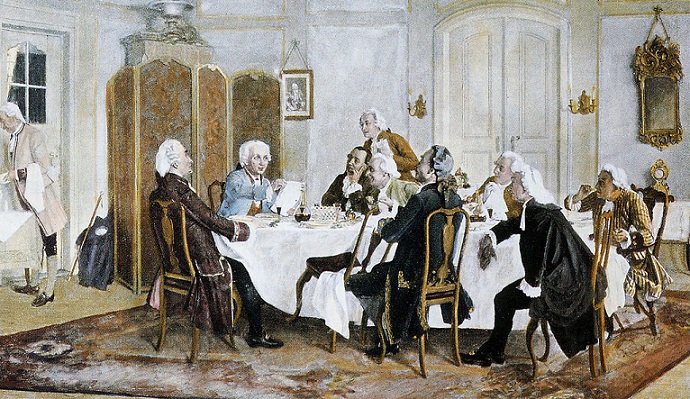
poems 'Kant' by Connor Rosemond


Out of the crooked timber laid by man,
No straight foundation may ever be built.
While Reason clinkers on across the span,
The tunes of Sin jaunt forward with a lilt.
To lie, to steal, to feel in ill no guilt,
To follow Peter’s thrice denial there
Before the day of blood through treason spilt;
That is the nat’ral state of man’s affairs.

But Reason also leads us off from err,
For through our wit we find morality.
Despite the bent of man toward disrepair,
We can still choose to live in sanctity.

Emotions burked, let this be understood:
There is no better aim than to be good.


Connor Rosemond is an eighteen-year-old poet from North Carolina.
ShareTweetPin
The Society of Classical Poets does not endorse any views expressed in individual poems or commentary.
Read Our Comments Policy Here

RandomPoems

‘Critical Failure’ by Bennett Chatigny
Beauty

‘Critical Failure’ by Bennett Chatigny

October 10, 2022

. Critical Failure Failure to launch in every direction; Ran out of fuel before firing the rocket. Time for some...

‘The Tea Garden: A Crown of Sonnets’ and Other Poetry by Evan Mantyk
Beauty

‘The Tea Garden: A Crown of Sonnets’ and Other Poetry by Evan Mantyk

August 6, 2017

On Visiting the Tea Garden in Middletown, New York I. A harried daddy with two kids in tow, Maneuvering through...

Next Post
‘In the Deep of the Night’ by Daniel Leach

'In the Deep of the Night' by Daniel Leach

Two Translations of the Poetry of Ryhor Krushyna

Two Translations of the Poetry of Ryhor Krushyna

‘Aldeyjarfoss’ and Other Poetry by Greg Tuleja

'Aldeyjarfoss' and Other Poetry by Greg Tuleja

Comments 20

  1. Amy Foreman says:
    8 years ago

    Well done, Connor! At age 18, you are writing meaty, metaphysical poetry with good form, and I say, “bravo!” I think you could change “to’ard” to “t’ward,” but otherwise, I believe it’s perfect!

    Reply
    • Connor Rosemond says:
      8 years ago

      I debated long over how to abbreviate “toward”, but ultimately decided that it didn’t matter too much as long as the reader understood my intention. Thank you very much for the compliments; this is my first published poem. Cheers!

      Reply
      • Beau Lecsi Werd says:
        8 years ago

        What I sometimes do is knock out two letters with an apostrophe, t’ord, as it is perhaps most frequently spoken as one syllable in this era; but Ms. Foreman’s recommendation is the more common.

        Reply
  2. James Sale says:
    8 years ago

    Yes, really enjoyed this poem – a marvellous achievement. It has a freshness and beauty about it. And, to be good? Yes, if only …

    Reply
    • Connor Rosemond says:
      8 years ago

      Thank you for the compliments! I’m glad to evoked such an emotional response.

      Reply
  3. Joseph Tessitore says:
    8 years ago

    Brilliant!
    How is it that an eighteen-year-old has an old fool like me looking up words?
    “burked” indeed!
    Congratulations on this being your first – I know it won’t be your last!

    Reply
    • Connor Rosemond says:
      8 years ago

      Thank you for the kind words!

      Reply
  4. William Krusch says:
    8 years ago

    As a fellow young North Carolinian poet (nearly twenty years), I congratulate you on your work. I am pleased to find that there exists another serious young poet of merit in this state, which too often lets its poetic scene get carried away with logorrhea merely reminiscing over cicadas in the humid nights. I digress, however…

    Any work which takes on a metaphysical topic instantly gains a loftier position in the pantheon of artistic endeavors, for art is but the search for unlocking the secrets of immortality and all that lies beyond our material world. You have done a fine job elucidating the struggle between humanity’s tendency to err through base materialism and the soul’s desiring for a nobler state. However, I am unsure of your word choice in several places, not because of any lack of semantic clarity, but rather your philosophical intent. For instance, “Emotions burked” seems to negate half of the existence of man; perhaps this is the Romantic in me speaking, but I do think that the denial of emotion is not in accord with what is truly Good. Reason leads the soul to a higher outlook from which it can apprehend wisdom; this apprehension leads to a state of ecstatic enrapture where the soul desires nothing more than to be reunited with the One. Ergo, I think treating all emotion as a base impediment to Reason is inaccurate, but I see what you are suggesting – letting emotions dominate Reason leads to logical errors, which prohibit the apprehension of the Truth, therefore disallowing the transpiration of a sublime, ecstatic state of higher Emotion. Also, on a more minor note, I think “wit” has perhaps too much of a whimsical connotation to it to be employed as a precedent to moral philosophy, but that is a mere matter of opinion. After writing this whole spiel, I have remembered that this work is indeed entitled “Kant,” and so I suppose I must restrain my commentary to judging what Kant himself would have said; as for that – well done.

    Overall, this is a fine sonnet; do continue your artistic pursuits, and congratulations on reading Kant (there are certainly more concise and lucid philosophers to read).

    One final comment – “burked” makes a fine pun for Edmund Burke, should you find the need to write a sonnet about him at a later time…

    Reply
    • Connor Rosemond says:
      8 years ago

      Yes: the poem is meant to portray the philosophy of Kant, and not necessarily my own moral philosophy (though there is significant overlap). I would agree, to an extent, with your opinions regarding the shunting of emotion. Thank you for the kind words!

      Reply
  5. Leo Yankevich says:
    8 years ago

    This is pretty darn good, Connor. I’d spell “toward” as “toward,” “natural” as “natural” and not irritate the moden reader, though irritating readers is an art in itself.

    I have a little poem on Kant, which you may wish to read:
    http://theformalist.org/ebooks/yankevich.html#V

    Reply
  6. Connor Rosemond says:
    8 years ago

    Thank you, Leo — your poem on Kant is quite good as well! I’ll keep your advice regarding abbreviations to mind. Cheers!

    Reply
    • Joseph S. Salemi says:
      8 years ago

      Leo Yankevich is correct — the word “toward” today is a natural monosyllable in standard English speech. There’s no need for any apostrophe.

      My only cavil is your use of “err” in the ninth line as if it were a noun. “To err” is a verb.

      Reply
  7. E. V. says:
    8 years ago

    Excellent, Connor! I loved the poem’s meaning and how you expressed it. It’ll be a treat to see more of your work.

    Reply
  8. C.B. Anderson says:
    8 years ago

    Connor,

    I thank you for reminding us all, once again, of the categorical imperative.

    Reply
  9. David Gosselin says:
    8 years ago

    Hey Connor,

    Nice effort my friend. I would definitely recommend you look at Friedrich Schiller, who refuted Kant’s whole approach to morality through what he called an aesthetical education. For Kant, man is essentially treated as a rational animal, but ultimately still an animal with all its irrational passions and desires. What to do? Well, in Kant’s thinking that means we need a good rule book, which we can just consult every time we’re not sure what we should be doing. But the question is, is that true freedom? Is a man who needs to consult a rule book to know how to behave really free? Remember what Saint Paul said, “the power of sin is the laws” – a seldom understood passage. Man is not a rational animal, man is a human being. Schiller makes the point that it is not by training man to follow a set of rules that he becomes free, it’s by taking joy in doing one’s duty, through the development of what he calls the beautiful soul, where man’s natural instincts becomes to do the Good, rather than the formalist fetish of following formulas, no matter how well conceived.
    It is the same with poetry and creativity. Think of those who attempt to craft their poems in order for all the lines and numbers to tally, vs. one driven by true passion. What difference!
    The Kantian cannot trust his instincts, and therefore he needs rules. And for that reason, he will never know the true meaning of beauty, or of poetry, or freedom, which springs not from following “rules”, but from its own innate necessity, from the joy of true creativity. It is a subtle point, but the results are unmistakable in writing and demeanour.

    https://schillerinstitute.org/fidelio_archive/2005/fidv14n01-02-2005SpSu/fidv14n01-02-2005SpSu_080-a_readers_guide_to_schillers_let.pdf

    Otherwise, here is one on Keats’ battle against the “Enlightment” and Augustan school. I think you’ll appreciate these.
    https://www.schillerinstitute.org/fid_91-96/963_keats.html

    Best,
    David
    Editor
    http://www.thechainedmuse.com

    Reply
  10. David Watt says:
    8 years ago

    Hello Connor,

    Your first published poem combines form and beauty. This indicates a bright future for you as a poet. I look forward to reading more of your work.

    Reply
  11. J. Simon Harris says:
    8 years ago

    This is a very well written poem, especially for an eighteen year old. The rhymes are nice, the meter done well, and you deftly handle your subject. I agree with Mr. Yankevich that you should not abbreviate the words “toward” and “natural”… let people pronounce them as they will (and most people pronounce them as you have abbreviated them, not as they are spelled). Otherwise, nicely done! I hope we see more from you in the future.

    Reply
  12. Leo Yankevich says:
    8 years ago

    “But Reason also leads us off from err,”

    Could be changed to:

    “However, reason helps us not to err”

    or more elegantly:

    “conversely, reason helps us not to err”

    Reply
  13. Paul Gray says:
    8 years ago

    All aims at being good will lead to nout
    The shadows on the cave wont lead us out;
    The best of all great aims is “live in doubt”
    Whilst doubting that same aim, being without
    Faith or certainty to soothe ones pain
    Still in such doubt I dare you to remain.

    Reply
  14. Paul Gray says:
    8 years ago

    I worked extremely hard at being good
    Pulled down prideful erections as I should
    My better nature’s king I’ve royal blood
    I now can see the trees
    But not the wood.

    Reply

Leave a Reply Cancel reply

Your email address will not be published. Required fields are marked *


  1. Jonathan Graver on ‘Victory’: A Poem by Jonathan GraverSeptember 5, 2026

    Paul, thank you! - JG

  2. Jonathan Graver on ‘Victory’: A Poem by Jonathan GraverSeptember 5, 2026

    Roy, I am honored and humbled. Thank you. - JG

  3. Maria Guia Lopez de Leon on The Society of Classical Poets 2026 Haiku CompetitionSeptember 5, 2026

    tin basin at night moonlight quivers on the wash hands wait in the dark ~~~ soft belly of spring gold-threaded…

  4. C.B. Anderson on ‘The Estuary’: A Poem by Jeff EardleySeptember 5, 2026

    Joe is right. As it stands, the sentence is run-on.

  5. C.B. Anderson on ‘Legend of the Griffin’: A Poem by Iryna HallSeptember 5, 2026

    Exquisite diction, superb control of meter, and a resonant theme. Who could ask for more?

Subscribe to Daily Poems

Enter your email address to subscribe to this blog and receive notifications of new posts by email.

Join 1,636 other subscribers

Recent Poems

  • ‘Victory’: A Poem by Jonathan Graver
  • ‘The Cristero Centennial’: A Poem by Margaret Coats
  • ‘A Potpourri of Aphoristic Verses’ by C.B. Anderson
  • ‘The Estuary’: A Poem by Jeff Eardley
  • ‘A World Without the Wednesday Child’: A Poem by Kimberly Fore
  • The 2026 Society of Classical Poets International Poetry Competition
  • The 2026 SCP International High School Poetry Competition
  • ‘Realistic Reflections’ and Other Poetry by Anna J. Arredondo
  • ‘China Made’: A Poem by Theresa Werba
  • ‘The Savage Moon’ and Other Poetry by Brian Yapko
  • Poetry Book Review: Love Found, Yearned For, and Lost by James A. Tweedie
  • ‘When Opportunity Knocks’: A Poem by Roy E. Peterson
  • ‘Legend of the Griffin’: A Poem by Iryna Hall
  • ‘Government Issue’ and Other Poems by Joseph S. Salemi
  • ‘Chaucer Announces His Desire to Retire’: A Poem by Paul A. Freeman
  • ‘Advantages of Restaurants’ and Other Poems by Russel Winick
  • ‘Bone China’: A Poem by Mary Gardner
  • ‘On the Death of One Too Young to Die’: A Poem by Jeffrey Essmann
  • ‘This Too Shall Pass’ and Other Poetry by Justin Dasher
  • ‘Humdrum and Harum-Scarum’: A Lecture on Free Verse, by Robert Bridges (1922)
  • ‘Unrest On the Floodplain’: A Poem by Bhikkhu Nyanasobhano
  • ‘Latitude and Loss’: A Poem by Martin Briggs
  • ‘Act III’ and Other Poetry by C.B. Anderson
  • ‘God’s Funeral’: A Poem by James Sale
  • ‘Star Festival’: A Poem by Margaret Coats
  • ‘Song of the Frog Princess’: A Poem by Scharlie Meeuws
  • ‘The Odyssey: Nolan and Solot Compared’: An Essay by Michael Curtis
  • ‘Solitude’ and Other Poems by Mary Jane Myers
  • ‘The River Not Taken’ and Other Poetry by Brian Yapko
  • ‘Totentanz’: A Poem by James A. Tweedie

Categories

  • Acrostic
  • Alexandroid
  • Alliterative
  • Art
  • Best Poems
  • Blank Verse
  • Chant Royal
  • Classical Poets Live
  • Clerihew
  • Covid-19
  • Deconstructing Communism
  • Educational
  • Epic
  • Epigrams and Proverbs
  • Essays
    • Interviews with Poets
    • Poetry Reviews
  • Featured
  • From the Society
  • Great Poets
    • Dante Alighieri
    • Edgar Allan Poe
    • Emily Dickinson
    • Geoffrey Chaucer
    • Henry Wadsworth Longfellow
    • Homer
    • John Keats
    • John Milton
    • Robert Frost
    • William Blake
    • William Shakespeare
    • William Wordsworth
  • Human Rights in China
  • Limerick
  • Love Poems
  • Music
  • Pantoum
  • Performing Arts
  • Poetry
    • Beauty
    • Children's Poems
    • Culture
    • Ekphrastic
    • Found Poems
    • High School Poets
    • Humor
    • Riddles
  • Poetry Challenge
  • Poetry Contests
  • Poetry Forms
    • Curtal Sonnet
    • Haiku
  • Poetry Readings
  • Rhupunt
  • Rondeau
  • Rondeau Redoublé
  • Rondel
  • Rubaiyat
  • Sapphic Verse
  • Satire
  • Science
  • Sestina
  • Shape Poems
  • Short Stories
  • Song Lyrics
  • Sonnet
  • Symposium
  • Terrorism
  • Terza Rima
  • The Environment
  • Translation
  • Triolet
  • Video
  • Villanelle

Quick Links

  • About Us
  • Submit Poetry
  • Become a Member
  • Members List
  • Support the Society
  • Advertisement Placement
  • Comments Policy
  • Terms of Use

Welcome Back!

Login to your account below

Forgotten Password?

Retrieve your password

Please enter your username or email address to reset your password.

Log In
No Result
View All Result
  • Poems
    • Beauty
    • Culture
    • Satire
    • Humor
    • Children’s
    • Art
    • Ekphrastic
    • Epic
    • Epigrams and Proverbs
    • Human Rights in China
    • Music
    • Performing Arts
    • Riddles
    • Science
    • Song Lyrics
    • The Environment
    • The Raven
    • Found Poems
    • High School Poets
    • Terrorism
    • Covid-19
  • Poetry Forms
    • Sonnet
    • Haiku
    • Limerick
    • Villanelle
    • Rondeau
    • Pantoum
    • Sestina
    • Triolet
    • Acrostic
    • Alexandroid
    • Alliterative
    • Blank Verse
    • Chant Royal
    • Clerihew
    • Rhupunt
    • Rondeau Redoublé
    • Rondel
    • Rubaiyat
    • Sapphic Verse
    • Shape Poems
    • Terza Rima
  • Great Poets
    • Geoffrey Chaucer
    • Emily Dickinson
    • Homer
    • Henry Wadsworth Longfellow
    • Dante Alighieri
    • John Keats
    • John Milton
    • Edgar Allan Poe
    • William Shakespeare
    • William Wordsworth
    • William Blake
    • Robert Frost
  • Love Poems
  • Contests
  • SCP Academy
    • Educational
    • Teaching Classical Poetry—A Guide for Educators
    • Poetry Forms
    • The SCP Journal
    • Books

© 2025 SCP. WebDesign by CODEC Prime.