


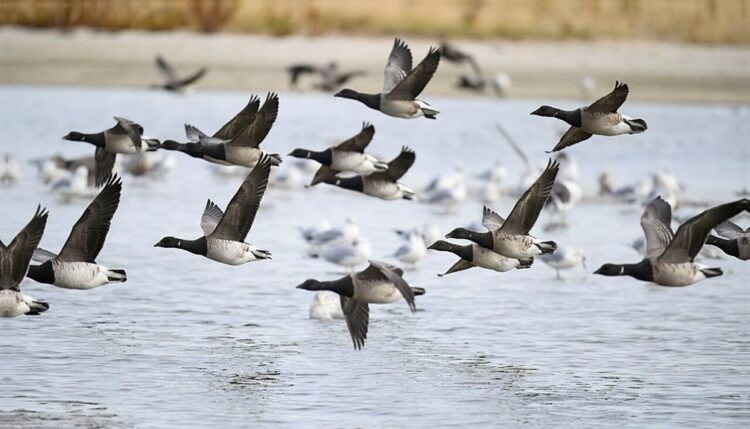
Latitude and Loss
One spring morning they announced themselves
at last: a faintly murmured intercourse
emerging surely from the shoring waves
like ancient spells incanted in Old Norse.
And there they came, low-beating over crests
intently on beneath the broken cloud,
a skein of purpose following the coast,
straining northward, urgent, calling loud
with high excited clamour in full flight.
Strong wingsweeps passing sighed of Arctic wind,
then faded into silence beyond sight,
leaving only emptier sky behind.
Innately charted constellations guide
their impulse to a reacquainted strand,
where old unfrozen birthrights recognised
anew are nurtured in a nightless land
of cloudberry, moss and watery wilderness.
Wanderers brooding on the edge of earth
sense instincts pulsing in each downy nest,
around them all the backcloth of rebirth –
seas where narwhal surge, bog where bears
roam like famished snow—and, sweetly harsh,
wild voices on the quaking tundral air,
whose echo haunts an empty Essex marsh.
Martin Briggs lives in Suffolk, England. He only began writing in earnest after retiring from a career in public administration, since when he has been published in various publications on both sides of the Atlantic.















This is an erudite expression of international bird migration with sensory images of their pilgrimages. The birds are seen to sally forth as they continue to the north. Their flight from England must seem harsh, since their echo haunts an Essex marsh. Well-constructed are the words as we follow this flight of birds.