


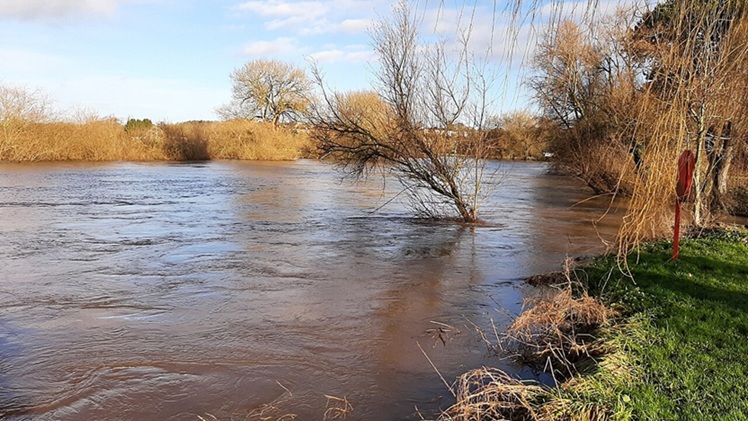
Unrest On the Floodplain
The rain commenced in darkness, flung upon
These acres as the heavens thumped and crashed.
I scarcely slept and got up to no sun.
In gray light I went out; my footsteps splashed.
The creek close to the house, not far below,
Raced by me muddy, thick with clots of drift,
Already rising up its banks to show
Power to shove aside, make way, and lift.
Beyond lay floodplain, weedy, tangled thick
With vines and sticks where bright birds screeched before,
But now I heard the water moving quick
In currents, swelling louder to a roar.
The day aged gray and comfortless, with rain
Just thinly sprinkling as the creek swirled past.
Then in that evening more storms hit the plain
And thunder burst again in blast on blast.
Another heavy dawn came on me late;
What floated in my sight I hardly knew.
Beyond the fringe of shrubs a driving fate
Had drowned the low ground wholly out of view.
The creek had now dilated to a lake,
A spreading shine and shimmer on the plain.
The still-arriving flow surged on to take
More territory in the new domain.
Out there forlorn seed-stalks of grass remained,
Absurd, awash, along with scraggly trees;
But long green grass was sunken and profaned
While on the water crawled a feeble breeze.
Now I was one to moralize and guess
At purposes and principles and themes,
And what I saw was witless wilderness
Whose wreckage seemed a specter out of dreams.
Of what was picturesque I saw no trace.
Throughout the plain, besmirching flood had run
Indifferently to alter and deface.
And what of creatures then? I saw not one.
The rain had ceased; the packed clouds broke askew;
But nowhere in that inundated scene
Could sunlight elevate my thoughts anew.
Old life would fail; no wish could intervene.
A while I brooded on the floodplain’s brim,
Awaiting some improbable relief.
Sunlight I had, but still my mood stayed dim.
I sighed in puzzlement and pointless grief.
After another night, I wandered out
Again on foot, my purpose then to find
The merest signal to be glad about
Or nearest charm to fascinate my mind.
A shock—the creek had ceased to roar, was back
Within its banks to ripple harmlessly.
I paused there, disconcerted by the lack
Of drama, chaos, and calamity.
And then beyond the shrubbery I saw
Prodigious alterations in my view
That moved me to exclaim, frankly in awe,
At one scene gone, another gleaming new.
The flood, a phantom, had dissolved and sped
At night down through the overburdened creek.
I marveled at what shone out there instead—
A vision of a kind I meant to seek.
All standing stark, the shrubs and shaken trees
Took on a semblance of antiquity
Restored in part, and then a simple breeze
Rose up and carried freshness straight to me.
Driftwood had dropped with dead grass clumped and wet,
But over that, incongruous, there stood
A scattering of green grass living yet,
Now waving unrestricted as it should.
Green life I saw renewed when the flood was gone,
But the flood in draining off had drained from me
Much of the notion that I could hold on
To changing forms in perpetuity.
With calmer breath I heard the click and buzz
Of creatures undistressed, of roaming bees
Gone out on daily business. So it was,
While bright birds skittered through the scraggly trees.
And will the deluge come again this year?
Oh, let that go, there’s present work for me.
What can I do but act with virtue here?
Result will follow act—so must it be.
How delicate does life’s fair promise seem,
And laughter, joy—how lightly do they pass.
With patience now let me take as my theme
The ever-fading, ever-rising grass.
Bhikkhu Nyanasobhano is a native of Kentucky who for many years has been a bhikkhu, a Buddhist monk of the Theravāda tradition.



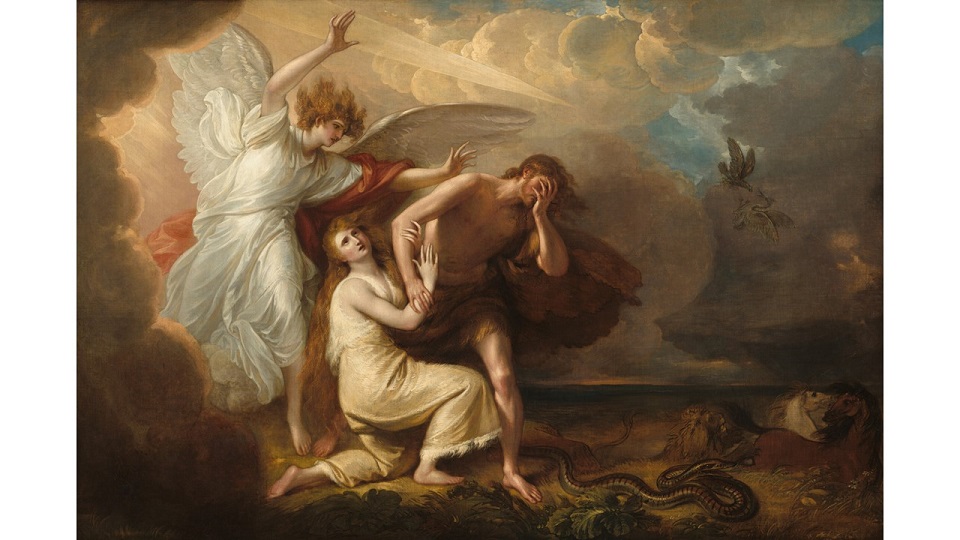
















The image of ‘grass … sunken and profaned’ is a strong one, and highlights the theme in the poem, of cyclical fear and turmoil followed by a return to order, even if traces of the turmoil remain.
Thanks for the read, Bhikkhu Nyanasobhano.
This is a powerful poem with images of a flood that stick in the mind. There is peace and resolve in the contemplation of that which has confronted the observer first with chaos and then with order. You have provided us a gift of an insightful event which first threatens nature and our bucolic world and then renewed hope that all is right with our world and rearranged view of it.
A compelling narrative, which describes very well Man’s (or a man’s) response to the forces of nature; the final resolution being both optimistic and peaceful. By the way, I write this in a drought-stricken England!
This is a great flood water poem which really resonates with me. The imagery is vivid and descriptive enough that it never gets tedious, even though the poem is on the slightly lengthier side. But the story you tell is well worth the length of the poem. I find it very engaging and enjoyable to read. Excellent job.
Truly an excellent description of a flood at one particular location, where the reader can almost imagine himself experiencing the cheerless and indeed threatening days of the inundation. The language is dreadfully suited to the event–and to the theme. “The day aged gray and comfortless with rain.” Long /a/ assonance for three words in a row, emphasized by the same sound in the end rhyme word. It well suits the heaviness of the picture. The theme, I believe, is stated in the title. It is the “unrest” experienced by the speaker, who says he is “one to moralize and guess at principles and purposes and themes.” However, he is “disconcerted” by this “witless wilderness” that seems to offer no charm but only “changing forms.” He is not made happy by flood waters subsiding or sunlight returning. The floodplain may look refreshed or renewed, but it is most certainly changed, demonstrating perpetual impermanence. Life, laughter, and joy now look “delicate.” The speaker sees freshened antiquity–the old and the new being nothing to hold on to. Thus the theme restated in the final line is “grass,” ever fading, ever rising. And the speaker resolves to “act with virtue” doing present work. A worthy consideration rising from your eloquent description, Bhikku Nyanasobhano.
This is a striking work, very much rapt in a moment, aware of every detail and the thoughts it inspires. Like most of your poetry, it is a calming breath, a step back, to take in fully a moment of particular inspiration. It demands a slow, deliberate, conscious read. Perfect over a cup of tea.