• Submit Poetry
  • Support SCP
  • About Us
  • Members
  • Join
Tuesday, August 4, 2026
Society of Classical Poets
  • Poems
    • Beauty
    • Culture
    • Satire
    • Humor
    • Children’s
    • Art
    • Ekphrastic
    • Epic
    • Epigrams and Proverbs
    • Human Rights in China
    • Music
    • Performing Arts
    • Riddles
    • Science
    • Song Lyrics
    • The Environment
    • The Raven
    • Found Poems
    • High School Poets
    • Terrorism
    • Covid-19
  • Poetry Forms
    • Sonnet
    • Haiku
    • Limerick
    • Villanelle
    • Rondeau
    • Pantoum
    • Sestina
    • Triolet
    • Acrostic
    • Alexandroid
    • Alliterative
    • Blank Verse
    • Chant Royal
    • Clerihew
    • Rhupunt
    • Rondeau Redoublé
    • Rondel
    • Rubaiyat
    • Sapphic Verse
    • Shape Poems
    • Terza Rima
  • Great Poets
    • Geoffrey Chaucer
    • Emily Dickinson
    • Homer
    • Henry Wadsworth Longfellow
    • Dante Alighieri
    • John Keats
    • John Milton
    • Edgar Allan Poe
    • William Shakespeare
    • William Wordsworth
    • William Blake
    • Robert Frost
  • Love Poems
  • Contests
  • SCP Academy
    • Educational
    • Teaching Classical Poetry—A Guide for Educators
    • Poetry Forms
    • The SCP Journal
    • Books
No Result
View All Result
Society of Classical Poets
  • Poems
    • Beauty
    • Culture
    • Satire
    • Humor
    • Children’s
    • Art
    • Ekphrastic
    • Epic
    • Epigrams and Proverbs
    • Human Rights in China
    • Music
    • Performing Arts
    • Riddles
    • Science
    • Song Lyrics
    • The Environment
    • The Raven
    • Found Poems
    • High School Poets
    • Terrorism
    • Covid-19
  • Poetry Forms
    • Sonnet
    • Haiku
    • Limerick
    • Villanelle
    • Rondeau
    • Pantoum
    • Sestina
    • Triolet
    • Acrostic
    • Alexandroid
    • Alliterative
    • Blank Verse
    • Chant Royal
    • Clerihew
    • Rhupunt
    • Rondeau Redoublé
    • Rondel
    • Rubaiyat
    • Sapphic Verse
    • Shape Poems
    • Terza Rima
  • Great Poets
    • Geoffrey Chaucer
    • Emily Dickinson
    • Homer
    • Henry Wadsworth Longfellow
    • Dante Alighieri
    • John Keats
    • John Milton
    • Edgar Allan Poe
    • William Shakespeare
    • William Wordsworth
    • William Blake
    • Robert Frost
  • Love Poems
  • Contests
  • SCP Academy
    • Educational
    • Teaching Classical Poetry—A Guide for Educators
    • Poetry Forms
    • The SCP Journal
    • Books
No Result
View All Result
Society of Classical Poets
No Result
View All Result
Home Poetry

Poetry Challenge: Write a Sonnet in Iambic Monometer

March 2, 2021
in Poetry, Poetry Challenge, Poetry Contests, Poetry Forms
A A
122
poems Poetry Challenge: Write a Sonnet in Iambic Monometer

.

This challenge was conceived by Paul A. Freeman after reading a sonnet in iambic monometer by James A. Tweedie, “Allergies.” Mr. Freeman’s example is below.

Make your own and post it in the comments section below!

.

An Aging Poet’s Lament

by Paul A. Freeman

My mind
these days
can’t find
always
good rhymes
to write.
Sometimes
I might
pen weak
rhyme words
that reek
like turds.
__Though versed,
__I’m cursed.

.

.

ShareTweetPin
The Society of Classical Poets does not endorse any views expressed in individual poems or commentary.
Read Our Comments Policy Here

RandomPoems

Rescuing Contemporary Poetry from Vers Libre: An Essay by Leland James
Beauty

Rescuing Contemporary Poetry from Vers Libre: An Essay by Leland James

January 21, 2022

. Rescuing Contemporary Poetry from Vers Libre The conservative & informal vs. the free Before addressing my thesis, let me...

National Poetry Month Limerick Challenge
Limerick

National Poetry Month Limerick Challenge

March 12, 2026

  Limerick Poetry Challenge Write a limerick (learn how to write one here) about a famous poet or about writing...

Next Post
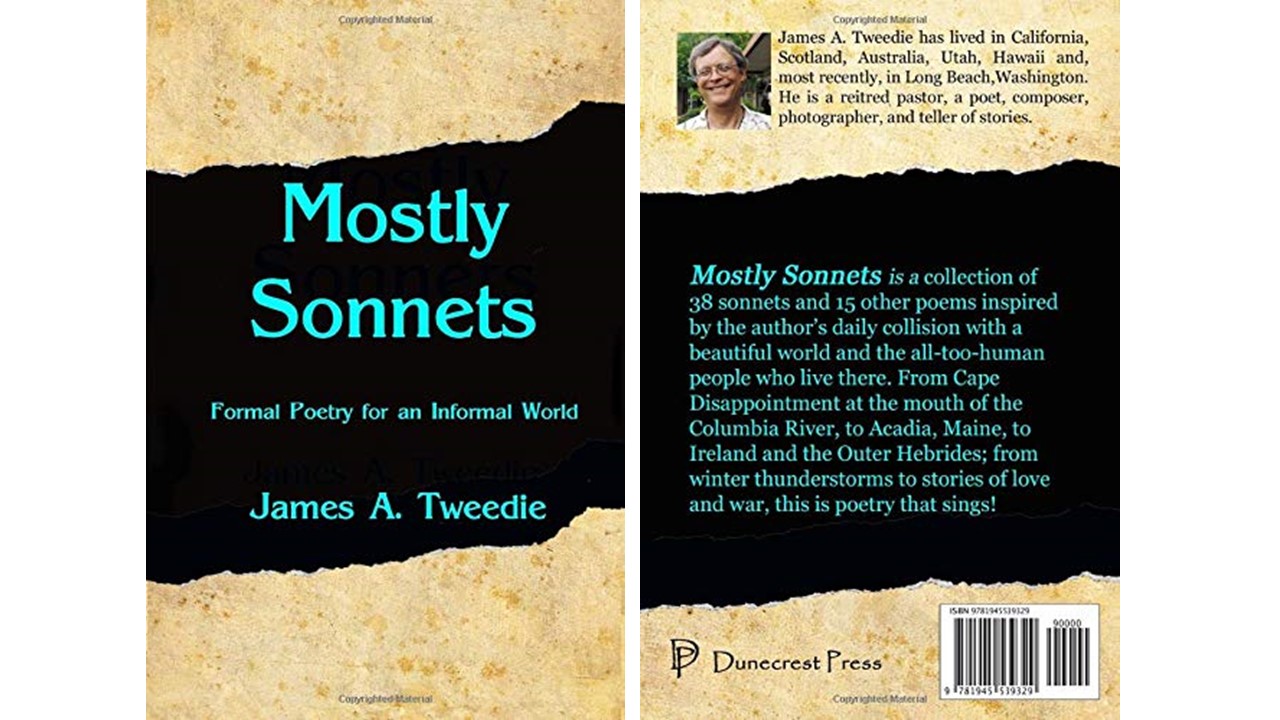
A Review of James A. Tweedie’s Mostly Sonnets: Formal Poetry in an Informal World

A Review of James A. Tweedie’s Mostly Sonnets: Formal Poetry in an Informal World

‘And Our Paths Through Flowers’ by David Whippman

'Who Knew' and Other Poetry by Áine Mae

‘The White Man’s Burden’ by Rudyard Kipling: Poem, Background, and Analysis

'The White Man's Burden' by Rudyard Kipling: Poem, Background, and Analysis

Comments 122

  1. Joseph S. Salemi says:
    5 years ago

    Adam Sedia, what hast thou wrought?

    Reply
  2. ray boyd says:
    5 years ago

    May I
    be part
    of why
    the heart
    of those
    who sing,
    Who chose
    to cling
    to song
    to right
    all wrong,
    can plight
    all truth,
    all ruth.
    ,

    Reply
  3. ray boyd says:
    5 years ago

    Out there
    so few
    who care
    to do
    what needs
    to be.
    Those deeds
    that we
    have seen
    as right.
    I ween
    to fight
    is not
    their lot

    Reply
    • Mia says:
      5 years ago

      As I return to this page in the last day of August I find myself loving
      both your poems. They are great and it seems to me growing more pertinent as time goes by.
      Thank you.

      Reply
  4. Julian D. Woodruff says:
    5 years ago

    I sing
    aloud
    from cloud
    nine. Bring
    me back
    to earth,
    though mirth
    there’s slack.
    (I’ve al-
    so tried
    cloud ten—
    unmol-
    lified
    again.)

    Reply
  5. John Freeborn says:
    5 years ago

    How can
    my rhyme
    attain
    and climb
    the lof-
    ty height
    of grand-
    eur’s light?
    And how
    illume
    the time-
    spun tomb,
    save if
    I trace
    the mas-
    ters’ grace?

    Reply
  6. BDW says:
    5 years ago

    The Beast
    by Bud “Weasel” Rice
    “Adam,,,what hast thou wrought?”
    —Joseph Salemi

    Like as
    an S.
    he has
    finesse,
    and bides
    the dawn;
    he hides
    his yawn.
    But snabs
    a stray,
    and grabs
    the day…
    to feast—
    the Beast!

    Reply
    • jd says:
      5 years ago

      Good one! So many possible subjects.

      Reply
  7. Joseph S. Salemi says:
    5 years ago

    BDWhatever

    He can’t
    compose
    to save
    his nose —
    not verse
    and not
    a line
    of prose.
    All he
    can do
    is preen
    and pose,
    count syll-
    ables
    as read-
    ers doze…
    and still
    he comes
    ici
    and crows.

    Reply
    • BDWhatever says:
      5 years ago

      Ah, Swami Salemi hath ope’d his jaw, excoriatingly.
      He doth not like my mono sonnet’s ess apparently.
      He spouts out cancel culture trash. He states I cannot write,
      “not verse and not a line of prose”. Doth he believe his tripe?

      I usually don’t join in such kinds of activities—it’s not my thing. But something about the form, its shape, and how it compared to iambic heptameter, appealed to me; and as I leaned back in my chair, I began composing. The form reminded me of a snake, and so became my topic. [By the way, the reason I became a literary critic, over two decades ago, was because my poetry has continually been rejected and attacked. It seems one must continually explain one’s motives and one’s art in this era.] Anyway, the snake grew; and it was quite an enjoyable composition. Of course, there were turns and slides along the way; but, as it is a short poem, it was over and done with rather quickly. At this point in time, I prefer the tennos and dodeca, as allowing for more expansion, but avoiding prolixity. Anyway, here was that “sonnet”.

      Like as
      an S.
      he has
      finesse,
      and bides
      the dawn,
      he hides
      his yawn.
      But snabs
      a stray,
      and grabs
      the day…
      to feast—
      the Beast!

      I really enjoyed writing the first quatrain, with its surprising simile embedded in the simplest words, but for the last “finesse”, the lone two-syllable word in the poem, a technique nicely practiced by Emily Dickinson (who was in my mind, as I composed).

      In the second quatrain, in the process of making the poem, I went through so many phrases, I could not list them all, though the rhymes were secured. The second quatrain, in similar simplicity, moves with two verbs and their objects. Perhaps the picture is unappreciated by the dozing reader, and yet I found the elementary phrasing pleasing to my taste.

      Moving to the sestet, I was torn between two possible 3rd quatrains:
      “But snabs/ a stray,/ and grabs/ the day…” where an onomatopoetic neologism, suggesting sna…[ke] is used and Horace’s commonly phrased cliché is semi-disguised, led by an abrupt “But” indicating the quickness of the snake’s bite… or the more ordinary process “to squeeze/ a stray,/ and seize/ the day…” Finally, the couplet suggests a wider meaning, that I thought could be aided by Mr. Salemi’s clipped quote. Actually, because he seems offended? perturbed? when the poem is next published, I shall drop his last name, and simply attribute the quote to Joseph S.

      Reply
      • Joseph S. Salemi says:
        5 years ago

        When your poem “is next published”?

        Dream on, Brucie. That’ll be the day.

        Reply
      • James A. Tweedie says:
        5 years ago

        Bruce, As you say, I must have been dozing.

        Reply
      • BDW says:
        5 years ago

        Old Rip Van Tweedie, living near the weedy, sandy dunes,
        I must admit I did not know that he was dozing too.

        Reply
      • BDW says:
        5 years ago

        Did I forget to post this on March 12, 2021, or was I simply cancelled again, like Theodore Seuss Geisel?

        I did change one item of “The Beast” when the poem was “next published” on March 12th 2021, I changed the quote’s attribution to “Swami Salami”, as only seems appropriate.

        Reply
    • jd says:
      5 years ago

      It’s “ici” that throws me off due to
      ignorance, I guess. The rest rings
      clear and true.

      Reply
      • A. K. says:
        5 years ago

        “Ici” is “here” in French. 🙂 Sometimes I find myself using what little French I know just because the syllables are different and I enjoy the sound better! Haha! Such as “avec” rather than “with.”

        Reply
  8. ray boyd says:
    5 years ago

    Will
    two
    still
    do?
    One
    more?
    None?
    Four?
    Pick
    nix?
    Tick
    six?
    Now
    how?

    Reply
  9. Julian D. Woodruff says:
    5 years ago

    Rather than diminishing, as Mr. Boyd has done, I thought of expanding: iambic monometer all with feminine .. excuse me! … weak endings. Why didn’t I realize the thing would be in essence dactylic, with an initial anacrusis?

    Scary Pair

    It’s Biden
    and Harris—
    I’m hidin’!
    Embarras-
    sing faces
    demeaning
    high places—
    I’m keening!
    The pair just
    pursue their
    ambitions;
    we’re there just
    to rue their
    decisions.

    Reply
  10. ray boyd says:
    5 years ago

    You
    there
    who
    cares!
    May
    I
    say
    Hi?
    Then
    ask
    when
    task
    wit
    fits?

    Reply
  11. ray boyd says:
    5 years ago

    Which
    laws
    pitch
    pause?
    How
    few
    now
    due?
    Wie
    sehr
    me
    dear
    be
    clear

    Reply
  12. Julie Desmond says:
    5 years ago

    Emboldened (Alone on a Winter Trail)

    When skis
    Bemoan
    March breeze
    Has thrown
    Glass swill
    Across
    The hill
    You toss
    Your gaze
    Admire
    The haze
    Inspired
    Recall
    Your place
    And fall
    With grace
    The snow
    Will know

    Reply
  13. Paul Freeman says:
    5 years ago

    End Game (or Not)

    Our fun,
    Ray Boyd,
    is done.
    We toyed
    with words
    that flew
    like birds.
    A few
    soared high –
    each foot.
    Now I
    shall put
    this thread
    to bed.

    Reply
  14. Frank De Canio says:
    5 years ago

    Video Lover

    I see
    you must
    hate me,
    or just
    for fun,
    you put
    it in,
    then out
    again.
    Don’t tease
    my friend,
    but please
    be kind –
    rewind!

    Reply
  15. ray boyd says:
    5 years ago

    My task?
    In touch
    to ask
    how much
    to post?
    What is
    the most?
    This quiz
    is so
    by this
    I know
    and miss
    slips, plus
    the fuss

    thanks … bye … loved the experiment

    Reply
  16. Ryan Watch says:
    5 years ago

    Roses

    Roses
    Divine
    Roses
    Are fine.
    Like lips
    That kiss,
    That drips
    With bliss.
    Roses red
    Are souls
    That spread
    Love whole.
    Thus, the rose
    Proposes.

    Reply
  17. Mia says:
    5 years ago

    Lockdown woes

    No longer
    free,
    I
    must
    wear
    mask,
    sanitiser,
    gloves,
    a visor,
    No contact
    Pass by
    Cross over
    the street
    stay back
    Take jab
    or stay
    indoors
    No travel
    Cover face
    Bare arm
    can’t
    See why
    Or where
    To go
    eyes sting
    tears stream
    Too late
    To turn
    Back
    To protest
    Muzzled
    Puzzled
    I write
    To reach
    The light
    Envious
    Of birds
    That chirp
    And fly
    but I am,
    I think
    I am,
    still alive

    I am not sure if this conforms, in fact feel certain it doesn’t, but it worked in getting my thoughts down on the current situation. Monometer by me is a bit monotonous…
    so I am especially in awe of all the joyous poems here, so good to read.
    thank you all.

    Reply
  18. Sasha A. Palmer says:
    5 years ago

    Redbirds

    The trees –
    still bare,
    yet “leaves,”
    the glare
    of which
    can blind,
    bewitch
    the mind,
    adorn
    the snow.
    This morn
    I know:
    they sing –
    it’s spring.

    Reply
    • Lucia Haase says:
      5 years ago

      This is beautiful.

      Reply
    • jd says:
      5 years ago

      Yes, I agree.

      Reply
  19. Andre Peltier says:
    5 years ago

    A Sonnet in Some Monometer Lines

    To sing
    of spring
    and all
    the things.
    So soon
    the blooms
    will fill
    our rooms.
    The pet-
    als shed
    and then
    we fret.
    Autumns
    a bum.

    Reply
  20. Rohini Sunderam says:
    5 years ago

    These are all so good, but here goes:
    They said:
    “It’s love,”
    She said.
    “Not love,”
    He said.

    “Above,”
    She read.
    “All else
    I dread.”

    “It’s false”
    He said
    “Your fault
    I bled.”

    She said.
    He said.

    Reply
  21. Roy E. Peterson says:
    5 years ago

    The Bee in the Beehive
    By Roy E. Peterson

    The bee
    In the
    Beehive
    Was not
    Alone.
    He was
    Just one
    Of the
    Bees, and
    They called
    Him, “Drone.”

    “Come Drone,
    I need
    Something
    Said the
    Queen Bee.
    I want
    You to
    Give me
    A taste
    Of your
    Honey.”

    Drone took
    A dab
    From the
    Honey
    Filled comb
    That was
    Contained
    In the
    Buzzing
    Sweet home.

    He flew
    To the
    Queen Bee
    To give
    Her the
    Honey.
    Made from
    A rose
    Out where
    It was
    Sunny.

    As he
    Waited
    In line
    To serve
    Honey
    With Drones
    He thought
    He would
    Change his
    Name to
    Ramon.

    Reply
  22. Jan Darling says:
    5 years ago

    THOUGHT SPORT.
    Jan Darling

    Your dreams
    Are lost
    In schemes
    Embossed
    With tears
    You shed
    And fears
    You dread.
    Your heart
    Beats still
    Then starts
    To chill.
    All sound
    Is drowned.

    But hear!
    The sound
    Of cheer
    Is found.
    Your thought
    was lost
    not chilled
    with frost.
    Free now
    To sing
    You vow
    To wring
    From storm
    Reform.

    Reply
  23. Mia says:
    5 years ago

    Tried so much to write something happy or funny
    but managed the opposite. tragic

    The
    crescent
    Moon
    winks,
    smiles
    and smirks,
    bares its
    sharp
    pointed
    blades
    the
    enemy
    stalks
    its prey
    and
    waits
    for
    thick
    velvet
    darkness
    to wield
    the sickle,
    a fragile
    rose
    weeps
    a lone
    star
    dims,
    a flash
    of red
    leaps
    to reap
    the spoils
    of war

    Reply
    • Mia says:
      5 years ago

      Perhaps I should have explained that the theme of this is
      the invasion of Northern Cyprus in 1974 by Turkey
      But here we are in 2021 and it makes me think of Afganistan.

      Reply
  24. Mo says:
    5 years ago

    Ha! You snagged me with this challenge.

    2021

    A time
    To flip
    Our world
    And now
    We have
    Gone on
    To “1984.”
    Report
    The news
    As per
    Their views.
    No facts
    To weigh
    Them down.
    So sad
    They get
    Their way
    Until
    It will
    One day
    Be much
    Too late.

    Reply
  25. jd says:
    5 years ago

    Iambic Monometer Sonnet

    I like
    the form
    but would
    prefer
    as start,
    a tome
    with hints
    that comb
    the rules –
    para
    meters
    would help
    this a-
    meteur.

    Reply
Previous
Next

Leave a Reply Cancel reply

Your email address will not be published. Required fields are marked *


  1. Joseph S. Salemi on ‘Good and Evil, a True Story’: A Poem by Roy E. PetersonAugust 4, 2026

    The American poet and literary critic, John Crow Ransom, argued in his book "God Without Thunder" that God is the…

  2. Karen Rodgers on ‘The Passing’: A Poem by Margaret BrintonAugust 4, 2026

    Dear Shantu, >We all wish for a Peaceful demise in an uncluttered environment free of the shackles of tubes and…

  3. Roy Eugene Peterson on ‘Good and Evil, a True Story’: A Poem by Roy E. PetersonAugust 4, 2026

    Margaret, I love your perspective and contribution. When I was in the eighth grade, I thought I made 100 on…

  4. Margaret Coats on ‘Good and Evil, a True Story’: A Poem by Roy E. PetersonAugust 4, 2026

    Good venture into philosophy, Roy--with a child very well known for later contemplations as your speaker. I hadn't heard this…

  5. Roy Eugene Peterson on ‘Good and Evil, a True Story’: A Poem by Roy E. PetersonAugust 4, 2026

    Bless you, Bhikkhu Nyansobhano! The story I read from which I wrote the poem made me contemplate as well.

Subscribe to Daily Poems

Enter your email address to subscribe to this blog and receive notifications of new posts by email.

Join 1,602 other subscribers

Recent Poems

  • ‘Good and Evil, a True Story’: A Poem by Roy E. Peterson
  • ‘The Royal Arse Hortillery’: A Poem on the Spoonerism, by Jeff Eardley
  • ‘Who Hears a Robot’s Prayer?’ and Other Poetry by Brian Yapko
  • The Society of Classical Poets 2026 Haiku Competition
  • Four Love Sonnets by Adam Sedia
  • ‘Rasputina Confers with Her Cohorts’: A Poem by Joseph S. Salemi
  • ‘Warfare by Remote Control’: A Poem by Paul A. Freeman
  • ‘The Passing’: A Poem by Margaret Brinton
  • ‘Of Webs and Whispers’: A Poem by Susan Jarvis Bryant
  • Poetry Book Review: Petrarch’s Canzoniere, Translated by A.M. Juster
  • ‘What Folly Dares’ and Other Love Poems by James A. Tweedie
  • ‘Allegrezza’ and Other Poetry by Rob Griffith
  • ‘The Lessons of Lot’: A Poem by Adam Wasem
  • ‘Prophecy and Divine Intervention in Virgil’s Aeneid’: An Essay by Kaitlyn Brown
  • ‘The Last Voyage of Barnaby Bear’: A Poem by Tashvi Reddy
  • ‘Impressions’ and Other Poems by Russel Winick
  • ‘The Reveal of the Rocks’: A Poem by Kyle Fiske
  • ‘Art Work’: A Poem by T.M. Moore
  • ‘A Strange Sun’: A Poem by Patricia Rogers Crozier
  • ‘Shave Off Those Whiskers’: A Poem by Roy E. Peterson
  • ‘The Man from China’: A Poem by Evan Mantyk
  • ‘The Ballad of the Ghost Mountain Boys’: A Poem by Rachel Lott
  • ‘The Threat of Virtue’: A Poem by Zumwalt
  • ‘A Poet at the Tower’ and Other Poetry by Michael C. Paul
  • ‘Florence Foster Jenkins’ and Other Poetry by Brian Yapko
  • Winners and Rankings of The Great American Poetry Competition
  • ‘The Gold Star Mother’: A Poem by Gerard Maritato
  • ‘An American Dash’: A Poem by Linda Ellis
  • ‘The Anonymous Soldier’: A Poem by Lucy Lind
  • ‘For Those We Never Meet’: A Poem by Aneesh Agarwal

Categories

  • Acrostic
  • Alexandroid
  • Alliterative
  • Art
  • Best Poems
  • Blank Verse
  • Chant Royal
  • Classical Poets Live
  • Clerihew
  • Covid-19
  • Deconstructing Communism
  • Educational
  • Epic
  • Epigrams and Proverbs
  • Essays
    • Interviews with Poets
    • Poetry Reviews
  • Featured
  • From the Society
  • Great Poets
    • Dante Alighieri
    • Edgar Allan Poe
    • Emily Dickinson
    • Geoffrey Chaucer
    • Henry Wadsworth Longfellow
    • Homer
    • John Keats
    • John Milton
    • Robert Frost
    • William Blake
    • William Shakespeare
    • William Wordsworth
  • Human Rights in China
  • Limerick
  • Love Poems
  • Music
  • Pantoum
  • Performing Arts
  • Poetry
    • Beauty
    • Children's Poems
    • Culture
    • Ekphrastic
    • Found Poems
    • High School Poets
    • Humor
    • Riddles
  • Poetry Challenge
  • Poetry Contests
  • Poetry Forms
    • Curtal Sonnet
    • Haiku
  • Poetry Readings
  • Rhupunt
  • Rondeau
  • Rondeau Redoublé
  • Rondel
  • Rubaiyat
  • Sapphic Verse
  • Satire
  • Science
  • Sestina
  • Shape Poems
  • Short Stories
  • Song Lyrics
  • Sonnet
  • Symposium
  • Terrorism
  • Terza Rima
  • The Environment
  • Translation
  • Triolet
  • Video
  • Villanelle

Quick Links

  • About Us
  • Submit Poetry
  • Become a Member
  • Members List
  • Support the Society
  • Advertisement Placement
  • Comments Policy
  • Terms of Use

Welcome Back!

Login to your account below

Forgotten Password?

Retrieve your password

Please enter your username or email address to reset your password.

Log In
No Result
View All Result
  • Poems
    • Beauty
    • Culture
    • Satire
    • Humor
    • Children’s
    • Art
    • Ekphrastic
    • Epic
    • Epigrams and Proverbs
    • Human Rights in China
    • Music
    • Performing Arts
    • Riddles
    • Science
    • Song Lyrics
    • The Environment
    • The Raven
    • Found Poems
    • High School Poets
    • Terrorism
    • Covid-19
  • Poetry Forms
    • Sonnet
    • Haiku
    • Limerick
    • Villanelle
    • Rondeau
    • Pantoum
    • Sestina
    • Triolet
    • Acrostic
    • Alexandroid
    • Alliterative
    • Blank Verse
    • Chant Royal
    • Clerihew
    • Rhupunt
    • Rondeau Redoublé
    • Rondel
    • Rubaiyat
    • Sapphic Verse
    • Shape Poems
    • Terza Rima
  • Great Poets
    • Geoffrey Chaucer
    • Emily Dickinson
    • Homer
    • Henry Wadsworth Longfellow
    • Dante Alighieri
    • John Keats
    • John Milton
    • Edgar Allan Poe
    • William Shakespeare
    • William Wordsworth
    • William Blake
    • Robert Frost
  • Love Poems
  • Contests
  • SCP Academy
    • Educational
    • Teaching Classical Poetry—A Guide for Educators
    • Poetry Forms
    • The SCP Journal
    • Books

© 2025 SCP. WebDesign by CODEC Prime.