


.
Practical Philosophy
The mind is meant to lead the body,
And not the other way around.
Permit no workmanship that’s shoddy,
And build foundations plumb and sound.
The godless, too, exalt their gods,
Though often in the guise of science.
Like little peas in brittle pods,
Their order suffers no defiance.
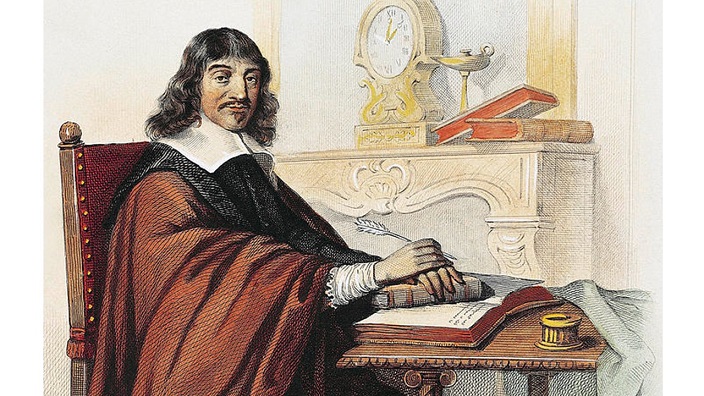
Descartes once stated that we think,
Which is the proof that we exist,
But dicta written down in ink
Suggest a hand become a fist.
It’s good to wonder what is real
And what is just a sheer illusion,
For otherwise you’ll only feel
More disappointment and confusion.
Believe in what your eyes perceive
Or what your heart and soul disclose;
Allow yourself to disbelieve
What wicked shallow minds propose.
.
.
The Bearable Cost of Living
Imagine that you never had been born
And all you’ve written still remained unread;
You wouldn’t’ve had to rise in early morn
Anticipating some new reader’s scorn—
You’d drift through music of the spheres instead.
Imagine that! If you had not been born,
Your thread would not be managed by a Norn
Who, with a snip, can make you join the dead
And nevermore rise early in the morn.
Though some have said you are a unicorn
With crazy notions running through your head,
Imagining that you were never born,
Sometimes you feel neglected and forlorn,
Beset with every woe from alph to zed,
But still you need to rise in early morn
To catch the dreams that restless sleep adorn
Before they have unraveled and have fled.
Imagine that you never had been born—
You wouldn’t’ve got to greet the early morn.
.
.
C.B. Anderson was the longtime gardener for the PBS television series, The Victory Garden. Hundreds of his poems have appeared in scores of print and electronic journals out of North America, Great Britain, Ireland, Austria, Australia and India. His collection, Mortal Soup and the Blue Yonder was published in 2013 by White Violet Press.















These are both wonderful, C.B. In “Practical Philosophy”, I especially love the second verse, particularly “The godless, too, exalt their gods” for its brilliant insight; and “Like little peas in brittle pods” for its clever internal rhyme that enhances the sarcasm. In your villanelle, I love that you’ve varied the wording of the repeated lines; I always think that works a kind of magic that a rote repetition doesn’t usually accomplish. “Zed” is a great rhyme; and I admit I had to look up “Norn”. (It works, though!) As you can tell, I really enjoyed these.
I’m glad you liked them, Cynthia. In the first, as you have understood perfectly, I am referring to the strange religion of scientism. As for the second, I think it is always a good idea to vary the repetends in a villanelle, even if it is only a matter of separating clauses into distinct rhetorical units that help carry the poem along in (one hopes) surprising ways.
The villanelle is perfectly constructed, and the use of “Norn” is unexpected and delightful.
The quatrains of “Practical Philosophy” are just as nicely crafted, but I have a question about something in the third quatrain:
But dicta written down in ink
Suggest a hand become a fist.
On first reading, it seemed to me that “become” was a typo for ” becomes.” This would be the normal indicative tense in straight narrative. But then I thought that perhaps you intended the subjunctive “become,” with the idea that “written dicta suggest that a hand should become a fist.”
In either case, the meaning of those two lines are not clear to me. If the correct word is “becomes,” then they seem to be saying “The existence of written text indicates that a hand becomes a closed fist when writing.” That just means that when we write we bunch up our fingers and palm into a fist. If the correct word is “become,” then the lines seem to be saying “Written text suggests that a hand should become a fist,” which seems to be an invitation to fighting.
Any clarifications?
I struggled with “become” for a time and decided that it was ok to use the participle form of the verb, with the meaning “turned to.” Maybe I got that wrong. In any case, the fist refers both to what is required in order to hold a pen and to the darker possibility that such a writer might impress his ideas on us by the strength of his authority.
Without being knowledgeable enough to comment on the grammar, the second sense is how I read the line.
I enjoyed both poems. The final stanza of Practical Philosophy is classic. Thanks for sharing.
You are always welcome, Russel. And you are right. That final stanza could be a stand-alone poem, as could any of the stanzas in that poem, because there is no enjambment between any of the stanzas.
C.B.,
I marvel at the smooth, polished progression of both form and substance in “Practical Philosophy.” It is the work of a master of the poetic craft with even the scattered feminine endings appearing as not only inevitable but absolutely integral to the success of the piece.
The villanelle is also compelling but more of a surprise insofar as I cannot recall you having shared one with SCP before!
Ha! James. Would it surprise you to learn that most of what I write is sheer freewheeling? If I tried to exert control over everything that comes out, I would likely stifle myself. Having written that, I do try to keep my feminine end rhymes under control in terms of their distribution within a poem. Just call it an OC nod to the idea of formalism. And just imagine how many good rhymes would be lost if feminine end rhymes were disallowed.
I’ve published many a villanelle on this site. They are archived and accessible through the Members section of this website.
I shall search the archives and enjoy what I find! And keep up the freewheeling! As I inferred in my comment, it is what makes your creative marvels so marvelous!
I really enjoyed these two poems C.B. The villanelle form is fascinating to me, as to how it is accomplished. I think it very clever.
I’m glad you enjoyed them, Norma. Given your proclivities toward humor, I’ll bet you could generate some kick-ass villanelles if you put your mind to it.
Thank you for your kind words C.B. As we used to say in Liverpool, I feel ‘chuffed’.
Very fine, CB. The last 4train of “Practical Philosopy” is about as terse and urgent a message as can be composed, and it is utterly controlled–no flying off the handle.
“Cost” is a gem, too. The variants in the born/morn lines keep it lively.
“… alph to zed”: is that just a sidestep around the inconvenience of the letter having to serve for the name of the letter? I wondered about “You’d not have had to rise …” for line 3; but to my ear that adjustment doesn’t work for line 17.
Thanks!
Without handles, Julian, I would have nothing to hold on to.
The “alph to zed” thing is indeed a sidestep — who needs more quotation marks? “Wouldn’t’ve” is a maximal contraction I only use when necessary, and I think your “You’d not have had” is probably more elegant and eloquent. As for line 19 (you wrote 17), it was less a matter of adjustment than it was a wish to stick to the text already established. Being faithful to the form is seldom a vice.
Agreed, CB. I was merely doubting the usefulness of my alternative.
(From your reply to Mr. Peterson, below, I suspect you’d enjoy Lessing’s “Die Beredsamkeit”–tr. readily available, wittily set by Haydn as a part song–likewise readily available).
Greetings, Sir!
To me, the first poem is made of smaller poems – each stanza a poem. For me, the following stanza stood out.
“Believe in what your eyes perceive
Or what your heart and soul disclose;
Allow yourself to disbelieve
What wicked shallow minds propose.”
I am thinking of pasting a print-out of this infront of my desk to deal with rejection emails.
Best wishes
Or the print-out could simple read, “never argue with an editor.”
These are both great poems, C.B. During the past couple of years particularly, adherents to scientism have shown themselves to be more intolerant and irrational than the religions they feel so, so superior to, which makes the message of “Practical Philosophy” feels quite urgent.
I love the villanelle and your comment to Cynthia above about adding subtle variations to the repeated lines. You’ve done it in such a way that it livens the form up nicely without ever seeming like a compromise. Inspiring stuff!
Thank you very much, cousin Shaun. For a really strong dose of scientism, look up YouTube videos featuring “The Four Horsemen,” Richard Dawkins, Daniel Dennett, Sam Harris & Christopher Hitchens.
Villanelles are fun to play with, and the best thing about that, unlike playing with matches, is that no harm will ever come of it.
Great stuff CB. I was reminded of the Monty Python “Philosophers” song and the realisation that “Renes Descartes was a drunken fart, I drink, therefore I am”
Whatever one thinks about Descartes, it should be remembered that he discovered/invented analytical geometry.
Two superb poems, C.B., with fascinating subject matter and many fine touches which are utterly unique to Anderson the poet. I found your villanelle thought-provoking with its “it’s a wonderful life” concept and clever, clever rhymes. But I was especially taken by your line “You wouldn’t’ve got to greet the early morn” with its double contraction which, in the hands of a lesser poet, would have been awkward but which works well for you and is satisfyingly chewy to say out loud.
“Practical Philosophy” is my favorite of the two because you concentrate so much that is observant and honest in these five brief stanzas (one of the few poems I’ve read in a while which I wish had kept going!) It was very hard for me to pick out favorite lines but I want to give a special mention to “The godless, too, exalt their gods” because no truer words have ever been said.
I was also struck by the lines “But dicta written down in ink/Suggest a hand become a fist.” I take those lines to suggest that once something becomes established as factual, whether its science or theology or any form of orthodoxy, those who subscribe will never let go of those “facts.” The mind, like the hand, are locked closed. That orthodoxy will be held onto with a fist even to the point of leaving claw marks. At least that’s what I got from it.
Well, thank you, Brian. And I’m glad you like to chew words.
“… no truer words have ever been said”? I though the winner of that accolade was “This too shall pass.” Your take on the whole “dicta” thing is as accurate and as good as anyone’s could be, and if I ever need exegetical advice I’ll know who to ask.
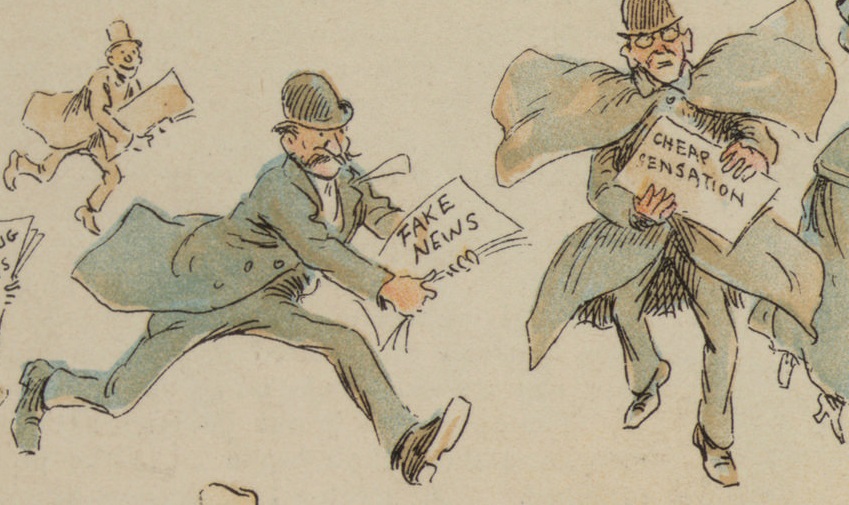
My comments are very much in line with most of those already posted. I always take the word, “dicta,” as an authoritarian statement that is imposed by those seeking control and that when written on paper achieves a status of presumed legality, when in fact it may be an aggressive attempt to silence dissenters. I certainly adhere to the last two lines, “Allow yourself to disbelieve What wicked shallow minds propose.” This certainly applies to scientism (false gods in whose names acolytes are making pronouncements that are both shallow and callous) and modern journalism in particular. Your second poem was a delight to read with some intriguing words used including “zed,” “Norn,” and “wouldn’t’ve.”
As La Rochefoucauld once wrote: Everybody doubts his memory, but nobody his judgment.
In the villanelle, I love the way that you re-imagined the use of “imagine”. You demonstrate how you don’t have to repeat a line verbatim. The variations still echo the thought of the original line. For me, it made for a more interesting reading experience. It’s an education as well. “Practical Philosophy” has so many true-isms – it’s a classic from start to finish, and “little peas in brittle pods” is a gem.
C.B., these poems sing to me in beautifully crafted poetry that offer the benefit of wisdom wrapped in the music of adeptly woven words. The closing stanza of ‘Practical Philosophy’ should be read by anyone suffering the angst brought on by the confusion of living in strange times. I love a good villanelle and ‘The Bearable Cost of Living’ is everything a good villanelle should be… and the message speaks to my soul.
Thanks, Susan. I think “woven words” is a great idea, and I have never doubted the disposition of your soul.