


Telling by Not Asking
I called up somebody I knew back in school,
_Beginning six decades ago.
Someone I spent six years of doing things with,
_But since then we’d not said hello.
I asked him about his whole life, and learned facts
_To a rather extensive degree,
The most poignant of which was in noticing that
_He did not ask one thing about me.
Course Correction
I often deem how I am seeing things,
To be the only viewpoint that makes sense,
Until I realize my wife’s way brings
Me over to the right side of the fence.
Wanting to Fit In
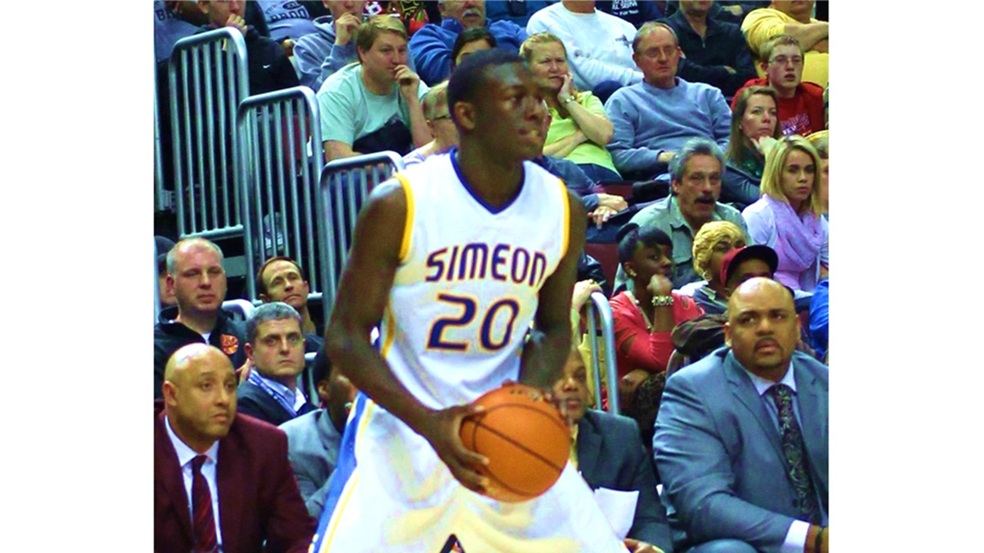
At games some parents yell
Instructions, not support.
With most, though, you can tell
They barely know the sport.
Russel Winick started writing poetry after ending a long legal career. He resides in Naperville, Illinois.












These are delightful, Russel. I especially like the first one. It made me laugh, and also recall similar experiences I’ve had. And, once again, when I’d seen only the title, I guessed it was yours. ☺️ You definitely need to make a collection of your words of wisdom.
And Cynthia, as soon as I see your name, I know that a sweet and uplifting comment lies just ahead. Thanks for being you!! As for a book, I keep waiting for publishers to knock down my door, but shockingly they have yet to do so!
Each of these enjoyable, with a facetiousness that is also linked to a savvy perception of human foibles.
The first piece touches on a major problem today — the utterly self-absorbed narcissism of much of the population, including a large percentage of the intellectual class. I am always amazed at the way in which someone at a gathering can speak of nothing except himself, his family, his current activities, and his achievements. If you add a comment to his monologue, he just stares at you blankly for a few seconds, and then goes right back to his narrative.
The second poem brings up a point that is not often addressed. When a man and a woman have been married for a long time, they tend to become two sides of the same coin. A man and his wife are “one flesh,” but their thoughts and opinions also frequently become not necessarily identical, but interlocking parts of a whole. They can disagree, but even in disagreement the entire situation resembles an interior dialogue between two halves of a higher personality. As Yukio Mishima points out in his story “Patriotism,” husband and wife should be harmonious.
The third poem deals with a regrettable reality — that of parents using their children as pawns in a larger chess game that is about adult aspirations rather than pride and pleasure in their offspring’s activities. Parents getting into a raging fight during a Little League baseball game, either with other parents or with coaches and umpires, is an ugly blight on true sportsmanship. But I suppose it’s part of the toxic competitiveness of American culture, where we can’t even have a cooking show on TV without it being a “contest” between chefs.
Thank you Professor, for your kind and always-interesting observations.
here’s a “somebody back in school” poem I wrote 60 years ago, when when the pickled events were really quite recent, and I was heavily into Beowulf:
How many people – are pickled as children
Preserved in their youth – by the brine of the mind!
(How much with them – is the pickler the pickled
Bedecking their past – like an onion or dill)
Odd are the images – twisted their passing,
Frog-grin and crayfish scraps – old fetal pig,
Torn by the tongs, – recollection, from memory,
Fuming and fixed – in formaldehyde dipped;
Old petty passions – the conflicts of childhood
Friendships and foeships – the clash and the crush,
Canned for dissection, – remembered, arisen,
Strange to the sight – of the present appear.
I presume you did not call that friend in the first poem again and likely did not receive a call back. You are wise to learn your wife’s perspective and remain silent. My yelled instructions upon reflection were not of the nice kind. Witty, whimsical, and fun as is your forte.
Thanks Roy, I always appreciate your feedback. And no, I’m not anxious to call that old teammate back, but I’m grateful that I got a poem out of our conversation!
I like your way of gathering observations of meaningful events. Attention to the moment bears fruit, though it’s not always pleasant. Such is the world. You were not asked anything about yourself? Yes, poignant, I’ll say, and all too common. And yes, sometimes not speaking tells plenty. Is it the times we live in? Is it worse now than before? Who can say? But thus, unaware, and in many ways, character shows itself. And you were there to record instructive events. Thanks for these glimpses of reality. Perhaps we can learn from them.
Thank you Sir. I truly appreciate all of your thoughtful and kind comments.
Yep, it’s often tricky reopening coms with people you’ve been out of contact with for a long time. We’ve all moved on I suppose.
The sports nugget is interesting. These nutty parents teaching by bad example seems to be a largely American phenomenon, often aired on TV and a key scene in the remake of Death Wish.
As for the second poem, not being the placid hubby takes it’s toll. Maybe I should take the easier way out.
Thank you Paul, for an astute analysis of each poem. The fellow I wrote about in the first poem seemed to be exactly as you described. Fortunately, other such conversations have been more balanced. As to the second poem, not always, but often my wife is right and I’m not, so I just have to admit it. It’s interesting that bad sports parent behavior is mostly an American phenomenon. With more sports becoming more global, I wonder if that will change?