


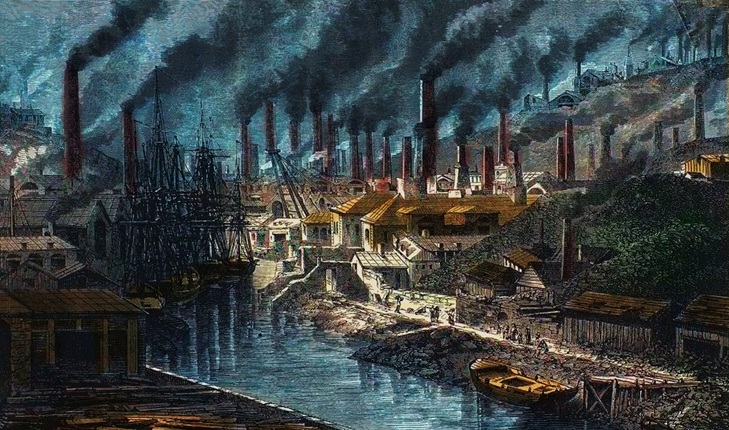
The New Satanic Mills
“And did the Countenance Divine,
Shine forth upon our clouded hills?
And was Jerusalem builded here,
Among these dark Satanic Mills?” —William Blake
Whatever’s happened to that scepter’d isle,
That earth of majesty, that seat of Mars,
Where aged veterans were wont to smile,
And strip their sleeves and proudly show their scars?
Whatever’s happened to that happy breed
That happily for her would go to war;
Relinquish dearest life for England’s need
And blaze in deathless glory evermore?
Whatever’s happened to that liberty
For which they struggled for a thousand years,
Defending it from foreign tyranny,
And paying the price in blood and toil and tears?
Has all that richness gone, that precious treasure,
To be by empty nothingness replaced?
Oh, England! shamed you are by us forever,
While we ourselves are shamefully disgraced.
For what is left when governments conspire
Against the people in whose name they rule;
Force-feed their cities, towns and every shire,
And choke their every hospital and school?
And what survives when girls are sacrificed
Upon diversity’s ignoble altar;
When right and decency are compromised
Protecting not assaulted but assaulter?
And what remains when merely outraged words
Are reason to remove that liberty,
As law its loins with haste indecent girds
To serve not justice but authority?
For such is now our broken throne of kings
That for the crown of nations once would vie,
But suffering such outrageous fortune’s slings,
Seems every day a little more to die.
The wombs of English girls contain our future,
While in them lives our nation’s teeming past,
And when we fear to challenge the abuser,
All Heaven stands affronted and aghast.
And when so vilely we betray our daughters,
And to their piteous cries are stony deaf,
We surely plumb the most unholy waters,
And tell the world of kingly England’s death.
And just as nothing palpably displays
The dying of a nation’s noble pride,
Or demonstrates a terminal malaise
As when for its defence it won’t provide;
So nothing surer manifests decay,
Or shows it spiralling downwards uncontrolled,
Than when for votes its leaders give away
Its finest treasures far surpassing gold.
And could there be a villainy to equal
The cynical betrayal of children here,
When guardians of the law consort with evil,
Or pockets fat with cash its victims smear?
And who will say that dark Satanic Mills
Have not arisen again in English towns,
In ugly blots across our northern hills,
Where something hellish now the landscape crowns?
Yet not the factories of a bygone age
Against whose soullessness would poets rail,
But dens of foul imported hate and rage
And gang rape on a vast industrial scale.
And this is now that land for which they fought
Whose dust forever rests in foreign fields,
Whose love of country was so fiercely wrought
Still undiminished is the power it wields.
Or dare we think that England’s spirit lives,
And only sleeps within the breasts of men;
That faithless is the heart which thus misgives
And thinks this England will not rise again?
That such an aberration cannot stand
Where God and Nature from themselves are turned
As in our erstwhile green and pleasant land
With all the majesty of England spurned?
And dare we hope that this is just a phase
Through which all nations sometimes have to pass;
That England will again the world amaze,
And from the flames emerge like tempered brass?
For nothing can contain the will for freedom,
Which tumbles in a fury like a flood,
As all in Nature has a time and season,
A time for lawfulness and time for blood;
While all is willed within the womb of time
Where England might restore her broken soul;
Cast out this criminality and crime,
And be again an undivided whole.
For so she must, and so we must believe,
Though how or when is not for us to know.
Till then, for England must the English grieve,
And hold themselves in readiness to go.
Paul Martin Freeman is an art dealer in London. His book of whimsical verse, A Chocolate Box Menagerie, is published by New English Review Press. This poem is from the his unpublished work, The Bus Poems: A Tale of the Devil.


















Paul,
A powerful indictment and reminder of what is being lost. As an American it’s difficult to watch the cascading abandonment of sense in the homeland that shaped so much of our own nation. The pain and dismay is tangible in your work. You ask more than once. ‘Dare we hope?’ I think we can and must.
Thank you, Robert, “cascading” is indeed the word.
For those unfamiliar with the details of the catastrophe unfolding in this country, here are some links to news articles. For those interested, I’ve included in the list the literary references.
References:
Stanza 1 lines 1-2: Richard II, Act II, Scene I, lines 40-41
Stanza 1 lines 3-4: Henry V, Act IV, Scene III, lines 40-48
Stanza 2 line 1: Richard II, ibid. line 45
Stanza 2 line 4: Ecclesiastes 44:14, inscribed on Britain’s war memorials since WW1
Stanza 3 line 4: Churchill’s speech to the Commons, May 13, 1940
Stanza 5 line 4: https://www.telegraph.co.uk/news/2025/01/16/true-scale-hospital-horror/
Stanza 6: https://www.telegraph.co.uk/news/2025/01/04/grooming-gangs-scandal-cover-up-oldham-telford-rotherham/?WT.mc_id=e_DM486793&WT.tsrc=email&etype=Edi_FAM_New_ES_Sat&utmsource=email&utm_medium=Edi_FAM_New_ES_Sat20250104&utm_campaign=DM486793
https://www.telegraph.co.uk/news/2025/01/13/grooming-gang-victims-rotherham/
Stanza 7 lines 1-2: https://news.sky.com/story/southport-stabbings-suspect-faces-separate-terror-charge-after-ricin-and-al-qaeda-manual-found-at-home-13243980
https://www.spectator.co.uk/article/was-it-necessary-to-send-this-facebook-poster-to-prison/
Stanza 7 line 3: https://uk.news.yahoo.com/uk-riots-prison-sentences-latest-105000956.html?guccounter=1&guce_referrer=aHR0cHM6Ly93d3cuZ29vZ2xlLmNvbS8&guce_referrer_sig=AQAAADu0d3liuiiQDuWzvsaOx1Csv-ZrqEcWoQDLU9KgUFv0Qy_1NnpAeOYiK-3jW7aq_87QW5OkkJE_mYOqwrkhTXg_f_ArzgYdaDeTTZwZjC7jNtb8kw3kF9EadeKLwC18uW2Yr5x6i7DZZ9KHA14xFNerTVcqtaiqa2eh63f_-fBZ
Stanza 7 line 4: https://conservativehome.com/2024/09/09/luca-watson-riots-prove-judges-will-give-harsh-sentences-just-not-when-it-counts/
Stanza 8 line 1: Richard II, ibid. line 40
Stanza 8 line 3: Hamlet, Act III, Scene I, lines 1750-1
Stanza 9 lines 1-2: Richard II, ibid. line 51
Stanza 10 liine 4: Richard II, Act III, Scene II, line 156
Stanza 12 line 3: https://x.com/TPointUK/status/1874765109446524980?ref_src=twsrc%5Etfw%7Ctwcamp%5Etweetembed%7Ctwterm%5E1875115770486935842%7Ctwgr%5E0756185ac69545254ef909f46f04f6b0e1e284d2%7Ctwcon%5Es3_&ref_url=https%3A%2F%2Fwww.geenstijl.nl%2F
Stanza 13 lines 3-4: https://news.sky.com/story/i-tried-to-pretend-it-wasnt-real-victim-of-grooming-gang-alleges-police-officer-was-among-abusers-12738871
https://www.google.com/search?client=safari&rls=en&q=police+took+bribes+gang+grooming&ie=UTF-8&oe=UTF-8
https://www.theguardian.com/uk-news/2023/dec/08/police-still-victim-blaming-child-grooming-gang-cases-watchdog-finds-inspection-england-and-wales
Stanza 14 line 1: William Blake: Jerusalem, line 8
Stanza 15 lines 3-4: https://www.telegraph.co.uk/news/2025/01/04/grooming-gangs-scandal-cover-up-oldham-telford-rotherham/
https://www.telegraph.co.uk/news/2025/01/02/truth-about-grooming-gangs-finally-coming-out-abuse-uk/
Stanza 16: Rupert Brooke: The Soldier
Stanza 18 line 3: Jerusalem, line 16
Stanza 20 lines 3-4: Ecclesiastes 3:1-8
Stanza 21 line 4: Hamlet Act V, Scene II, line 237
Hi Paul,
A wonderful poem. Great work. Are you contactable in any way? I am keen to share some of my work with you as I explore similar themes you have conveyed so beautifully here. I picture a poetic ‘fight’ against the dark satanic mills and I want to join with others making a similar cry from the ashes.
Best wishes,
Jordan
What a strong echo of Blake, in your title and throughout (and even an echo of Shakespeare (“suffering such outrageous fortune’s slings”). As an American Anglican, I too mourn the loss of the “erstwhile green and pleasant land”. You’ve set forth the current state of affairs mournfully, poignantly, truthfully and, at the end, even hopefully. Of very many expressive lines, I was particularly impressed with “Protecting not assaulted but assaulter”; “As law its loins with haste indecent girds…”
May the Countenance Divine shine forth again, there and here, soon. T hank you for your poem.
Hello Cynthia. Thank you for your kind comment. My own above went up after yours was posted. But yes, there’s quite a lot of shameless borrowing from Shakespeare and others there!
I mean the high seriousness of the subject matter requires nothing less than the most noble words in our language.
when so vilely we betray our daughters,
And to their piteous cries are stony deaf,
We surely plumb the most unholy waters,
And tell the world of kingly England’s death.
Brilliant Paul, just brilliant.
Clear-eyed yet hopeful.
Praying hard that the promised Illumination of Conscience will come soon
warmest regards,
Karen
Faustina: Love and Mercy
Original title: Milosc i milosierdzie
2019
TV-PG
1h 47m
https://www.imdb.com/title/tt10052290/?ref_=fn_all_ttl_2
and
“The Great Warning” film
https://www.youtube.com/watch?v=s4drVQhEvXo
****************************************
Thank you, Karen, and best wishes to you too.
Thank you, Karen.
Paul, thank you so much for this work. It made me dust off my copy of Blake’s complete works. What poem contains the lines you quoted?
As an American, I’ve heard much about England that I find disturbing. But your poem moved me to grieve what once was, also since we experience, perhaps to a lesser degree, some of the same things here in the US. Thank you for this moving poem!
Thank you, Jeff. The poem is Jerusalem.
Hello Karen Rodgers. For some reason my computer won’t allow me to respond to your comment. But anyway, thank you!
Your poem is extremely poignant, Paul, and especially for many in the USA who feel that our own country is barely clinging to its own soul.
Hello Margaret. Thank you for your kind comment. These are indeed troubling times, but I think you over there are more likely to pull through them than we are.
Over the summer last year I stayed with my daughter for a month in Hounslow, a diverse, and one of the less affluent areas, of London. I also spent a month in the English countryside, in Sussex. They were both pleasant and peaceful experiences. Nothing Satanic happened at all, I’m sorry to report.
Hello again after all these months, Paul. I hope you are well.
As I recall, you don’t live in the UK so may not be aware of the situation here.
This is Shabana Mahmood, the Home Secretary, speaking in Parliament on 9 December:
Thank you, Madam Deputy Speaker, with your permission I will make a statement on the Independent Inquiry into Grooming Gangs, the appointment of its Chair and panel, and the inquiry’s terms of reference.
I know that, for many, this day is long overdue. For years, the victims of these awful crimes were ignored. First abused by vile predators, they then found themselves belittled and even blamed, when it was justice they were owed.
In January, my predecessor asked Baroness Casey of Blackstock, who’s here with us today, to conduct a National Audit on Group-Based Child Sexual Exploitation and Abuse.
With devastating clarity, Baroness Casey revealed the horror that lies behind that jargonistic term. It is vital that we too call these crimes what they were: multiple sexual assaults, committed by multiple men, on multiple occasions.
Children were submitted to beatings and gang rapes. Many contracted sexually transmitted infections. Some were forced to have abortions. Others had their children taken from them.
But it was not just these awful crimes that now shame us.
There was also an abject failure by the state, in its many forms, to fulfil its most basic duty: protecting the young and vulnerable.
Worse still, some in positions of power turned a blind eye to the horror, even covered it up.
Despite a shameful lack of national data, Baroness Casey was clear that in some local areas, where data was available, and I quote:
“Disproportionate numbers of men from Asian ethnic backgrounds” were “amongst the suspects”.
Like every member of my community who I know, I am horrified by these acts.
We must root out this evil, once and for all. The sickening acts of a minority of evil men – as well as those in positions of authority, who looked the other way – must not be allowed to marginalise – or demonise – entire communities of law-abiding citizens…
You can find the rest here:
https://www.gov.uk/government/speeches/independent-inquiry-into-grooming-gangs
Paul, what a trenchant, heart-rending poem bespeaking the present satanic conditions in England that are allowed to be performed and perpetuated by the dimwitted, sluggish, blinded by profit carpetbaggers (American term) in power. You poured a lot into this poem so perfectly juxtaposed to the metaphor of the satanic mills. The present conditions are certainly equal if not surpassing those of former times.
Hello again, Roy! Thank you for your comment. I’m afraid I have to agree with your last remark. As Robert says above, we seem to have lost all common sense with our moral compass.
A rousing work! May it be a battle-cry to save a country that is so close to falling beyond any salvation.
Your use of quatrains (although in pentameter and double-rhymed) pays a tribute to the “Jerusalem” of the epigraph. In fact, the tone of the entire poem is Blakean, full of righteous and prophetic outrage.
Thank you, Adam. Very kind.
It’s lovely to see you back here, Paul, and what a powerful poem. You have managed to capture in impactful and impassioned words the feelings that boil beneath my skin. The last time I returned to my homeland was in 2023, and I was shocked by the changes I witnessed, especially in the attitudes of those dear to me who have simply had enough of being trampled on and silenced. When a country sweeps kidnappings, beatings, and gang rape of schoolgirls under the carpet for decades in the interest of an ideology that’s based on a lie, the country has lost its way. I thank you with all my heart for being brave enough to say it clearly and creatively. I weep for my homeland, and anyone who refuses to stand up for the children is part of the problem.
Beautifully written poetry full of honesty and bravery. I am not certain that Great Britain is any nearer the precipice than the good ole USA is, but I do know that the notion is quite popular at the moment. We all have a long way to go… Welcome back, sir.
Susan and Mike, if I may address you together. Thank you for your comments. I am touched by your kindness.
The poem was written a year ago, and so much has happened since then it already seems a little out of date, belonging to an earlier phase of our story as we descend into the darkness. We do indeed have a long way to go, and things will get worse before they get better. The only question is how much.
Again, I am touched by your kindness. Thank you.
Hands across the sea!
I am impressed, Paul, with the sustained dignity of your lines. Documentation of your literary allusions partly accounts for that; they help provide a recurring uplift as you deal with sordid subject matter. The literary dignity suits the essence of a poem appealing for the innocence of children, and addressed to the conscience of a nation with a great deal of glory in its long history. As well, whatever appeal you make seems to envision readers both compassionate and idealistic. Innocence is an ideal almost lost. There are too many to whom it means nothing, and therefore they proceed from the present depths as if some small improvement might suffice. But while any improvement is welcome, the best is in view. Blake wrote songs of innocence and songs of experience, not neglecting either. Your literary work carries on noble traditions.
Thank you for your thoughtful comment, Margaret.
“Innocence is an ideal almost lost. There are too many to whom it means nothing…”
Indeed. And, one might add, too few prepared to speak up for it, and when they do are shouted down or worse. Yet how we treat our children is the measure of all we are.
You nailed it, Paul, and I love it. Partly English myself (by virtue of Birdsall), I have deep empathy. A hero is needed, lest Britain perish.
Thank you, C.B.
“A hero is needed, lest Britain perish.” Yes, and with him a people of whatever colour or race reinvigorated to fight against the darkness.
Paul, great work… you’ve said it all… America is not that far behind.
Thank you, Mike.
Over here there is a sense of national tragedy unfolding with everything Starmer does hastening the end. We are circling the plughole at greater and greater speed with only one possible outcome!