• Submit Poetry
  • Support SCP
  • About Us
  • Members
  • Join
Tuesday, May 12, 2026
Society of Classical Poets
  • Poems
    • Beauty
    • Culture
    • Satire
    • Humor
    • Children’s
    • Art
    • Ekphrastic
    • Epic
    • Epigrams and Proverbs
    • Human Rights in China
    • Music
    • Performing Arts
    • Riddles
    • Science
    • Song Lyrics
    • The Environment
    • The Raven
    • Found Poems
    • High School Poets
    • Terrorism
    • Covid-19
  • Poetry Forms
    • Sonnet
    • Haiku
    • Limerick
    • Villanelle
    • Rondeau
    • Pantoum
    • Sestina
    • Triolet
    • Acrostic
    • Alexandroid
    • Alliterative
    • Blank Verse
    • Chant Royal
    • Clerihew
    • Rhupunt
    • Rondeau Redoublé
    • Rondel
    • Rubaiyat
    • Sapphic Verse
    • Shape Poems
    • Terza Rima
  • Great Poets
    • Geoffrey Chaucer
    • Emily Dickinson
    • Homer
    • Henry Wadsworth Longfellow
    • Dante Alighieri
    • John Keats
    • John Milton
    • Edgar Allan Poe
    • William Shakespeare
    • William Wordsworth
    • William Blake
    • Robert Frost
  • Love Poems
  • Contests
  • SCP Academy
    • Educational
    • Teaching Classical Poetry—A Guide for Educators
    • Poetry Forms
    • The SCP Journal
    • Books
No Result
View All Result
Society of Classical Poets
  • Poems
    • Beauty
    • Culture
    • Satire
    • Humor
    • Children’s
    • Art
    • Ekphrastic
    • Epic
    • Epigrams and Proverbs
    • Human Rights in China
    • Music
    • Performing Arts
    • Riddles
    • Science
    • Song Lyrics
    • The Environment
    • The Raven
    • Found Poems
    • High School Poets
    • Terrorism
    • Covid-19
  • Poetry Forms
    • Sonnet
    • Haiku
    • Limerick
    • Villanelle
    • Rondeau
    • Pantoum
    • Sestina
    • Triolet
    • Acrostic
    • Alexandroid
    • Alliterative
    • Blank Verse
    • Chant Royal
    • Clerihew
    • Rhupunt
    • Rondeau Redoublé
    • Rondel
    • Rubaiyat
    • Sapphic Verse
    • Shape Poems
    • Terza Rima
  • Great Poets
    • Geoffrey Chaucer
    • Emily Dickinson
    • Homer
    • Henry Wadsworth Longfellow
    • Dante Alighieri
    • John Keats
    • John Milton
    • Edgar Allan Poe
    • William Shakespeare
    • William Wordsworth
    • William Blake
    • Robert Frost
  • Love Poems
  • Contests
  • SCP Academy
    • Educational
    • Teaching Classical Poetry—A Guide for Educators
    • Poetry Forms
    • The SCP Journal
    • Books
No Result
View All Result
Society of Classical Poets
No Result
View All Result
Home Love Poems

‘Shards’ and Other Poetry by James A. Tweedie

January 11, 2026
in Love Poems, Music, Poetry, Sonnet
A A
14
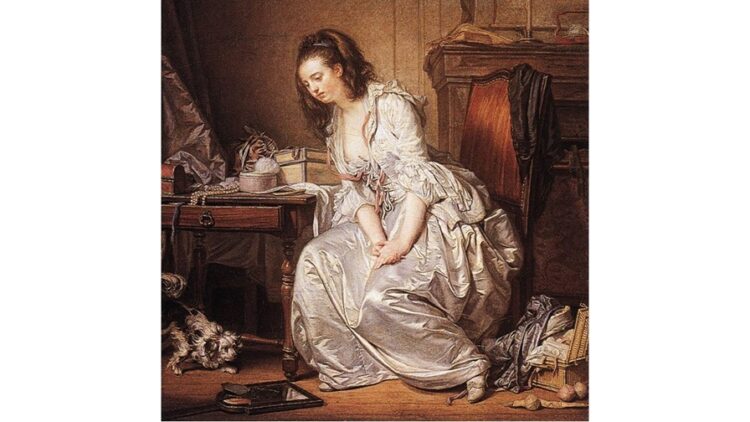
"The Broken Mirror" by Jean-Baptiste Greuze

"The Broken Mirror" by Jean-Baptiste Greuze


Shards

How unexpected did that moment come;
How swift and sudden did that moment pass.
A fleeting touch that left my spirit numb;
A shattered mirror, shards of broken glass.

A moment etched into my memory
As if engraved on cold, unbending stone.
A passing moment in eternity;
A dream, a nightmare known to me, alone.

And what of you, who think you know me well;
When, love aside, you know me not at all?
A tale I cannot bring myself to tell;
A time-looped play in which I’m doomed to fall.

So, if I weep in silence, understand
It isn’t you. It’s when I feel his hand.


The Featured Singer

An evening out with friends. While on the-way,
I joined them in a basement bistro bar.
How Brechtian, I thought. A cabaret
Where Lotta Lenya could have been the star.

I had a glass of wine, or maybe three,
But that, I swear was not the reason why
The featured singer’s voice affected me
In such a way that I began to cry.

Her song filled me with sadness. Full with tears,
I wept and hid my face behind my hands
As buried feelings fought with deep-set fears
To free me from my self-shamed shadowlands.

As when the dawn sets darkest night aside.
So did it seem when my last tear had dried.


Poet’s Note: While these two poems are “fictive,” they were inspired by the experiences of two women shared with me some years ago. These poems are my attempt to capture their experiences in words that, in poetic form, approximate their own.


James A. Tweedie is a retired pastor living in Long Beach, Washington. He has written and published six novels, one collection of short stories, and four collections of poetry including Sidekicks, Mostly Sonnets, and Laughing Matters, all with Dunecrest Press. His poems have been published nationally and internationally in both print and online media. He was honored with being chosen as the winner of the 2021 SCP International Poetry Competition.
ShareTweetPin
The Society of Classical Poets does not endorse any views expressed in individual poems or commentary.
Read Our Comments Policy Here

RandomPoems

poem/anderson/love/valentines day
Humor

‘Overkill’ and Other Light Verse by James A. Tweedie

May 3, 2024

. Overkill K.I.S.S. ("Keep it simple, stupid.") My heart enflamed with rapture, burned With passionate desire; yearned For her and...

‘The Seven Wonders of the Ancient World And What Became of One of Them’ by James A. Tweedie
Beauty

‘The Seven Wonders of the Ancient World And What Became of One of Them’ by James A. Tweedie

August 4, 2018

καὶ κραναᾶς Βαβυλῶνος ἐπίδρομον ἅρμασι τεῖχος καὶ τὸν ἐπ᾽ Ἀλφειῷ Ζᾶνα κατηυγασάμην, κάπων τ᾽ αἰώρημα, καὶ Ἠελίοιο κολοσσόν, καὶ μέγαν αἰπεινᾶν πυραμίδων κάματον, μνᾶμά τε Μαυσώλοιο πελώριον ἀλλ᾽ ὅτ᾽ ἐσεῖδον Ἀρτέμιδος νεφέων ἄχρι θέοντα δόμον, κεῖνα μὲν ἠμαύρωτο † δεκηνιδε νόσφιν Ὀλύμπου ἅλιος οὐδέν πω τοῖον ἐπηυγάσατο. I have set eyes on the wall of lofty Babylon on which is...

Next Post
‘Leak’: A Poem by Leslie Lippincott Hidley

'Leak': A Poem by Leslie Lippincott Hidley

‘Telling by Not Asking’ and Other Poetry by Russel Winick

'Telling by Not Asking' and Other Poetry by Russel Winick

‘The New Satanic Mills’: A Poem by Paul Martin Freeman

'The New Satanic Mills': A Poem by Paul Martin Freeman

Comments 14

  1. Russel Winick says:
    4 months ago

    I just love these two poems — the stories, the rhyme and meter. Outstanding! “To free me from my self-shamed shadowlands” is an amazing line! Thanks for these two pleasures.

    Reply
  2. Mary Jane Myers says:
    4 months ago

    James
    Thank you for these two well-crafted sonnets that capture so well repressed and unexpressed feelings about traumatic events. The speakers do not use “therapy speak” –rather, they allude to “the facts” only tangentially, and do not “label” the events, or find a “pattern.” They are not saying (glibly and with flat affect)–“Oh yeah, like many girls, I was raped, it’s so long ago, I’m over it, part of growing up I suppose. The guy was stoned on marijuana, came from a family of alcoholics–it was partially my fault because I was myself a little high, and I let him come inside the door to my apartment.” Rather, these poems mirror the way that people (including both sexes) think and talk to themselves about deep-seated grief and shame.

    “Shards” especially is powerful: a rape victim who cannot share with anyone, even (and in probable fact, most especially) her beloved husband, her traumatic experience. This is the bind that survivors of trauma typically face. I think this is especially true of deep-seated sexual trauma.

    “The Featured Singer” captures the phenomenon that music is one avenue that seems to “channel” the inarticulate emotions of survivors. Something in the music releases emotional tension and that person, seemingly “out of nowhere” begins to cry.

    Sincerely
    Mary Jane

    Reply
  3. Paul Buchheit says:
    4 months ago

    Great sonnets, James. They both elicit deep, heartfelt emotions!

    Reply
  4. Joseph S. Salemi says:
    4 months ago

    We have the poet’s assurance that both poems are based on real events in the lives of two women, but when details are this sketchy we as readers are compelled either to imagine what occurred, or be content with the knowledge that the experiences were painful.

    Mary Jane guesses that the first poem refers to a rape. But the only details we get are that the event was momentary and fleeting, that a mirror was shattered, and that the speaker felt a man’s hand. There are other possibilities besides sexual violation. It might have been the breakup of an affair, or some culminating argument in a strained relationship.

    The second poem is about an unhappy memory provoked by a song, and perhaps by some drinking. The only key to what has been recalled are the words “my self-shamed shadowlands,” which suggest that what’s troubling the speaker is shameful, and perhaps her own fault.

    Don’t get me wrong. These are both excellent and well-crafted sonnets. The diction is top-notch, and the rhyme and the meter perfect to a T. But if all the reader gets is a telegraphing of emotional distress, without some explanation of their cause and source, he is left hanging and therefore not especially sympathetic. It’s as if these were written by a priest who is bound by the Confessional’s seal of silence.

    Reply
    • James A. Tweedie says:
      4 months ago

      Joe, I believe that you underestimate the effect that even a fleeting, random sexual touch can have on a person, and a woman in particular. In these poems I would argue that women do not need to have the details spelled out in order for them to connect the poem to their own experience. And what the hell does the confessional seal of silence have to do with it? Perhaps you are disappointed that I did not describe the incidents in more graphic detail? And that doing so would have somehow made the poems more successful? Sometimes, especially in these emotionally charged matters, less can be more. I assure you, the lack of detail had nothing to do with any discretion on my part. I also guarantee that women will “get” these poems even if you did not.

      Reply
      • Joseph S. Salemi says:
        4 months ago

        OK then — so the poems are written for an audience of women only.

        Reply
  5. Margaret Coats says:
    4 months ago

    Very fine miniatures of moments impossible to describe. When the speaker in “Shards” says, “Love aside, you know me not at all,” she indicates an entire hidden identity concealed beneath incapacity for words. This reader sympathizes deeply with anyone who has been so inhumanly silenced. I myself cannot easily imagine that state of the psyche, but I know it is real and may feel eternal even though the memory may not recur frequently. “Time-looped” seems a good word choice.

    In “The Featured Singer,” music brings tears that achieve catharsis without words. The poems are well paired, James. Relief and freedom come with the occasion for expression in this equally human way, and not necessarily with speech. Still, I’m glad you listened so as to portray these experiences well.

    Reply
  6. Mark Stellinga says:
    4 months ago

    “Shards” shares, with me, James, a deeply disturbing remembrance that so haunts its victim she is unable to share the ‘event’ even with someone she loves, worried her significant-other might misinterpret what brought it about.

    “The Featured Singer” strikes me as one of those fairly common experiences where a ‘certain old song’ evokes a melancholy memory in the mind of slightly tipsy, ‘wonder-how-she’s-doin’-now’ fool that hasn’t yet managed to escape his ‘if-only-I-hadn’t-done-that’ break-up from years ago. I know the feeling!

    Acutely evocative sonnets both –

    Reply
  7. Susan Jarvis Bryant says:
    4 months ago

    What interesting sonnets, James, and what a great comments section. Without the notes, the first poem speaks to me of brokenness. The title points in that direction and so does the imagery… but for me, none of the brokenness is exclusive to ‘sexual abuse’ or ‘rape’. A grave sadness at the uncaring hand of a man and a distrust because of it comes across with room for the reader to decide what that might mean, and I like the room left for personal interpretation. The second poem also speaks of a brokenness, with bad and sad memories triggered by a song. There are subtle clues as to what may have caused the grief with a powerful third stanza and a closing couplet that stirs thoughts of several possibilities, but none clear, leaving room for the reader’s interpretation – which I like. And then I read the notes… the notes (together with your bio) bring an extra dimension to the read – a dimension which shifts my perspective. I must say, I prefer the poems without the notes. In my opinion, the beauty of these sonnets lies in their ambiguity.

    Reply
  8. Roy Eugene Peterson says:
    4 months ago

    James, you were wise as a retired pastor to share the feelings and not the details of both events. The imagery is striking and enhances our own visual thoughts of amenable possibilities which makes them both fascinating and wonderful as they stir our sentimentalities.

    Reply
  9. Maria Panayi , says:
    4 months ago

    Shards is such an apt title for the first poem. It reminds us that how well we think we might know people, we mostly know the outside whilst the inside remains shrouded in mystery. In a sense we know shards of a persons psyche , the fragments they want to share with us. The mirror is broken reality that we see imperfectly perhaps.
    Please forgive me if I am wrong but when I first read the poem I thought that , his hand , in the last line, might be His hand, that somehow the person was feeling God’s hand. But then of course I knew it wasn’t because if you intended it that way it would have been written so.
    The Featured Singer is very subtle indeed. Grief can be carried by a person for many reasons, bereavement abandonment , separation , just to name a few examples. It is amazing how many times one comes across the notion that children who are abandoned for example blame themselves , or even blame themselves for their parents divorce. I know the speaker here is an adult but I wonder how much those shadowlands are clear even to her.
    Thank you for these heartfelt poems that make perfect poetry look so easy. when of course it is nothing of the sort.

    Reply
  10. Theresa Werba says:
    4 months ago

    Thank you Jim for these deeply touching and unusual sonnets. I agree with Susan, I like the ambiguity, it creates an aura of mystery and wondering. True craftsmanship!

    Reply
  11. Paul Freeman says:
    4 months ago

    I commented yesterday, but the wifi was playing up here on the edge of the world.

    It’s difficult, and affecting, to get into the heads of other people and write about experiences that happened to them at their most vulnerable. You’ve succeeded admirably, James.

    Reply
  12. James A. Tweedie says:
    4 months ago

    Thanks to all for your comment. Each has been read, savored, and helpful in some special way.

    Reply

Leave a Reply Cancel reply

Your email address will not be published. Required fields are marked *

  1. Roy Eugene Peterson on National Poetry Month Limerick ChallengeMay 12, 2026

    Urszula, what an imaginative limerick! That is something Poe might have done! Sorry to be so late seeing this.

  2. Roy Eugene Peterson on National Poetry Month Limerick ChallengeMay 12, 2026

    Agreed, Urszula! Thank you for commenting.

  3. Joseph S. Salemi on ‘Spontaneous Conjugal Combustion’ and Other Poems by Susan Jarvis BryantMay 12, 2026

    When I was in the U.K. I heard that "poodle" could mean a henpecked or subservient husband, and by extension…

  4. Susan Jarvis Bryant on ‘Spontaneous Conjugal Combustion’ and Other Poems by Susan Jarvis BryantMay 12, 2026

    Yael, it's always lovely to hear from you. I'm thrilled you enjoyed the poems. I did have people in mind…

  5. Susan Jarvis Bryant on ‘Spontaneous Conjugal Combustion’ and Other Poems by Susan Jarvis BryantMay 12, 2026

    James, I'm hoping you enjoyed the villanelle and it hasn't worried you too much. Mike often suffers for my art…

Subscribe to Daily Poems

Enter your email address to subscribe to this blog and receive notifications of new posts by email.

Join 1,593 other subscribers

Recent Poems

  • A Poem on Coach “Black Mike” Castronis from Athens Y Camp, by Alec Ream
  • A Poem on the Zambian National Park Mosi-oa-Tunya, by Paul A. Freeman
  • ‘Creation of Mom’: A Mother’s Day Poem by Roy E. Peterson
  • ‘Spontaneous Conjugal Combustion’ and Other Poems by Susan Jarvis Bryant
  • ‘The Man in the Moon Was a Very Round Man’: A Poem by Lauren V. Leon
  • ‘Fibromytrauma’: A Poem by Golan Shahar
  • ‘A Lonely Sliver’: A Poem by Katie Tencza
  • ‘Higher Gas Prices Are a Small Price to Pay’: An Iran War Poem by Mark F. Stone
  • ‘Always Ahead’: A Poem by Scharlie Meeuws
  • ‘Hamlet’s Lawyer’ and Other Poetry by Brian Yapko
  • ‘On An Old Photograph’: A Poem by Joseph S. Salemi
  • ‘Faust Foresees His End’: A Poem by Martin Briggs
  • ‘À la Carte’ and Other Poetry by C.B. Anderson
  • ‘Where the Sweet Bluebonnets Bloom’: A Poem by Roy E. Peterson
  • ‘The Waters’: A Poem by Margaret Brinton
  • ‘The Pinnacle of Poetry’ and Other Poems by Russel Winick
  • The First American Sonnets: An Essay on David Humphreys, by Margaret Coats
  • ‘The Holy Rollers on Poetry’: A Poem by Joseph S. Salemi
  • Sappho’s ‘Poem 1’ Translated by Bruce Phenix
  • ‘The Cautionary Tale of Phone Addicted Mimi’: A Poem by Paul A. Freeman
  • ‘Look Away’: A Poem for America’s 250th Anniversary, by Roger Crane
  • ‘Sunday Morning in Canada’: A Poem by Jeffrey Essmann
  • ‘Bean’: A Poem by Jan Mennite
  • ‘The Swan’s Song ’: A Poem for Shakespeare’s Birthday, by Susan Jarvis Bryant
  • ‘The Gravedigger’: A Poem by Marie Burdett
  • ‘Waiting for the Perfect Man’: A Poem by Janice Canerdy
  • ‘The George-A-Saurus’ and Other Poetry by Brian Yapko
  • ‘When Asked: What’s Your Favorite Season?’: A Poem by Paul Millan  
  • ‘The Last At-Bat of Lyndon Braun’: A Poem by Michael Pietrack
  • ‘The Perpetual Battle’ and Other Poetry by Adam Sedia

Categories

  • Acrostic
  • Alexandroid
  • Alliterative
  • Art
  • Best Poems
  • Blank Verse
  • Chant Royal
  • Classical Poets Live
  • Clerihew
  • Covid-19
  • Deconstructing Communism
  • Educational
  • Epic
  • Epigrams and Proverbs
  • Essays
    • Interviews with Poets
    • Poetry Reviews
  • Featured
  • From the Society
  • Great Poets
    • Dante Alighieri
    • Edgar Allan Poe
    • Emily Dickinson
    • Geoffrey Chaucer
    • Henry Wadsworth Longfellow
    • Homer
    • John Keats
    • John Milton
    • Robert Frost
    • William Blake
    • William Shakespeare
    • William Wordsworth
  • Human Rights in China
  • Limerick
  • Love Poems
  • Music
  • Pantoum
  • Performing Arts
  • Poetry
    • Beauty
    • Children's Poems
    • Culture
    • Ekphrastic
    • Found Poems
    • High School Poets
    • Humor
    • Riddles
  • Poetry Challenge
  • Poetry Contests
  • Poetry Forms
    • Curtal Sonnet
    • Haiku
  • Poetry Readings
  • Rhupunt
  • Rondeau
  • Rondeau Redoublé
  • Rondel
  • Rubaiyat
  • Sapphic Verse
  • Satire
  • Science
  • Sestina
  • Shape Poems
  • Short Stories
  • Song Lyrics
  • Sonnet
  • Symposium
  • Terrorism
  • Terza Rima
  • The Environment
  • Translation
  • Triolet
  • Video
  • Villanelle

Quick Links

  • About Us
  • Submit Poetry
  • Become a Member
  • Members List
  • Support the Society
  • Advertisement Placement
  • Comments Policy
  • Terms of Use

Welcome Back!

Login to your account below

Forgotten Password?

Retrieve your password

Please enter your username or email address to reset your password.

Log In
No Result
View All Result
  • Poems
    • Beauty
    • Culture
    • Satire
    • Humor
    • Children’s
    • Art
    • Ekphrastic
    • Epic
    • Epigrams and Proverbs
    • Human Rights in China
    • Music
    • Performing Arts
    • Riddles
    • Science
    • Song Lyrics
    • The Environment
    • The Raven
    • Found Poems
    • High School Poets
    • Terrorism
    • Covid-19
  • Poetry Forms
    • Sonnet
    • Haiku
    • Limerick
    • Villanelle
    • Rondeau
    • Pantoum
    • Sestina
    • Triolet
    • Acrostic
    • Alexandroid
    • Alliterative
    • Blank Verse
    • Chant Royal
    • Clerihew
    • Rhupunt
    • Rondeau Redoublé
    • Rondel
    • Rubaiyat
    • Sapphic Verse
    • Shape Poems
    • Terza Rima
  • Great Poets
    • Geoffrey Chaucer
    • Emily Dickinson
    • Homer
    • Henry Wadsworth Longfellow
    • Dante Alighieri
    • John Keats
    • John Milton
    • Edgar Allan Poe
    • William Shakespeare
    • William Wordsworth
    • William Blake
    • Robert Frost
  • Love Poems
  • Contests
  • SCP Academy
    • Educational
    • Teaching Classical Poetry—A Guide for Educators
    • Poetry Forms
    • The SCP Journal
    • Books

© 2025 SCP. WebDesign by CODEC Prime.