• Submit Poetry
  • Support SCP
  • About Us
  • Members
  • Join
Tuesday, May 12, 2026
Society of Classical Poets
  • Poems
    • Beauty
    • Culture
    • Satire
    • Humor
    • Children’s
    • Art
    • Ekphrastic
    • Epic
    • Epigrams and Proverbs
    • Human Rights in China
    • Music
    • Performing Arts
    • Riddles
    • Science
    • Song Lyrics
    • The Environment
    • The Raven
    • Found Poems
    • High School Poets
    • Terrorism
    • Covid-19
  • Poetry Forms
    • Sonnet
    • Haiku
    • Limerick
    • Villanelle
    • Rondeau
    • Pantoum
    • Sestina
    • Triolet
    • Acrostic
    • Alexandroid
    • Alliterative
    • Blank Verse
    • Chant Royal
    • Clerihew
    • Rhupunt
    • Rondeau Redoublé
    • Rondel
    • Rubaiyat
    • Sapphic Verse
    • Shape Poems
    • Terza Rima
  • Great Poets
    • Geoffrey Chaucer
    • Emily Dickinson
    • Homer
    • Henry Wadsworth Longfellow
    • Dante Alighieri
    • John Keats
    • John Milton
    • Edgar Allan Poe
    • William Shakespeare
    • William Wordsworth
    • William Blake
    • Robert Frost
  • Love Poems
  • Contests
  • SCP Academy
    • Educational
    • Teaching Classical Poetry—A Guide for Educators
    • Poetry Forms
    • The SCP Journal
    • Books
No Result
View All Result
Society of Classical Poets
  • Poems
    • Beauty
    • Culture
    • Satire
    • Humor
    • Children’s
    • Art
    • Ekphrastic
    • Epic
    • Epigrams and Proverbs
    • Human Rights in China
    • Music
    • Performing Arts
    • Riddles
    • Science
    • Song Lyrics
    • The Environment
    • The Raven
    • Found Poems
    • High School Poets
    • Terrorism
    • Covid-19
  • Poetry Forms
    • Sonnet
    • Haiku
    • Limerick
    • Villanelle
    • Rondeau
    • Pantoum
    • Sestina
    • Triolet
    • Acrostic
    • Alexandroid
    • Alliterative
    • Blank Verse
    • Chant Royal
    • Clerihew
    • Rhupunt
    • Rondeau Redoublé
    • Rondel
    • Rubaiyat
    • Sapphic Verse
    • Shape Poems
    • Terza Rima
  • Great Poets
    • Geoffrey Chaucer
    • Emily Dickinson
    • Homer
    • Henry Wadsworth Longfellow
    • Dante Alighieri
    • John Keats
    • John Milton
    • Edgar Allan Poe
    • William Shakespeare
    • William Wordsworth
    • William Blake
    • Robert Frost
  • Love Poems
  • Contests
  • SCP Academy
    • Educational
    • Teaching Classical Poetry—A Guide for Educators
    • Poetry Forms
    • The SCP Journal
    • Books
No Result
View All Result
Society of Classical Poets
No Result
View All Result
Home Poetry Beauty

‘The Bunyip’s Spell’ and Other Poetry by David Watt

May 12, 2021
in Beauty, Culture, Poetry
A A
13
poems 'The Bunyip’s Spell' and Other Poetry by David Watt

.

The Bunyip’s Spell

A native girl of spirit strong,
As graceful as the flitting fishes;
Went swimming in a billabong,
Against her mother’s stated wishes.
And though the water, murky grey,
Embodied trouble in the making;
To swim on that idyllic day
Was deemed to be a risk worth taking.

There in the depths a bunyip waited
For such a child to share his lore,
Although the price was left unstated
For learning ways of scale and claw,
Because the payment meant foregoing
The life they knew, the world above—
Confined to swimming, always knowing
Regret for loss of those they love.

The bunyip surfaced, sleek and dripping,
Away from where the youngster swam,
But aided by judicious flipping,
Moved in, announcing “Here I am!
This spell I cast will take you places
The likes of which you’ve never seen!
When lightning strikes and water races
You’ll wear the silver of a queen.”

There came: a flash, a scene of wonder
Where barramundi, eel, and cray
Slithered, swam, and sidled under
Protective ledges in the clay;
And true to word, the spell provided:
A shiny tail in place of toes,
Bright scales where velvet skin resided,
And gills beside her silver nose.

No more the campfire smoke, the glowing
Arisen from the break of day,
Above the slender wiregrass flowing
In waves as breezes came to play.
And farewell to the storytelling
While sitting on her mother’s lap—
Her head grown heavy, as if swelling
From knowledge of their Dreamtime map.

Although the tribe, with single purpose,
Cast nets, and probed the depths with spears,
No curl of hair rose to the surface;
And this confirmed their deepest fears.
But next night, came a sound repeating;
An otherworldly sweet refrain,
To rise between the gunyah’s sheeting
And ease her grieving mother’s pain.

The mother knew her girl would ever
Inhabit realms where spirits dwell;
But still, no distance could dissever
Bonds formed before the bunyip’s spell.

.

Bunyip: a mythical amphibious monster said to inhabit inland waterways.
Dreamtime: for Australian Aboriginal people represents the time when the Ancestral Spirits progressed over the land and created life and important physical geographic formations and sites.
Gunyah: an Aboriginal bush hut, typically made of sheets of bark and branches.

.

.

Counting On Heaven

Save me a place in Heaven:
Keep me away from Hell.
Will I find life hereafter?
That, one may never tell.

When I have left this body
As but an empty shell,
How will my faith be measured
After the final bell?

There is a God, I’m certain,
And I am sure as well
That every man is a sinner
Under Temptation’s spell.

Oh, how I long to enter
That place where the righteous dwell,
If only I show repentance
For times when I tripped and fell.

.

..

David Watt is a writer from Canberra, the “Bush Capital” of Australia. He has contributed regularly to Collections of Poetry and Prose by Robin Barratt. When not working for IP (Intellectual Property) Australia, he finds time to appreciate the intrinsic beauty of traditional rhyming poetry.


ShareTweetPin
The Society of Classical Poets does not endorse any views expressed in individual poems or commentary.
Read Our Comments Policy Here

RandomPoems

poem/poetry/farm/fly
Beauty

An Analysis of Norman MacCaig’s ‘Summer Farm’

August 27, 2018

Paradox as Explanatory Paradigm in Norman MacCaig’s ‘Summer Farm’ by Phillip Whidden   Summer Farm Straws like tame lightnings lie...

10 Greatest Love Poems Ever Written
Best Poems

10 Greatest Love Poems Ever Written

October 27, 2016

by Conrad Geller People are always asking "What are the best love poems?" or "Where can I find something beautiful...

Next Post
‘On the Beating Up of Sarah Liang’ by Damian Robin

'On the Beating Up of Sarah Liang' by Damian Robin

FoFG 2020 Poetry Contest: Adult, College, and High School Awards

Winners of the Friends of Falun Gong Poetry Contest Announced

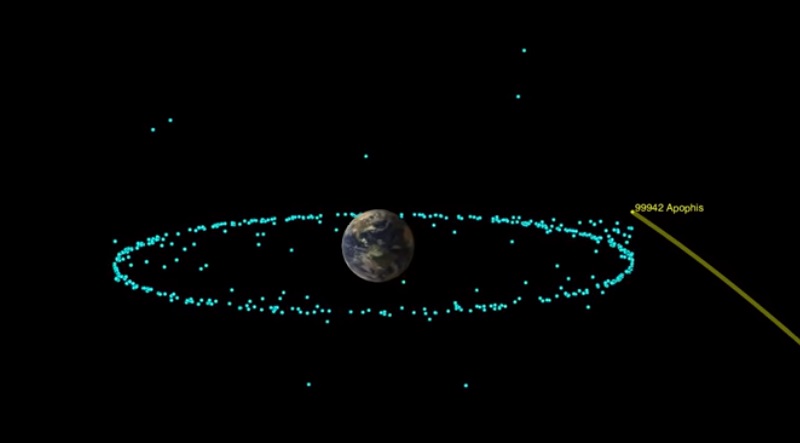
A Poem on the Near-Earth Asteroid Apophis and Other Poetry by Adam Sedia

A Poem on the Near-Earth Asteroid Apophis and Other Poetry by Adam Sedia

Comments 13

  1. Julian D. Woodruff says:
    5 years ago

    Very refreshing to see a good folkish narrative like yours, Mr. Watt. I hope you will supply more here. Your prayer is fine, too. I think the expansion of the 2nd line in the last 4train works quite well.

    Reply
    • David Watt says:
      5 years ago

      Thanks Julian for appreciating my pair of quite different poems. For some reason I enjoy writing narratives, so you will most likely see more in the future.

      Reply
  2. Jeff Eardley says:
    5 years ago

    David, most enjoyable to read this folk tale. The Bunyip in the picture looks a lot more vicious than the one featured in your excellent poem. Counting on heaven is a definite song lyric and I was reminded of the song “When did you leave heaven” by US blues legend Big Bill Broonzy and found myself singing your words to his tune. Sir Les would love these two. Thank you.

    Reply
    • David Watt says:
      5 years ago

      Jeff, the bunyip in Australian folklore is only ever portrayed as a vicious killer.
      I doubt that there are any bunyip pictures reflecting a more agreeable character. Thanks for your favorable comments on both poems. I have to admit not previously being aware of Big Bill Broonzy. However, I’m delighted that my poem reminds you of his lyrics.

      Reply
  3. Paul Freeman says:
    5 years ago

    I enjoyed ‘The Bunyip’s Spell’ enormously. I was wondering if it is a re-telling of an Aboriginal story, or is your own invention.

    Thank you for the reads.

    Reply
    • David Watt says:
      5 years ago

      Hello Paul, ‘The Bunyip’s Spell’ is based on the Aboriginal legend of bunyips snatching and devouring unsuspecting victims. The story I present is my own invention featuring a bunyip in search of a worthy assistant. It seemed to me that it was also preferable to soften the mother’s loss, rather than merely relate a tragic event. I’m glad you enjoyed the narrative.

      Reply
  4. Ryan Watch says:
    5 years ago

    What an enjoyable read! I have been caught in the thrall of your mystical poem Mr. Watt. Poems like these, which contain magical and fantasy themes are seldom written by poets nowadays, and I am fortunate enough to have come across your poem.

    May I be permitted to ask you what form the narrative is written in? Forgive me for asking, but I am curious about the style of the poem, as I seek to learn and explore more poetic forms.

    Reply
    • David Watt says:
      5 years ago

      Thank you Ryan for your generous comments.

      I would say that ‘The Bunyip’s Spell’ is a form of ballad.
      Generally ballads have four line stanzas (quatrains), and tell a story.
      My understanding is that ballads may have different rhyme schemes and
      meters to suit the poems story, or the poet’s preference.

      In the case of this poem, I have mostly joined quatrains in pairs to keep the action moving along. As the concluding stanza carries a short message, it came out of its own accord as a single quatrain.

      Reply
      • Ryan Watch says:
        5 years ago

        I see. Thank you for enlightening me on the style and form that you applied to your poem. I find it creative of you to stray a little from the rules of the ballad form as it create a rhythmic and continuous narrative that flows as smoothly as the river described in the poem.

        Reply
  5. Susan Jarvis Bryant says:
    5 years ago

    David, your two admirably written poems, that romp along with aplomb, have me thoroughly entertained and smiling from ear to ear… a rare accomplishment these days. Hats off to you and thank you!

    Reply
    • David Watt says:
      5 years ago

      Thank you Susan, it’s a rare treat to entertain a poet who provides us with so much entertainment herself.

      Reply
  6. Margaret Coats says:
    5 years ago

    Economy of plot and rapid flow of words make “The Bunyip’s Spell” a delight to read. I was looking at a discussion of poem length recently, that said about 50 lines was all most readers could tolerate today (down from 100 lines that Edgar Allan Poe thought readers could accomplish in one sitting). Getting a complete narrative into 50 lines is a good trick, but you have the right kind of story for it. Maybe there’s an alternate bunyip tale (as Jeff Eardley suggests) for the fellow in the illustration. I’ll be interested to hear more. Also most interested in what you have to say to Ryan Watch about the form–and why you chose it.

    “Counting on Heaven” has a light tone for a serious topic. That’s perhaps a relief to readers, but it seems more difficult for the writer to come to a satisfactory conclusion that doesn’t sound too simple.

    Reply
    • David Watt says:
      5 years ago

      Margaret, your point about poem length brings to mind the poem “Leisure” by William Henry Davies. I’m sure it’s true that the average person has less ‘time to stop and stare’, or indeed to concentrate on reading than in Poe’s era. I put it down to electronic gadgets, the state of education, and the desire for fast results.

      “Counting on Heaven” does have a somewhat light tone for a serious subject. Belief is a topic I have never addressed poetically before, and accordingly, I kept the conclusion simple.

      I always enjoy reading your thorough and perceptive comments.

      Reply

Leave a Reply Cancel reply

Your email address will not be published. Required fields are marked *

  1. Susan Jarvis Bryant on ‘Spontaneous Conjugal Combustion’ and Other Poems by Susan Jarvis BryantMay 12, 2026

    Brian, thank you so much for this extremely generous and perceptive reading. I thoroughly appreciate your take on my quirky…

  2. Susan Jarvis Bryant on ‘Spontaneous Conjugal Combustion’ and Other Poems by Susan Jarvis BryantMay 12, 2026

    Awww, what a beautiful comment, Mark. It's lovely to hear of the joys of marital bliss after 53 years. Congratulations!…

  3. Susan Jarvis Bryant on ‘Spontaneous Conjugal Combustion’ and Other Poems by Susan Jarvis BryantMay 12, 2026

    C.B., it's always interesting to read your take on my poems, and I've got to say I agree with you…

  4. Roy Eugene Peterson on A Poem on Coach “Black Mike” Castronis from Athens Y Camp, by Alec ReamMay 12, 2026

    Alec, this is a touching tribute to a camp coach/counselor. I had my own at Camp Paisano near Alpine, Texas.…

  5. Roy Eugene Peterson on ‘Creation of Mom’: A Mother’s Day Poem by Roy E. PetersonMay 12, 2026

    Margaret, I was thinking about the vast variety of Moms when I wrote it. Thank you for pointing that out…

Subscribe to Daily Poems

Enter your email address to subscribe to this blog and receive notifications of new posts by email.

Join 1,593 other subscribers

Recent Poems

  • A Poem on Coach “Black Mike” Castronis from Athens Y Camp, by Alec Ream
  • A Poem on the Zambian National Park Mosi-oa-Tunya, by Paul A. Freeman
  • ‘Creation of Mom’: A Mother’s Day Poem by Roy E. Peterson
  • ‘Spontaneous Conjugal Combustion’ and Other Poems by Susan Jarvis Bryant
  • ‘The Man in the Moon Was a Very Round Man’: A Poem by Lauren V. Leon
  • ‘Fibromytrauma’: A Poem by Golan Shahar
  • ‘A Lonely Sliver’: A Poem by Katie Tencza
  • ‘Higher Gas Prices Are a Small Price to Pay’: An Iran War Poem by Mark F. Stone
  • ‘Always Ahead’: A Poem by Scharlie Meeuws
  • ‘Hamlet’s Lawyer’ and Other Poetry by Brian Yapko
  • ‘On An Old Photograph’: A Poem by Joseph S. Salemi
  • ‘Faust Foresees His End’: A Poem by Martin Briggs
  • ‘À la Carte’ and Other Poetry by C.B. Anderson
  • ‘Where the Sweet Bluebonnets Bloom’: A Poem by Roy E. Peterson
  • ‘The Waters’: A Poem by Margaret Brinton
  • ‘The Pinnacle of Poetry’ and Other Poems by Russel Winick
  • The First American Sonnets: An Essay on David Humphreys, by Margaret Coats
  • ‘The Holy Rollers on Poetry’: A Poem by Joseph S. Salemi
  • Sappho’s ‘Poem 1’ Translated by Bruce Phenix
  • ‘The Cautionary Tale of Phone Addicted Mimi’: A Poem by Paul A. Freeman
  • ‘Look Away’: A Poem for America’s 250th Anniversary, by Roger Crane
  • ‘Sunday Morning in Canada’: A Poem by Jeffrey Essmann
  • ‘Bean’: A Poem by Jan Mennite
  • ‘The Swan’s Song ’: A Poem for Shakespeare’s Birthday, by Susan Jarvis Bryant
  • ‘The Gravedigger’: A Poem by Marie Burdett
  • ‘Waiting for the Perfect Man’: A Poem by Janice Canerdy
  • ‘The George-A-Saurus’ and Other Poetry by Brian Yapko
  • ‘When Asked: What’s Your Favorite Season?’: A Poem by Paul Millan  
  • ‘The Last At-Bat of Lyndon Braun’: A Poem by Michael Pietrack
  • ‘The Perpetual Battle’ and Other Poetry by Adam Sedia

Categories

  • Acrostic
  • Alexandroid
  • Alliterative
  • Art
  • Best Poems
  • Blank Verse
  • Chant Royal
  • Classical Poets Live
  • Clerihew
  • Covid-19
  • Deconstructing Communism
  • Educational
  • Epic
  • Epigrams and Proverbs
  • Essays
    • Interviews with Poets
    • Poetry Reviews
  • Featured
  • From the Society
  • Great Poets
    • Dante Alighieri
    • Edgar Allan Poe
    • Emily Dickinson
    • Geoffrey Chaucer
    • Henry Wadsworth Longfellow
    • Homer
    • John Keats
    • John Milton
    • Robert Frost
    • William Blake
    • William Shakespeare
    • William Wordsworth
  • Human Rights in China
  • Limerick
  • Love Poems
  • Music
  • Pantoum
  • Performing Arts
  • Poetry
    • Beauty
    • Children's Poems
    • Culture
    • Ekphrastic
    • Found Poems
    • High School Poets
    • Humor
    • Riddles
  • Poetry Challenge
  • Poetry Contests
  • Poetry Forms
    • Curtal Sonnet
    • Haiku
  • Poetry Readings
  • Rhupunt
  • Rondeau
  • Rondeau Redoublé
  • Rondel
  • Rubaiyat
  • Sapphic Verse
  • Satire
  • Science
  • Sestina
  • Shape Poems
  • Short Stories
  • Song Lyrics
  • Sonnet
  • Symposium
  • Terrorism
  • Terza Rima
  • The Environment
  • Translation
  • Triolet
  • Video
  • Villanelle

Quick Links

  • About Us
  • Submit Poetry
  • Become a Member
  • Members List
  • Support the Society
  • Advertisement Placement
  • Comments Policy
  • Terms of Use

Welcome Back!

Login to your account below

Forgotten Password?

Retrieve your password

Please enter your username or email address to reset your password.

Log In
No Result
View All Result
  • Poems
    • Beauty
    • Culture
    • Satire
    • Humor
    • Children’s
    • Art
    • Ekphrastic
    • Epic
    • Epigrams and Proverbs
    • Human Rights in China
    • Music
    • Performing Arts
    • Riddles
    • Science
    • Song Lyrics
    • The Environment
    • The Raven
    • Found Poems
    • High School Poets
    • Terrorism
    • Covid-19
  • Poetry Forms
    • Sonnet
    • Haiku
    • Limerick
    • Villanelle
    • Rondeau
    • Pantoum
    • Sestina
    • Triolet
    • Acrostic
    • Alexandroid
    • Alliterative
    • Blank Verse
    • Chant Royal
    • Clerihew
    • Rhupunt
    • Rondeau Redoublé
    • Rondel
    • Rubaiyat
    • Sapphic Verse
    • Shape Poems
    • Terza Rima
  • Great Poets
    • Geoffrey Chaucer
    • Emily Dickinson
    • Homer
    • Henry Wadsworth Longfellow
    • Dante Alighieri
    • John Keats
    • John Milton
    • Edgar Allan Poe
    • William Shakespeare
    • William Wordsworth
    • William Blake
    • Robert Frost
  • Love Poems
  • Contests
  • SCP Academy
    • Educational
    • Teaching Classical Poetry—A Guide for Educators
    • Poetry Forms
    • The SCP Journal
    • Books

© 2025 SCP. WebDesign by CODEC Prime.