• Submit Poetry
  • Support SCP
  • About Us
  • Members
  • Join
Tuesday, May 12, 2026
Society of Classical Poets
  • Poems
    • Beauty
    • Culture
    • Satire
    • Humor
    • Children’s
    • Art
    • Ekphrastic
    • Epic
    • Epigrams and Proverbs
    • Human Rights in China
    • Music
    • Performing Arts
    • Riddles
    • Science
    • Song Lyrics
    • The Environment
    • The Raven
    • Found Poems
    • High School Poets
    • Terrorism
    • Covid-19
  • Poetry Forms
    • Sonnet
    • Haiku
    • Limerick
    • Villanelle
    • Rondeau
    • Pantoum
    • Sestina
    • Triolet
    • Acrostic
    • Alexandroid
    • Alliterative
    • Blank Verse
    • Chant Royal
    • Clerihew
    • Rhupunt
    • Rondeau Redoublé
    • Rondel
    • Rubaiyat
    • Sapphic Verse
    • Shape Poems
    • Terza Rima
  • Great Poets
    • Geoffrey Chaucer
    • Emily Dickinson
    • Homer
    • Henry Wadsworth Longfellow
    • Dante Alighieri
    • John Keats
    • John Milton
    • Edgar Allan Poe
    • William Shakespeare
    • William Wordsworth
    • William Blake
    • Robert Frost
  • Love Poems
  • Contests
  • SCP Academy
    • Educational
    • Teaching Classical Poetry—A Guide for Educators
    • Poetry Forms
    • The SCP Journal
    • Books
No Result
View All Result
Society of Classical Poets
  • Poems
    • Beauty
    • Culture
    • Satire
    • Humor
    • Children’s
    • Art
    • Ekphrastic
    • Epic
    • Epigrams and Proverbs
    • Human Rights in China
    • Music
    • Performing Arts
    • Riddles
    • Science
    • Song Lyrics
    • The Environment
    • The Raven
    • Found Poems
    • High School Poets
    • Terrorism
    • Covid-19
  • Poetry Forms
    • Sonnet
    • Haiku
    • Limerick
    • Villanelle
    • Rondeau
    • Pantoum
    • Sestina
    • Triolet
    • Acrostic
    • Alexandroid
    • Alliterative
    • Blank Verse
    • Chant Royal
    • Clerihew
    • Rhupunt
    • Rondeau Redoublé
    • Rondel
    • Rubaiyat
    • Sapphic Verse
    • Shape Poems
    • Terza Rima
  • Great Poets
    • Geoffrey Chaucer
    • Emily Dickinson
    • Homer
    • Henry Wadsworth Longfellow
    • Dante Alighieri
    • John Keats
    • John Milton
    • Edgar Allan Poe
    • William Shakespeare
    • William Wordsworth
    • William Blake
    • Robert Frost
  • Love Poems
  • Contests
  • SCP Academy
    • Educational
    • Teaching Classical Poetry—A Guide for Educators
    • Poetry Forms
    • The SCP Journal
    • Books
No Result
View All Result
Society of Classical Poets
No Result
View All Result
Home Poetry Beauty

A Poem on the Near-Earth Asteroid Apophis and Other Poetry by Adam Sedia

May 14, 2021
in Beauty, Culture, Poetry
A A
7
poems A Poem on the Near-Earth Asteroid Apophis and Other Poetry by Adam Sedia

.

Apophis

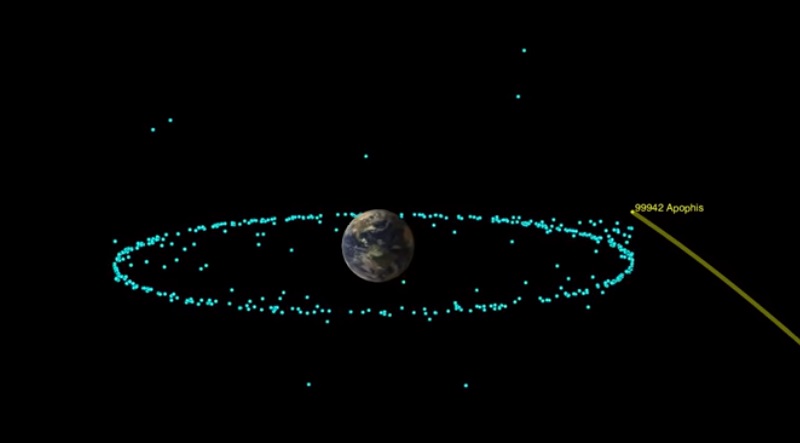
Apophis is the name of a near-earth asteroid that passed by our planet a few months ago, a name it shares with the Ancient Egyptian evil serpent god and one of the Hyksos pharaohs of Egypt.

Apophis, demon-snake,
Foe to truth and light,
Coiled at the cusp of the sky,
Poised where the sun must pass by
To snatch him in your bite;
__Again, when day shall break,
__Your heart shall quake.

Apophis, demon-king,
Foe to ancient gods,
Blood-spilling brute from the waste,
Smiting a nation disgraced
Beneath your crushing rod;
__A day, not far, shall bring
__Your vanquishing.

Apophis, demon-star,
Foe to us, you loom
Hurtling through tumult-filled skies
Inexorably, our demise,
To rain down crashing doom;
__What miracle can bar
__Your fatal hour?

.

.

Io

Hellish orb of woe,
Infernal realm aglow,
__Ablaze with fiery red,
Vast lava-seas that go
In boundless, roiling flow
__From pole to burnt pole, fed
From ash-stained peaks that throw
Cascading magmas, blow
__Out noxious plumes, and spread
A white-hot flood below,
The molten sulfur floe
__Across the fire-sea’s bed,
Which ever surge and grow,
Engulf and overflow,
__With naught but flame to tread.
Your heart of fire, the throe
That stirs it forth you owe
__To Jove, around whom, led
Careening to and fro
In rounds that never slow
__You dance, forever wed.
O, wrathful world! Although
Your flames and fumes are foe
__To life, you are not dead.
No! Rather, they bestow
A living death and show
__That beauty has not fled
But lives to undergo
Such pain, so all may know
__The hell they are to dread.

.

.

Adam Sedia (b. 1984) lives in his native Northwest Indiana, with his wife, Ivana, and their children, and practices law as a civil and appellate litigator. In addition to the Society’s publications, his poems and prose works have appeared in The Chained Muse Review, Indiana Voice Journal, and other literary journals. He is also a composer, and his musical works may be heard on his YouTube channel.

ShareTweetPin
The Society of Classical Poets does not endorse any views expressed in individual poems or commentary.
Read Our Comments Policy Here

RandomPoems

‘Grain’ and Other Poetry by Stephen Ramsek
Beauty

‘Grain’ and Other Poetry by Stephen Ramsek

March 23, 2021

. Grain If the future were a famine And tomorrow were a blight, Would we close our eyes today in...

‘The Night after Christmas’ and Other Poetry by C.B. Anderson
Beauty

‘The Night after Christmas’ and Other Poetry by C.B. Anderson

December 25, 2020

. The Night after Christmas You better not cry. “Deplorable” might be how best to putit, just to underscore the...

Next Post
‘CDC: New Guidance’ by Mike Bryant

'In Praise of the Helicap' by Jeff Eardley

‘My Paola’s Love’ by Martin Rizley

'My Paola's Love' by Martin Rizley

‘Mary Le Cuisinier’ by Beverly Stock

'A Woke Recipe for Disaster' and Other Poetry by Susan Jarvis Bryant

Comments 7

  1. Ryan Watch says:
    5 years ago

    These are two marvelous poems with a most uncommon topic Mr. Sedia. I commend you for effortlessly commixing the topics of astronomy and mythology into a brief, but metaphysical narratives! I was particularly captivated by the final lines of your first poem as they bear a striking parallel to the prophetic warning of an asteroid falling to earth in the Book of Revelations 8:10-11.
    ——————————-
    Apophis, demon-star,
    Foe to us, you loom
    Hurtling through tumult-filled skies
    Inexorably, our demise,
    To rain down crashing doom;
    __What miracle can bar
    __Your fatal hour?

    10 The third angel sounded his trumpet, and a great star, blazing like a torch, fell from the sky on a third of the rivers and on the springs of water— 11 the name of the star is Wormwood. A third of the waters turned bitter, and many people died from the waters that had become bitter.
    ——————————-
    Was this parallelism intentional, or is it a merely coincidental observation on my part?

    Comparisons aside, may I be so bold to ask whatthe poetic form your poems are written in? After reading them, I couldn’t help feeling curious about the form or style used and why you chose apply it. Once again, I thank you for these great works you have shared, though I couldn’t prevent myself from writing a few quatrains inspired by your poetic pieces.

    “We Who Seek the Stars”
    We who seek the stars are not at peace
    With the earthy ground beneath our knees.
    We who seek the stars yearn to fly
    Among the stars above the sky.

    Dare we explore, dare we deplore
    The old views like savants who pore
    Over the star spangled pages,
    Spread across the heavens for ages.

    We who seek the stars wish to reign
    Over the stellar and mortal plains.
    Yet we who seek the stars are blind
    To the grim fate which we’re entwined.

    Reply
    • C.B. Anderson says:
      5 years ago

      Although your query was addressed to the author, I shall try to answer it. As far as I can tell, this is a nonce form, that is, a stanzaic structure created just for this particular poem, the definition of which lies only in an accurate description of the structure of the stanzas A one-off, you might say. Perhaps Mr. Sedia or someone else will chime in and prove me wrong with a clear historical precedent that has been given a name.

      What we have here (in the first poem) is a seven-line stanza with an ABCCBAA rhyme scheme. The lines are mostly iambic trimeter, but the last line in each stanza is dimeter. This might not be totally clear because the author, who is known by most of us here to have a fondness for metrical variation — even if only for its own sake — takes liberties when it comes to carrying out the promise of his initial plan. He’s thrown in quite a few anapests, which may be elided or taken as metrical variations, and in the final stanza he lost the good perfect rhyme. I’m sure he thought it was worth it, because the result is pretty good.

      Reply
  2. Ryan Watch says:
    5 years ago

    Mr. Anderson, thank you for presenting your interpretation on the techniques used in these poems. I initially assumed some iambic or trochaic meter was applied, although your interpretation was close to what I inferred. However since I am new here, I am unfamiliar with the author’s modus operandi and am therefore sceptical of my conjecture.

    Reply
    • Adam Sedia says:
      5 years ago

      Thank you, Ryan, for reading the poems and for your comments (and verses!) – and thank you to CB for his kind words, as well.

      As far as form goes, I dislike the term “nonce,” as it carries an implication of capriciousness or whimsy. But CB is right: the forms are indeed idiosyncratic. In my earlier works I liked to let each poem dictate its own form, and these more recent works are hat-tips to my earlier style. “Io” owes its consistent rhyme to a work “Allayne” by the late Kevin Roberts, which I think uses a consistent, driving rhyme to great effect.

      As for the meter, CB’s scansion is correct: both poems are iambic, with some slight variation. For a summary of my views on metric variation and its techniques, please read the essay I published on this site earlier:

      https://classicalpoets.org/2020/07/13/the-spice-of-life-metric-variation-in-formal-verse-an-essay/

      The point of the essay is that metric variation should be used to reflect the natural patterns of speech, as meter itself derives from natural speech patterns.

      Finally, I’m glad to see my subtle reference to Wormwood of the Apocalypse has not been lost on the reader. Tie it in with the serpent god and the Egyptian tyrant and you have a more comprehensive, if less straightforward, reference to the episode – at least by way of analogy.

      Anyway, thanks to you both again. I very much appreciate all your thoughts.

      Reply
  3. Ryan Watch says:
    5 years ago

    Thank you for clarifying me on the subject Mr. Sedia and I am glad to that my observations on the symbolic meaning of your poems have been proven correct.

    Reply
  4. Margaret Coats says:
    5 years ago

    I very much enjoyed the iambic trimeter “Io” as a flowing poem with a well-defined conclusion.

    I was waiting with interest for Adam to comment on the form of “Apophis.” I myself use “nonce form” exactly as C. B. Anderson does, with no pejorative implication. It is a very useful term, and others here and elsewhere have used it. However, I am surprised to see no definition of the term either online or in print dictionaries or specialized works such as the Princeton Encyclopedia of Poetry and Poetics. “Nonce word” is more often defined and less useful.

    If any pejorative meaning attaches to the word “nonce,” it may come from “nonsense” or “nonsense verse,” as Adam’s comment suggests.

    Reply
  5. Cynthia Erlandson says:
    5 years ago

    I, too, was immediately fascinated with these forms, especially the parallelism — both in thought and form — of “Apophis”. The imagery is also very beautiful!

    Reply

Leave a Reply Cancel reply

Your email address will not be published. Required fields are marked *

  1. Joseph S. Salemi on ‘Spontaneous Conjugal Combustion’ and Other Poems by Susan Jarvis BryantMay 12, 2026

    When I was in the U.K. I heard that "poodle" could mean a henpecked or subservient husband, and by extension…

  2. Susan Jarvis Bryant on ‘Spontaneous Conjugal Combustion’ and Other Poems by Susan Jarvis BryantMay 12, 2026

    Yael, it's always lovely to hear from you. I'm thrilled you enjoyed the poems. I did have people in mind…

  3. Susan Jarvis Bryant on ‘Spontaneous Conjugal Combustion’ and Other Poems by Susan Jarvis BryantMay 12, 2026

    James, I'm hoping you enjoyed the villanelle and it hasn't worried you too much. Mike often suffers for my art…

  4. Susan Jarvis Bryant on ‘Spontaneous Conjugal Combustion’ and Other Poems by Susan Jarvis BryantMay 12, 2026

    C.B. I just love the Queen Elizabeth II and Welsh Corgis scene... I would have claimed that one had I…

  5. Susan Jarvis Bryant on ‘Spontaneous Conjugal Combustion’ and Other Poems by Susan Jarvis BryantMay 12, 2026

    Brian, thank you so much for this extremely generous and perceptive reading. I thoroughly appreciate your take on my quirky…

Subscribe to Daily Poems

Enter your email address to subscribe to this blog and receive notifications of new posts by email.

Join 1,593 other subscribers

Recent Poems

  • A Poem on Coach “Black Mike” Castronis from Athens Y Camp, by Alec Ream
  • A Poem on the Zambian National Park Mosi-oa-Tunya, by Paul A. Freeman
  • ‘Creation of Mom’: A Mother’s Day Poem by Roy E. Peterson
  • ‘Spontaneous Conjugal Combustion’ and Other Poems by Susan Jarvis Bryant
  • ‘The Man in the Moon Was a Very Round Man’: A Poem by Lauren V. Leon
  • ‘Fibromytrauma’: A Poem by Golan Shahar
  • ‘A Lonely Sliver’: A Poem by Katie Tencza
  • ‘Higher Gas Prices Are a Small Price to Pay’: An Iran War Poem by Mark F. Stone
  • ‘Always Ahead’: A Poem by Scharlie Meeuws
  • ‘Hamlet’s Lawyer’ and Other Poetry by Brian Yapko
  • ‘On An Old Photograph’: A Poem by Joseph S. Salemi
  • ‘Faust Foresees His End’: A Poem by Martin Briggs
  • ‘À la Carte’ and Other Poetry by C.B. Anderson
  • ‘Where the Sweet Bluebonnets Bloom’: A Poem by Roy E. Peterson
  • ‘The Waters’: A Poem by Margaret Brinton
  • ‘The Pinnacle of Poetry’ and Other Poems by Russel Winick
  • The First American Sonnets: An Essay on David Humphreys, by Margaret Coats
  • ‘The Holy Rollers on Poetry’: A Poem by Joseph S. Salemi
  • Sappho’s ‘Poem 1’ Translated by Bruce Phenix
  • ‘The Cautionary Tale of Phone Addicted Mimi’: A Poem by Paul A. Freeman
  • ‘Look Away’: A Poem for America’s 250th Anniversary, by Roger Crane
  • ‘Sunday Morning in Canada’: A Poem by Jeffrey Essmann
  • ‘Bean’: A Poem by Jan Mennite
  • ‘The Swan’s Song ’: A Poem for Shakespeare’s Birthday, by Susan Jarvis Bryant
  • ‘The Gravedigger’: A Poem by Marie Burdett
  • ‘Waiting for the Perfect Man’: A Poem by Janice Canerdy
  • ‘The George-A-Saurus’ and Other Poetry by Brian Yapko
  • ‘When Asked: What’s Your Favorite Season?’: A Poem by Paul Millan  
  • ‘The Last At-Bat of Lyndon Braun’: A Poem by Michael Pietrack
  • ‘The Perpetual Battle’ and Other Poetry by Adam Sedia

Categories

  • Acrostic
  • Alexandroid
  • Alliterative
  • Art
  • Best Poems
  • Blank Verse
  • Chant Royal
  • Classical Poets Live
  • Clerihew
  • Covid-19
  • Deconstructing Communism
  • Educational
  • Epic
  • Epigrams and Proverbs
  • Essays
    • Interviews with Poets
    • Poetry Reviews
  • Featured
  • From the Society
  • Great Poets
    • Dante Alighieri
    • Edgar Allan Poe
    • Emily Dickinson
    • Geoffrey Chaucer
    • Henry Wadsworth Longfellow
    • Homer
    • John Keats
    • John Milton
    • Robert Frost
    • William Blake
    • William Shakespeare
    • William Wordsworth
  • Human Rights in China
  • Limerick
  • Love Poems
  • Music
  • Pantoum
  • Performing Arts
  • Poetry
    • Beauty
    • Children's Poems
    • Culture
    • Ekphrastic
    • Found Poems
    • High School Poets
    • Humor
    • Riddles
  • Poetry Challenge
  • Poetry Contests
  • Poetry Forms
    • Curtal Sonnet
    • Haiku
  • Poetry Readings
  • Rhupunt
  • Rondeau
  • Rondeau Redoublé
  • Rondel
  • Rubaiyat
  • Sapphic Verse
  • Satire
  • Science
  • Sestina
  • Shape Poems
  • Short Stories
  • Song Lyrics
  • Sonnet
  • Symposium
  • Terrorism
  • Terza Rima
  • The Environment
  • Translation
  • Triolet
  • Video
  • Villanelle

Quick Links

  • About Us
  • Submit Poetry
  • Become a Member
  • Members List
  • Support the Society
  • Advertisement Placement
  • Comments Policy
  • Terms of Use

Welcome Back!

Login to your account below

Forgotten Password?

Retrieve your password

Please enter your username or email address to reset your password.

Log In
No Result
View All Result
  • Poems
    • Beauty
    • Culture
    • Satire
    • Humor
    • Children’s
    • Art
    • Ekphrastic
    • Epic
    • Epigrams and Proverbs
    • Human Rights in China
    • Music
    • Performing Arts
    • Riddles
    • Science
    • Song Lyrics
    • The Environment
    • The Raven
    • Found Poems
    • High School Poets
    • Terrorism
    • Covid-19
  • Poetry Forms
    • Sonnet
    • Haiku
    • Limerick
    • Villanelle
    • Rondeau
    • Pantoum
    • Sestina
    • Triolet
    • Acrostic
    • Alexandroid
    • Alliterative
    • Blank Verse
    • Chant Royal
    • Clerihew
    • Rhupunt
    • Rondeau Redoublé
    • Rondel
    • Rubaiyat
    • Sapphic Verse
    • Shape Poems
    • Terza Rima
  • Great Poets
    • Geoffrey Chaucer
    • Emily Dickinson
    • Homer
    • Henry Wadsworth Longfellow
    • Dante Alighieri
    • John Keats
    • John Milton
    • Edgar Allan Poe
    • William Shakespeare
    • William Wordsworth
    • William Blake
    • Robert Frost
  • Love Poems
  • Contests
  • SCP Academy
    • Educational
    • Teaching Classical Poetry—A Guide for Educators
    • Poetry Forms
    • The SCP Journal
    • Books

© 2025 SCP. WebDesign by CODEC Prime.