• Submit Poetry
  • Support SCP
  • About Us
  • Members
  • Join
Sunday, September 6, 2026
Society of Classical Poets
  • Poems
    • Beauty
    • Culture
    • Satire
    • Humor
    • Children’s
    • Art
    • Ekphrastic
    • Epic
    • Epigrams and Proverbs
    • Human Rights in China
    • Music
    • Performing Arts
    • Riddles
    • Science
    • Song Lyrics
    • The Environment
    • The Raven
    • Found Poems
    • High School Poets
    • Terrorism
    • Covid-19
  • Poetry Forms
    • Sonnet
    • Haiku
    • Limerick
    • Villanelle
    • Rondeau
    • Pantoum
    • Sestina
    • Triolet
    • Acrostic
    • Alexandroid
    • Alliterative
    • Blank Verse
    • Chant Royal
    • Clerihew
    • Rhupunt
    • Rondeau Redoublé
    • Rondel
    • Rubaiyat
    • Sapphic Verse
    • Shape Poems
    • Terza Rima
  • Great Poets
    • Geoffrey Chaucer
    • Emily Dickinson
    • Homer
    • Henry Wadsworth Longfellow
    • Dante Alighieri
    • John Keats
    • John Milton
    • Edgar Allan Poe
    • William Shakespeare
    • William Wordsworth
    • William Blake
    • Robert Frost
  • Love Poems
  • Contests
  • SCP Academy
    • Educational
    • Teaching Classical Poetry—A Guide for Educators
    • Poetry Forms
    • The SCP Journal
    • Books
No Result
View All Result
Society of Classical Poets
  • Poems
    • Beauty
    • Culture
    • Satire
    • Humor
    • Children’s
    • Art
    • Ekphrastic
    • Epic
    • Epigrams and Proverbs
    • Human Rights in China
    • Music
    • Performing Arts
    • Riddles
    • Science
    • Song Lyrics
    • The Environment
    • The Raven
    • Found Poems
    • High School Poets
    • Terrorism
    • Covid-19
  • Poetry Forms
    • Sonnet
    • Haiku
    • Limerick
    • Villanelle
    • Rondeau
    • Pantoum
    • Sestina
    • Triolet
    • Acrostic
    • Alexandroid
    • Alliterative
    • Blank Verse
    • Chant Royal
    • Clerihew
    • Rhupunt
    • Rondeau Redoublé
    • Rondel
    • Rubaiyat
    • Sapphic Verse
    • Shape Poems
    • Terza Rima
  • Great Poets
    • Geoffrey Chaucer
    • Emily Dickinson
    • Homer
    • Henry Wadsworth Longfellow
    • Dante Alighieri
    • John Keats
    • John Milton
    • Edgar Allan Poe
    • William Shakespeare
    • William Wordsworth
    • William Blake
    • Robert Frost
  • Love Poems
  • Contests
  • SCP Academy
    • Educational
    • Teaching Classical Poetry—A Guide for Educators
    • Poetry Forms
    • The SCP Journal
    • Books
No Result
View All Result
Society of Classical Poets
No Result
View All Result
Home Poetry Culture

Two Views of Sleep: Poetry by Martin Briggs

September 1, 2025
in Culture, Poetry
A A
13
poems Two Views of Sleep: Poetry by Martin Briggs

.

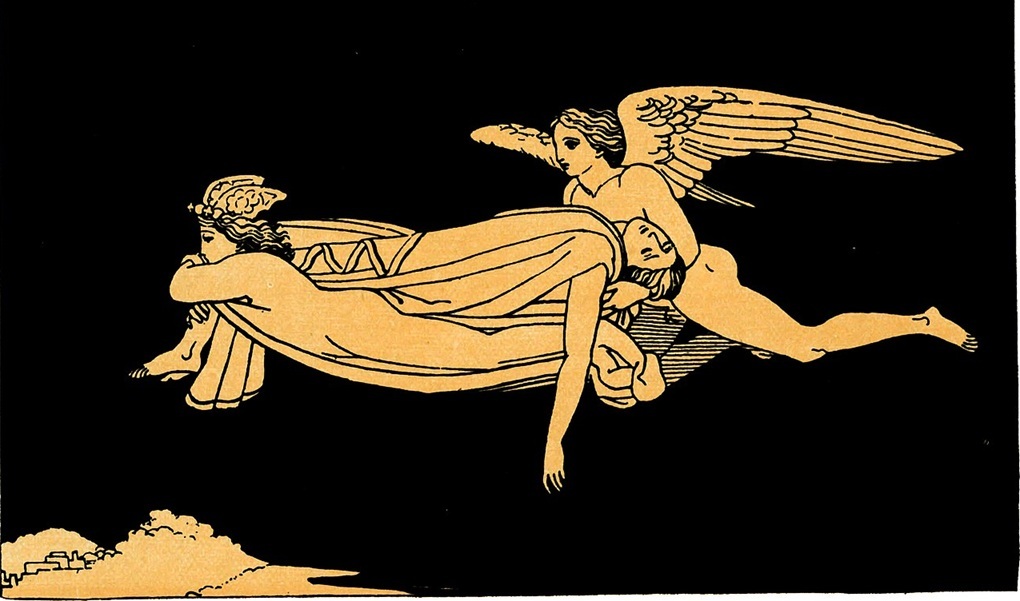
Hypnos

Wraiths of twilight-conjured mist:
At last, a prospect of release.
Come child, keep our nightly tryst.
To you, the wakeful weariest,
_I bring unconscious peace.

Steal softly past your unlaid ghosts,
Ignore the creaking of your stair,
Embrace the nightmares you dread most;
Your time has come to know the worst.
_Surrender, and prepare.

Rehearse the epilogue of day,
Snuff the candle, dowse the light.
Let me bear your thoughts away,
Let your abandoned psyche stray
_Where truth dissolves in night.

Believe you rule those wanton deeps,
But sovereignty comes at a cost.
Beside your bed, while shadows creep,
My arch twin brother never sleeps.
_You’ll meet him: Thanatos.

.

.

Helios

You’ve travelled far and widely while you slept,
inhabited some dark disturbing dreams.
Now, refugee from otherness, you’ve stepped
into the hour when Helios redeems
the innocence of shadow from the dark.
The amnesty of reason has begun.

A star is nothing but a dying spark
struck from oblivion by the very sun
now probing all those dreadful holes and corners.
Each is empty. Wake to lambent light,
revel in the greenwood’s dawning chorus:
birds never heard of such a thing as night.

.

.

Martin Briggs lives in Suffolk, England. He only began writing in earnest after retiring from a career in public administration, since when he has been published in various publications on both sides of the Atlantic.
ShareTweetPin
The Society of Classical Poets does not endorse any views expressed in individual poems or commentary.
Read Our Comments Policy Here

RandomPoems

‘Homemade Halos—An Election Reflection’: A Poem by Warren Bonham
Poetry

‘Homemade Halos—An Election Reflection’: A Poem by Warren Bonham

December 13, 2024

. Homemade Halos---An Election Reflection “Celebrity endorsements say a lot: they say you’re a liberal, an elitist, and a cultural...

‘The Woods Have Waited Anxiously’: A Poem by Roy E. Peterson
Poetry

‘Tapiola’: A Poem by Martin Briggs

February 3, 2026

  Tapiola Tapio is the Finnish god of the forest; Tapiola is his home. Only a fool disturbs my sylvan...

Next Post
‘Sunflower Field’: A Poem by Adam Sedia

'Sunflower Field': A Poem by Adam Sedia

‘Meddling’: A Poem by Mary Jane Myers

'Meddling': A Poem by Mary Jane Myers

A Video Poetry Reading of ‘Libra’ by Patricia Rogers Crozier

A Video Poetry Reading of 'Libra' by Patricia Rogers Crozier

Comments 13

  1. Roy Eugene Peterson says:
    1 year ago

    Those are two wildly enchanting and entertaining poems from different perspectives regarding sleep. You prove to have an adept and creative mind that conjures up imaginative images.

    Reply
    • Martin Briggs says:
      1 year ago

      Thank you Roy.

      Reply
  2. Joseph S. Salemi says:
    1 year ago

    This is a sophisticated pair of poems, almost like Milton’s “L’Allegro” and “Il Penseroso.” It’s interesting that the first poem has the title “Hypnos” (sleep), and is clearly in the voice of sleep speaking to a child. “Thanatos” (death) is mentioned at the finish of the poem, as if that name closed the circle. This would be a common trope in Western poetry, where “The sleeping and the dead are but as pictures” (Shakespeare), and where sleep and death are considered as complementary, or as parallels.

    But the second poem is about “Helios” (the sun), and concerns awakening from sleep. The speaker is unknown, or might simply be the authorial voice. It celebrates light, morning, waking, brightness. What we have here is an escape from sleep and from death, with a strong rhetorical push against both of them. Consider the language:

    “dark disturbing dreams”
    “refugee from otherness”
    “dreadful holes and corners”
    “Helios redeems”
    “Wake to lambent light”
    “revel in the dawning… chorus”

    Strongest of all are the lines “The amnesty of reason has begun” and “birds never heard of such a thing as night.” These two lines are jam-packed with meaning: the first is a powerful metaphor of the conscious human mind’s release from the dark obscurity of the unconscious, and the renewed freedom that rationality gives us; the second uses the flight of birds to describe, figuratively, the human release from earthbound, dark, nocturnal, mortal chains. Helios — the god of light, civilization, order, reason, consciousness, art, and achievement — is here expressing his triumph over the sleep and death of the first poem.

    The waking sleeper is a “refugee from otherness.” What an image! He has escaped from the dark pit of that which is NOT himself, and come at last into the bright light of his real birthright. Is that not what we in the West have before us as an urgent task? We must slough off the sick worship of “The Other” and “The Alien,” and awaken to the bright light of of Western cultural identity.

    Reply
    • Martin Briggs says:
      1 year ago

      Thank you for this detailed critique, Joseph. I’m pleased that you picked up the sleep-death ambiguity – a recurrent theme of W Shakespeare, as you point out (For in that sleep of death what dreams may come” etc etc). As for “the bright light of Western cultural identity”, I’m continually surprised by the way a reader can derive more from a piece than the writer put into it! But I suppose anything that stimulates individual reflection is for the good, even if tangential to the ostensible subject matter…. Kind regards.

      Reply
  3. Cynthia L Erlandson says:
    1 year ago

    These are both fascinating and beautifully written descriptions of things that are hard to describe. One thing I love about “Hypnos” is your stanza form, composed of four lines of tetrameter, followed by a fifth line of trimeter — the trimeter line seems to add an emphasis that strengthens the mood by drawing the reader up short (especially “You’ll meet him: Thanatos”). After that one, there’s a nice sense of relief in “Helios” — I feel like a “refugee from otherness.” I think the last line of each of the two stanzas is particularly insightful.

    Reply
    • Martin Briggs says:
      1 year ago

      Thank you Cynthia. Yes, these two pieces were meant to complement each other, so I’m glad they struck you that way.

      Reply
  4. Paul A. Freeman says:
    1 year ago

    I can relate to both poems, Martin. Some great imagery here.

    What a fantastic couple of lines: ‘the hour when Helios redeems / the innocence of shadow from the dark’.

    Thanks for the reads.

    Reply
    • Martin Briggs says:
      1 year ago

      And thank you, Paul, for reading them.

      Reply
  5. Susan Jarvis Bryant says:
    1 year ago

    What a treat it is to read this exquisite and highly entertaining pair of contrasting and complementary poems. Dr. Salemi’s enlightening comment has given me further appreciation. I particularly enjoyed: “Let your abandoned psyche stray / Where truth dissolves in night” – magical, mysterious, and… dangerous. Martin, thank you!

    Reply
    • Martin Briggs says:
      1 year ago

      Thank you Susan. I’ve never been called dangerous before….

      Reply
  6. Cheryl Corey says:
    1 year ago

    For me, the trimeter lines of “Hypnos” give you pause to contemplate the preceding tetrameter lines.

    Reply
  7. C.B. Anderson says:
    1 year ago

    Two of the most under-used words in the English language are “hypnogogic” and “hypnopompic.” Without using those words, Martin has covered (or uncovered) the substance of their denotation.

    Reply
    • Martin Briggs says:
      12 months ago

      Thank you, C.B. I’ll take your word for it….

      Reply

Leave a Reply Cancel reply

Your email address will not be published. Required fields are marked *


  1. Margaret Coats on ‘The Cristero Centennial’: A Poem by Margaret CoatsSeptember 6, 2026

    Thanks for your comment, Margaret B. You're right that those mid-20th century decades seemed innocent to us, and I think…

  2. Margaret Coats on ‘Victory’: A Poem by Jonathan GraverSeptember 6, 2026

    Jonathan, you wave the red, white, and blue well in this stirring patriotic lyric. The colors appear symbolic, among which…

  3. Jonathan Graver on ‘Victory’: A Poem by Jonathan GraverSeptember 6, 2026

    Jason, thank you for your kind words. - JG

  4. Margaret Coats on ‘The Cristero Centennial’: A Poem by Margaret CoatsSeptember 6, 2026

    Thank you so much, Paul, for finding the poem inspiring. Its method is much more "outline history" than Greene's absorbing…

  5. Margaret Coats on ‘The Cristero Centennial’: A Poem by Margaret CoatsSeptember 6, 2026

    Thanks, Jeremiah, for bringing up that early work of art about the Cristero conflict. It was published in 1940 while…

Subscribe to Daily Poems

Enter your email address to subscribe to this blog and receive notifications of new posts by email.

Join 1,637 other subscribers

Recent Poems

  • ‘Serenade’ and Other Poetry by Adam Sedia
  • ‘Self-Exploration’ and Other Poems by Paul Millan
  • ‘Victory’: A Poem by Jonathan Graver
  • ‘The Cristero Centennial’: A Poem by Margaret Coats
  • ‘A Potpourri of Aphoristic Verses’ by C.B. Anderson
  • ‘The Estuary’: A Poem by Jeff Eardley
  • ‘A World Without the Wednesday Child’: A Poem by Kimberly Fore
  • The 2026 Society of Classical Poets International Poetry Competition
  • The 2026 SCP International High School Poetry Competition
  • ‘Realistic Reflections’ and Other Poetry by Anna J. Arredondo
  • ‘China Made’: A Poem by Theresa Werba
  • ‘The Savage Moon’ and Other Poetry by Brian Yapko
  • Poetry Book Review: Love Found, Yearned For, and Lost by James A. Tweedie
  • ‘When Opportunity Knocks’: A Poem by Roy E. Peterson
  • ‘Legend of the Griffin’: A Poem by Iryna Hall
  • ‘Government Issue’ and Other Poems by Joseph S. Salemi
  • ‘Chaucer Announces His Desire to Retire’: A Poem by Paul A. Freeman
  • ‘Advantages of Restaurants’ and Other Poems by Russel Winick
  • ‘Bone China’: A Poem by Mary Gardner
  • ‘On the Death of One Too Young to Die’: A Poem by Jeffrey Essmann
  • ‘This Too Shall Pass’ and Other Poetry by Justin Dasher
  • ‘Humdrum and Harum-Scarum’: A Lecture on Free Verse, by Robert Bridges (1922)
  • ‘Unrest On the Floodplain’: A Poem by Bhikkhu Nyanasobhano
  • ‘Latitude and Loss’: A Poem by Martin Briggs
  • ‘Act III’ and Other Poetry by C.B. Anderson
  • ‘God’s Funeral’: A Poem by James Sale
  • ‘Star Festival’: A Poem by Margaret Coats
  • ‘Song of the Frog Princess’: A Poem by Scharlie Meeuws
  • ‘The Odyssey: Nolan and Solot Compared’: An Essay by Michael Curtis
  • ‘Solitude’ and Other Poems by Mary Jane Myers

Categories

  • Acrostic
  • Alexandroid
  • Alliterative
  • Art
  • Best Poems
  • Blank Verse
  • Chant Royal
  • Classical Poets Live
  • Clerihew
  • Covid-19
  • Deconstructing Communism
  • Educational
  • Epic
  • Epigrams and Proverbs
  • Essays
    • Interviews with Poets
    • Poetry Reviews
  • Featured
  • From the Society
  • Great Poets
    • Dante Alighieri
    • Edgar Allan Poe
    • Emily Dickinson
    • Geoffrey Chaucer
    • Henry Wadsworth Longfellow
    • Homer
    • John Keats
    • John Milton
    • Robert Frost
    • William Blake
    • William Shakespeare
    • William Wordsworth
  • Human Rights in China
  • Limerick
  • Love Poems
  • Music
  • Pantoum
  • Performing Arts
  • Poetry
    • Beauty
    • Children's Poems
    • Culture
    • Ekphrastic
    • Found Poems
    • High School Poets
    • Humor
    • Riddles
  • Poetry Challenge
  • Poetry Contests
  • Poetry Forms
    • Curtal Sonnet
    • Haiku
  • Poetry Readings
  • Rhupunt
  • Rondeau
  • Rondeau Redoublé
  • Rondel
  • Rubaiyat
  • Sapphic Verse
  • Satire
  • Science
  • Sestina
  • Shape Poems
  • Short Stories
  • Song Lyrics
  • Sonnet
  • Symposium
  • Terrorism
  • Terza Rima
  • The Environment
  • Translation
  • Triolet
  • Video
  • Villanelle

Quick Links

  • About Us
  • Submit Poetry
  • Become a Member
  • Members List
  • Support the Society
  • Advertisement Placement
  • Comments Policy
  • Terms of Use

Welcome Back!

Login to your account below

Forgotten Password?

Retrieve your password

Please enter your username or email address to reset your password.

Log In
No Result
View All Result
  • Poems
    • Beauty
    • Culture
    • Satire
    • Humor
    • Children’s
    • Art
    • Ekphrastic
    • Epic
    • Epigrams and Proverbs
    • Human Rights in China
    • Music
    • Performing Arts
    • Riddles
    • Science
    • Song Lyrics
    • The Environment
    • The Raven
    • Found Poems
    • High School Poets
    • Terrorism
    • Covid-19
  • Poetry Forms
    • Sonnet
    • Haiku
    • Limerick
    • Villanelle
    • Rondeau
    • Pantoum
    • Sestina
    • Triolet
    • Acrostic
    • Alexandroid
    • Alliterative
    • Blank Verse
    • Chant Royal
    • Clerihew
    • Rhupunt
    • Rondeau Redoublé
    • Rondel
    • Rubaiyat
    • Sapphic Verse
    • Shape Poems
    • Terza Rima
  • Great Poets
    • Geoffrey Chaucer
    • Emily Dickinson
    • Homer
    • Henry Wadsworth Longfellow
    • Dante Alighieri
    • John Keats
    • John Milton
    • Edgar Allan Poe
    • William Shakespeare
    • William Wordsworth
    • William Blake
    • Robert Frost
  • Love Poems
  • Contests
  • SCP Academy
    • Educational
    • Teaching Classical Poetry—A Guide for Educators
    • Poetry Forms
    • The SCP Journal
    • Books

© 2025 SCP. WebDesign by CODEC Prime.