


San Juan Capistrano
Jewel of the California Missions,
Founded November 1, 1776
A year before, there’d been a bracing start.
Resourceful builder, Father Lasuén
Outlined a camp above a useful stream—
When warfare elsewhere called back fighting men,
Making regretful missioners depart.
In seventy-six, late autumn days defeated
The New York Continentals at White Plains
While Father Serra founded Capistrano;
One of those two American campaigns
Succeeded through his “forward march” repeated.
The eastern seaboard battles shaped ideals;
The west coast mission building gathered gold
Contributing to the greatness of one nation,
States later joined but equally as old,
Both challenged by the continent’s ordeals.
The Acjachemen were hunter-gatherers
Who learned to farm wheat, barley, corn and beans.
Tomatoes, watermelons, peppers, grapes,
Oranges, olives and cattle graced the scenes
Of Capistrano’s expert laborers.
Their spirits formed a glorious sanctuary
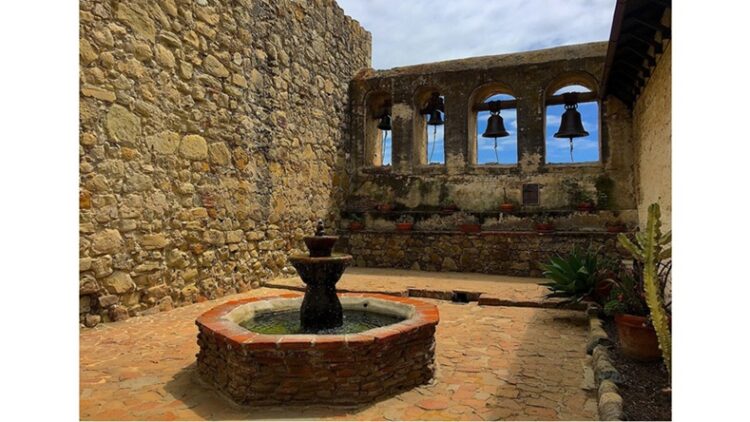
Of stone, and bricks their skill had baked. Four bells
They set in place, made gardens bloom, and brightened
Interiors with gilding and pastels.
Nearby they laid a restful cemetery.
Their chapel still puts heaven on display;
A grander new basilica recalls
The precious lives and works a massive earthquake
Destroyed in 1812. Sad ruined walls
Hear mission bells appeal for souls each day.
And there’s a song to celebrate in spring
How swallows love to nest at Capistrano
In beak-built mud pots during summertime.
Saint Joseph’s Day brings back to Capistrano
A promise to which faithful swallows cling.
That song says swallows fly far out to sea;
Their schedule and the route they need not learn.
The singer begs a whispered vow be kept,
And warbles of the day wise birds return,
“That’s the day I pray that you’ll come back to me.”
Franciscan friars Fermín Lasuén and Junípero Serra founded most California missions.
Acjachemen (name of the local indigenous tribe) is pronounced HAH-shuh-men.
The 1940 popular song “When the swallows come back to Capistrano” has been recorded often.
Saint Joseph’s Day, March 19, brings tourists, locals, and swallows together for a mission festival.
Margaret Coats lives in California. She holds a Ph.D. in English and American Literature and Language from Harvard University. She has retired from a career of teaching literature, languages, and writing that included considerable work in homeschooling for her own family and others.
















I loved the way you framed the mission building within the historical context of events of the time, i.e. the American Civil war, the indigenous, First Nation people rounding off the picture.
We then have the natural world intruding with the cemetery reminding us of mortality, likewise with an Act of God earthquake. This, is juxtaposed to the rebuilding, emphasising Man’s resilience.
The returning swallows is a lovely touch, especially when you think of the almost miraculous avian navigation.
Most readable and most enjoyable, Margaret.
When’s St. Joseph’s Day again?
Perhaps send this poem to those in charge at San Juan Capistrano.