• Submit Poetry
  • Support SCP
  • About Us
  • Members
  • Join
Friday, September 4, 2026
Society of Classical Poets
  • Poems
    • Beauty
    • Culture
    • Satire
    • Humor
    • Children’s
    • Art
    • Ekphrastic
    • Epic
    • Epigrams and Proverbs
    • Human Rights in China
    • Music
    • Performing Arts
    • Riddles
    • Science
    • Song Lyrics
    • The Environment
    • The Raven
    • Found Poems
    • High School Poets
    • Terrorism
    • Covid-19
  • Poetry Forms
    • Sonnet
    • Haiku
    • Limerick
    • Villanelle
    • Rondeau
    • Pantoum
    • Sestina
    • Triolet
    • Acrostic
    • Alexandroid
    • Alliterative
    • Blank Verse
    • Chant Royal
    • Clerihew
    • Rhupunt
    • Rondeau Redoublé
    • Rondel
    • Rubaiyat
    • Sapphic Verse
    • Shape Poems
    • Terza Rima
  • Great Poets
    • Geoffrey Chaucer
    • Emily Dickinson
    • Homer
    • Henry Wadsworth Longfellow
    • Dante Alighieri
    • John Keats
    • John Milton
    • Edgar Allan Poe
    • William Shakespeare
    • William Wordsworth
    • William Blake
    • Robert Frost
  • Love Poems
  • Contests
  • SCP Academy
    • Educational
    • Teaching Classical Poetry—A Guide for Educators
    • Poetry Forms
    • The SCP Journal
    • Books
No Result
View All Result
Society of Classical Poets
  • Poems
    • Beauty
    • Culture
    • Satire
    • Humor
    • Children’s
    • Art
    • Ekphrastic
    • Epic
    • Epigrams and Proverbs
    • Human Rights in China
    • Music
    • Performing Arts
    • Riddles
    • Science
    • Song Lyrics
    • The Environment
    • The Raven
    • Found Poems
    • High School Poets
    • Terrorism
    • Covid-19
  • Poetry Forms
    • Sonnet
    • Haiku
    • Limerick
    • Villanelle
    • Rondeau
    • Pantoum
    • Sestina
    • Triolet
    • Acrostic
    • Alexandroid
    • Alliterative
    • Blank Verse
    • Chant Royal
    • Clerihew
    • Rhupunt
    • Rondeau Redoublé
    • Rondel
    • Rubaiyat
    • Sapphic Verse
    • Shape Poems
    • Terza Rima
  • Great Poets
    • Geoffrey Chaucer
    • Emily Dickinson
    • Homer
    • Henry Wadsworth Longfellow
    • Dante Alighieri
    • John Keats
    • John Milton
    • Edgar Allan Poe
    • William Shakespeare
    • William Wordsworth
    • William Blake
    • Robert Frost
  • Love Poems
  • Contests
  • SCP Academy
    • Educational
    • Teaching Classical Poetry—A Guide for Educators
    • Poetry Forms
    • The SCP Journal
    • Books
No Result
View All Result
Society of Classical Poets
No Result
View All Result
Home Poetry Beauty

‘We’ and Other Poetry by Mike Bryant

October 28, 2021
in Beauty, Love Poems, Poetry
A A
24
"The Journey of Life---Old Age" by Thomas Cole

"The Journey of Life---Old Age" by Thomas Cole

.

We

Sum total of all life is death,
And breath sustains us for a time.
We’ll live until we’ve spent God’s dime.
The meter’s running faster still.
No matter what we want or will,
We’re always in His debt.

Some say that life’s a losing bet,
But we embrace its burning fire.
We’re partial to the soul’s desire.
We love the earth and all within,
We love rotation, love her spin,
We love the love and all we get.

We’ve not been called away just yet,
But if our fire died yesterday,
And we were laid to rest today,
We should not hold God in the wrong,
For He shall wake us with a song
__And so our future’s set.

.

.

A Rose and Me

__My words, like models, only pose
As simulacrums of this perfect rose.
__No one can know or comprehend
The rise and flow of love, the weft, the bend.
__For love is what we know and feel—
The deathly lows, the height of heaven’s zeal.
__Intensity is what I see
In every moment that you look at me.

__So, please accept this long-stemmed rose
Which reaches out to you, the one I chose
__In softened sighs, and read the note
That answers all the questions that you wrote.
__I hear you sotto voce here
Within my mind and see your blue eyes clear.
__I’ll always hold your memory—
The stem, the bloom, your fingertips and me.

.

.

Mike Bryant is a poet and retired plumber living on the Gulf Coast of Texas.

ShareTweetPin
The Society of Classical Poets does not endorse any views expressed in individual poems or commentary.
Read Our Comments Policy Here

RandomPoems

‘True Worth’: A Poem by Margaret Brinton
Beauty

‘True Worth’: A Poem by Margaret Brinton

August 7, 2025

. True Worth Her thoughts do not align with "bigger, better"; A humble mode of living suits her fine. The...

poem/philosophy/descartes
Beauty

A Poem on Descartes’ ‘I Think Therefore I Am’ and Other Poems by C.B. Anderson

February 17, 2024

. Ipse Dixit I say Cogito ergo sum To the animal here in the room. So how do I know...

Next Post
‘The Asinine Armoress: Hannah Gutierrez Reed’ by Joseph S. Salemi

'The Asinine Armoress: Hannah Gutierrez Reed' by Joseph S. Salemi

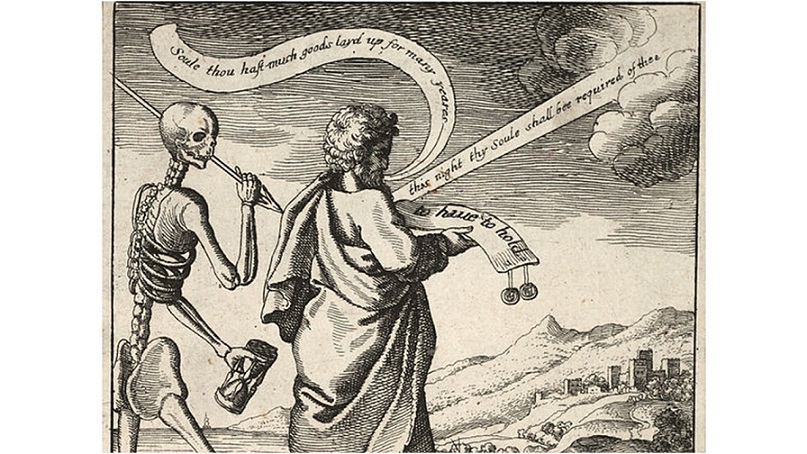
Poems on the Grim Reaper and God, by Roy E. Peterson

Poems on the Grim Reaper and God, by Roy E. Peterson

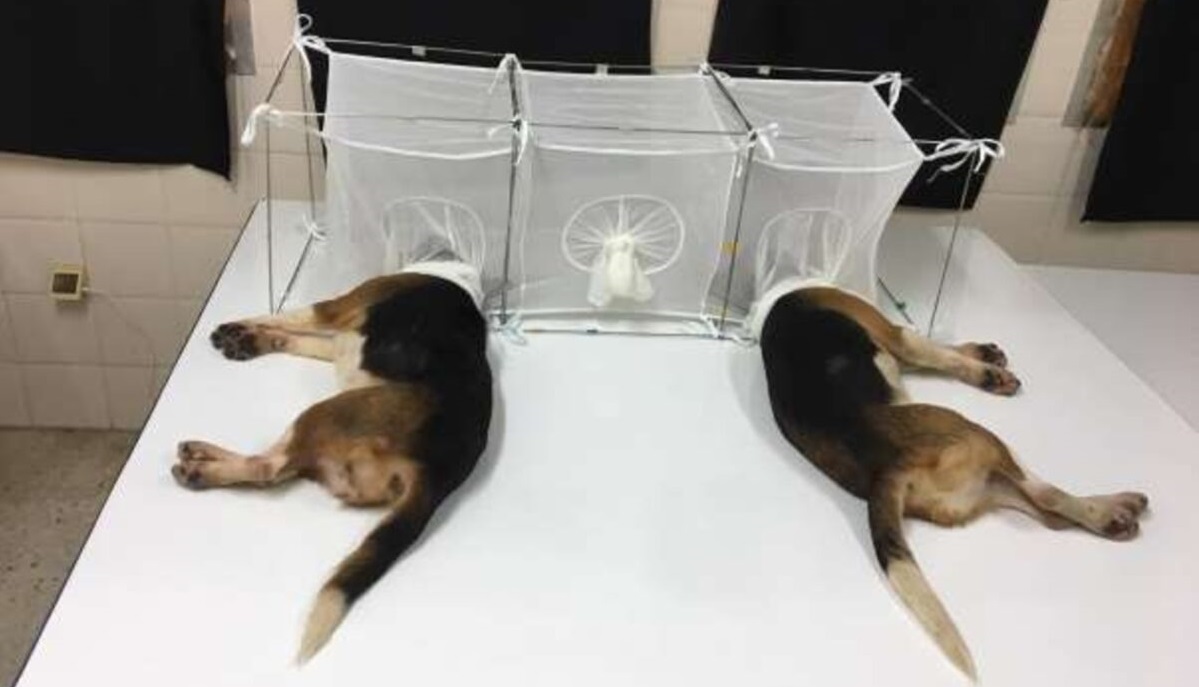
A Poem on Fauci and ‘Dead Puppies,’ by Joe Tessitore

A Poem on Fauci and 'Dead Puppies,' by Joe Tessitore

Comments 24

  1. Brian Yapko says:
    5 years ago

    Mike, I greatly enjoyed both of these poems — especially upon analyzing the unique rhyme and meter for both. Are these forms that you have created?
    “We” is interesting with its a-b-b-c-c-a rhyme pattern but which maintains the repeating A rhyme for the first and last lines of the subsequent verses. This creates a really interesting pattern which recalls a cycle of birth and death.

    And then it took me a couple of readings of “A Rose and Me” to realize that you had very rigorously created a meter of 4-5-4-5-4-5-4-5 in your two octets. I’m not sure if there’s a textual reason for your use of this metrical form — is it to keep the reader slightly off-balance but symmetrical like the speaker who admits uncomprehension of love but who symbolizes love with a perfect flower? Perhaps I’m projecting intent, but either way, I think it’s very clever and well done.

    Thank you for the enjoyable afternoon read!

    Reply
    • Mike Bryant says:
      5 years ago

      Brian, I wrote “We” a few years ago and I swear I can’t remember how I came up with that form. I wouldn’t be a bit surprised if it has been used before. I like it as a kind of gut expression of faith. As for the flower poem, I wrote the first few lines, and then I just had to go on with the metrical scheme. Thanks for thinking I did that purposely in order to keep people off kilter… if only I really was that clever! And thanks for your wonderful analysis.

      Reply
    • Susan Jarvis Bryant says:
      5 years ago

      Brian, I simply had to smile at this train of thought you had: “I’m not sure if there’s a textual reason for your use of this metrical form — is it to keep the reader slightly off-balance…” You have captured Mike’s personality to a tee. Keeping people off balance is Mike’s favorite pastime… friends and family visibly brace themselves when Mike is around. LOL

      Reply
  2. Margaret Coats says:
    5 years ago

    Mike, both of these read just beautifully. I love the earthy lines in “We”: “We love rotation, love her spin.” When I come to “A Rose and Me,” I seem to see some poetic horseplay with grammar. Wouldn’t the expectation for a title be “A Rose and I”? And you immediately make a self-deprecating point, saying that your words are “simulacrums” of this perfect rose. The correct Latin plural is “simulacra,” even in American English, but I get the feeling you like the humble and ungrammatical sound of “-crums.” Lovely love poems!

    Reply
    • Mike Bryant says:
      5 years ago

      Thanks for your comment, Margaret. I love the word earthy and, as a plumber, I have moved plenty of it… so I take that as a compliment of course. As for me and that rose… I suppose it depends on whether that phrase, that sentence fragment, is from the subject or the object of the unknown complete sentence! You know, I did take Latin in high school and should have known the plural of simulacrum, but I did just check it out and simulacrums is acceptable, at least in American English… but, yes, I do like the way it sounds. Again, thanks so much.

      Reply
  3. D.G. Rowe says:
    5 years ago

    Aye, “The Rose and Me”, Mr Bryant, is crafted rather well with also lovely sound and sentiment.

    They both are, to be frank, but the second one edges it for me, pal.

    Cheers.

    Reply
    • Mike Bryant says:
      5 years ago

      Thanks, D.G. I like the second better, too.

      Reply
  4. Peter Hartley says:
    5 years ago

    Mike – I like both of these poems, especially the first, and, like Brian I can admire its unique rhyme scheme. It is a little difficult for the ear to remember rhymes that are six lines apart but I think it works very well in the reading in unifying and rounding off each stanza. I wonder if this stanza form is your own invention or if it has an actual name (like Alexandrine or Spenserian) because it looks as though it really should! I admire the optimism in the second poem, and its very memorable last two lines.

    Reply
    • Mike Bryant says:
      5 years ago

      Thanks, Peter. I don’t know the name for that poetic form or even if it has a name. It does remind me of something, but I don’t know what! I am an incurable optimist.

      Reply
  5. Cheryl Corey says:
    5 years ago

    Mike, the line “I hear you sotto voce here” gave me pause. Shouldn’t it be “your” instead?

    Reply
    • Mike Bryant says:
      5 years ago

      Cheryl, I believe that ‘sotto voce’ is typically used as an adverb or an adjective in English. If I’m not mistaken the Italian ‘sottovoce’ is an adverb, so, either way I think it’s okay.

      Reply
      • Cheryl Corey says:
        5 years ago

        Not knowing any Italian, I’ll defer to greater minds.

        Reply
        • Mike Bryant says:
          5 years ago

          googletranslate.com is my friend!

          Reply
      • Margaret Coats says:
        5 years ago

        “Sotto” means “under,” and “voce” is “voice,” which makes “sotto voce” a prepositional phrase used as an adverb, meaning “in an undertone.” “I hear you in an undertone” is correct English, and if Mike wanted to say “I hear your low voice” using Italian, he would have to say “voce bassa” because the feminine adjective comes after the feminine noun.

        Reply
  6. Mrs. Bryant says:
    5 years ago

    Simply beautiful… the sort of poetry that could lead a lady up a church aisle. 😉

    Reply
  7. Mr. Bryant says:
    5 years ago

    Why do you think I took up poetry, Mrs. Bryant?

    Reply
  8. Yael says:
    5 years ago

    I find both poems thoroughly entertaining, but We is my favorite of the two. It’s a great story and very well told. Thank you for sharing.

    Reply
  9. Mike Bryant says:
    5 years ago

    Thanks, Yael!

    Reply
  10. Sally Cook says:
    5 years ago

    Mike –
    I have been back to these poems three times. First tune, I considered them an interesting expansion of your poetic viewpoint; second tune I went to find out why you would choose to do this; the third time I am here to question
    myself. What am I here for, other than to say each time the poems get better.This time, I’m here to say I find them to be like fast growing vines. Like those vines, your poems have used those off-hours to grow in strength and intensity. Mike, I had to stop this cycle less I find myself driven to have them printed on sheets of gold leaf, and bound in rubies and encrusted in emeralds. Amazing effect!
    Susan is right to say that when you are around there is no telling what might happen.

    Reply
    • Mike Bryant says:
      5 years ago

      Sally, what a beautiful comment. It has almost rendered me speechless, a very rare occurrence. Thank you!

      Reply
      • Sally Cook says:
        5 years ago

        Mike, thought I had offended you. As that was not the case, I’ll just add – Happy Birthday ~

        Reply
        • Mike Bryant says:
          5 years ago

          Thanks, Sally!

          Reply
  11. Paul Freeman says:
    5 years ago

    I thought ‘We’ was superb. ‘Complex-simplicity’ comes to mind. The ideas are profound but are stated with free-flowing simplicity.

    Thanks for the reads.

    Reply
    • Mike Bryant says:
      5 years ago

      Thank you, Paul.

      Reply

Leave a Reply Cancel reply

Your email address will not be published. Required fields are marked *


  1. Cynthia L Erlandson on ‘The Cristero Centennial’: A Poem by Margaret CoatsSeptember 4, 2026

    Thank you for the excellent poetic history lesson, Margaret. May courage not fail us.

  2. Margaret Brinton on ‘The Cristero Centennial’: A Poem by Margaret CoatsSeptember 4, 2026

    Hello Margaret C. This is, indeed, an ominous poem. My mind returns to the relatively "innocent" mid-century decades when corruption,…

  3. Paul Freeman on ‘A Potpourri of Aphoristic Verses’ by C.B. AndersonSeptember 4, 2026

    Some creditable couplets ( if I can add to the descriptors of 'gnomic verses' and 'aphorisms'). The first half are…

  4. Paul Freeman on ‘The Cristero Centennial’: A Poem by Margaret CoatsSeptember 4, 2026

    Hi, Margaret. Like Jeremiah, I've read about this chapter of Mexican history through the lens of Graham Greene, so it…

  5. Dan C. Iulian on The Society of Classical Poets 2026 Haiku CompetitionSeptember 4, 2026

    night in the trenches – one cigarette butt passes from hand to next hand momijigari – along the old path…

Subscribe to Daily Poems

Enter your email address to subscribe to this blog and receive notifications of new posts by email.

Join 1,635 other subscribers

Recent Poems

  • ‘The Cristero Centennial’: A Poem by Margaret Coats
  • ‘A Potpourri of Aphoristic Verses’ by C.B. Anderson
  • ‘The Estuary’: A Poem by Jeff Eardley
  • ‘A World Without the Wednesday Child’: A Poem by Kimberly Fore
  • The 2026 Society of Classical Poets International Poetry Competition
  • The 2026 SCP International High School Poetry Competition
  • ‘Realistic Reflections’ and Other Poetry by Anna J. Arredondo
  • ‘China Made’: A Poem by Theresa Werba
  • ‘The Savage Moon’ and Other Poetry by Brian Yapko
  • Poetry Book Review: Love Found, Yearned For, and Lost by James A. Tweedie
  • ‘When Opportunity Knocks’: A Poem by Roy E. Peterson
  • ‘Legend of the Griffin’: A Poem by Iryna Hall
  • ‘Government Issue’ and Other Poems by Joseph S. Salemi
  • ‘Chaucer Announces His Desire to Retire’: A Poem by Paul A. Freeman
  • ‘Advantages of Restaurants’ and Other Poems by Russel Winick
  • ‘Bone China’: A Poem by Mary Gardner
  • ‘On the Death of One Too Young to Die’: A Poem by Jeffrey Essmann
  • ‘This Too Shall Pass’ and Other Poetry by Justin Dasher
  • ‘Humdrum and Harum-Scarum’: A Lecture on Free Verse, by Robert Bridges (1922)
  • ‘Unrest On the Floodplain’: A Poem by Bhikkhu Nyanasobhano
  • ‘Latitude and Loss’: A Poem by Martin Briggs
  • ‘Act III’ and Other Poetry by C.B. Anderson
  • ‘God’s Funeral’: A Poem by James Sale
  • ‘Star Festival’: A Poem by Margaret Coats
  • ‘Song of the Frog Princess’: A Poem by Scharlie Meeuws
  • ‘The Odyssey: Nolan and Solot Compared’: An Essay by Michael Curtis
  • ‘Solitude’ and Other Poems by Mary Jane Myers
  • ‘The River Not Taken’ and Other Poetry by Brian Yapko
  • ‘Totentanz’: A Poem by James A. Tweedie
  • ‘In God Is Our Trust’: A Poem by Roy E. Peterson

Categories

  • Acrostic
  • Alexandroid
  • Alliterative
  • Art
  • Best Poems
  • Blank Verse
  • Chant Royal
  • Classical Poets Live
  • Clerihew
  • Covid-19
  • Deconstructing Communism
  • Educational
  • Epic
  • Epigrams and Proverbs
  • Essays
    • Interviews with Poets
    • Poetry Reviews
  • Featured
  • From the Society
  • Great Poets
    • Dante Alighieri
    • Edgar Allan Poe
    • Emily Dickinson
    • Geoffrey Chaucer
    • Henry Wadsworth Longfellow
    • Homer
    • John Keats
    • John Milton
    • Robert Frost
    • William Blake
    • William Shakespeare
    • William Wordsworth
  • Human Rights in China
  • Limerick
  • Love Poems
  • Music
  • Pantoum
  • Performing Arts
  • Poetry
    • Beauty
    • Children's Poems
    • Culture
    • Ekphrastic
    • Found Poems
    • High School Poets
    • Humor
    • Riddles
  • Poetry Challenge
  • Poetry Contests
  • Poetry Forms
    • Curtal Sonnet
    • Haiku
  • Poetry Readings
  • Rhupunt
  • Rondeau
  • Rondeau Redoublé
  • Rondel
  • Rubaiyat
  • Sapphic Verse
  • Satire
  • Science
  • Sestina
  • Shape Poems
  • Short Stories
  • Song Lyrics
  • Sonnet
  • Symposium
  • Terrorism
  • Terza Rima
  • The Environment
  • Translation
  • Triolet
  • Video
  • Villanelle

Quick Links

  • About Us
  • Submit Poetry
  • Become a Member
  • Members List
  • Support the Society
  • Advertisement Placement
  • Comments Policy
  • Terms of Use

Welcome Back!

Login to your account below

Forgotten Password?

Retrieve your password

Please enter your username or email address to reset your password.

Log In
No Result
View All Result
  • Poems
    • Beauty
    • Culture
    • Satire
    • Humor
    • Children’s
    • Art
    • Ekphrastic
    • Epic
    • Epigrams and Proverbs
    • Human Rights in China
    • Music
    • Performing Arts
    • Riddles
    • Science
    • Song Lyrics
    • The Environment
    • The Raven
    • Found Poems
    • High School Poets
    • Terrorism
    • Covid-19
  • Poetry Forms
    • Sonnet
    • Haiku
    • Limerick
    • Villanelle
    • Rondeau
    • Pantoum
    • Sestina
    • Triolet
    • Acrostic
    • Alexandroid
    • Alliterative
    • Blank Verse
    • Chant Royal
    • Clerihew
    • Rhupunt
    • Rondeau Redoublé
    • Rondel
    • Rubaiyat
    • Sapphic Verse
    • Shape Poems
    • Terza Rima
  • Great Poets
    • Geoffrey Chaucer
    • Emily Dickinson
    • Homer
    • Henry Wadsworth Longfellow
    • Dante Alighieri
    • John Keats
    • John Milton
    • Edgar Allan Poe
    • William Shakespeare
    • William Wordsworth
    • William Blake
    • Robert Frost
  • Love Poems
  • Contests
  • SCP Academy
    • Educational
    • Teaching Classical Poetry—A Guide for Educators
    • Poetry Forms
    • The SCP Journal
    • Books

© 2025 SCP. WebDesign by CODEC Prime.