• Submit Poetry
  • Support SCP
  • About Us
  • Members
  • Join
Saturday, October 17, 2026
Society of Classical Poets
  • Poems
    • Beauty
    • Culture
    • Satire
    • Humor
    • Children’s
    • Art
    • Ekphrastic
    • Epic
    • Epigrams and Proverbs
    • Human Rights in China
    • Music
    • Performing Arts
    • Riddles
    • Science
    • Song Lyrics
    • The Environment
    • The Raven
    • Found Poems
    • High School Poets
    • Terrorism
    • Covid-19
  • Poetry Forms
    • Sonnet
    • Haiku
    • Limerick
    • Villanelle
    • Rondeau
    • Pantoum
    • Sestina
    • Triolet
    • Acrostic
    • Alexandroid
    • Alliterative
    • Blank Verse
    • Chant Royal
    • Clerihew
    • Rhupunt
    • Rondeau Redoublé
    • Rondel
    • Rubaiyat
    • Sapphic Verse
    • Shape Poems
    • Terza Rima
  • Great Poets
    • Geoffrey Chaucer
    • Emily Dickinson
    • Homer
    • Henry Wadsworth Longfellow
    • Dante Alighieri
    • John Keats
    • John Milton
    • Edgar Allan Poe
    • William Shakespeare
    • William Wordsworth
    • William Blake
    • Robert Frost
  • Love Poems
  • Contests
  • SCP Academy
    • Educational
    • Teaching Classical Poetry—A Guide for Educators
    • Poetry Forms
    • The SCP Journal
    • Books
No Result
View All Result
Society of Classical Poets
  • Poems
    • Beauty
    • Culture
    • Satire
    • Humor
    • Children’s
    • Art
    • Ekphrastic
    • Epic
    • Epigrams and Proverbs
    • Human Rights in China
    • Music
    • Performing Arts
    • Riddles
    • Science
    • Song Lyrics
    • The Environment
    • The Raven
    • Found Poems
    • High School Poets
    • Terrorism
    • Covid-19
  • Poetry Forms
    • Sonnet
    • Haiku
    • Limerick
    • Villanelle
    • Rondeau
    • Pantoum
    • Sestina
    • Triolet
    • Acrostic
    • Alexandroid
    • Alliterative
    • Blank Verse
    • Chant Royal
    • Clerihew
    • Rhupunt
    • Rondeau Redoublé
    • Rondel
    • Rubaiyat
    • Sapphic Verse
    • Shape Poems
    • Terza Rima
  • Great Poets
    • Geoffrey Chaucer
    • Emily Dickinson
    • Homer
    • Henry Wadsworth Longfellow
    • Dante Alighieri
    • John Keats
    • John Milton
    • Edgar Allan Poe
    • William Shakespeare
    • William Wordsworth
    • William Blake
    • Robert Frost
  • Love Poems
  • Contests
  • SCP Academy
    • Educational
    • Teaching Classical Poetry—A Guide for Educators
    • Poetry Forms
    • The SCP Journal
    • Books
No Result
View All Result
Society of Classical Poets
No Result
View All Result
Home Poetry Beauty

‘Incense’ by Jeffrey Essmann

May 4, 2022
in Beauty, Culture, Poetry
A A
8
poems 'Incense' by Jeffrey Essmann

.

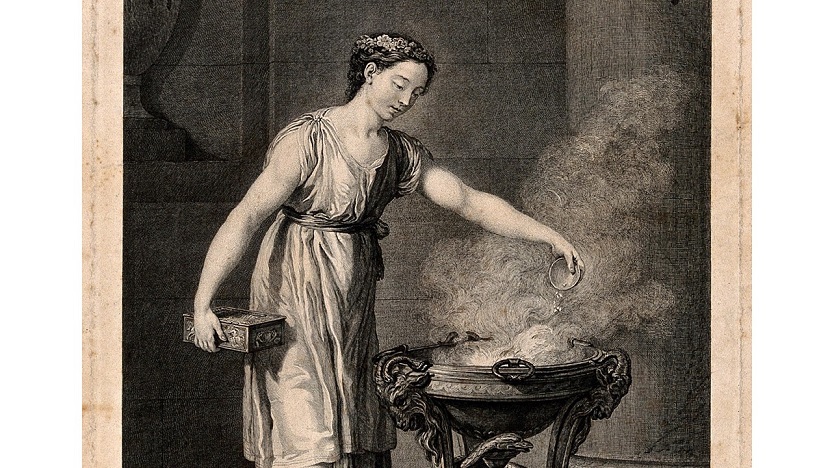
Incense

I cast my words aloft this way and that,
Imagining they’re incense offered sweet
And fragrant, curling in their brief conceit,
Their wisps as agile as an acrobat;
And think of priests the Covenant begat,
Who when they did their solemn God entreat,
The incense was a carrier concrete
Of prayer beyond our earthly habitat.
And yet the smoke another purpose met,
Obscuring sight lest God should show His face,
Which unobscured would mean the viewer’s death.
My words are incense-like in this sense too:
For if my smoky words don’t fill this space,
I just might let the face of God peek through.

.

.

Jeffrey Essmann is an essayist and poet living in New York. His poetry has appeared in numerous magazines and literary journals, among them Agape Review, America Magazine, Dappled Things, the St. Austin Review, U.S. Catholic, Grand Little Things, Heart of Flesh Literary Journal, and various venues of the Benedictine monastery with which he is an oblate. He is editor of the Catholic Poetry Room page on the Integrated Catholic Life website.

ShareTweetPin
The Society of Classical Poets does not endorse any views expressed in individual poems or commentary.
Read Our Comments Policy Here

RandomPoems

Poetry

Poetry by Kevan Duer of Mount Ephraim, New Jersey

November 9, 2012

A Cold Truth If Love can move mountains I could move the Earth My Heart as a fountain We would...

poetry/benson brown/readings
Classical Poets Live

CPL: Reading of FoFG Poetry Competition Winner, Interview with James Sale, and More

May 30, 2023

. Classical Poets Live with Andrew Benson Brown Episode 3: Embrace the Epic, Not the Opaque If you enjoy this video,...

Next Post
poem/erlandson/culture

'This, Too, Will Pass' by Michael Charles Maibach

Christmas and New Year Poetry Reading Video Now Available

Christmas and New Year Poetry Reading Video Now Available

‘The First Spring Rain’ by Phil S. Rogers

'The First Spring Rain' by Phil S. Rogers

Comments 8

  1. Evan Mantyk says:
    4 years ago

    Thank you, Jeffrey, for this fascinating and well executed piece. It reminds me of Adam Sedia’s poem on incense: https://classicalpoets.org/2021/08/02/incense-by-adam-sedia/#/

    It also reminds me of the Chinese tradition of burning money, sending it over to the other realm to pay off expenses. The Greeks held similar beliefs, as I once edited a book with this story from ancient Greece:

    Periander had a wife whose name was Melissa. Melissa died and was buried; but her garments, for some reason or other, were not burned as was usual in such cases. Now, among the other oracles of Greece, there was one where departed spirits could be consulted. It was called the oracle of the dead. Periander lost an important item and asked the oracle to consult the ghost of Melissa to see if she knew. The ghost appeared, but refused to answer the question asked of her, saying, with frightful seriousness, “I am cold; I am cold; I am naked and cold. My clothes were not burned; I am naked and cold.”
    When this answer was reported to Periander, he decided to make a great sacrifice and offering to satisfy the restless spirit. He invited a group of women of Corinth to witness some spectacle in a temple, and when they were together, he surrounded them with his guards, seized them, stripped them of most of their clothing, and then let them go free. The clothes thus taken were then all solemnly burned, as an offering to the ghost of Melissa.
    When this was done, a second messenger was sent to the oracle of the dead. The spirit, now clothed and comfortable in its grave, answered the question through the oracle, informing Periander where the lost item could be found.

    Reply
    • Jeffrey Essmann says:
      4 years ago

      Evan: Thanks so much for taking the time for these kind–and very interesting–reflections on the poem. I was unfamiliar with the story of Periander and Melissa, and love it. Such a great Happy Ending: she gets a new wardrobe and he finds his car keys (or: chariot keys, I guess).
      Since I’m here, I can clarify some of the religious aspects of the piece, which, even though they’re Judeo-Christian, would nonetheless be unfamiliar to most practitioners.
      “Priests the Covenant begat” refers to the Levitical priesthood established by the Mosaic Covenant that, many years after Moses, was the priestly caste serving at the Temple in Jerusalem. At the center of the Temple was the Holy of Holies, revered by religious Jews as the Dwelling Place of God and, by extension, the Axis of the World. As such, its importance in the Jewish religious worldview cannot be overestimated. Once a year the high priest entered the Holy of Holies to burn incense and offer the prayers of the people. The incense served the symbolic function of carrying the prayers to God, but it also had an eminently practical function as well: as much as the Psalms and other prayers reference the desire to “see the face of God”, it was also held that anyone who actually saw the face of God would be so overwhelmed by it that he would die. (One of Moses’ great distinctions as a prophet was that he “spoke with God face to face”.) So the incense also served as a protective screen. On the off chance that God did indeed reveal His face, the incense would protect the high priest from a direct view of it, thus saving his life. The final two lines, then, reference the built-in ambivalence/tension of a poet trying to limn spiritual experience while words themselves necessarily keep it from slipping through.

      Reply
  2. Susan Jarvis Bryant says:
    4 years ago

    Jeffrey, I am not sure of all the underlying meanings woven throughout this poem, but your words have intrigued me enough to do a bit of research on the subject of incense. In fact, your words have wrapped me in their mellifluous splendor and carried me away on waves of linguistic wonder to ethereal places of intrigue… the mark of a fine poem. Thank you.

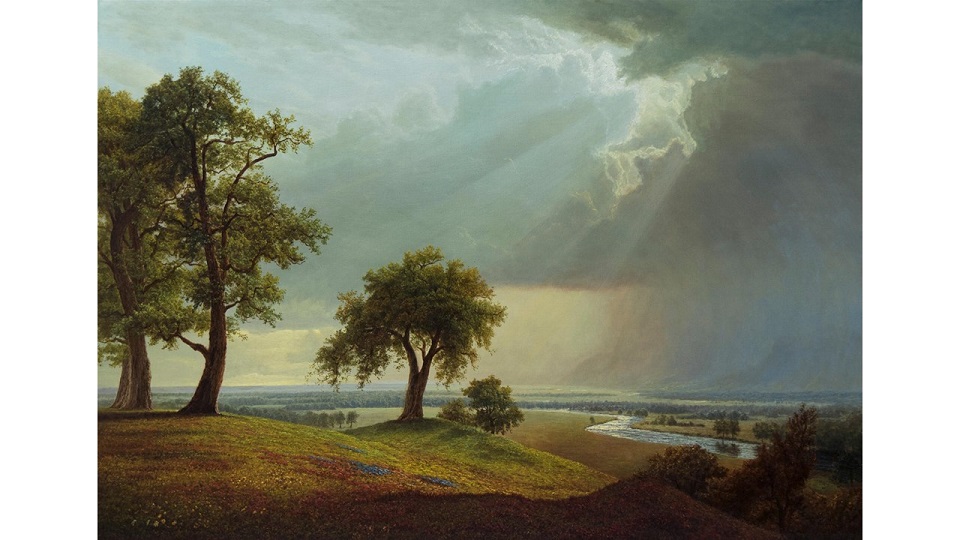
    Also, thank you, Evan, for your interesting observations and a perfect picture to frame Jeffrey’s art.

    Reply
    • Jeffrey Essmann says:
      4 years ago

      Thanks so much, Susan. I explain some of the spiritual aspects of the poem in my response to Evan (above).

      Reply
  3. Cheryl Corey says:
    4 years ago

    I don’t quite grasp the religious aspect of this poem, but I appreciate the way you carry the imagery of incense and smoke throughout.

    Reply
    • Jeffrey Essmann says:
      4 years ago

      Thanks so much, Cheryl. I explain some of the spiritual aspects of the poem in my response to Evan (above).

      Reply
  4. Stuti says:
    4 years ago

    Jeffrey, Thank you for this read! I love that you’ve chosen to hero incense almost as a character in the piece –

    “Imagining they’re incense offered sweet
    And fragrant, curling in their brief conceit,
    Their wisps as agile as an acrobat;”

    These lines are so evocative and sharp in imagery. Also weaving your words around incense is so clever because it is common to so many different cultures and I think almost anyone will relate to all or parts of the essence of this piece. I am definitely not aware of all the references this piece makes, but you have tickled my curiosity on the subject. Thank you again, for the read!

    Reply
  5. Jeffrey Essmann says:
    4 years ago

    Thanks so much, Stuti. I explain some of the spiritual aspects of the poem in my response to Evan (above).

    Reply

Leave a Reply Cancel reply

Your email address will not be published. Required fields are marked *


  1. Paul Freeman on Poems by Derzhavin, Akhmatova, and Tyutchev, Translated by Kevin RainbowOctober 17, 2026

    Thanks for these three poems, Kevin. I've read them through twice and am getting into the intricacies of poetry of…

  2. Paul Freeman on ‘Their Words, My Fault’ and Other Poems by Russel WinickOctober 17, 2026

    As always, a lot of head nodding in agreement, Russel. Sadly, I have to get my students to write their…

  3. Paul Freeman on ‘The Walking Wounded’: A Poem by Jeffrey EssmannOctober 17, 2026

    I'm a bit late to the party, Jeffrey, but you'll be glad to know it's not because I was doom-scrolling.…

  4. Paul Freeman on ‘Nature’s Family’: A Poem by Margaret CoatsOctober 17, 2026

    Sometimes we just have to sit back, switch off and appreciate the natural world. What better way than to celebrate…

  5. Margaret Brinton on ‘The River & The Sea’: A Poem by Rohini SunderamOctober 17, 2026

    I very much enjoy this personification of two mighty waters. It reminds me of San Diego this morning where we…

Subscribe to Daily Poems

Enter your email address to subscribe to this blog and receive notifications of new posts by email.

Join 1,660 other subscribers
No Result
View All Result

Resources

       1. A Guide to Writing Poetry

      2. The Best Poems of 2020      

      3. Poetry and Writing Contests

      4. Journals Accepting Formal Verse

Recent Poems

  • The Blobfish—‘Mr Blobby’: A Poem by Paul A. Freeman
  • ‘Nature’s Family’: A Poem by Margaret Coats
  • ‘The River & The Sea’: A Poem by Rohini Sunderam
  • Poems by Derzhavin, Akhmatova, and Tyutchev, Translated by Kevin Rainbow
  • ‘After-Action Report’: A Poem by Joseph S. Salemi
  • ‘The Walking Wounded’: A Poem by Jeffrey Essmann
  • ‘Their Words, My Fault’ and Other Poems by Russel Winick
  • ‘Lazarus I’: A Poem by Jason Hunt
  • Poetry Challenge: Dictionary Delights
  • ‘In Defense of Rhyme’: An Essay by Euphrates Moss
  • ‘Gun Control’: A Poem by Kevin Ahern
  • ‘Power of a Pen’: A Poem by Janice Stanley
  • The Best Haiku of 2026
  • ‘One Night in Bangkok’ and Other Poetry by Brian Yapko
  • ‘Invocation’: A Poem by D.R. Rainbolt
  • ‘Enjoy the Peace, Prepare for War’: A Poem by Roy E. Peterson
  • Faust Part Two, Act One: ‘A Pleasant Landscape’ by Goethe, Translated by Josh Olson
  • A Song Inspired by Robert Frost’s ‘The Road Not Taken’, by Gunny Markefka
  • ‘Reappraisals of Mortality’: A Poem by C.B. Anderson
  • ‘What Is the Measure of My Days?’: A Poem by Peter Venable
  • ‘Polar Coordinates’: A Poem by Adam Sedia
  • ‘It Never Lies!’: A Poem by Paul A. Freeman
  • ‘The Mahjong Flowers’: A Set of Sonnets by Margaret Coats
  • ‘The Martyrdom of Saint Cassian’: A Poem by Joseph S. Salemi
  • ‘Mind Versus Beauty’: A Poem by Johann Wolfgang von Goethe, Translated by Eric v.d. Luft
  • ‘Summer Sails’: A Poem by Paulette Calasibetta
  • ‘Aquarius’: A Poem by Patricia Rogers Crozier
  • ‘No Body Here on Earth’: A Poem by Gerard Maritato
  • A Visualized Reading of The Odyssey: Book 1, Produced by Andrew Benson Brown
  • ‘Now?’ and Other Poetry by Stephen DiLauro

Categories

  • Acrostic
  • Alexandroid
  • Alliterative
  • Art
  • Best Poems
  • Blank Verse
  • Chant Royal
  • Classical Poets Live
  • Clerihew
  • Covid-19
  • Deconstructing Communism
  • Educational
  • Epic
  • Epigrams and Proverbs
  • Essays
    • Interviews with Poets
    • Poetry Reviews
  • Featured
  • From the Society
  • Great Poets
    • Dante Alighieri
    • Edgar Allan Poe
    • Emily Dickinson
    • Geoffrey Chaucer
    • Henry Wadsworth Longfellow
    • Homer
    • John Keats
    • John Milton
    • Robert Frost
    • William Blake
    • William Shakespeare
    • William Wordsworth
  • Human Rights in China
  • Limerick
  • Love Poems
  • Music
  • Pantoum
  • Performing Arts
  • Poetry
    • Beauty
    • Children's Poems
    • Culture
    • Ekphrastic
    • Found Poems
    • High School Poets
    • Humor
    • Riddles
  • Poetry Challenge
  • Poetry Contests
  • Poetry Forms
    • Curtal Sonnet
    • Haiku
  • Poetry Readings
  • Rhupunt
  • Rondeau
  • Rondeau Redoublé
  • Rondel
  • Rubaiyat
  • Sapphic Verse
  • Satire
  • Science
  • Sestina
  • Shape Poems
  • Short Stories
  • Song Lyrics
  • Sonnet
  • Symposium
  • Terrorism
  • Terza Rima
  • The Environment
  • Translation
  • Triolet
  • Video
  • Villanelle

Quick Links

  • About Us
  • Submit Poetry
  • Become a Member
  • Members List
  • Support the Society
  • Advertisement Placement
  • Comments Policy
  • Terms of Use

Welcome Back!

Login to your account below

Forgotten Password?

Retrieve your password

Please enter your username or email address to reset your password.

Log In
No Result
View All Result
  • Poems
    • Beauty
    • Culture
    • Satire
    • Humor
    • Children’s
    • Art
    • Ekphrastic
    • Epic
    • Epigrams and Proverbs
    • Human Rights in China
    • Music
    • Performing Arts
    • Riddles
    • Science
    • Song Lyrics
    • The Environment
    • The Raven
    • Found Poems
    • High School Poets
    • Terrorism
    • Covid-19
  • Poetry Forms
    • Sonnet
    • Haiku
    • Limerick
    • Villanelle
    • Rondeau
    • Pantoum
    • Sestina
    • Triolet
    • Acrostic
    • Alexandroid
    • Alliterative
    • Blank Verse
    • Chant Royal
    • Clerihew
    • Rhupunt
    • Rondeau Redoublé
    • Rondel
    • Rubaiyat
    • Sapphic Verse
    • Shape Poems
    • Terza Rima
  • Great Poets
    • Geoffrey Chaucer
    • Emily Dickinson
    • Homer
    • Henry Wadsworth Longfellow
    • Dante Alighieri
    • John Keats
    • John Milton
    • Edgar Allan Poe
    • William Shakespeare
    • William Wordsworth
    • William Blake
    • Robert Frost
  • Love Poems
  • Contests
  • SCP Academy
    • Educational
    • Teaching Classical Poetry—A Guide for Educators
    • Poetry Forms
    • The SCP Journal
    • Books

© 2025 SCP. WebDesign by CODEC Prime.