• Submit Poetry
  • Support SCP
  • About Us
  • Members
  • Join
Wednesday, September 2, 2026
Society of Classical Poets
  • Poems
    • Beauty
    • Culture
    • Satire
    • Humor
    • Children’s
    • Art
    • Ekphrastic
    • Epic
    • Epigrams and Proverbs
    • Human Rights in China
    • Music
    • Performing Arts
    • Riddles
    • Science
    • Song Lyrics
    • The Environment
    • The Raven
    • Found Poems
    • High School Poets
    • Terrorism
    • Covid-19
  • Poetry Forms
    • Sonnet
    • Haiku
    • Limerick
    • Villanelle
    • Rondeau
    • Pantoum
    • Sestina
    • Triolet
    • Acrostic
    • Alexandroid
    • Alliterative
    • Blank Verse
    • Chant Royal
    • Clerihew
    • Rhupunt
    • Rondeau Redoublé
    • Rondel
    • Rubaiyat
    • Sapphic Verse
    • Shape Poems
    • Terza Rima
  • Great Poets
    • Geoffrey Chaucer
    • Emily Dickinson
    • Homer
    • Henry Wadsworth Longfellow
    • Dante Alighieri
    • John Keats
    • John Milton
    • Edgar Allan Poe
    • William Shakespeare
    • William Wordsworth
    • William Blake
    • Robert Frost
  • Love Poems
  • Contests
  • SCP Academy
    • Educational
    • Teaching Classical Poetry—A Guide for Educators
    • Poetry Forms
    • The SCP Journal
    • Books
No Result
View All Result
Society of Classical Poets
  • Poems
    • Beauty
    • Culture
    • Satire
    • Humor
    • Children’s
    • Art
    • Ekphrastic
    • Epic
    • Epigrams and Proverbs
    • Human Rights in China
    • Music
    • Performing Arts
    • Riddles
    • Science
    • Song Lyrics
    • The Environment
    • The Raven
    • Found Poems
    • High School Poets
    • Terrorism
    • Covid-19
  • Poetry Forms
    • Sonnet
    • Haiku
    • Limerick
    • Villanelle
    • Rondeau
    • Pantoum
    • Sestina
    • Triolet
    • Acrostic
    • Alexandroid
    • Alliterative
    • Blank Verse
    • Chant Royal
    • Clerihew
    • Rhupunt
    • Rondeau Redoublé
    • Rondel
    • Rubaiyat
    • Sapphic Verse
    • Shape Poems
    • Terza Rima
  • Great Poets
    • Geoffrey Chaucer
    • Emily Dickinson
    • Homer
    • Henry Wadsworth Longfellow
    • Dante Alighieri
    • John Keats
    • John Milton
    • Edgar Allan Poe
    • William Shakespeare
    • William Wordsworth
    • William Blake
    • Robert Frost
  • Love Poems
  • Contests
  • SCP Academy
    • Educational
    • Teaching Classical Poetry—A Guide for Educators
    • Poetry Forms
    • The SCP Journal
    • Books
No Result
View All Result
Society of Classical Poets
No Result
View All Result
Home Poetry Culture

‘Curse of the Desert’: A Poem by Stuti Sinha

December 21, 2023
in Culture, Poetry
A A
18
poems 'Curse of the Desert': A Poem by Stuti Sinha

.

Curse of the Desert

Ill-tempered droughts strip lands of foliage sheath.
Its barren womb still yields a wilted crust
that liberates, from layers underneath,
a swell of ruffled soil and choking dust.

Fluorescent flares and roars of forking light,
that carve the palms of charcoal-tainted skies,
make flickers of abated hope ignite
chimeras in a mortal dweller’s eyes,

yet flaking shores remain unquenched as clouds
somnambulantly stray and then proceed.
An arbitrary whim of flighty crowds
of blooming billows indisposed to bleed.

Thus hexed, the fabled glory and allure
of Kutch now languishes without a cure.

.

.

Stuti Sinha is an Indian writer & musician who lives in Dubai.  In 2023, she was acclaimed in the San Antonio Writers Guild Poetry Competition, Erbacce Poetry Competition, The Passionfruit Review Poetry Contest and selected as a finalist in the DiBiase Poetry Contest.  She has been published by the Society of Classical Poets, Sky Island Journal, Celestite Poetry, Moss Puppy Magazine, Slice of Life Lit Mag, Duck Duck Mongoose Mag, and Sonder Magazine, amongst others.  

ShareTweetPin
The Society of Classical Poets does not endorse any views expressed in individual poems or commentary.
Read Our Comments Policy Here

RandomPoems

Poetry

‘Quids Pro Quo’ and Other Poetry by Lynn Veach Sadler

January 29, 2013

Quids Pro Quo Does beauty matter?  You, of all, know why: it skirts the edge of my and your decay....

An Analysis of ‘The Gods of the Copybook Headings’ by Rudyard Kipling
Beauty

An Analysis of ‘The Gods of the Copybook Headings’ by Rudyard Kipling

June 9, 2020

  The Gods of the Copybook Headings by Rudyard Kipling AS I PASS through my incarnations in every age and...

Next Post
Book Review: Songs of My Life and Death by Peter Hartley

Book Review: Songs of My Life and Death by Peter Hartley

On Maine Storm Delaying Electric Vehicle Mandate: A Poem by James A. Tweedie

On Maine Storm Delaying Electric Vehicle Mandate: A Poem by James A. Tweedie

‘Love Nibbles and Bites’: A Poem by Ken Gosse

'Love Nibbles and Bites': A Poem by Ken Gosse

Comments 18

  1. Roy Eugene Peterson says:
    3 years ago

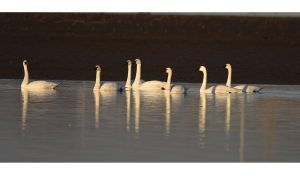
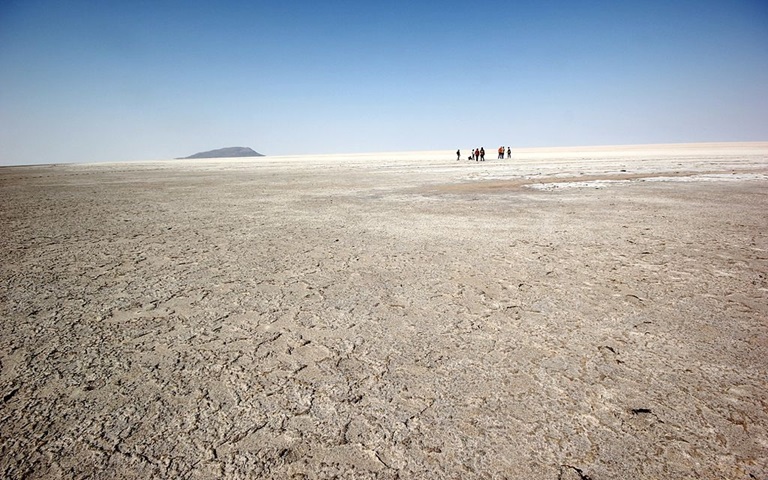
    Stuti, I am among those who never knew India had a desert. I have lived in a semi-arid region of West Texas with cactus, mesquite, and tarantulas, but still find it difficult to imagine such a desert bereft of any life like the Gobi, the Sahara, and now the Kutch. This is a great poem that brings the reality of the desert into vivid view. The picture above it adds to the solemnity of your well-crafted words. Excellent work and cause for a pause in our contemplation.

    Reply
    • Stuti Sinha says:
      3 years ago

      Thank you so much for taking the time to read. India has such diverse landscape. It feels a privilege to be able to write about some of that which has inspired me.

      Reply
  2. Paul A. Freeman says:
    3 years ago

    Thus hexed, the fabled glory and allure
    of Kutch now languishes without a cure.

    A great final couplet, highlighting how climate change is affecting one of the more marginal environments on Planet Earth.

    Thanks for the read, Stuti.

    Reply
    • Stuti Sinha says:
      3 years ago

      Thank you for taking the time to read Paul. Your words ‘marginal environments’ struck a chord with me.

      Reply
  3. Margaret Coats says:
    3 years ago

    I take the “fabled glory and allure” of Kutch to be the Indus Valley civilization that declined about 3000 years ago because of climate change at that time. But I did read about recent hopes for rain, and that seems to be the picture in your second quatrain, Stuti. The hopes must have been dashed as you describe in the third quatrain. What an experience for a “mortal dweller” to hope for the “cure” of the desert in his or her lifetime–even if the result is only temporary foliage. The sonnet is a fabulous triptych of (1) droughts that tend to maintain a desert landscape, (2) dramatic signs that rain may restore greenery, and (3) the ease with which promising clouds disappear. How often this must have occurred during the millennia of the White Desert’s existence! The poem gives us a feeling for it.

    Reply
    • Stuti Sinha says:
      3 years ago

      Thank you Margaret for taking the time to read. You aptly said, that this situation of droughts followed by the hope of rain, is mocked by disappearing clouds. Kutch is one place amongst many that is affected by this kind of drastic climatic experience, and sadly, these occurrences hurt civilizations then and continue to pose a threat even now.

      Reply
  4. Allegra Silberstein says:
    3 years ago

    What a lovely surprise to read your beautiful sonnet this morning. My neighbors are from India. Thanks Stuti.

    Reply
    • Stuti Sinha says:
      3 years ago

      Thank you Allegra for taking the time to read.

      Reply
  5. Cheryl Corey says:
    3 years ago

    Stuti, I’m currently reading a tome about British social life during the Raj, which has educated me about the diversity of India’s climate (malaria was always a huge concern, and the monsoon rains a challenge). It seems that India’s climate is somewhat like America’s with tropical, temperate, desert, and cold-weather zones.

    Reply
    • Stuti Sinha says:
      3 years ago

      Hi Cheryl,
      Thank you for taking the time to read. That is absolutely correct and therefore there is also the diversity in landscape, people, cultures, foods, languages, traditions etc. depending on the specific conditions of the region. If these are books you’re reading, I’d love to have some recommendations please 🙂

      Reply
  6. Rohini says:
    3 years ago

    Absolutely superb! I love your use of imagery: charcoal-tainted skies, chimeras in a mortal dweller’s eyes… so many gems or should I say scintillating ‘hexes’ in the ‘curse.

    Reply
    • Stuti Sinha says:
      3 years ago

      Thank you Rohini for taking the time to read and for your generous appreciation

      Reply
  7. Gary Borck says:
    3 years ago

    Very well written, Stuti! It is joy to read such a well-crafted poem. Beautifully descriptive. Every line a delight and a wonderful final couplet.

    Reply
    • Stuti Sinha says:
      3 years ago

      Thank you Gary for taking the time to read and for your wonderful words of appreciation

      Reply
  8. Daniel Kemper says:
    3 years ago

    I too never thought about deserts in India, thinking more of its southern, famously monsoon-drenched regions. The Kutch, reminded me of what is arguable the biblical Cush — which has similar deserts — the afar. The human hopes rising and falling with the wind of nature, which is a phenomenon common to all, is well illustrated in its most extreme forms here. Very pleasant to see sonnets of serious craftsmanship.

    Reply
    • Stuti Sinha says:
      3 years ago

      Thank you Daniel for taking the time to read.
      I am delighted that this has been a doorway for people to know a little bit about deserts in India. I happen to have lived for the longest time in one of those ‘monsoon-drenched’ regions in India, you’ve mentioned. Ironically I now live in the desert in Middle East 🙂

      Reply
  9. Shamik Banerjee says:
    3 years ago

    Dear Stuti, your use of such refined language not only gives us a glimpse into the formation of Kutch but also explains why it (or just every desert) is ‘cursed’. I also like the way you’ve portrayed certain natural events with words like forking light, charcoal-tainted skies, etc. The part, ‘flickers of abated hope ignite chimeras in a mortal dweller’s eyes’ strikes hard because the same is true for farmers of the equatorial regions, whose hopes die every day due to lack of rainfall. This poem is a complete package of excellent articulation and precision.

    Reply
    • Stuti Sinha says:
      3 years ago

      Thanks Shamik. I truly appreciate the time you’ve taken to read the piece and write such a detailed comment.

      Reply

Leave a Reply Cancel reply

Your email address will not be published. Required fields are marked *


  1. Paul Millan on ‘Realistic Reflections’ and Other Poetry by Anna J. ArredondoSeptember 2, 2026

    Anna, I enjoyed reading both of your poems. The first one might be my favorite from both, but also like…

  2. jd on ‘A World Without the Wednesday Child’: A Poem by Kimberly ForeSeptember 2, 2026

    Lovely poem, Kimberly, and so wise. I also thought the "tongueless bell" is excellent and so is the final line.

  3. Russel Winick on ‘Advantages of Restaurants’ and Other Poems by Russel WinickSeptember 2, 2026

    Thanks Paul. I’m glad you liked those poems. And FYI, the setting for “The Change One Word Can Bring” was…

  4. Theresa Werba on ‘China Made’: A Poem by Theresa WerbaSeptember 2, 2026

    Thank you Paul very much! I suppose all politics is "local" or "personal" in some way, if we trace its…

  5. Paul Freeman on ‘This Too Shall Pass’ and Other Poetry by Justin DasherSeptember 2, 2026

    I was particularly enamoured with 'Otherness', modernised and accessible. If only the religious elements at daily assembly and in class…

Subscribe to Daily Poems

Enter your email address to subscribe to this blog and receive notifications of new posts by email.

Join 1,633 other subscribers

Recent Poems

  • ‘A World Without the Wednesday Child’: A Poem by Kimberly Fore
  • The 2026 Society of Classical Poets International Poetry Competition
  • The 2026 SCP International High School Poetry Competition
  • ‘Realistic Reflections’ and Other Poetry by Anna J. Arredondo
  • ‘China Made’: A Poem by Theresa Werba
  • ‘The Savage Moon’ and Other Poetry by Brian Yapko
  • Poetry Book Review: Love Found, Yearned For, and Lost by James A. Tweedie
  • ‘When Opportunity Knocks’: A Poem by Roy E. Peterson
  • ‘Legend of the Griffin’: A Poem by Iryna Hall
  • ‘Government Issue’ and Other Poems by Joseph S. Salemi
  • ‘Chaucer Announces His Desire to Retire’: A Poem by Paul A. Freeman
  • ‘Advantages of Restaurants’ and Other Poems by Russel Winick
  • ‘Bone China’: A Poem by Mary Gardner
  • ‘On the Death of One Too Young to Die’: A Poem by Jeffrey Essmann
  • ‘This Too Shall Pass’ and Other Poetry by Justin Dasher
  • ‘Humdrum and Harum-Scarum’: A Lecture on Free Verse, by Robert Bridges (1922)
  • ‘Unrest On the Floodplain’: A Poem by Bhikkhu Nyanasobhano
  • ‘Latitude and Loss’: A Poem by Martin Briggs
  • ‘Act III’ and Other Poetry by C.B. Anderson
  • ‘God’s Funeral’: A Poem by James Sale
  • ‘Star Festival’: A Poem by Margaret Coats
  • ‘Song of the Frog Princess’: A Poem by Scharlie Meeuws
  • ‘The Odyssey: Nolan and Solot Compared’: An Essay by Michael Curtis
  • ‘Solitude’ and Other Poems by Mary Jane Myers
  • ‘The River Not Taken’ and Other Poetry by Brian Yapko
  • ‘Totentanz’: A Poem by James A. Tweedie
  • ‘In God Is Our Trust’: A Poem by Roy E. Peterson
  • ‘Confession’: A Poem by Jeffrey Essmann
  • ‘Religious Poetry, and Religionist Poetry’: An Essay by Joseph S. Salemi
  • The Zingers of Adam Sedia: A Review by Theresa Werba

Categories

  • Acrostic
  • Alexandroid
  • Alliterative
  • Art
  • Best Poems
  • Blank Verse
  • Chant Royal
  • Classical Poets Live
  • Clerihew
  • Covid-19
  • Deconstructing Communism
  • Educational
  • Epic
  • Epigrams and Proverbs
  • Essays
    • Interviews with Poets
    • Poetry Reviews
  • Featured
  • From the Society
  • Great Poets
    • Dante Alighieri
    • Edgar Allan Poe
    • Emily Dickinson
    • Geoffrey Chaucer
    • Henry Wadsworth Longfellow
    • Homer
    • John Keats
    • John Milton
    • Robert Frost
    • William Blake
    • William Shakespeare
    • William Wordsworth
  • Human Rights in China
  • Limerick
  • Love Poems
  • Music
  • Pantoum
  • Performing Arts
  • Poetry
    • Beauty
    • Children's Poems
    • Culture
    • Ekphrastic
    • Found Poems
    • High School Poets
    • Humor
    • Riddles
  • Poetry Challenge
  • Poetry Contests
  • Poetry Forms
    • Curtal Sonnet
    • Haiku
  • Poetry Readings
  • Rhupunt
  • Rondeau
  • Rondeau Redoublé
  • Rondel
  • Rubaiyat
  • Sapphic Verse
  • Satire
  • Science
  • Sestina
  • Shape Poems
  • Short Stories
  • Song Lyrics
  • Sonnet
  • Symposium
  • Terrorism
  • Terza Rima
  • The Environment
  • Translation
  • Triolet
  • Video
  • Villanelle

Quick Links

  • About Us
  • Submit Poetry
  • Become a Member
  • Members List
  • Support the Society
  • Advertisement Placement
  • Comments Policy
  • Terms of Use

Welcome Back!

Login to your account below

Forgotten Password?

Retrieve your password

Please enter your username or email address to reset your password.

Log In
No Result
View All Result
  • Poems
    • Beauty
    • Culture
    • Satire
    • Humor
    • Children’s
    • Art
    • Ekphrastic
    • Epic
    • Epigrams and Proverbs
    • Human Rights in China
    • Music
    • Performing Arts
    • Riddles
    • Science
    • Song Lyrics
    • The Environment
    • The Raven
    • Found Poems
    • High School Poets
    • Terrorism
    • Covid-19
  • Poetry Forms
    • Sonnet
    • Haiku
    • Limerick
    • Villanelle
    • Rondeau
    • Pantoum
    • Sestina
    • Triolet
    • Acrostic
    • Alexandroid
    • Alliterative
    • Blank Verse
    • Chant Royal
    • Clerihew
    • Rhupunt
    • Rondeau Redoublé
    • Rondel
    • Rubaiyat
    • Sapphic Verse
    • Shape Poems
    • Terza Rima
  • Great Poets
    • Geoffrey Chaucer
    • Emily Dickinson
    • Homer
    • Henry Wadsworth Longfellow
    • Dante Alighieri
    • John Keats
    • John Milton
    • Edgar Allan Poe
    • William Shakespeare
    • William Wordsworth
    • William Blake
    • Robert Frost
  • Love Poems
  • Contests
  • SCP Academy
    • Educational
    • Teaching Classical Poetry—A Guide for Educators
    • Poetry Forms
    • The SCP Journal
    • Books

© 2025 SCP. WebDesign by CODEC Prime.