• Submit Poetry
  • Support SCP
  • About Us
  • Members
  • Join
Wednesday, October 21, 2026
Society of Classical Poets
  • Poems
    • Beauty
    • Culture
    • Satire
    • Humor
    • Children’s
    • Art
    • Ekphrastic
    • Epic
    • Epigrams and Proverbs
    • Human Rights in China
    • Music
    • Performing Arts
    • Riddles
    • Science
    • Song Lyrics
    • The Environment
    • The Raven
    • Found Poems
    • High School Poets
    • Terrorism
    • Covid-19
  • Poetry Forms
    • Sonnet
    • Haiku
    • Limerick
    • Villanelle
    • Rondeau
    • Pantoum
    • Sestina
    • Triolet
    • Acrostic
    • Alexandroid
    • Alliterative
    • Blank Verse
    • Chant Royal
    • Clerihew
    • Rhupunt
    • Rondeau Redoublé
    • Rondel
    • Rubaiyat
    • Sapphic Verse
    • Shape Poems
    • Terza Rima
  • Great Poets
    • Geoffrey Chaucer
    • Emily Dickinson
    • Homer
    • Henry Wadsworth Longfellow
    • Dante Alighieri
    • John Keats
    • John Milton
    • Edgar Allan Poe
    • William Shakespeare
    • William Wordsworth
    • William Blake
    • Robert Frost
  • Love Poems
  • Contests
  • SCP Academy
    • Educational
    • Teaching Classical Poetry—A Guide for Educators
    • Poetry Forms
    • The SCP Journal
    • Books
No Result
View All Result
Society of Classical Poets
No Result
View All Result
Home Poetry

‘The Limits of Hospitality’ and Other Poetry by C.B. Anderson

September 25, 2025
in Poetry, Satire
A A
17
poems 'The Limits of Hospitality' and Other Poetry by C.B. Anderson

.

The Limits of Hospitality

_While I was working in my garden
_A traveler said, “I beg your pardon,
But could you tell me where to find a church?”
_Said I, “Just look around you, man;
_Experience the Masterplan.
No earnest pilgrim ever needs to search.”

_He said that he was looking for
_A whitewashed structure with a door
On which is posted: PLEASE DO ENTER IN.
_I told him to roll up his sleeves,
_To grab a spade or rake some leaves,
For that’s where true salvation will begin.

_It seemed I’d taken him aback,
_And so I showed him to my shack,
Where we sat down to corn and lima beans.
_He spent the night in my spare bed,
_And when the morning came he said,
“For breakfast I would like to try some greens.”

_And so it went for several days,
_Through morning mist and evening haze,
Which made me think he ought to pay some rent.
_At suppertime I told him that
_He needs to pull his weight, or scat.
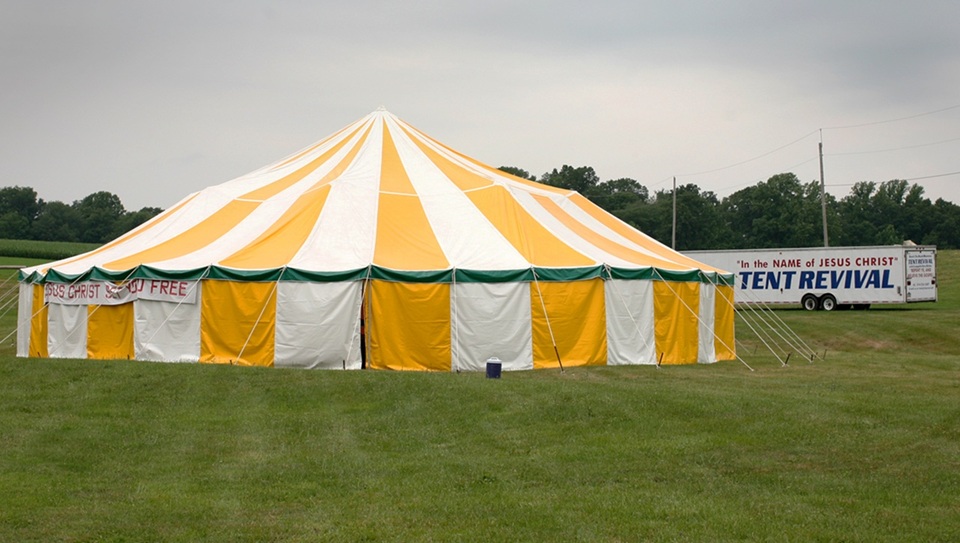
He smiled and said, “No need, I have a tent.”

.

.

The Last Yugoslav

_Nikola was belligerent
And always wore a dagger and a frown,
_With not enough refrigerant
In all the world to cool his temper down.

_He rendered judgment on his captives:
If they were healthy, he cut off their heads.
_He had no time for maladaptives—
If they were sick, he just cut off their meds.

_He wanted women soft and fluffy,
Like feather pillows stuffed to bust a seam,
_And yet they said this Balkan toughie
But rarely slept and didn’t ever dream.

_A couple of his distant cousins
Complained about his brutal iron fist.
_He reasoned that, since he had dozens,
This pair of fools would likely not be missed.

_When people learned he’d fallen ill
And gone to meet his Maker, no one cried.
_They hated him and always will,
And some still celebrate the day he died.

.

.

C.B. Anderson was the longtime gardener for the PBS television series, The Victory Garden.  Hundreds of his poems have appeared in scores of print and electronic journals out of North America, Great Britain, Ireland, Austria, Australia and India.  His collection, Mortal Soup and the Blue Yonder was published in 2013 by White Violet Press.

ShareTweetPin
The Society of Classical Poets does not endorse any views expressed in individual poems or commentary.
Read Our Comments Policy Here

RandomPoems

A Poem on the Oxford English Dictionary, by Maurice J. O’Sullivan
Beauty

A Poem on Dictionaries: ‘Panlexia’ by C.B. Anderson

March 24, 2021

. Don’t you love the Oxford Dictionary?  When I first read it, I thought it was a really really long...

Poetry

Tang Poetry: The Gan Yu

September 27, 2012

By Chen Z'iang (Translated by Lan Hua) The orchids birthed Through spring And summer both Such luxuriant growth How can...

Next Post
A Video Reading of the Poem “Wisdom and Sway” by Mark F. Stone

A Video Reading of the Poem "Wisdom and Sway" by Mark F. Stone

‘St. Philip Neri’: A Poem by Reid McGrath

'St. Philip Neri': A Poem by Reid McGrath

‘A Sonnet upon a Most Ungrateful Gnat’: A Poem by Scharlie Meeuws

'A Sonnet upon a Most Ungrateful Gnat': A Poem by Scharlie Meeuws

Comments 17

  1. Joseph S. Salemi says:
    1 year ago

    Kip, these are hysterically funny. No boring sentimentality, no tedious edification, no moralistic sermonizing — just impish fun and sharp verbal swordplay!

    Two great fictive ideas: a freeloading churchgoer who has a thing for fresh vegetables, and the last of a defunct Yugoslavia’s citizenry (they’re all Croats or Serbs or Bosnians or Monenegrins now, as they were in 1914).

    Reply
    • C.B. Anderson says:
      1 year ago

      Yeah, Joe, I been on a roll lately. I think there are still at least a few persons who identify as Yugoslav: naturalized Americans who emigrated to the U.S. before the dissolution of the Soviet Union. A few years ago I worked beside an extended family of Bosnians, good masons and good general workers all. The second generation was as American as I am, and none of us had any trouble getting along with each other. Balkanization might well be a very good thing. Who stands against the preservation of cultural identities? Only those who have never had anything to lose.

      And I’m happy to have coaxed a chuckle.

      Reply
    • C.B. Anderson says:
      1 year ago

      And why, Joe, would anyone want to do the things you said I didn’t do?

      Reply
      • Joseph S. Salemi says:
        1 year ago

        Si monumentum requiris, circumspice.

        This was the answer given to the question of why Sir Christoper Wren didn’t have a monument. To relate it to your question, I’ll just say “Look around.”

        Reply
  2. Cynthia L Erlandson says:
    1 year ago

    I, too, really enjoyed the humor in these!

    Reply
    • C.B. Anderson says:
      1 year ago

      Being funny, Cynthia, is a lot of fun. But maybe I was trying to be dead serious.

      Reply
  3. James A. Tweedie says:
    1 year ago

    C.B. As they say, “Stick a fork in it!” These tales are medium rare, just the way I like ‘em! And, of course, well seasoned to perfection!

    Reply
    • C.B. Anderson says:
      1 year ago

      Well, James, a little bit of salt is always a good idea.

      Reply
  4. Paulette Calasibetta says:
    1 year ago

    Such Fun! A little whimsy is great for the soul.
    A perfect way to start my day…you put a smile on my face.

    Reply
    • C.B. Anderson says:
      1 year ago

      I agree, Paulette. A smile is as good for you as a glass of fresh-squeezed orange juice.

      Reply
  5. Roy Eugene Peterson says:
    1 year ago

    C.B., the first thing that amazed me was how you ever conceived these poems in the first place, particularly the second one. “The Limits of Hospitality,” which envisions a freeloader playing on the sentiments of a host even with the ending of the freeloader having a tent, is highly creative while making us wonder if that statement earned the freeloader a reprieve. “The Last Yugoslav” was a fascinating take on history with the demise of that nation and return to the pastiche of historical “tribal” identifications. These are not only humorous, but contain elements that make us think.

    Reply
    • C.B. Anderson says:
      1 year ago

      Sometimes, Roy, I just let my imagination get the best of me. Somehow, I don’t think a reprieve was granted.

      Reply
  6. Adam Sedia says:
    1 year ago

    What I like most about both of these is that they stimulate thought. “The Limits of Hospitality,” while on its surface is a straightforward narrative has a few profound subtexts that I’m still sorting out. The final line is wonderfully enigmatic and I think could inspire many different readings of the answer.

    “The Last Yugoslav” spoke to me personally. I live in an area with a large Serbian and Croatian population, many of them recent immigrants. I had a client who lost everything in the Balkan wars of the 90’s and came here as a war refugee, and many more who have family who experienced the wars. I saw Nikola as an otherwise unpleasant man turned by circumstances into a real monster. There is some irony in the title, too. “Yugoslav” is an entirely made-up term. It never was an ethnicity, just a passport designation that disappeared once the strongman Tito died. The type of violence depicted here is rooted in ethnicity, and Nikola is someone to whom “Yugoslav” would have meant nothing.

    Reply
    • C.B. Anderson says:
      1 year ago

      You weigh the details, Adam, pretty much as I weigh them. “Yugoslav” is about as useful a term as “Palestinian”. No such thing exists or has ever existed. Let tribes be tribes. In the US we call this federalism.

      Reply
    • Joseph S. Salemi says:
      1 year ago

      After World War I, nobody knew what to do with the savagely antagonistic groups who inhabited the Balkans and who had been at each other’s throats for centuries. So the big shots at Versailles just lumped them all together into a fake nation called “Yugoslavia,” which simply means “the South Slav place.” It worked as well as a dilapidated jalopy held together with baling wire.

      Reply
  7. Susan Jarvis Bryant says:
    1 year ago

    C.B., You have a way of getting to the heart of human nature with a raw honesty that makes me grin! Your wisdom shines through in “The Limits of Hospitality” which is a harsh reminder of how many times I’ve been charmed by the guest with a tent tucked away for when it’s time to trample my boundaries and pitch a portable abode where it’s not wanted. Yet the poem says much more… spirituality in action versus ritual… a poetic parable on active care as opposed to passive attendance at a church to signal “care”, perhaps?

    And “The Last Yugoslav” makes me want to pick up my pen and write another series of poetic character portrayals. I say with all honesty, the first stanza of this poem leapt from the page and pulled me close and held me captivate until the very end. The potency of your words weave a hypnotic spell. C.B., thank you!

    Reply
  8. Scott Andrew Kass says:
    1 year ago

    “The Limits of Hospitality” reminds me a lot of “Resolution and Independence” in the short, simple answer given to one who is lost and searching for something of great value. I can imagine the speaker as the old leech-gatherer on the lonely moor.

    I appreciate the casual tone in “The Last Yugoslav” that plainly recounts this tyrannical leader. Reminds me of somebody of today…

    Thank you for sharing these! You have a seasoned poetic voice that is clearly very comfortable weaving through the English language.

    Reply

Leave a Reply Cancel reply

Your email address will not be published. Required fields are marked *


  1. Russel Winick on ‘Life Is Conflictual’: A Poem by Roy E. PetersonOctober 21, 2026

    Roy, again you have aptly captured one of life’s great truths. Thanks for the nice morning read.

  2. Roy Eugene Peterson on ‘Life Is Conflictual’: A Poem by Roy E. PetersonOctober 21, 2026

    I love your reference to the Louisa May Alcott quote!

  3. Roy Eugene Peterson on ‘Life Is Conflictual’: A Poem by Roy E. PetersonOctober 21, 2026

    I appreciate your comment, Sephen.

  4. Roy Eugene Peterson on ‘Life Is Conflictual’: A Poem by Roy E. PetersonOctober 21, 2026

    So true, Briana. Thank you for your comments.

  5. Mary Jane Myers on ‘The Walking Wounded’: A Poem by Jeffrey EssmannOctober 21, 2026

    Jeffrey This “philosophical” poem is artfully constructed. You have written three 6-line stanzas exact rhymed a-b-c-b-a-c; iambic pentameter (5 )…

Subscribe to Daily Poems

Enter your email address to subscribe to this blog and receive notifications of new posts by email.

Join 1,661 other subscribers
No Result
View All Result

Resources

       1. A Guide to Writing Poetry

      2. The Best Poems of 2020      

      3. Poetry and Writing Contests

      4. Journals Accepting Formal Verse

Recent Poems

  • ‘Life Is Conflictual’: A Poem by Roy E. Peterson
  • ‘The Siege on Castle Hill’: A Poem by Apollo Clark Co
  • ‘Every New Pantheon’: A Poem by C.B. Anderson
  • ‘Biblical? Emblematic?’: A Poem by Stephen DiLauro
  • ‘The Valley’: A Poem by Briana Reavis
  • The Blobfish—‘Mr Blobby’: A Poem by Paul A. Freeman
  • ‘Nature’s Family’: A Poem by Margaret Coats
  • ‘The River & The Sea’: A Poem by Rohini Sunderam
  • Poems by Derzhavin, Akhmatova, and Tyutchev, Translated by Kevin Rainbow
  • ‘After-Action Report’: A Poem by Joseph S. Salemi
  • ‘The Walking Wounded’: A Poem by Jeffrey Essmann
  • ‘Their Words, My Fault’ and Other Poems by Russel Winick
  • ‘Lazarus I’: A Poem by Jason Hunt
  • Poetry Challenge: Dictionary Delights
  • ‘In Defense of Rhyme’: An Essay by Euphrates Moss
  • ‘Gun Control’: A Poem by Kevin Ahern
  • ‘Power of a Pen’: A Poem by Janice Stanley
  • The Best Haiku of 2026
  • ‘One Night in Bangkok’ and Other Poetry by Brian Yapko
  • ‘Invocation’: A Poem by D.R. Rainbolt
  • ‘Enjoy the Peace, Prepare for War’: A Poem by Roy E. Peterson
  • Faust Part Two, Act One: ‘A Pleasant Landscape’ by Goethe, Translated by Josh Olson
  • A Song Inspired by Robert Frost’s ‘The Road Not Taken’, by Gunny Markefka
  • ‘Reappraisals of Mortality’: A Poem by C.B. Anderson
  • ‘What Is the Measure of My Days?’: A Poem by Peter Venable
  • ‘Polar Coordinates’: A Poem by Adam Sedia
  • ‘It Never Lies!’: A Poem by Paul A. Freeman
  • ‘The Mahjong Flowers’: A Set of Sonnets by Margaret Coats
  • ‘The Martyrdom of Saint Cassian’: A Poem by Joseph S. Salemi
  • ‘Mind Versus Beauty’: A Poem by Johann Wolfgang von Goethe, Translated by Eric v.d. Luft

Categories

  • Acrostic
  • Alexandroid
  • Alliterative
  • Art
  • Best Poems
  • Blank Verse
  • Chant Royal
  • Classical Poets Live
  • Clerihew
  • Covid-19
  • Deconstructing Communism
  • Educational
  • Epic
  • Epigrams and Proverbs
  • Essays
    • Interviews with Poets
    • Poetry Reviews
  • Featured
  • From the Society
  • Great Poets
    • Dante Alighieri
    • Edgar Allan Poe
    • Emily Dickinson
    • Geoffrey Chaucer
    • Henry Wadsworth Longfellow
    • Homer
    • John Keats
    • John Milton
    • Robert Frost
    • William Blake
    • William Shakespeare
    • William Wordsworth
  • Human Rights in China
  • Limerick
  • Love Poems
  • Music
  • Pantoum
  • Performing Arts
  • Poetry
    • Beauty
    • Children's Poems
    • Culture
    • Ekphrastic
    • Found Poems
    • High School Poets
    • Humor
    • Riddles
  • Poetry Challenge
  • Poetry Contests
  • Poetry Forms
    • Curtal Sonnet
    • Haiku
  • Poetry Readings
  • Rhupunt
  • Rondeau
  • Rondeau Redoublé
  • Rondel
  • Rubaiyat
  • Sapphic Verse
  • Satire
  • Science
  • Sestina
  • Shape Poems
  • Short Stories
  • Song Lyrics
  • Sonnet
  • Symposium
  • Terrorism
  • Terza Rima
  • The Environment
  • Translation
  • Triolet
  • Video
  • Villanelle

Quick Links

  • About Us
  • Submit Poetry
  • Become a Member
  • Members List
  • Support the Society
  • Advertisement Placement
  • Comments Policy
  • Terms of Use

Welcome Back!

Login to your account below

Forgotten Password?

Retrieve your password

Please enter your username or email address to reset your password.

Log In
No Result
View All Result
  • Poems
    • Beauty
    • Culture
    • Satire
    • Humor
    • Children’s
    • Art
    • Ekphrastic
    • Epic
    • Epigrams and Proverbs
    • Human Rights in China
    • Music
    • Performing Arts
    • Riddles
    • Science
    • Song Lyrics
    • The Environment
    • The Raven
    • Found Poems
    • High School Poets
    • Terrorism
    • Covid-19
  • Poetry Forms
    • Sonnet
    • Haiku
    • Limerick
    • Villanelle
    • Rondeau
    • Pantoum
    • Sestina
    • Triolet
    • Acrostic
    • Alexandroid
    • Alliterative
    • Blank Verse
    • Chant Royal
    • Clerihew
    • Rhupunt
    • Rondeau Redoublé
    • Rondel
    • Rubaiyat
    • Sapphic Verse
    • Shape Poems
    • Terza Rima
  • Great Poets
    • Geoffrey Chaucer
    • Emily Dickinson
    • Homer
    • Henry Wadsworth Longfellow
    • Dante Alighieri
    • John Keats
    • John Milton
    • Edgar Allan Poe
    • William Shakespeare
    • William Wordsworth
    • William Blake
    • Robert Frost
  • Love Poems
  • Contests
  • SCP Academy
    • Educational
    • Teaching Classical Poetry—A Guide for Educators
    • Poetry Forms
    • The SCP Journal
    • Books

© 2025 SCP. WebDesign by CODEC Prime.