• Submit Poetry
  • Support SCP
  • About Us
  • Members
  • Join
Tuesday, August 25, 2026
Society of Classical Poets
  • Poems
    • Beauty
    • Culture
    • Satire
    • Humor
    • Children’s
    • Art
    • Ekphrastic
    • Epic
    • Epigrams and Proverbs
    • Human Rights in China
    • Music
    • Performing Arts
    • Riddles
    • Science
    • Song Lyrics
    • The Environment
    • The Raven
    • Found Poems
    • High School Poets
    • Terrorism
    • Covid-19
  • Poetry Forms
    • Sonnet
    • Haiku
    • Limerick
    • Villanelle
    • Rondeau
    • Pantoum
    • Sestina
    • Triolet
    • Acrostic
    • Alexandroid
    • Alliterative
    • Blank Verse
    • Chant Royal
    • Clerihew
    • Rhupunt
    • Rondeau Redoublé
    • Rondel
    • Rubaiyat
    • Sapphic Verse
    • Shape Poems
    • Terza Rima
  • Great Poets
    • Geoffrey Chaucer
    • Emily Dickinson
    • Homer
    • Henry Wadsworth Longfellow
    • Dante Alighieri
    • John Keats
    • John Milton
    • Edgar Allan Poe
    • William Shakespeare
    • William Wordsworth
    • William Blake
    • Robert Frost
  • Love Poems
  • Contests
  • SCP Academy
    • Educational
    • Teaching Classical Poetry—A Guide for Educators
    • Poetry Forms
    • The SCP Journal
    • Books
No Result
View All Result
Society of Classical Poets
  • Poems
    • Beauty
    • Culture
    • Satire
    • Humor
    • Children’s
    • Art
    • Ekphrastic
    • Epic
    • Epigrams and Proverbs
    • Human Rights in China
    • Music
    • Performing Arts
    • Riddles
    • Science
    • Song Lyrics
    • The Environment
    • The Raven
    • Found Poems
    • High School Poets
    • Terrorism
    • Covid-19
  • Poetry Forms
    • Sonnet
    • Haiku
    • Limerick
    • Villanelle
    • Rondeau
    • Pantoum
    • Sestina
    • Triolet
    • Acrostic
    • Alexandroid
    • Alliterative
    • Blank Verse
    • Chant Royal
    • Clerihew
    • Rhupunt
    • Rondeau Redoublé
    • Rondel
    • Rubaiyat
    • Sapphic Verse
    • Shape Poems
    • Terza Rima
  • Great Poets
    • Geoffrey Chaucer
    • Emily Dickinson
    • Homer
    • Henry Wadsworth Longfellow
    • Dante Alighieri
    • John Keats
    • John Milton
    • Edgar Allan Poe
    • William Shakespeare
    • William Wordsworth
    • William Blake
    • Robert Frost
  • Love Poems
  • Contests
  • SCP Academy
    • Educational
    • Teaching Classical Poetry—A Guide for Educators
    • Poetry Forms
    • The SCP Journal
    • Books
No Result
View All Result
Society of Classical Poets
No Result
View All Result
Home Poetry

‘Vernal Clinic’ and Other Poetry by C.B. Anderson

July 9, 2026
in Poetry, Culture, Sonnet
A A
16
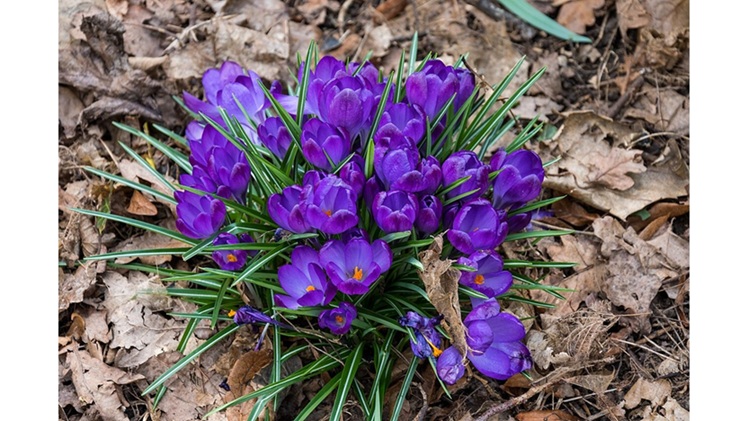
photo of purple narcissus by Martin Pettitt

photo of purple narcissus by Martin Pettitt


Vernal Clinic

To regular observers, spring had never seemed
So jarringly abnormal as it did this year.
Its bright chromatic strains came winging in, some claimed,
On airships made from canvas scrap and two-by-four.

The whole three months came off as crudely improvised,
A makeshift presentation staged without a plan
That we could fathom; strange cacophonies our eyes
Beheld were never well explained by weathermen.

Bold flowers blooming out of sequence was a sign
That something was amiss. The colors were in total
Disorder, poorly matched and bleeding in the rain.
For birds, it only mattered that it wasn’t fatal.

Derangement isn’t commonplace in Nature’s ruled
Demesne, but neither are exceptions hard to find:
There’s almost nothing as disturbing or as cruel
As frosts which dare to smudge what May adeptly penned.

The classic text, incondite and corrupt, has scads
Of footnotes, thus anomalies appear legit.
If spring’s arrival disappoints, that’s just too bad—
Make do, ‘cause it’s the only spring you’re gonna get.


The Moment

About the only thing that’s certain in this world,
Besides the many taxes one must pay till death
Arrives, is how the time we think we’ve safely squirreled
Away for future need evaporates like breath

Condensed upon a windowpane. The proper way
To save the days allotted us is making use
Of them the moment they arrive, without delay.
Our rope’s too short to stand procrastination’s noose,

And any hopes left hanging there were better spent
On pulling for a worthy end: that when the sun
Has set, we’ve done a part of all those things we meant
To do some day—and while we did it, had some fun.

To dawdle while the iron lies ready on the fire
Is vain, my friend. I trust I’m preaching to the choir.


C.B. Anderson was the longtime gardener for the PBS television series, The Victory Garden.  Hundreds of his poems have appeared in scores of print and electronic journals out of North America, Great Britain, Ireland, Austria, Australia and India.  His collection, Mortal Soup and the Blue Yonder was published in 2013 by White Violet Press.
Tags: C.B. AndersonPoetry About LifePoetry About Nature
ShareTweetPin
The Society of Classical Poets does not endorse any views expressed in individual poems or commentary.
Read Our Comments Policy Here

RandomPoems

‘Coming Out,’ a Holocaust Villanelle by Susanna Rich
Culture

‘Coming Out,’ a Holocaust Villanelle by Susanna Rich

December 12, 2015

Free me from wars? Make my debut? Oh, Mr. Handsome G.I. Joe— your face and a blanket won’t do. Sift...

Post Your Election Day Poems Here
Poetry

An Election Day Poem: ‘Voting Advice’ by Warren Bonham

November 5, 2024

. Voting Advice When we vote in each election,few with brains will ever run.So, when we make our selection,we elect...

Next Post
‘An American Fabius’: A Poem by John Hernandez

'An American Fabius': A Poem by John Hernandez

‘American Dreams’: A Poem by Adam Sedia

'American Dreams': A Poem by Adam Sedia

‘The Melody That Lingers On’ and Other Poetry by John McPherson

'The Melody That Lingers On' and Other Poetry by John McPherson

Comments 16

  1. Roy Eugene Peterson says:
    2 months ago

    C.B. the endings of both poems is magnificently conceived and written. I feel them both!

    Reply
    • C.B. Anderson says:
      2 months ago

      I’m glad you liked the endings, Roy. My feeling is that every decent poem should have satisfying closure.

      Reply
  2. Cheryl Corey says:
    2 months ago

    I’m very impressed by your near rhymes in “Vernal Clinic”; and as for “The Moment”, and speaking as a long-time procrastinator, the subject is close to home. So true … so very true.

    Reply
    • C.B. Anderson says:
      2 months ago

      I’m glad you approve of the line-ends, Cheryl. I think I did a pretty good job with the slant rhymes — nothing too far-fetched. As for procrastination, believe it or not I could probably show you a few new tricks on how to put things off. But really, can there even be such a thing as a short-time procrastinator?

      Reply
  3. Joseph S. Salemi says:
    2 months ago

    I agree with Cheryl — the near rhymes are expertly managed. They allow a wider range of word choice, and they do not distract from the essential “formalism” of the poem. The use of hexameters made the poem more laid-back and conversational.

    There is a striking “conceit” in the first two lines of the last quatrain in “Vernal Clinic”:

    The classic text, incondite and corrupt, has scads
    Of footnotes, thus anomalies appear legit.

    This shows how poetry can telescope into a few words what prose would have to describe in a paragraph. The use of the rare work “incondite” (unfinished, badly constructed) really helps here. Prose would have to say: “The written and historical record of past springs, which is only partially dependable, shows a great many variations and exceptions to what might be thought of as typical spring weather, and therefore the unusual spring we have just had must be seen as something to be expected occasionally.” That’s 48 words, as opposed to 14.

    Reply
    • C.B. Anderson says:
      2 months ago

      I have been given to understand, Joseph, that compression ought to be a standard feature for almost any poem. The last thing I need is to wade through unnecessary verbiage. That was a nice periphrastic paraphrase by you though, just what I would expect from a master essayist.

      Reply
  4. C.B. Anderson says:
    2 months ago

    In regard to the photo at the top, I have never seen nor even heard of a purple narcissus. The plant there is definitely a crocus, and its color is not really purple, but indigo or violet or some mixture thereof.

    Reply
  5. Brian Yapko says:
    2 months ago

    Your technique, Kip, is extremely impressive. The end near-rhymes of Vernal cCinic is a great use of the poem’s architecture to mirror the thwarted expectations described in the text. Of interest to me: I would wager that for a poet who uses rhyme as naturally and expertly as you it was harder to produce the near-rhymes than it would have been for true rhymes! Is my theory correct?

    And speaking of technique, the enjambment in the Moment sonnet is superb. There is no one who can come close to using unexpected rhymes (squirreled and world) or utilizingbreathless enjambment like you. That is a very sincere compliment.

    Reply
    • C.B. Anderson says:
      2 months ago

      Having written that poem roughly a decade ago, I can’t remember how hard it was to go slant. But yes, finding a good near-rhyme is often, if not usually, more difficult than coming up with a perfect rhyme. I only wish I could see what I do as clearly as you seem to. Sometimes stuff just happens. As far as I know, I have no technique. A voice, maybe. And I’m no longer fond of mirrors. I take to heart your penultimate sentence, and now I must consider the tropes you mentioned a bounden, if not sacred, duty. Things never get easier.

      Reply
      • Anna Arredondo says:
        1 month ago

        I am a little late to the party here, and reaping the benefit of Brian asking the very question I had when reading Vernal Clinic. Thank you both, for the question and the answer!

        It is funny that your 10-year old poem matches this spring so well — perhaps not so surprising given your observation that the anomalies are more the rule than the exception. Here in my neck of the woods I spent a couple days in March at an outdoor pool with my kids, and shoveled snow off the driveway in May…

        Reply
  6. Adam Sedia says:
    2 months ago

    “Vernal Clinic” is thought-provoking and instructive, a wonderful illustration of one of the many life lessons gardening teaches. La Niña gave us all a curveball this year and you’ve turned it into a work of wisdom.

    “Moment” is in the same vein, but with a delightful twist of an ending that can be taken two ways: are we fellow procrastinators, diligent, or perhaps a little of both?

    Reply
    • C.B. Anderson says:
      2 months ago

      The funny thing, Adam, is that we must fight for the gardens we sow, whereas Eden was given to us complete, entire, and unconditionally. (Well, I guess there were a couple conditions.) I did not understand your reference to La Nina’s curveball, but, then, you Midwesterners always get our weather before it comes to us. Rotation is a powerful device..

      Strike while the iron is hot, is all.

      Reply
  7. Margaret Coats says:
    1 month ago

    “Vernal Clinic” matches a medieval poem of like demesne, where I translate:

    “We seem to see a strange parade
    Of unaccustomed wonders rare”
    The woodsman said. “My axe’s blade
    Has hacked down goodly trees and fair
    To turn up more than one March hare
    And other freaks as wood is cleared.”

    He and a farmer and vinegrower decide the madness of the present time is probably to be attributed to (or at least reported to) the king who should put better officials in charge. They have more confidence in authority than you do in weathermen, C. B.

    Reply
    • C.B. Anderson says:
      1 month ago

      So History is cyclical, Margaret. I’d rather repeat someone else than repeat myself. Other than for purposes of prognostication, my own rain gauge tells me all I need to know. Reports on today’s weather are silly and unnecessary.

      Reply
  8. Susan Jarvis Bryant says:
    1 month ago

    C.B., your poems always offer me layers of meaning – there is a humble and curious wisdom about them that speaks ever louder to my soul the older I get. I am at an age and stage where many years have passed and I know less and less as time moves on. Your poems lift me with their wit and beauty. Thank you!

    Reply
    • C.B. Anderson says:
      1 month ago

      The good news, Susan, is that you are not one of those fools who don’t know what they don’t know, but act like they know things they don’t. It is said that brevity is the soul of wit, and Emerson said, “If eyes were made for seeing, then beauty is its own excuse for being.”

      Reply

Leave a Reply Cancel reply

Your email address will not be published. Required fields are marked *


  1. Carmenchita Coloma on The Society of Classical Poets 2026 Haiku CompetitionAugust 25, 2026

    I wish to withdraw my earlier entry to conform to the 3-haiku submission. 1) walking on white snow ready to…

  2. Cynthia Tyler on The Society of Classical Poets 2026 Haiku CompetitionAugust 25, 2026

    Autumn: gold red whispers drift crisp breath farewells visitors the earth falls asleep

  3. Bob Elkins on ‘Humdrum and Harum-Scarum’: A Lecture on Free Verse, by Robert Bridges (1922)August 25, 2026

    And that is the ultimate point, eh?

  4. Margaret Coats on ‘Star Festival’: A Poem by Margaret CoatsAugust 25, 2026

    Thank you so much, Nicole. I'm glad you love these *starry* images! With this complicated ancient story referring to actual…

  5. Jan Mennite on ‘Act III’ and Other Poetry by C.B. AndersonAugust 24, 2026

    Why? They're honest, relatable, great reads. I'm glad to get to read them.

Subscribe to Daily Poems

Enter your email address to subscribe to this blog and receive notifications of new posts by email.

Join 1,621 other subscribers

Recent Poems

  • ‘Bone China’: A Poem by Mary Gardner
  • ‘On the Death of One Too Young to Die’: A Poem by Jeffrey Essmann
  • ‘This Too Shall Pass’ and Other Poetry by Justin Dasher
  • ‘Humdrum and Harum-Scarum’: A Lecture on Free Verse, by Robert Bridges (1922)
  • ‘Unrest On the Floodplain’: A Poem by Bhikkhu Nyanasobhano
  • ‘Latitude and Loss’: A Poem by Martin Briggs
  • ‘Act III’ and Other Poetry by C.B. Anderson
  • ‘God’s Funeral’: A Poem by James Sale
  • ‘Star Festival’: A Poem by Margaret Coats
  • ‘Song of the Frog Princess’: A Poem by Scharlie Meeuws
  • ‘The Odyssey: Nolan and Solot Compared’: An Essay by Michael Curtis
  • ‘Solitude’ and Other Poems by Mary Jane Myers
  • ‘The River Not Taken’ and Other Poetry by Brian Yapko
  • ‘Totentanz’: A Poem by James A. Tweedie
  • ‘In God Is Our Trust’: A Poem by Roy E. Peterson
  • ‘Confession’: A Poem by Jeffrey Essmann
  • ‘Religious Poetry, and Religionist Poetry’: An Essay by Joseph S. Salemi
  • The Zingers of Adam Sedia: A Review by Theresa Werba
  • ‘A Paradox’: A Poem by Shamik Banerjee
  • ‘A Prayer of Aristotle’: A Poem by Margaret Coats
  • ‘The Sparrow’: A Poem by Michael Pietrack
  • ‘Chemo Refusal’ and Other Poetry by Golan Shahar
  • ‘Deliverance’ and Other Poetry by Peter Venable
  • ‘Rain’ and Other Poems by Russel Winick
  • ‘The Story of a Plague’ and Other Poetry by Michael Robinson
  • ‘Javert Derailed’: A Poem by Zanna Barton
  • ‘People Forget’: A Poem by James Sale
  • ‘Good and Evil’: A Poem by Roy E. Peterson
  • ‘The Royal Arse Hortillery’: A Poem on the Spoonerism, by Jeff Eardley
  • ‘Who Hears a Robot’s Prayer?’ and Other Poetry by Brian Yapko

Categories

  • Acrostic
  • Alexandroid
  • Alliterative
  • Art
  • Best Poems
  • Blank Verse
  • Chant Royal
  • Classical Poets Live
  • Clerihew
  • Covid-19
  • Deconstructing Communism
  • Educational
  • Epic
  • Epigrams and Proverbs
  • Essays
    • Interviews with Poets
    • Poetry Reviews
  • Featured
  • From the Society
  • Great Poets
    • Dante Alighieri
    • Edgar Allan Poe
    • Emily Dickinson
    • Geoffrey Chaucer
    • Henry Wadsworth Longfellow
    • Homer
    • John Keats
    • John Milton
    • Robert Frost
    • William Blake
    • William Shakespeare
    • William Wordsworth
  • Human Rights in China
  • Limerick
  • Love Poems
  • Music
  • Pantoum
  • Performing Arts
  • Poetry
    • Beauty
    • Children's Poems
    • Culture
    • Ekphrastic
    • Found Poems
    • High School Poets
    • Humor
    • Riddles
  • Poetry Challenge
  • Poetry Contests
  • Poetry Forms
    • Curtal Sonnet
    • Haiku
  • Poetry Readings
  • Rhupunt
  • Rondeau
  • Rondeau Redoublé
  • Rondel
  • Rubaiyat
  • Sapphic Verse
  • Satire
  • Science
  • Sestina
  • Shape Poems
  • Short Stories
  • Song Lyrics
  • Sonnet
  • Symposium
  • Terrorism
  • Terza Rima
  • The Environment
  • Translation
  • Triolet
  • Video
  • Villanelle

Quick Links

  • About Us
  • Submit Poetry
  • Become a Member
  • Members List
  • Support the Society
  • Advertisement Placement
  • Comments Policy
  • Terms of Use

Welcome Back!

Login to your account below

Forgotten Password?

Retrieve your password

Please enter your username or email address to reset your password.

Log In
No Result
View All Result
  • Poems
    • Beauty
    • Culture
    • Satire
    • Humor
    • Children’s
    • Art
    • Ekphrastic
    • Epic
    • Epigrams and Proverbs
    • Human Rights in China
    • Music
    • Performing Arts
    • Riddles
    • Science
    • Song Lyrics
    • The Environment
    • The Raven
    • Found Poems
    • High School Poets
    • Terrorism
    • Covid-19
  • Poetry Forms
    • Sonnet
    • Haiku
    • Limerick
    • Villanelle
    • Rondeau
    • Pantoum
    • Sestina
    • Triolet
    • Acrostic
    • Alexandroid
    • Alliterative
    • Blank Verse
    • Chant Royal
    • Clerihew
    • Rhupunt
    • Rondeau Redoublé
    • Rondel
    • Rubaiyat
    • Sapphic Verse
    • Shape Poems
    • Terza Rima
  • Great Poets
    • Geoffrey Chaucer
    • Emily Dickinson
    • Homer
    • Henry Wadsworth Longfellow
    • Dante Alighieri
    • John Keats
    • John Milton
    • Edgar Allan Poe
    • William Shakespeare
    • William Wordsworth
    • William Blake
    • Robert Frost
  • Love Poems
  • Contests
  • SCP Academy
    • Educational
    • Teaching Classical Poetry—A Guide for Educators
    • Poetry Forms
    • The SCP Journal
    • Books

© 2025 SCP. WebDesign by CODEC Prime.