


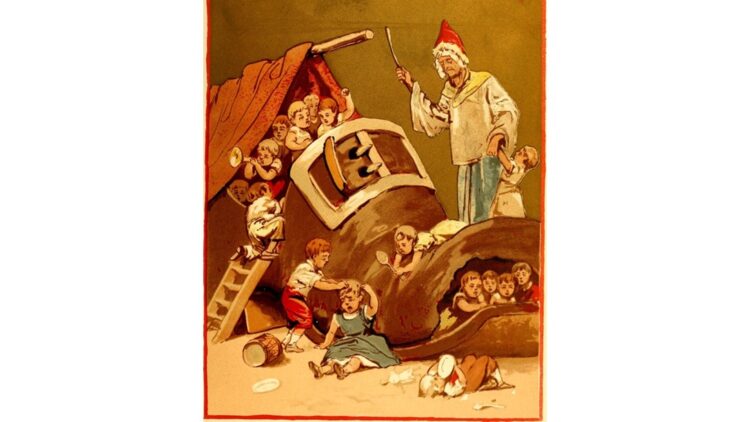
Pedagogy
Some claim the moon is made of cheese
—No farting, please, it’s unrefined—
Whose surface is a softened rind
Kept in kind by a cosmic breeze.
This would explain so many things
—No giggling, Miss Goose, stay behind—
That Science still struggles to find:
Is the Sun male, what planet sings
Lead in the music of the spheres?
—No belching, Rob Robin, it’s crude—
Does Mars in Uranus exude
Any influence on your fears?
Is it gravity or static cling
—No more warnings, class, don’t be rude—
That keeps us planted, as if glued
To the ground, each and every thing,
Yet still will let us move about
—Miss Partridge, please be cautious
Your body odor is nauseous—
To dance and jump and sing and shout.
And that was when the laughing cow
—Bundy Bushtit, go step outside—
Discovered with eyes, no doubt wide,
The Moon is Emmental somehow.
Working alone in groups of three,
Compare/contrast “privilege” to Brie.
Substitute for the pronoun “he,”
And forty percent will earn you a “C.”
Jonathan Kinsman’s book length poem, ‘Canso of California,’ won the 2006 James Irvine Award for the “Best Narrative Poem about California.” He was the first Laureate to serve two counties simultaneously from 2012-2020. His commentary and poems appeared recently (Jan 2024) in the Journal of Humanistic Mathematics. He toils in the vineyards of the Lord, aka, 8th grade public school English classes in northern Sacramento Valley.











What a wild piece of semi-surreal satire! A lesson in a classroom of children about the moon, the sun, planets, and gravity by a clearly off-the-wall teacher who dishes out false information, and the lesson is interspersed with her scoldings of bad behavior or disruptive unpleasantries. The poem is very clear about what goes on, and is unafraid to describe indecorous details.
The whole thing is a spoof on the absolute misinformation that is dished out in many modern classrooms, and ends (quite fitly) with four of the most egregious errors of modern pedagogy: 1) having students break up into small groups, 2) propagandizing them about “privilege”, 3) drilling them with idiocies about “their pronouns”, and 4) making sure that all grades fall in a bell curve.
Dr Salemi,
I am sorry for the delay in getting back on this. I was separating the laundry into piles of “privilege” and “clothes of color,” and frankly, my wife doesn’t explain things enough times for me to understand and I cannot find my stuffy!
You are, as usual, spot one. The kids are visual and Influencer is King. Two to three out of 20+ in my 8th grade classes read at grade level, and still the District Office brings in the Clowns every August from the Sacramento County Office of Edjumakayshun to “inspire us to connect and understand America’s future!” I have contacted Victory Capital and moved my 401k and 403b to Israeli Defense Bonds. The skies are getting dark and no, Kenreatha, the world was not black and white in the 1800s!
Jonathan, my husband and I decided to homeschool because the public schools were poor at teaching science, and the parochial schools poor at teaching religion. In other words, neither was good at what should have been its specialty. Therefore I’m delighted with your choice of astrophysics as subject for your public school lecture class! Moon mythology continues to fascinate me–but I never thought of citing the laughing cow as a knowledgeable expert. She is well published! However, I plan to keep both Emmenthal and Brie in mind as possible varieties of lunar rock.
Interesting that you lecture to the class on science, and work in the laboratory on language. I will trust that if you are still teaching, you do the opposite. As for decorum (the other thing students need to learn and practice in school), your teacher’s loud “asides” show very well that it’s not a subject for the classroom. Has to be handled, but in my excellent Florida high school, the teacher would step outside to speak privately to the offending student, even when everyone understood the nature of the offense. We were learning to behave like adults!
Your poem is an entertaining exaggeration of the dreary pedagogy undoubtedly exercised in too many schools, wasting student time and teacher talent.
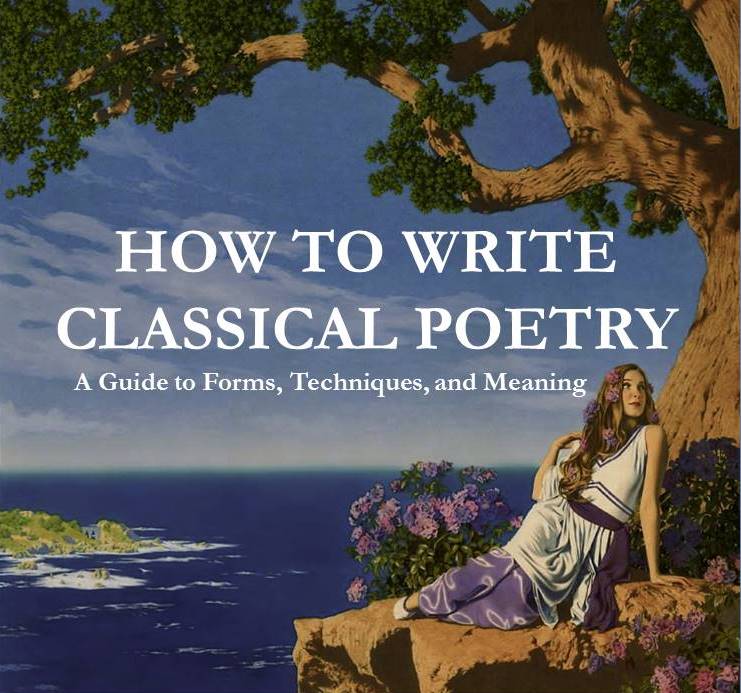
So clever and enjoyable with a perfect graphic though I must confess the two expositions were very helpful to my enjoyment.
As a former homeschooler and as someone who has to live in a world managed by mismanaged learners, I can only say: Another good one.