


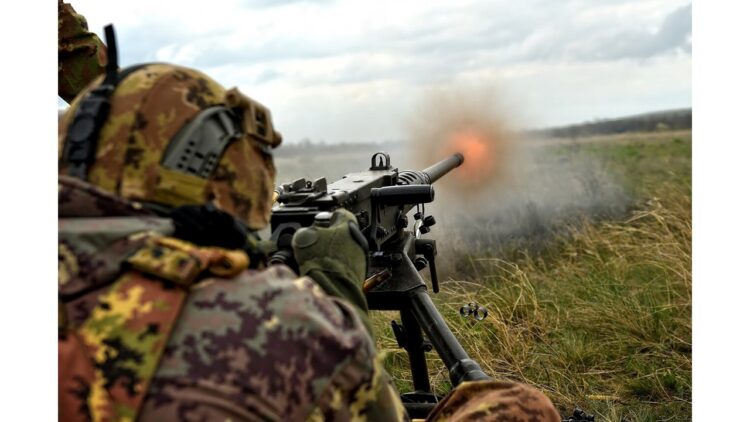
Military Quatrains,
or the Modern Archilochus
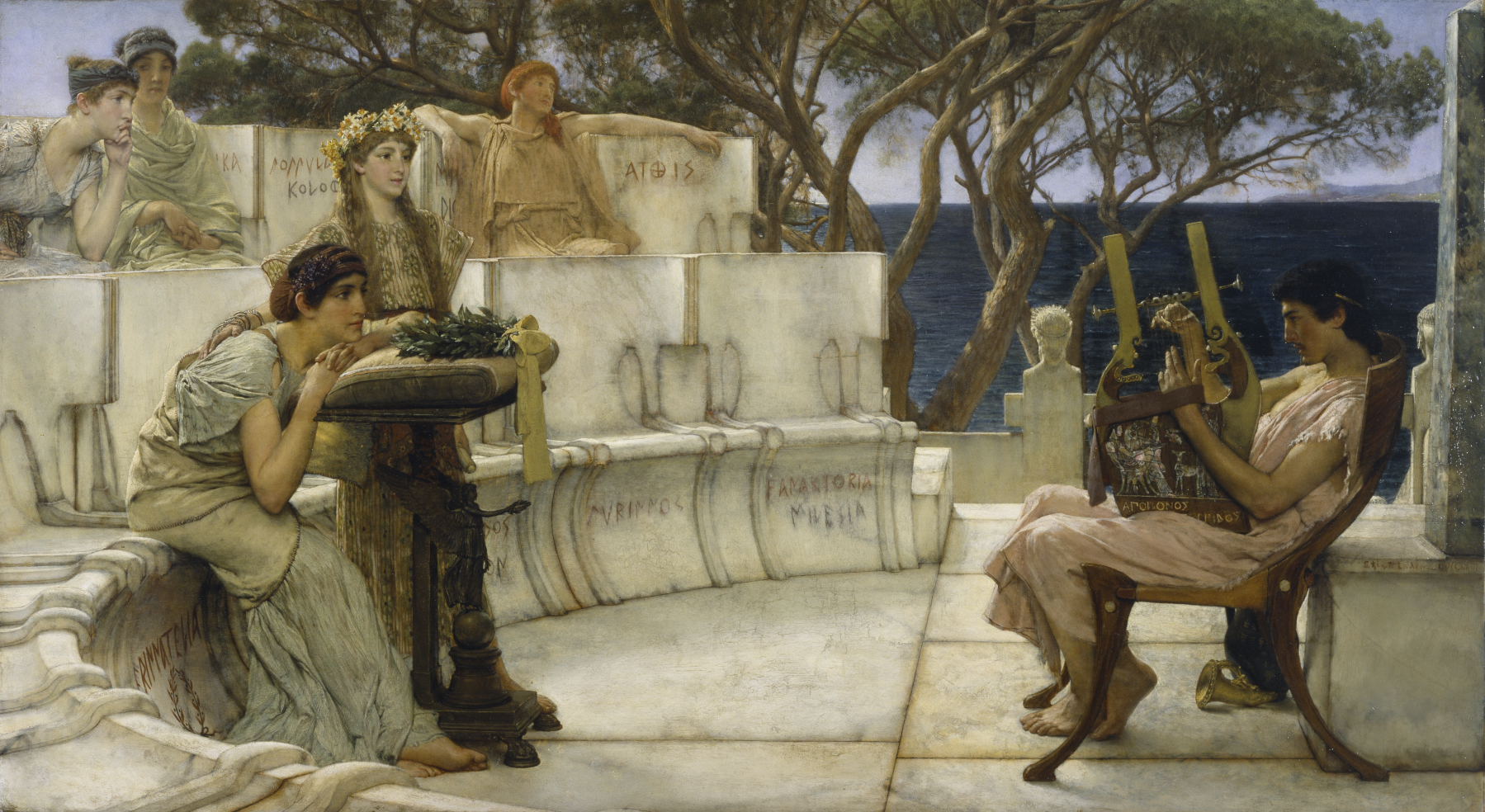
εἰμὶ δ’ἐγὼ θεράπων μὲν Ἐνυαλίοιο ἄνακτος,
καὶ Μουσέων ἐρατὸν δῶρον ἐπιστάμενος.
“I am a servant of the Lord of War,
And I also know the lovely gift of the Muses.” —Archilochus
I rammed a loaded magazine
In my empty M-16.
Luckily I fired first
And gave him a full-auto burst.
The ring pin in a live grenade
Deserves respect. I’d be afraid
To hang one from my harness hooks—
Leave that stuff to macho schnooks.
The Ma Deuce is a heavy gun—
Toting it is not much fun.
But in a firefight, it’s true:
You’re glad to have a good M-2.
A bayonet’s an antique thing—
A pike upon a muzzle ring.
It’s clunky and old-fashioned, yet
You sometimes need your bayonet.
A rocket launcher, called a LAW
Improves one’s chances, as I saw
When called-in airstrikes didn’t come
And arty seemed both deaf and dumb.
Willie Peter, when it hits
Turns a man to char-broiled bits.
Take this tip, for what it’s worth:
Give the stuff a damned wide berth.
A claymore is an upright mine
Pointing towards the battle line.
Make sure to set it straight and true—
You don’t want it facing you.
Notes
Archilochus: an early Greek iambic and lyric poet (c. 680-645 B.C.) who
also served as a combat soldier. He was killed in battle, but his poetic
reputation was so great that a cult of hero-worship grew up around him
after his death.
M-16: the standard U.S. service rifle in 1975, when this poem was
written.
Ma Deuce: nickname for the Browning M-2 heavy machine gun that
fires .50-caliber rounds.
LAW: the M72 Light Anti-Tank Weapon, a one-man disposable rocket.
Arty: artillery or other long-range fire.
Willie Peter: nickname for white phosphorus, a highly flammable chemical agent in anti-personnel explosives.
Claymore: a curved above-ground mine set facing the enemy.
Joseph S. Salemi has published five books of poetry, and his poems, translations and scholarly articles have appeared in over one hundred publications world-wide. He is the editor of the literary magazine TRINACRIA and writes for Expansive Poetry On-line. He teaches in the Department of Humanities at New York University and in the Department of Classical Languages at Hunter College.














Joseph, you cannot imagine how much I love this military poem. I was familiar with everything and remembered what “Willie Peter” stood for, before I read your notes at the bottom. I have fired every one of those weapons mentioned. My first training was as a Tank Officer at Fort Knox before I went into Military Intelligence. Back then and maybe even now a Military Intelligence Officer had to have training in a ground combat school (Armor, Artillery. or Infantry). Your verses took me back to training and to my stint in Vietnam. My first night in Saigon before being assigned to a military district, I was greeted that evening with Willie Peter and other incendiary fireworks maybe 10-20 miles away with the sky lit up for hours.
Always in the trenches and ever trenchant, Salemi keeps his readers in his crosshairs. Incoming!
Kip, I want my poems to be interesting and arresting and unexpected. Sometimes war, sometimes peace, and sometimes something freaky.
Roy, thanks for this wonderful comment. I was not in the military, but I had many fellow classmates in Fordham who were in ROTC, and who served during the Vietnam war. Several of them came back in body bags.
My talks with Vietnam veterans made me familiar with the things mentioned in this poem — the M-16, the Ma Deuce, the LAW, the claymore mine, and Willie Peter. I wrote several poems about the Vietnam experience as a result of my conversation with these guys. All wars are savage and brutal, but I learned that the war in Southeast Asia was much different from the one that my father and uncles had fought in Europe against the Axis.
Reading these quatrains (are they squibs, or is this a list poem?) brought to mind a number of films where these weapons feature prominently and made me realise how often they feature, not only in war films (claymore mines in ‘Nobody’ and ‘Proof of Life’, for example).
Quite a unique poem I felt, that to me will act as something of a viewing gude.
Thanks for the read.
Thanks, Paul. Yes, since they are short, and self-contained, I suppose they could be classified as squibs.
War movies have indeed made these items known beyond the confines of the military. The Ma Deuce is a machine gun so devastatingly powerful that it was bound to catch the attention of film makers. In one Vietnam movie (it think it was “Platoon”) there is a riveting scene with a claymore mine. An American sentry, at night on a jungle patrol when the rest of his team is asleep, suddenly hears the slow approach of enemy soldiers. His immediate task is to detonate the claymore in their direction, but he is so paralyzed with fear that he cannot move a muscle. All he has to do is strike the detonation mechanism with three sharp taps, but he simply can’t move. A fierce firefight breaks out, and the claymore is eventually detonated, but viewers of the film get a real understanding of how destructive a claymore is, and how easily a young soldier can be frozen with terror in combat.
Joseph
This is a terrific read. I am in awe of our brave soldiers who wield these arms so expertly to protect all of us. I love the ‘ marching rhythm’ (or perhaps the ‘rat-a-tat-tat’ of some fearsome gun?) suggested by your regular staccato meter: WIL-lie PE-ter, WHEN it HITS, TURNS a MAN to CHAR-broiled BITS.
Why don’t you treat us, to a poem specifically about that ‘antique thing,’ a bayonet, ‘a pike upon a muzzle ring.’ Only imagine the courage of Washington’s men at Yorktown who ‘fixed bayonets’ to go up against Cornwallis at Yorktown. They won our independence. As Washington reported back: ‘Nothing could exceed the firmness and bravery of the troops. They advanced under the fire of the enemy without returning a shot, and effected the business with the bayonet only.’
Sincerely
Mary Jane
Thank you, Mary Jane. I have a poem on bayonets somewhere, and if I can dig it out easily I’ll put it up here for you.
congrats Joe, been there, done that .. may I add one of my own ..
Senate warmongers,
memories of love chattered,
what if I’m captured?