Island of Poets
Settlers came from Thessaly, eastward sailing
Far as Lesbos, loveliest isle regaling
Grateful hearts with poetry countervailing
___Laughable wailing.
Lesbos means “desirable.” It’s magnetic.
Tour the creativity sympathetic:
Local ouzo fortifies energetic
___Spirits poetic.
Here the lyrist Térpander, singing clearly,
Fathered Grecian musical modes by dearly
Loving wine and cíthara cavalierly,
___Verse more sincerely.
Lesches’ Little Iliad briefly stated
Final epic stories of Troy ill-fated,
Worded just as losers had stipulated:
___War should be hated.
Drama names Aríon an early writer,
One who gave the dithyramb chorus lighter
Realistic dialogue plotted tighter:
___Theater shines brighter.
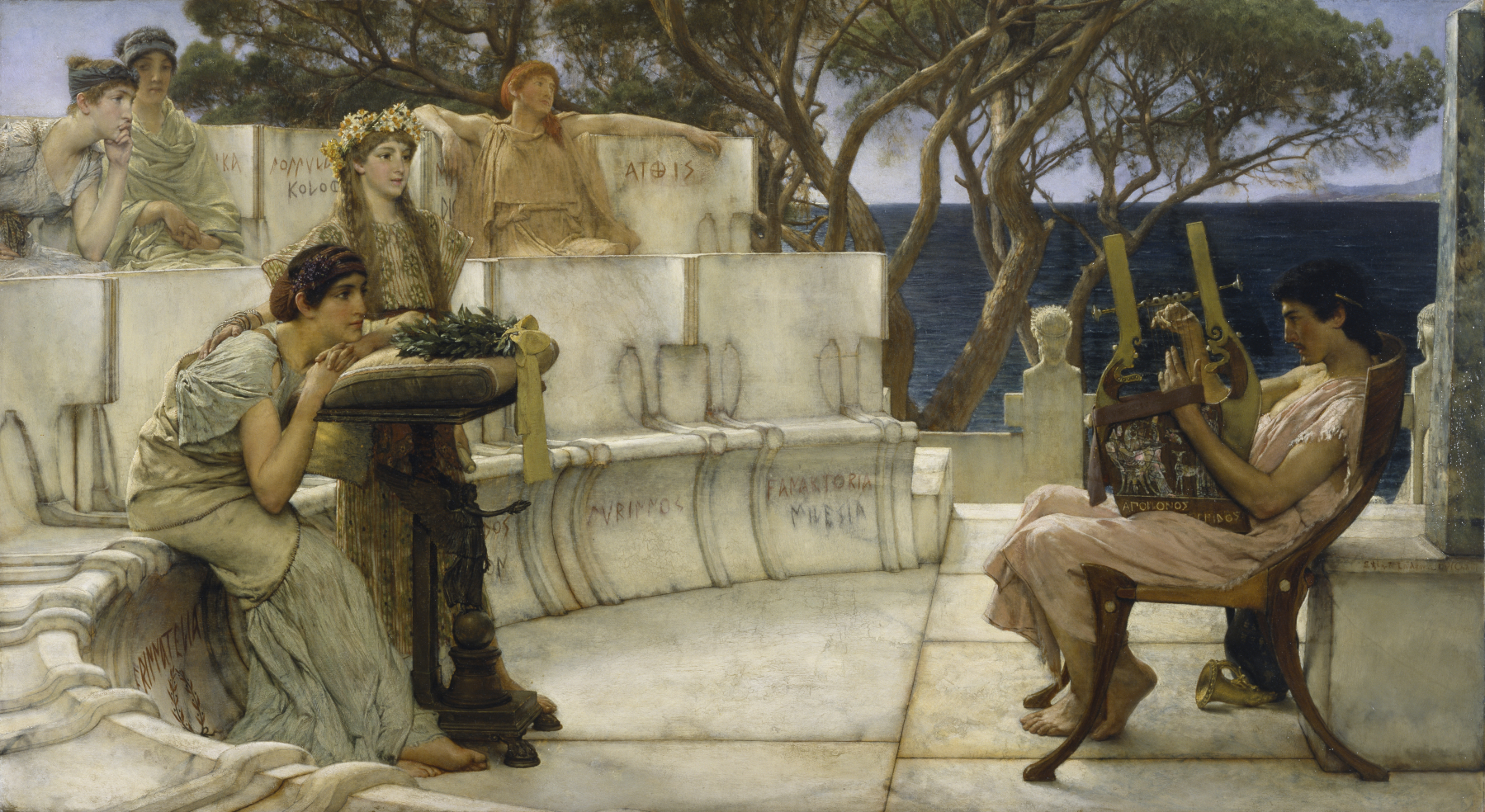
Sappho sang that girlish love quickly passes.
Lasses marry; Sappho grows old, amasses
Farewell odes in memory’s fond morasses
___Damp with sweet grasses.
Stronger lines Alcǽus composed, of bolder
Themes and feelings. Eloquent hymns hail older
Times when love was warm, fateful journeys colder;
___Martial songs smolder.
“Holy Sappho, goddess-like luminary,
Be my partner, honey-sweet adversary.”
“My Alcǽus, passion is temporary.
___Ardent but airy.”
“Answer me triumphantly, melancholic
Music maker; liven our land bucolic.”
“Pin your ears back. Take a reply symbolic:
___Let’s have a frolic!”
Poet’s Note
The poem features sapphic stanzas of falling rhythm. Each longer line has two trochees, a dactyl, and two more trochees. The final shorter line (called an “Adonic”) is made up of a dactyl and a trochee. The English accentual meter adapts a quantitative Greek meter used by ancient poets Sappho and Alcaeus, who like Terpander, Lesches, and Arion came from Lesbos off the coast of Asia Minor.
The above rhymed sapphic stanzas acknowledge fine examples by Vivian Yeiser Laramore Rader, Poet Laureate of Florida from 1931 to 1975. For easier unrhymed sapphics and much more, see James A. Tweedie, “Beginner’s Guide to Sapphic Verse.”
Margaret Coats lives in California. She holds a Ph.D. in English and American Literature and Language from Harvard University. She has retired from a career of teaching literature, languages, and writing that included considerable work in homeschooling for her own family and others.