• Submit Poetry
  • Support SCP
  • About Us
  • Members
  • Join
Tuesday, May 12, 2026
Society of Classical Poets
  • Poems
    • Beauty
    • Culture
    • Satire
    • Humor
    • Children’s
    • Art
    • Ekphrastic
    • Epic
    • Epigrams and Proverbs
    • Human Rights in China
    • Music
    • Performing Arts
    • Riddles
    • Science
    • Song Lyrics
    • The Environment
    • The Raven
    • Found Poems
    • High School Poets
    • Terrorism
    • Covid-19
  • Poetry Forms
    • Sonnet
    • Haiku
    • Limerick
    • Villanelle
    • Rondeau
    • Pantoum
    • Sestina
    • Triolet
    • Acrostic
    • Alexandroid
    • Alliterative
    • Blank Verse
    • Chant Royal
    • Clerihew
    • Rhupunt
    • Rondeau Redoublé
    • Rondel
    • Rubaiyat
    • Sapphic Verse
    • Shape Poems
    • Terza Rima
  • Great Poets
    • Geoffrey Chaucer
    • Emily Dickinson
    • Homer
    • Henry Wadsworth Longfellow
    • Dante Alighieri
    • John Keats
    • John Milton
    • Edgar Allan Poe
    • William Shakespeare
    • William Wordsworth
    • William Blake
    • Robert Frost
  • Love Poems
  • Contests
  • SCP Academy
    • Educational
    • Teaching Classical Poetry—A Guide for Educators
    • Poetry Forms
    • The SCP Journal
    • Books
No Result
View All Result
Society of Classical Poets
  • Poems
    • Beauty
    • Culture
    • Satire
    • Humor
    • Children’s
    • Art
    • Ekphrastic
    • Epic
    • Epigrams and Proverbs
    • Human Rights in China
    • Music
    • Performing Arts
    • Riddles
    • Science
    • Song Lyrics
    • The Environment
    • The Raven
    • Found Poems
    • High School Poets
    • Terrorism
    • Covid-19
  • Poetry Forms
    • Sonnet
    • Haiku
    • Limerick
    • Villanelle
    • Rondeau
    • Pantoum
    • Sestina
    • Triolet
    • Acrostic
    • Alexandroid
    • Alliterative
    • Blank Verse
    • Chant Royal
    • Clerihew
    • Rhupunt
    • Rondeau Redoublé
    • Rondel
    • Rubaiyat
    • Sapphic Verse
    • Shape Poems
    • Terza Rima
  • Great Poets
    • Geoffrey Chaucer
    • Emily Dickinson
    • Homer
    • Henry Wadsworth Longfellow
    • Dante Alighieri
    • John Keats
    • John Milton
    • Edgar Allan Poe
    • William Shakespeare
    • William Wordsworth
    • William Blake
    • Robert Frost
  • Love Poems
  • Contests
  • SCP Academy
    • Educational
    • Teaching Classical Poetry—A Guide for Educators
    • Poetry Forms
    • The SCP Journal
    • Books
No Result
View All Result
Society of Classical Poets
No Result
View All Result
Home Poetry Culture

‘Apocalypse Women’: A Poem by Monika Cooper

October 28, 2023
in Culture, Poetry
A A
18
poem/arredondo/death

.

Apocalypse Women

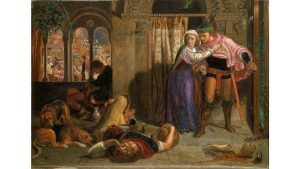
The Christians gather at the baby’s grave.
There are no tall stones in the children’s field.
Red scarves veil women’s heads among the crowd
And one, eyes streaming with a grief unhealed,
Turns toward us, mouth wide open in her cry,
Her full-throat wail. The veil of years is torn.
The modern world flaps loose and flies away.
It’s not her baby, this time, dead unborn,
But she’s been rocked again by age-old woe
That will not be denied. We stood apart.
And I’ll go home, take off my veil of black,
And hug my own. But walls have fallen now.
A village lost bursts from the world we knew.
And none of us are, ever, going back.

.

.

Monika Cooper is an American family woman.
ShareTweetPin
The Society of Classical Poets does not endorse any views expressed in individual poems or commentary.
Read Our Comments Policy Here

RandomPoems

‘How to Acquire and Maintain Political Power’: A Poem by Mark F. Stone
Poetry

‘How to Acquire and Maintain Political Power’: A Poem by Mark F. Stone

January 30, 2026

  How to Acquire and Maintain Political Power   Part 1: Acquiring Power Announce that you’re The Savior. _You’ll be...

poem/winick/humor
Humor

‘Mosquitoes’ and Other Poetry by Russel Winick

August 23, 2023

. Mosquitoes God designed the darn mosquito, But the reason’s nothing we know. Seems their less than epic purpose Is...

Next Post
Extract from DoorWay Canto 3: Constellation of the Virgin, by James Sale

Extract from DoorWay Canto 3: Constellation of the Virgin, by James Sale

‘Plato’s Pumpkins’ and Other Halloween Poetry by Leland James

'Plato's Pumpkins' and Other Halloween Poetry by Leland James

‘The Democratic Party Dressed for Halloween’: A Poem by Roy E. Peterson

'The Democratic Party Dressed for Halloween': A Poem by Roy E. Peterson

Comments 18

  1. Bruce Phenix says:
    3 years ago

    Thank you for this sensitive, economically expressed reflection. So true that grief lies dormant, rather than disappearing, and can be awakened at any time; also that sharing such a deep human emotion can create a permanent bond between people. I especially like the veil motif and image.

    Reply
    • Monika Cooper says:
      3 years ago

      Thank you, Bruce, for reading and for your comment. The veil is an important symbol in the poem as you’ve picked up. For a woman, putting on a veil can be an occasion of scales falling from her eyes and illusions being torn away.

      Reply
  2. Roy Eugene Peterson says:
    3 years ago

    Monika, I am elated to read your nicely rhymed poem and saddened by the condition of the decadent hellbent society you so aptly and preciously describe.

    Reply
    • Monika Cooper says:
      3 years ago

      Thank you, Roy. I don’t always use it but I love rhyme and I think there’s no magic like a poem in which the rhymes are woven deep, enmeshed with the meaning. But that is a rare gift.

      Reply
  3. Cynthia Erlandson says:
    3 years ago

    Monika, this is a beautiful poem in which you have skillfully sketched both outer (visual and auditory) and inner, emotional scenery, for a powerful effect.

    Reply
    • Monika Cooper says:
      3 years ago

      Thank you, Cynthia. It is weird that in my inner perception of the scene I do not hear that “full-throat wail,” I only see it.

      Reply
  4. Rohini says:
    3 years ago

    No words. This is so moving and beautiful.

    Reply
    • Monika Cooper says:
      3 years ago

      Thank you, Rohini. I am glad it touched you.

      Reply
  5. Julian D. Woodruff says:
    3 years ago

    Monika, this is a quietly emphatic insistence on truths that an increasing portion of our world tries to shout down. The thicker the shield, the heavier.
    The poem might be termed a sonnet. If one thinks of it that way, it is maybe more a broken one than a loose one; in other words, it seems you are evoking the sonnet, in inviting the reader to compare the on-off (ABCB etc.) rhymes here with the “classical” Petrarchan and Elizabethan forms. (Look what’s been done to the “baby.”)
    Thank you for this somber beauty.

    Reply
    • Monika Cooper says:
      3 years ago

      Thank you for your comment, Julian, especially: “The thicker the shield, the heavier.” Yes, this is a kind of sonnet, and I’ve been using this rhymed and blank line pattern for them quite a bit lately. It is a compromise of sorts and we all make them although we probably all dream of a poem without compromises. Maybe such things exist but at the very least there are poems in which the compromises cease to matter, become indispensable features.

      Reply
  6. Margaret Coats says:
    3 years ago

    It’s a sonnet xaxa xbxb xxcxxc, where x indicates an unrhymed line. This is a long-established rhyming technique often used in other lyric forms. Monika uses it here to show the shape and proportion of a sonnet, with the turn coming dramatically at the words “dead unborn.” They refer to what is mildly called “pregnancy loss” today. Monika may mean to include the early death of a born baby and/or grief over an abortion, but miscarriage and stillbirth have been the largely unacknowledged griefs of women for all of history. The title “Apocalypse Women” speaks of the tearing of veils (and falling of walls) between women who have had this experience, and even includes those who have not, but have heard of it from others. Often telling another woman is the only means available of working through the grief–which never goes away. The time scale here is apocalyptic, as indicated by the references to the modern world flying away and a lost village bursting forth. Monika, this is a poem of tremendous power.

    Reply
    • Monika Cooper says:
      3 years ago

      Thank you so much, Margaret, and especially for your insight into the hidden world of maternal grief my poem sought to pull the veil away from, if only for a glimpse. The wailing woman, not one of the chief mourners, surely had some grief of her own that may have been private before that re-opening at the funeral. Perhaps no one is ever told anyone else’s story but we sometimes find our stories and our griefs in each other’s. And it’s a marvelous exchange; it doesn’t take a village to raise a child (not in the Hillary Clinton sense anyway) but it does take a village to allow for that exchange and in this case, it took a village to bury one. The funeral made the village visible and brought it into sharper and fuller existence.

      Reply
  7. Sally Cook says:
    3 years ago

    Monika —

    A powerful, painterly image. You know how to paint with words.

    Reply
    • Monika Cooper says:
      3 years ago

      Ah, thank you, Sally. Since reading your book, I’ve been thinking so much about synesthesia. Like ambidexterity, it seems to be an extraordinary and rare gift, but also one that can be developed in people not initially highly gifted with it. It seems to me that the seeds of many talents lie undeveloped in many, if not all, people. So sometimes I see a painting and I think: if I’d pursued painting, that’s how I would do it. I chose writing because of its low budget materials and lyric poetry because of its minimal demands on stamina. Maybe there’s a bit of poverty mindset there but we all have limits, chains to sing in, and the hope of an eternity for unfolding undertapped talents, in perfect liberty.

      Reply
      • Sally Cook says:
        3 years ago

        You Have a multi-faceted eye, which works in many directioins at once. While it may not work as synethesia does, still it czn produce similar results.

        I am very glad I received my musical first, before any literary training or additions to to my vocabulary.
        In this way, I had time to thoroughly investigate the symbolic content on one level, and add it to my lexicon of symbolic meaning. Sometimes, too much knowledge at once can liken itself to too much dessert at the end of a heavy meal.
        On a personal note, I did a bit of Christmas shopping Saturday, which had a fringe benefit of some things for myself. Found a Teddy sweater which feels just like one of my Teddy Bears, a super-warm vest for the dead of winter, and slippers. The slipper store has been a lesson in unlikely occurrences. At first, I bought my size and rushed on, which resulted in things that were either too small or too large, Then realized size meant nothing; Just as in poetry, you have to try things on.
        Once I caught on I was able to get much greater value for my money, circumventing people who had not yet caught on ! Talking with you is always worthwhile..

        Reply
  8. C.B. Anderson says:
    3 years ago

    I can’t say that I understand every turn taken in this poem, but the cumulation of powerful line after powerful was utterly gripping. What I’m left with are feelings of shock and awe.

    Reply
    • Monika Cooper says:
      3 years ago

      Thank you, C. B. Your reaction of “shock and awe” has allowed me to recover for myself some of the original impact of the moment I was writing about. It was the catalyst of many powerful things in my life and no doubt others, of which this poem may well be the least. But approach to the meaning restores the experience.

      Reply
  9. Monika Cooper says:
    3 years ago

    Dear friends, thank you all for reading and sharing your thoughts here! The scene in the poem is the funeral of a stillborn baby. (Miscarried and aborted babies almost never receive public funerals.) The speaker, with some others, stands somewhat apart from the scene, like the women “at a distance” from Calvary. The veil she is wearing though gives her a degree of solidarity with the mourners. Her wearing of a veil to the funeral, in deference to Christian custom, is what disposes her to see what she is given to see: the modern world with its sparkles, conveniences, and determined avoidance of pain, suffering, and death, stripped away like the illusion it was. She sees the “village” as if a vision from the past reared up before her but it is the bedrock reality of the human condition she is seeing: this valley of tears. (In another aspect, this same valley is called the valley of love and delight.) She has a choice to make: will she descend to the valley, make exodus from the modern world, and join the exchange of active love among the poor that is the essence of the lost village? The final line expresses her decision, as she speaks for the whole little group of those who originally “stood apart.”

    Reply

Leave a Reply Cancel reply

Your email address will not be published. Required fields are marked *

  1. Susan Jarvis Bryant on ‘Spontaneous Conjugal Combustion’ and Other Poems by Susan Jarvis BryantMay 12, 2026

    C.B., it's always interesting to read your take on my poems, and I've got to say I agree with you…

  2. Roy Eugene Peterson on A Poem on Coach “Black Mike” Castronis from Athens Y Camp, by Alec ReamMay 12, 2026

    Alec, this is a touching tribute to a camp coach/counselor. I had my own at Camp Paisano near Alpine, Texas.…

  3. Roy Eugene Peterson on ‘Creation of Mom’: A Mother’s Day Poem by Roy E. PetersonMay 12, 2026

    Margaret, I was thinking about the vast variety of Moms when I wrote it. Thank you for pointing that out…

  4. Alec Ream on A Poem on Coach “Black Mike” Castronis from Athens Y Camp, by Alec ReamMay 12, 2026

    Margaret, thank you for the read and remarks. First Presbyterian is still there. As is Emmanuel Episcopal, which started at…

  5. Margaret Coats on ‘Creation of Mom’: A Mother’s Day Poem by Roy E. PetersonMay 12, 2026

    Roy, considering the vast variety of Moms, I'm glad you put that wondering of the angels into your creation workshop…

Subscribe to Daily Poems

Enter your email address to subscribe to this blog and receive notifications of new posts by email.

Join 1,593 other subscribers

Recent Poems

  • A Poem on Coach “Black Mike” Castronis from Athens Y Camp, by Alec Ream
  • A Poem on the Zambian National Park Mosi-oa-Tunya, by Paul A. Freeman
  • ‘Creation of Mom’: A Mother’s Day Poem by Roy E. Peterson
  • ‘Spontaneous Conjugal Combustion’ and Other Poems by Susan Jarvis Bryant
  • ‘The Man in the Moon Was a Very Round Man’: A Poem by Lauren V. Leon
  • ‘Fibromytrauma’: A Poem by Golan Shahar
  • ‘A Lonely Sliver’: A Poem by Katie Tencza
  • ‘Higher Gas Prices Are a Small Price to Pay’: An Iran War Poem by Mark F. Stone
  • ‘Always Ahead’: A Poem by Scharlie Meeuws
  • ‘Hamlet’s Lawyer’ and Other Poetry by Brian Yapko
  • ‘On An Old Photograph’: A Poem by Joseph S. Salemi
  • ‘Faust Foresees His End’: A Poem by Martin Briggs
  • ‘À la Carte’ and Other Poetry by C.B. Anderson
  • ‘Where the Sweet Bluebonnets Bloom’: A Poem by Roy E. Peterson
  • ‘The Waters’: A Poem by Margaret Brinton
  • ‘The Pinnacle of Poetry’ and Other Poems by Russel Winick
  • The First American Sonnets: An Essay on David Humphreys, by Margaret Coats
  • ‘The Holy Rollers on Poetry’: A Poem by Joseph S. Salemi
  • Sappho’s ‘Poem 1’ Translated by Bruce Phenix
  • ‘The Cautionary Tale of Phone Addicted Mimi’: A Poem by Paul A. Freeman
  • ‘Look Away’: A Poem for America’s 250th Anniversary, by Roger Crane
  • ‘Sunday Morning in Canada’: A Poem by Jeffrey Essmann
  • ‘Bean’: A Poem by Jan Mennite
  • ‘The Swan’s Song ’: A Poem for Shakespeare’s Birthday, by Susan Jarvis Bryant
  • ‘The Gravedigger’: A Poem by Marie Burdett
  • ‘Waiting for the Perfect Man’: A Poem by Janice Canerdy
  • ‘The George-A-Saurus’ and Other Poetry by Brian Yapko
  • ‘When Asked: What’s Your Favorite Season?’: A Poem by Paul Millan  
  • ‘The Last At-Bat of Lyndon Braun’: A Poem by Michael Pietrack
  • ‘The Perpetual Battle’ and Other Poetry by Adam Sedia

Categories

  • Acrostic
  • Alexandroid
  • Alliterative
  • Art
  • Best Poems
  • Blank Verse
  • Chant Royal
  • Classical Poets Live
  • Clerihew
  • Covid-19
  • Deconstructing Communism
  • Educational
  • Epic
  • Epigrams and Proverbs
  • Essays
    • Interviews with Poets
    • Poetry Reviews
  • Featured
  • From the Society
  • Great Poets
    • Dante Alighieri
    • Edgar Allan Poe
    • Emily Dickinson
    • Geoffrey Chaucer
    • Henry Wadsworth Longfellow
    • Homer
    • John Keats
    • John Milton
    • Robert Frost
    • William Blake
    • William Shakespeare
    • William Wordsworth
  • Human Rights in China
  • Limerick
  • Love Poems
  • Music
  • Pantoum
  • Performing Arts
  • Poetry
    • Beauty
    • Children's Poems
    • Culture
    • Ekphrastic
    • Found Poems
    • High School Poets
    • Humor
    • Riddles
  • Poetry Challenge
  • Poetry Contests
  • Poetry Forms
    • Curtal Sonnet
    • Haiku
  • Poetry Readings
  • Rhupunt
  • Rondeau
  • Rondeau Redoublé
  • Rondel
  • Rubaiyat
  • Sapphic Verse
  • Satire
  • Science
  • Sestina
  • Shape Poems
  • Short Stories
  • Song Lyrics
  • Sonnet
  • Symposium
  • Terrorism
  • Terza Rima
  • The Environment
  • Translation
  • Triolet
  • Video
  • Villanelle

Quick Links

  • About Us
  • Submit Poetry
  • Become a Member
  • Members List
  • Support the Society
  • Advertisement Placement
  • Comments Policy
  • Terms of Use

Welcome Back!

Login to your account below

Forgotten Password?

Retrieve your password

Please enter your username or email address to reset your password.

Log In
No Result
View All Result
  • Poems
    • Beauty
    • Culture
    • Satire
    • Humor
    • Children’s
    • Art
    • Ekphrastic
    • Epic
    • Epigrams and Proverbs
    • Human Rights in China
    • Music
    • Performing Arts
    • Riddles
    • Science
    • Song Lyrics
    • The Environment
    • The Raven
    • Found Poems
    • High School Poets
    • Terrorism
    • Covid-19
  • Poetry Forms
    • Sonnet
    • Haiku
    • Limerick
    • Villanelle
    • Rondeau
    • Pantoum
    • Sestina
    • Triolet
    • Acrostic
    • Alexandroid
    • Alliterative
    • Blank Verse
    • Chant Royal
    • Clerihew
    • Rhupunt
    • Rondeau Redoublé
    • Rondel
    • Rubaiyat
    • Sapphic Verse
    • Shape Poems
    • Terza Rima
  • Great Poets
    • Geoffrey Chaucer
    • Emily Dickinson
    • Homer
    • Henry Wadsworth Longfellow
    • Dante Alighieri
    • John Keats
    • John Milton
    • Edgar Allan Poe
    • William Shakespeare
    • William Wordsworth
    • William Blake
    • Robert Frost
  • Love Poems
  • Contests
  • SCP Academy
    • Educational
    • Teaching Classical Poetry—A Guide for Educators
    • Poetry Forms
    • The SCP Journal
    • Books

© 2025 SCP. WebDesign by CODEC Prime.