• Submit Poetry
  • Support SCP
  • About Us
  • Members
  • Join
Tuesday, May 12, 2026
Society of Classical Poets
  • Poems
    • Beauty
    • Culture
    • Satire
    • Humor
    • Children’s
    • Art
    • Ekphrastic
    • Epic
    • Epigrams and Proverbs
    • Human Rights in China
    • Music
    • Performing Arts
    • Riddles
    • Science
    • Song Lyrics
    • The Environment
    • The Raven
    • Found Poems
    • High School Poets
    • Terrorism
    • Covid-19
  • Poetry Forms
    • Sonnet
    • Haiku
    • Limerick
    • Villanelle
    • Rondeau
    • Pantoum
    • Sestina
    • Triolet
    • Acrostic
    • Alexandroid
    • Alliterative
    • Blank Verse
    • Chant Royal
    • Clerihew
    • Rhupunt
    • Rondeau Redoublé
    • Rondel
    • Rubaiyat
    • Sapphic Verse
    • Shape Poems
    • Terza Rima
  • Great Poets
    • Geoffrey Chaucer
    • Emily Dickinson
    • Homer
    • Henry Wadsworth Longfellow
    • Dante Alighieri
    • John Keats
    • John Milton
    • Edgar Allan Poe
    • William Shakespeare
    • William Wordsworth
    • William Blake
    • Robert Frost
  • Love Poems
  • Contests
  • SCP Academy
    • Educational
    • Teaching Classical Poetry—A Guide for Educators
    • Poetry Forms
    • The SCP Journal
    • Books
No Result
View All Result
Society of Classical Poets
  • Poems
    • Beauty
    • Culture
    • Satire
    • Humor
    • Children’s
    • Art
    • Ekphrastic
    • Epic
    • Epigrams and Proverbs
    • Human Rights in China
    • Music
    • Performing Arts
    • Riddles
    • Science
    • Song Lyrics
    • The Environment
    • The Raven
    • Found Poems
    • High School Poets
    • Terrorism
    • Covid-19
  • Poetry Forms
    • Sonnet
    • Haiku
    • Limerick
    • Villanelle
    • Rondeau
    • Pantoum
    • Sestina
    • Triolet
    • Acrostic
    • Alexandroid
    • Alliterative
    • Blank Verse
    • Chant Royal
    • Clerihew
    • Rhupunt
    • Rondeau Redoublé
    • Rondel
    • Rubaiyat
    • Sapphic Verse
    • Shape Poems
    • Terza Rima
  • Great Poets
    • Geoffrey Chaucer
    • Emily Dickinson
    • Homer
    • Henry Wadsworth Longfellow
    • Dante Alighieri
    • John Keats
    • John Milton
    • Edgar Allan Poe
    • William Shakespeare
    • William Wordsworth
    • William Blake
    • Robert Frost
  • Love Poems
  • Contests
  • SCP Academy
    • Educational
    • Teaching Classical Poetry—A Guide for Educators
    • Poetry Forms
    • The SCP Journal
    • Books
No Result
View All Result
Society of Classical Poets
No Result
View All Result
Home Poetry Beauty

‘Apocrypha’ and Other Poetry by C.B. Anderson

April 29, 2022
in Beauty, Culture, Poetry
A A
21
poems 'Apocrypha' and Other Poetry by C.B. Anderson

.

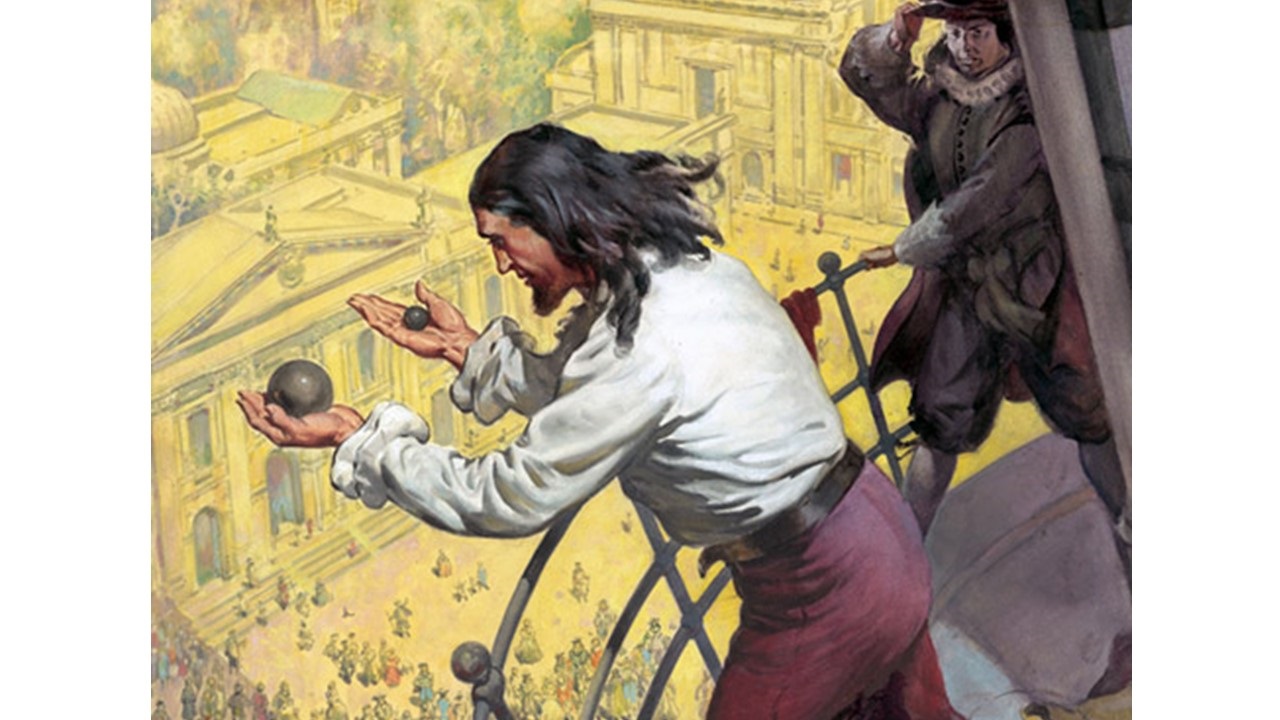
Apocrypha

Two orbs in hand—one large, one small—
He climbed the tower to the top.
He let them go and watched them fall,
And those below who saw them drop

Were dumbstruck when they hit the ground
With a loud thud at the same time.
The clerics in the piazza frowned,
For it was deemed a heinous crime

To contradict the Church’s teaching.
Before an anxious Pisan throng,
One Galileo, overreaching,
Had proven Aristotle wrong.

                                                        First published in Angle (2014)

.

.

Hier Stehe Ich

after Martin Luther

I take a moment, nearly every day,
To think about the many first responders
Who place themselves directly in harm’s way.
__Ich kann nicht anders.

When I become distracted by the news
My focus on what’s most important wanders,
And I’m abruptly called upon to choose.
__Ich kann nicht anders.

With heavy heart and with a knitted brow
I notice what my troubled conscience ponders,
The pith of what it will and won’t allow.
__Ich kann nicht anders.

In mornings following a restless night,
I feel the weight of chances laxness squanders
And try to find a way to make things right.
__Ich kann nicht anders.

                                                               First published in The Lyric (2020)

.

Hier Stehe Ich: Here I stand

Ich kann nicht anders: I can do no other

.

.

C.B. Anderson was the longtime gardener for the PBS television series, The Victory Garden.  Hundreds of his poems have appeared in scores of print and electronic journals out of North America, Great Britain, Ireland, Austria, Australia and India.  His collection, Mortal Soup and the Blue Yonder was published in 2013 by White Violet Press.
ShareTweetPin
The Society of Classical Poets does not endorse any views expressed in individual poems or commentary.
Read Our Comments Policy Here

RandomPoems

‘Shoveling Out the Blizzard’ and Other Poetry by Adam Wasem
Beauty

‘Shoveling Out the Blizzard’ and Other Poetry by Adam Wasem

February 27, 2024

. . Shoveling Out the Blizzard Snow came so thick, the roof makes pops and creaks; downspouts froze solid as...

‘Don’t Get Caught’ and Other Poetry by C.B. Anderson
Beauty

‘Don’t Get Caught’ and Other Poetry by C.B. Anderson

April 1, 2020

  Don’t Get Caught The catfish and the trout hum different tunes, But both agree they love hot afternoons When...

Next Post
‘Apollo’s Lament’ by Brian Yapko

'Apollo’s Lament' by Brian Yapko

‘May Day’ by Cheryl Corey

'May Day' by Cheryl Corey

‘A Sonnet for My Nephew’ by Caitlin O’Brien

'A Sonnet for My Nephew' by Caitlin O'Brien

Comments 21

  1. Paul Freeman says:
    4 years ago

    I particularly enjoyed the first poem.

    If only physics (or religious studies) was taught like this at school.

    Thanks for the reads, CB.

    Reply
    • C.B. Anderson says:
      4 years ago

      The funny thing, Paul, is that very few scholars believe that this event actually happened, whence the title.

      Reply
  2. Brian Yapko says:
    4 years ago

    I enjoyed both of these poems very much, C.B. Galileo’s importance in the history of science is difficult to overstate. He basically invented the scientific method. He had brains and guts, even when it meant standing up to the Church. Is your poem titled “Apocrypha” because the Leaning Tower of Pisa experiment is often considered more legend than fact?

    Hier Stehe Ich is a very meaningful poem about integrity and being true to yourself. I especially enjoyed your ability to rhyme the German word “anders” with your selection of appropriate English words. I very much enjoy seeing foreign words brought into English poetry and song lyrics.

    Reply
    • C.B. Anderson says:
      4 years ago

      The answer to your question in first paragraph, Brian, is yes.

      If I could have found any other English rhymes for “anders,” then the poem might have run on a bit longer. Can you think of any others?

      Reply
  3. Russel Winick says:
    4 years ago

    I agree with Paul – had physics been taught like this in school, my grades would have been better. And your second poem is a highly relatable standard to reach for. Thanks for contributing these works.

    Reply
    • C.B. Anderson says:
      4 years ago

      When you write “taught like this,” Russel, do you mean through poems or by conducting experiments in the field? Your second sentence speaks to the importance of personal integrity and faith in the truth.

      Reply
  4. Margaret Coats says:
    4 years ago

    C. B., I love that pyrrhic-spondee-pyrrhic-spondee line, “With a loud thud at the same time.” Fits the topic of the poem to perfection. But did Pisans really think Aristotle was a Church teacher? And didn’t some smart kid try the trick with a rock and a feather?

    The first experiment in intro physics is Galileo’s concerning motion down an inclined plane. This is one where Galileo did not rely on popular perceptions (as above), but measured time with a water clock. Or so he said when he published the results. He had hit upon the fundamental equation, and trusted his genius so much that he did not perform the experiment. His results were too perfect. Had he been a scientist, he would have discovered friction slowing down the motion. Da Vinci (earlier than Galileo) suggested the idea, but only in the 19th century did Morin calculate coefficients of friction dependent on roughness of the surface.

    Moral of the story for physics students is not to trust your theory and fudge your results. Like Galileo and Fauci, you and your methods are not Science. Nature is complex.

    Reply
  5. C.B. Anderson says:
    4 years ago

    Well yes, Margaret, I was backed into a corner and could find no other way out than to use the substitutions you noted. I don’t know what Pisans thought, but it has been my understanding that the Church accepted Aristotle as the authority on most mundane issues. The problem with the rock and the feather issue is a simple matter of air resistance. In a vacuum, feathers and rocks will fall at the same rate.

    Had I known that you were so well versed in science (and not just, say, French literature) we might have had some very different exchanges. And you are right: Nature is complex, as complex as an omniscient god can make it.

    Reply
    • Joseph S. Salemi says:
      4 years ago

      Aristotle was called “the master of them that know” by star-struck medievals. But in fact there was a lot that he didn’t know in physics, and other things that he got wrong.

      Reply
      • C.B. Anderson says:
        4 years ago

        In other words, the Greek shall inherit the earth, for better or for worse, and it’s hard to dig ourselves out of this mire.

        Reply
  6. Russel Winick says:
    4 years ago

    The latter, although the former would have been interesting as well.

    Reply
    • C.B. Anderson says:
      4 years ago

      So you might have had trouble with calculus as well, which is the key to physics. No wonder, then, that you became a lawyer, where everything is up for grabs and little is exact (or unarguable), and this is precisely why I admire your poems.

      Reply
  7. Mia says:
    4 years ago

    Aristotle lived around 350BC, of course discoveries have been made since then.
    But why the comment on everything Greek?
    eg ‘the Greek shall inherit the earth and it’s hard to dig ourselves out of this
    mire’
    It is amazing to me that saying, the Jew or the Muslim or the American would not be tolerated, but the Greek is always fair game…

    Reply
  8. Joseph S. Salemi says:
    4 years ago

    Kip Anderson said it because it rhymes with “meek.”

    Everyone is fair game for attack at some time or another. There are no privileged classes. Even the Romans, who deeply respected Greek culture and literature, sometimes referred to them as “Graeculi,” which is a playfully contemptuous term that can be translated as “little no-good Greeks.”

    Reply
    • C.B. Anderson says:
      4 years ago

      Yes, Joseph, it was just a silly pun, no more than that.

      Reply
  9. Mia says:
    4 years ago

    My apologies if I totally misunderstood the comment but
    I respectfully disagree that everyone is fair game for attack though. Some things and people are never attacked or criticised.
    I don’t want to disagree with you as I respect your knowledge and ability a great deal but that is my opinion. I also believe that criticism should always be allowed in a fair and democratic society but attack usually comes from those on the losing side of a debate.
    As for the Romans, well what can I say, they translated all the Greek stories, copied the architecture and passed it all off as their own whilst belittling those they stole from. But that is probably the least they did.
    Would I have liked to live during that time? Well it depends I suppose whether
    I would be rich, powerful and influential or a poor, Graeculi pawn. Nothing much changes then.

    Reply
    • Joseph S. Salemi says:
      4 years ago

      Actually, I attack Americans quite a bit. See my new essay (“Stupidity’s Hothouse”) up at the Expansive Poetry Online website.

      But you’re right — there are certain “protected classes” in modern Western society that you are not allowed to attack without suffering great social ostracism and penalties. Those are Muslims, blacks, Jews, non-Westerners in general, feminist women, illegal aliens and immigrants, homosexuals, and transsexuals.

      Reply
      • Mia says:
        4 years ago

        Thank you for taking the time to reply. For me the pressure to conform to a certain way of thinking is too much at times. That is why I appreciate this site and admire how it advocates for excellence in poetry. I see some of your criticism here as being concerned about that. There are so many issues that it is difficult to discuss them all.
        One glimmer of hope though is that some transgender young people are publicly regretting transitioning and are open about the catastrophic ways it has impacted on their health. I have read of one person in their twenties with brittle bones for example, caused by medication given when they were still a child. It is still not mainstream news though. I think I had better leave it at that.
        I am going to go and read your essay now. But I think you don’t attack people, you attack stupidity!

        Reply
      • Joseph S. Salemi says:
        4 years ago

        I knew only one transsexual person (male to female), but he did not undergo the procedure until he was in his sixties. Why? Very simple — he did not dare to do it until his wealthy father was dead. He had no intention of losing his substantial inheritance (which his strict European father would have cut him off from totally had he done it while the old man lived). In other words, money was more important to him than “sexual identity.”

        Reply
  10. Susan Jarvis Bryant says:
    4 years ago

    C.B., I particularly like ‘Hier Stehe Ich’ with the impactful repetition of ‘ Ich kann nicht anders’. It hits home with me… each stanza is a beautiful beacon of light in a dark world that doesn’t seem to care.

    Reply
    • C.B. Anderson says:
      4 years ago

      Thank you so much for your kind comment, Susan. For sure, the world doesn’t care, but the people in it should.

      Reply

Leave a Reply Cancel reply

Your email address will not be published. Required fields are marked *

  1. Roy Eugene Peterson on A Poem on Coach “Black Mike” Castronis from Athens Y Camp, by Alec ReamMay 12, 2026

    Alec, this is a touching tribute to a camp coach/counselor. I had my own at Camp Paisano near Alpine, Texas.…

  2. Roy Eugene Peterson on ‘Creation of Mom’: A Mother’s Day Poem by Roy E. PetersonMay 12, 2026

    Margaret, I was thinking about the vast variety of Moms when I wrote it. Thank you for pointing that out…

  3. Alec Ream on A Poem on Coach “Black Mike” Castronis from Athens Y Camp, by Alec ReamMay 12, 2026

    Margaret, thank you for the read and remarks. First Presbyterian is still there. As is Emmanuel Episcopal, which started at…

  4. Margaret Coats on ‘Creation of Mom’: A Mother’s Day Poem by Roy E. PetersonMay 12, 2026

    Roy, considering the vast variety of Moms, I'm glad you put that wondering of the angels into your creation workshop…

  5. Margaret Coats on A Poem on the Zambian National Park Mosi-oa-Tunya, by Paul A. FreemanMay 12, 2026

    Quite a memory, Paul. Having watched that cascade flow into an impressive geologic gash, and produce rain forest, must give…

Subscribe to Daily Poems

Enter your email address to subscribe to this blog and receive notifications of new posts by email.

Join 1,593 other subscribers

Recent Poems

  • A Poem on Coach “Black Mike” Castronis from Athens Y Camp, by Alec Ream
  • A Poem on the Zambian National Park Mosi-oa-Tunya, by Paul A. Freeman
  • ‘Creation of Mom’: A Mother’s Day Poem by Roy E. Peterson
  • ‘Spontaneous Conjugal Combustion’ and Other Poems by Susan Jarvis Bryant
  • ‘The Man in the Moon Was a Very Round Man’: A Poem by Lauren V. Leon
  • ‘Fibromytrauma’: A Poem by Golan Shahar
  • ‘A Lonely Sliver’: A Poem by Katie Tencza
  • ‘Higher Gas Prices Are a Small Price to Pay’: An Iran War Poem by Mark F. Stone
  • ‘Always Ahead’: A Poem by Scharlie Meeuws
  • ‘Hamlet’s Lawyer’ and Other Poetry by Brian Yapko
  • ‘On An Old Photograph’: A Poem by Joseph S. Salemi
  • ‘Faust Foresees His End’: A Poem by Martin Briggs
  • ‘À la Carte’ and Other Poetry by C.B. Anderson
  • ‘Where the Sweet Bluebonnets Bloom’: A Poem by Roy E. Peterson
  • ‘The Waters’: A Poem by Margaret Brinton
  • ‘The Pinnacle of Poetry’ and Other Poems by Russel Winick
  • The First American Sonnets: An Essay on David Humphreys, by Margaret Coats
  • ‘The Holy Rollers on Poetry’: A Poem by Joseph S. Salemi
  • Sappho’s ‘Poem 1’ Translated by Bruce Phenix
  • ‘The Cautionary Tale of Phone Addicted Mimi’: A Poem by Paul A. Freeman
  • ‘Look Away’: A Poem for America’s 250th Anniversary, by Roger Crane
  • ‘Sunday Morning in Canada’: A Poem by Jeffrey Essmann
  • ‘Bean’: A Poem by Jan Mennite
  • ‘The Swan’s Song ’: A Poem for Shakespeare’s Birthday, by Susan Jarvis Bryant
  • ‘The Gravedigger’: A Poem by Marie Burdett
  • ‘Waiting for the Perfect Man’: A Poem by Janice Canerdy
  • ‘The George-A-Saurus’ and Other Poetry by Brian Yapko
  • ‘When Asked: What’s Your Favorite Season?’: A Poem by Paul Millan  
  • ‘The Last At-Bat of Lyndon Braun’: A Poem by Michael Pietrack
  • ‘The Perpetual Battle’ and Other Poetry by Adam Sedia

Categories

  • Acrostic
  • Alexandroid
  • Alliterative
  • Art
  • Best Poems
  • Blank Verse
  • Chant Royal
  • Classical Poets Live
  • Clerihew
  • Covid-19
  • Deconstructing Communism
  • Educational
  • Epic
  • Epigrams and Proverbs
  • Essays
    • Interviews with Poets
    • Poetry Reviews
  • Featured
  • From the Society
  • Great Poets
    • Dante Alighieri
    • Edgar Allan Poe
    • Emily Dickinson
    • Geoffrey Chaucer
    • Henry Wadsworth Longfellow
    • Homer
    • John Keats
    • John Milton
    • Robert Frost
    • William Blake
    • William Shakespeare
    • William Wordsworth
  • Human Rights in China
  • Limerick
  • Love Poems
  • Music
  • Pantoum
  • Performing Arts
  • Poetry
    • Beauty
    • Children's Poems
    • Culture
    • Ekphrastic
    • Found Poems
    • High School Poets
    • Humor
    • Riddles
  • Poetry Challenge
  • Poetry Contests
  • Poetry Forms
    • Curtal Sonnet
    • Haiku
  • Poetry Readings
  • Rhupunt
  • Rondeau
  • Rondeau Redoublé
  • Rondel
  • Rubaiyat
  • Sapphic Verse
  • Satire
  • Science
  • Sestina
  • Shape Poems
  • Short Stories
  • Song Lyrics
  • Sonnet
  • Symposium
  • Terrorism
  • Terza Rima
  • The Environment
  • Translation
  • Triolet
  • Video
  • Villanelle

Quick Links

  • About Us
  • Submit Poetry
  • Become a Member
  • Members List
  • Support the Society
  • Advertisement Placement
  • Comments Policy
  • Terms of Use

Welcome Back!

Login to your account below

Forgotten Password?

Retrieve your password

Please enter your username or email address to reset your password.

Log In
No Result
View All Result
  • Poems
    • Beauty
    • Culture
    • Satire
    • Humor
    • Children’s
    • Art
    • Ekphrastic
    • Epic
    • Epigrams and Proverbs
    • Human Rights in China
    • Music
    • Performing Arts
    • Riddles
    • Science
    • Song Lyrics
    • The Environment
    • The Raven
    • Found Poems
    • High School Poets
    • Terrorism
    • Covid-19
  • Poetry Forms
    • Sonnet
    • Haiku
    • Limerick
    • Villanelle
    • Rondeau
    • Pantoum
    • Sestina
    • Triolet
    • Acrostic
    • Alexandroid
    • Alliterative
    • Blank Verse
    • Chant Royal
    • Clerihew
    • Rhupunt
    • Rondeau Redoublé
    • Rondel
    • Rubaiyat
    • Sapphic Verse
    • Shape Poems
    • Terza Rima
  • Great Poets
    • Geoffrey Chaucer
    • Emily Dickinson
    • Homer
    • Henry Wadsworth Longfellow
    • Dante Alighieri
    • John Keats
    • John Milton
    • Edgar Allan Poe
    • William Shakespeare
    • William Wordsworth
    • William Blake
    • Robert Frost
  • Love Poems
  • Contests
  • SCP Academy
    • Educational
    • Teaching Classical Poetry—A Guide for Educators
    • Poetry Forms
    • The SCP Journal
    • Books

© 2025 SCP. WebDesign by CODEC Prime.