• Submit Poetry
  • Support SCP
  • About Us
  • Members
  • Join
Saturday, July 18, 2026
Society of Classical Poets
  • Poems
    • Beauty
    • Culture
    • Satire
    • Humor
    • Children’s
    • Art
    • Ekphrastic
    • Epic
    • Epigrams and Proverbs
    • Human Rights in China
    • Music
    • Performing Arts
    • Riddles
    • Science
    • Song Lyrics
    • The Environment
    • The Raven
    • Found Poems
    • High School Poets
    • Terrorism
    • Covid-19
  • Poetry Forms
    • Sonnet
    • Haiku
    • Limerick
    • Villanelle
    • Rondeau
    • Pantoum
    • Sestina
    • Triolet
    • Acrostic
    • Alexandroid
    • Alliterative
    • Blank Verse
    • Chant Royal
    • Clerihew
    • Rhupunt
    • Rondeau Redoublé
    • Rondel
    • Rubaiyat
    • Sapphic Verse
    • Shape Poems
    • Terza Rima
  • Great Poets
    • Geoffrey Chaucer
    • Emily Dickinson
    • Homer
    • Henry Wadsworth Longfellow
    • Dante Alighieri
    • John Keats
    • John Milton
    • Edgar Allan Poe
    • William Shakespeare
    • William Wordsworth
    • William Blake
    • Robert Frost
  • Love Poems
  • Contests
  • SCP Academy
    • Educational
    • Teaching Classical Poetry—A Guide for Educators
    • Poetry Forms
    • The SCP Journal
    • Books
No Result
View All Result
Society of Classical Poets
  • Poems
    • Beauty
    • Culture
    • Satire
    • Humor
    • Children’s
    • Art
    • Ekphrastic
    • Epic
    • Epigrams and Proverbs
    • Human Rights in China
    • Music
    • Performing Arts
    • Riddles
    • Science
    • Song Lyrics
    • The Environment
    • The Raven
    • Found Poems
    • High School Poets
    • Terrorism
    • Covid-19
  • Poetry Forms
    • Sonnet
    • Haiku
    • Limerick
    • Villanelle
    • Rondeau
    • Pantoum
    • Sestina
    • Triolet
    • Acrostic
    • Alexandroid
    • Alliterative
    • Blank Verse
    • Chant Royal
    • Clerihew
    • Rhupunt
    • Rondeau Redoublé
    • Rondel
    • Rubaiyat
    • Sapphic Verse
    • Shape Poems
    • Terza Rima
  • Great Poets
    • Geoffrey Chaucer
    • Emily Dickinson
    • Homer
    • Henry Wadsworth Longfellow
    • Dante Alighieri
    • John Keats
    • John Milton
    • Edgar Allan Poe
    • William Shakespeare
    • William Wordsworth
    • William Blake
    • Robert Frost
  • Love Poems
  • Contests
  • SCP Academy
    • Educational
    • Teaching Classical Poetry—A Guide for Educators
    • Poetry Forms
    • The SCP Journal
    • Books
No Result
View All Result
Society of Classical Poets
No Result
View All Result
Home Poetry Beauty

‘Beach Fragments’ and Other Beach Poetry by Adam Sedia

August 11, 2023
in Beauty, Poetry
A A
10
poem/sedia/beauty

.

Beach Fragments

A million tiny fragments strewn across the sand
Along the foaming margin of the boundless sea—
The spiraled, fluted castles built so splendidly
Now smashed and shattered, mere detritus on the strand.

The sculpted contours, hues and patterns tell how grand
Slow, humble, unseen labor shone once undersea,
Only for pounding waves to fling mercilessly
On coral rock, and leave to bleach on sun-drenched land.

The broken colonnades of Italy and Greece,
The long-abandoned glyph-carved stones along the Nile
Remain to tell the grandeur of the vanished whole.

The broken architecture of each blasted piece
Still tells a logic of design, a sense of style
Far past the ken of humble mollusks on the shoal.

.

.

Seaside Storm

We frolicked on the beach,
Building our castles from sand,
Laid out for sunbeams to reach,
Or ambling on the strand.

We eyed the sun ahead,
Rapt, while behind us a cloud,
Towered and darkened and sped
Upon the heedless crowd.

Now we see the storm loom,
Blotting out afternoon’s light,
Thundering, threatening doom,
Scattering us in flight.

.

.

Adam Sedia (b. 1984) lives in his native Northwest Indiana and practices law as a civil and appellate litigator. In addition to the Society’s publications, his poems and prose works have appeared in The Chained Muse Review, Indiana Voice Journal, and other literary journals. He is also a composer, and his musical works may be heard on his YouTube channel.

ShareTweetPin
The Society of Classical Poets does not endorse any views expressed in individual poems or commentary.
Read Our Comments Policy Here

RandomPoems

‘Dihydrogen Monoxide’ by Andrew Joseph
Humor

‘Dihydrogen Monoxide’ by Andrew Joseph

February 16, 2015

A mysterious substance is ruling our lives. It flows through our oceans and floats in our skies. “It’s good for...

poem/essmann/beauty
Beauty

‘Conversion’: A Poem by Jeffrey Essmann

August 3, 2023

. Conversion The great advantage of the years I stacked up often carelessly And often as a mutineer Against all...

Next Post
poem/winick/the environment

A Poem on John Kerry's Private Jet and Other Poetry by Russel Winick

poem/mckee/beauty

'Mighty Oak' and Other Tree Poetry by Nathaniel Todd McKee

poem/yapko/beauty

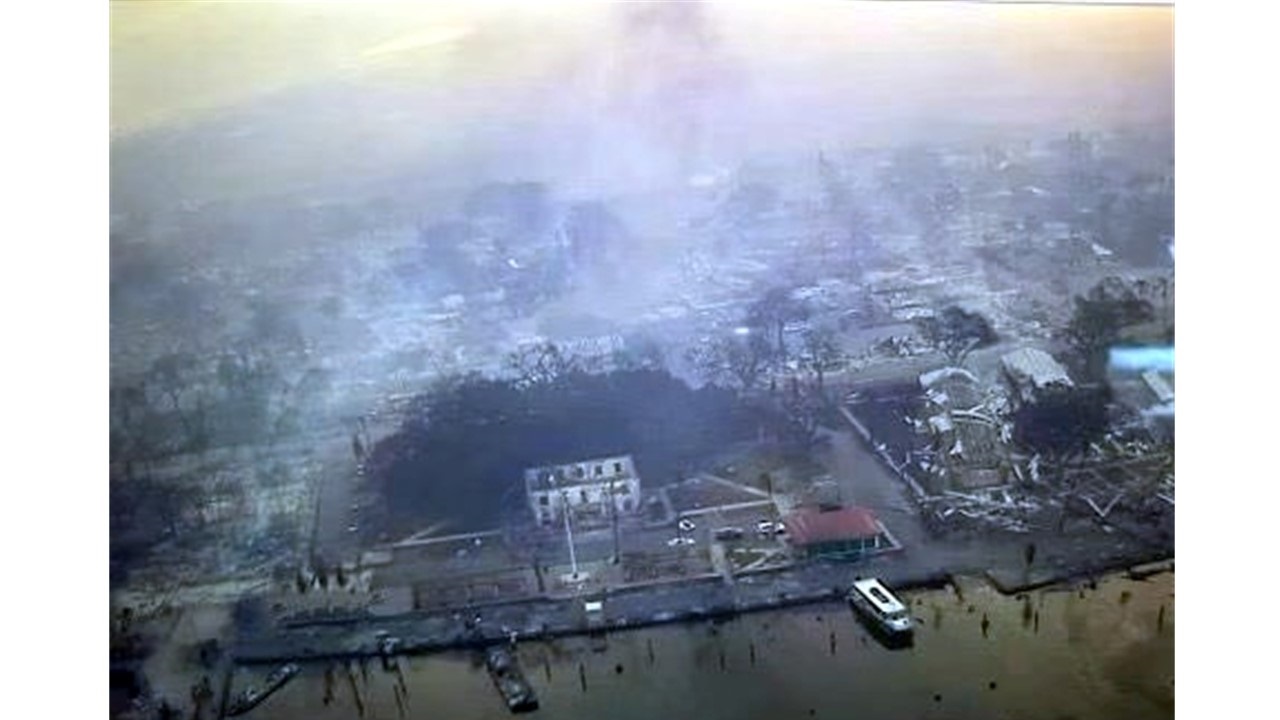
A Poem for Fire-Ravaged Lahaina, Hawaii, by Brian Yapko

Comments 10

  1. Roy Eugene Peterson says:
    3 years ago

    The seas and oceans hide so many architectural achievements of mankind that over time have sunk out of sight leaving the beguiling “detritus,” as you said. The seaside storms often seem to arise out of nowhere, although the likely case is people simply do not pay attention to the coming clouds until the gales are upon them. These two poems provide a pleasant interlude for intrepid imaginations.

    Reply
  2. Carey Jobe says:
    3 years ago

    Adam, I enjoyed both poems, particularly “Beach Fragments” as I have rarely encountered a Petrarchan sonnet written in alexandrines instead of iambic pentameter. And a sea breeze seemed to blow through both works that I found refreshing. Well done!

    Reply
  3. Cheryl Corey says:
    3 years ago

    What I find in “Seaside Storm” is a metaphor for the storms of life. Don’t we all, at times, have our castles in the sand?

    Reply
  4. Cynthia Erlandson says:
    3 years ago

    Beautiful imagery, and profound thoughts.

    Reply
  5. Margaret Coats says:
    3 years ago

    The sonnet in alexandrine lines, as Carey Jobe remarks, is rare in English, although very common in French (where the Petrarchan octave is used). I have tried translating such sonnets into English, and I find it difficult to make an English hexameter sonnet where lines do not often break apart, or need filler adjectives. Adam Sedia’s “Beach Fragments,” however, flows strongly in beautifully varied rhythmic lines, and the adjectives all contribute to the meaning and atmosphere of the piece.

    The sense of the sestet is well done. Adam compares shell fragments to ruins of classical civilization, in context of “a vanished whole.” Who designed the vanished whole of undersea architecture? One could say God, whose works ought to be superior to those of human culture. But that thought is beyond the scope of the sonnet. It compares fragments of work by Greek, Roman, or Egyptian artisans, to fragments made by humble mollusks. This is a culture-versus-nature comparison, in which God is the artisan behind both, but gives human beings a share in His creativity that animal instincts do not have. Thus the sonnet can truthfully declare that human logic, design, and style surpass that of mollusks, beautiful as their works may be.

    Reply
    • Adam Sedia says:
      3 years ago

      I’m glad both of you commented on the Alexandrines. I originally tried writing this in iambic pentameter, but found that a couple extra syllables were necessary to encapsulate everything I wanted to say. I’ve been reading Italian sonnets lately, and naturally turned to the Alexandrine meter they use.

      Reply
    • Margaret Coats says:
      3 years ago

      Adam, I’d love to know which Italian sonneteers you’re reading. I know there is supposed to be an Italian alexandrine line, but I have read mainly hendecasyllabic sonnets by Petrarch and his predecessors and followers.

      Reply
      • Adam Sedia says:
        3 years ago

        Right now, I’ve been reading sonnets by Alfieri and Foscolo. I’ve also read Spanish poetry extensively, and the alexandrine is the favored meter there, as well.

        Reply
      • Margaret Coats says:
        3 years ago

        Thanks for the reply, Adam. I’ll keep these in mind as authors and places to read alexandrine sonnets different from those I know.

        Reply
  6. C.B. Anderson says:
    3 years ago

    It’s funny, Adam, but both poems, for me, convey a deep sense of loss. Oddly, though we humans left the sea long ago, we still bear its semblance in our circulatory system, where every drop of salty blood must regularly and rhythmically pass through the heart.

    Reply

Leave a Reply Cancel reply

Your email address will not be published. Required fields are marked *

  1. Joseph S. Salemi on National Poetry Month Limerick ChallengeJuly 18, 2026

    Susan, that is very timely. He that hath ears to hear, let him hear.

  2. Susan Jarvis Bryant on ‘My Pyjamas!’ and Other Poems by Susan Jarvis BryantJuly 18, 2026

    Jan, thank you very much for your encouraging comment. I'm so glad you enjoyed the poems and especially glad they…

  3. James Sale on ‘The 51st State’: A Poem by James SaleJuly 18, 2026

    Not quite a win, Theresa, but thank you for the thought, and congratulations yourself on your "Finalist' status for your…

  4. Susan Jarvis Bryant on National Poetry Month Limerick ChallengeJuly 18, 2026

    A Slippery Victory There once was a prize for the best, Though merit was hardly the test. The winner was…

  5. Susan Jarvis Bryant on National Poetry Month Limerick ChallengeJuly 18, 2026

    Beautifully written and hilarious, Jan! You have inspired me to have a go. Thank you!

Subscribe to Daily Poems

Enter your email address to subscribe to this blog and receive notifications of new posts by email.

Join 1,594 other subscribers

Recent Poems

  • Winners and Rankings of The Great American Poetry Competition
  • ‘The Gold Star Mother’: A Poem by Gerard Maritato
  • ‘An American Dash’: A Poem by Linda Ellis
  • ‘The Anonymous Soldier’: A Poem by Lucy Lind
  • ‘For Those We Never Meet’: A Poem by Aneesh Agarwal
  • ‘Ben Franklin’s Copper Fugio Cent’: A Poem by Geoffrey Smagacz
  • Three Brief Poems by Luxorius, Translated by Joseph S. Salemi
  • ‘The American Spirit’: A Poem by Dusty Grein
  • ‘The Ballad of Zebulon Pike’: A Poem by M.D. Skeen
  • ‘We Are the Ones’ and Other Poetry by Cheryl Corey
  • ‘My Pyjamas!’ and Other Poems by Susan Jarvis Bryant
  • ‘A Snowy Egret’: A Poem by Bruce Dale Wise
  • ‘The Swearing-in of Calvin Coolidge’: A Sonnet by Robert W. Crawford
  • ‘Ballad of the Sequoia’: A Poem by Lauren V. Leon
  • ‘The 51st State’: A Poem by James Sale
  • ‘La Uva’ (The Grape): A Poem by Michael Pietrack
  • ‘There’s Blood that Flows Within the Stripes’: A Poem by Lauren V. Leon
  • ‘Birdsong’: A Poem by Jeffrey Essmann
  • ‘The Melody That Lingers On’ and Other Poetry by John McPherson
  • ‘American Dreams’: A Poem by Adam Sedia
  • ‘An American Fabius’: A Poem by John Hernandez
  • ‘Vernal Clinic’ and Other Poetry by C.B. Anderson
  • ‘Omaha Beach’ and Other Poetry by Bradford Skow
  • ‘Music to Part the Veil’: A Poem by T.M. Moore
  • ‘A Gentleman’s Guide to Losing a War’ and Other Poetry by Arnon Peterson
  • ‘Black Shuck’: A Poem by Martin Briggs
  • ‘When the Last World War II Veteran Passes Away’: A Poem by N.S. Boone
  • ‘A Fallow Year at Worthy Farm’: A Poem by Paul A. Freeman
  • ‘Outstanding in Afghanistan’: A Poem by Jared S. Chang
  • ‘250 More’: A Poem by Miguel Moreno

Categories

  • Acrostic
  • Alexandroid
  • Alliterative
  • Art
  • Best Poems
  • Blank Verse
  • Chant Royal
  • Classical Poets Live
  • Clerihew
  • Covid-19
  • Deconstructing Communism
  • Educational
  • Epic
  • Epigrams and Proverbs
  • Essays
    • Interviews with Poets
    • Poetry Reviews
  • Featured
  • From the Society
  • Great Poets
    • Dante Alighieri
    • Edgar Allan Poe
    • Emily Dickinson
    • Geoffrey Chaucer
    • Henry Wadsworth Longfellow
    • Homer
    • John Keats
    • John Milton
    • Robert Frost
    • William Blake
    • William Shakespeare
    • William Wordsworth
  • Human Rights in China
  • Limerick
  • Love Poems
  • Music
  • Pantoum
  • Performing Arts
  • Poetry
    • Beauty
    • Children's Poems
    • Culture
    • Ekphrastic
    • Found Poems
    • High School Poets
    • Humor
    • Riddles
  • Poetry Challenge
  • Poetry Contests
  • Poetry Forms
    • Curtal Sonnet
    • Haiku
  • Poetry Readings
  • Rhupunt
  • Rondeau
  • Rondeau Redoublé
  • Rondel
  • Rubaiyat
  • Sapphic Verse
  • Satire
  • Science
  • Sestina
  • Shape Poems
  • Short Stories
  • Song Lyrics
  • Sonnet
  • Symposium
  • Terrorism
  • Terza Rima
  • The Environment
  • Translation
  • Triolet
  • Video
  • Villanelle

Quick Links

  • About Us
  • Submit Poetry
  • Become a Member
  • Members List
  • Support the Society
  • Advertisement Placement
  • Comments Policy
  • Terms of Use

Welcome Back!

Login to your account below

Forgotten Password?

Retrieve your password

Please enter your username or email address to reset your password.

Log In
No Result
View All Result
  • Poems
    • Beauty
    • Culture
    • Satire
    • Humor
    • Children’s
    • Art
    • Ekphrastic
    • Epic
    • Epigrams and Proverbs
    • Human Rights in China
    • Music
    • Performing Arts
    • Riddles
    • Science
    • Song Lyrics
    • The Environment
    • The Raven
    • Found Poems
    • High School Poets
    • Terrorism
    • Covid-19
  • Poetry Forms
    • Sonnet
    • Haiku
    • Limerick
    • Villanelle
    • Rondeau
    • Pantoum
    • Sestina
    • Triolet
    • Acrostic
    • Alexandroid
    • Alliterative
    • Blank Verse
    • Chant Royal
    • Clerihew
    • Rhupunt
    • Rondeau Redoublé
    • Rondel
    • Rubaiyat
    • Sapphic Verse
    • Shape Poems
    • Terza Rima
  • Great Poets
    • Geoffrey Chaucer
    • Emily Dickinson
    • Homer
    • Henry Wadsworth Longfellow
    • Dante Alighieri
    • John Keats
    • John Milton
    • Edgar Allan Poe
    • William Shakespeare
    • William Wordsworth
    • William Blake
    • Robert Frost
  • Love Poems
  • Contests
  • SCP Academy
    • Educational
    • Teaching Classical Poetry—A Guide for Educators
    • Poetry Forms
    • The SCP Journal
    • Books

© 2025 SCP. WebDesign by CODEC Prime.