• Submit Poetry
  • Support SCP
  • About Us
  • Members
  • Join
Saturday, August 8, 2026
Society of Classical Poets
  • Poems
    • Beauty
    • Culture
    • Satire
    • Humor
    • Children’s
    • Art
    • Ekphrastic
    • Epic
    • Epigrams and Proverbs
    • Human Rights in China
    • Music
    • Performing Arts
    • Riddles
    • Science
    • Song Lyrics
    • The Environment
    • The Raven
    • Found Poems
    • High School Poets
    • Terrorism
    • Covid-19
  • Poetry Forms
    • Sonnet
    • Haiku
    • Limerick
    • Villanelle
    • Rondeau
    • Pantoum
    • Sestina
    • Triolet
    • Acrostic
    • Alexandroid
    • Alliterative
    • Blank Verse
    • Chant Royal
    • Clerihew
    • Rhupunt
    • Rondeau Redoublé
    • Rondel
    • Rubaiyat
    • Sapphic Verse
    • Shape Poems
    • Terza Rima
  • Great Poets
    • Geoffrey Chaucer
    • Emily Dickinson
    • Homer
    • Henry Wadsworth Longfellow
    • Dante Alighieri
    • John Keats
    • John Milton
    • Edgar Allan Poe
    • William Shakespeare
    • William Wordsworth
    • William Blake
    • Robert Frost
  • Love Poems
  • Contests
  • SCP Academy
    • Educational
    • Teaching Classical Poetry—A Guide for Educators
    • Poetry Forms
    • The SCP Journal
    • Books
No Result
View All Result
Society of Classical Poets
  • Poems
    • Beauty
    • Culture
    • Satire
    • Humor
    • Children’s
    • Art
    • Ekphrastic
    • Epic
    • Epigrams and Proverbs
    • Human Rights in China
    • Music
    • Performing Arts
    • Riddles
    • Science
    • Song Lyrics
    • The Environment
    • The Raven
    • Found Poems
    • High School Poets
    • Terrorism
    • Covid-19
  • Poetry Forms
    • Sonnet
    • Haiku
    • Limerick
    • Villanelle
    • Rondeau
    • Pantoum
    • Sestina
    • Triolet
    • Acrostic
    • Alexandroid
    • Alliterative
    • Blank Verse
    • Chant Royal
    • Clerihew
    • Rhupunt
    • Rondeau Redoublé
    • Rondel
    • Rubaiyat
    • Sapphic Verse
    • Shape Poems
    • Terza Rima
  • Great Poets
    • Geoffrey Chaucer
    • Emily Dickinson
    • Homer
    • Henry Wadsworth Longfellow
    • Dante Alighieri
    • John Keats
    • John Milton
    • Edgar Allan Poe
    • William Shakespeare
    • William Wordsworth
    • William Blake
    • Robert Frost
  • Love Poems
  • Contests
  • SCP Academy
    • Educational
    • Teaching Classical Poetry—A Guide for Educators
    • Poetry Forms
    • The SCP Journal
    • Books
No Result
View All Result
Society of Classical Poets
No Result
View All Result
Home Essays

Classical Book Review: A Brief Look at ‘The Kojiki’ (Tuttle)

May 18, 2017
in Essays, Poetry, Poetry Reviews, Translation
A A
3
Musee Guimet [Public domain], via Wikimedia Commons

Musee Guimet [Public domain], via Wikimedia Commons

By Joshua Philipppoems Classical Book Review: A Brief Look at 'The Kojiki' (Tuttle)

The Japanese creation story begins in a time of primordial chaos, and from this the god Izanagi and the goddess Izanami emerge to create the Japanese islands. This is the first tale in The Kojiki, the oldest surviving Japanese book. It tells of the ancient legends of Japan, beginning with tales from the spirit world, moving to stories of the mortal world, then telling, often through poetry, of the histories and divine origins of the imperial family.

The book is regarded as one of the main Shinto texts, not because it contains any religious teachings per se (Shinto has no religious texts), but because it tells the mythological history of Japan from a time when its culture and beliefs were grounded in the old faith.

It’s difficult to understand another culture or the thinking behind its stories and history without first understanding the myths and folklore at the foundations of its beliefs. It is these ancient stories that form the basis of our thoughts and actions—and here we find the cut and dry nature of the ancient Japanese views, and legends that trace the Japanese emperor to divine origins.

It always interests me that all cultures, no matter how remote and distant from one-another, all share similar stories of origin. Nearly all have their creation stories, their own pantheon of Gods, and their own tales of the sages and heroes who formed their cultures. There is a universality in tales of origin.

What makes The Kojiki especially interesting is that it’s not just a collection of myths and legends, but instead works as a chronological history of Japan.

And what is even more interesting about The Kojiki is how close these recorded histories came to being forgotten.

It was transcribed from oral tradition by Yasumaro, from the words of Hiyeda no Are (said to have had an extraordinary memory), and was then presented to the imperial court in 712 A.D.

The English translation from Tuttle Publishing goes back to Basil Hall Chamberlain (1850 – 1935), who read and translated The Kojiki in 1882. It was reprinted in 1919 and 1920 as a supplement to Vol. X of the Transactions of the Asiatic Society (which were destroyed in the earthquake and fire of 1923). The version from Tuttle Publishing is based on a print that belonged to the late W.G. Aston, and includes his numerous annotations—which so many years later now act as historical texts in themselves.

There are three major English translations of The Kojiki. Basil Hall Chamberlain translated it in 1882, Donald L. Philippi did a version in 1969, and Gustav Heldt did a version in 2014.

I’ve been looking at the earliest English translation of The Kojiki, since it contains notes and footnotes that are historical records in themselves—and also show a unique perspective from that time. Being translated nearly a century-and-a-half ago, the translator was able to see more clearly the nature of the Japanese people at a time when traditional culture was still very much alive.

For example, look first at this poem from the 2014 translation of The Kojiki:

Eightfold are the clouds that rise
in Billowing Clouds, where eightfold fences
to surround and shelter my wife
are eightfold fences made by me.
Ah, those eightfold fences!

(We will not venture much into the Japanese-language original since, we can presume, that there is ample room for debate.) Next, look at Tuttle’s edition. In a true spirit of humbleness and respect toward the original text, this edition offers three different versions, one from Chamberlain and two others in the copious notes:

(1)

Eight clouds arise. The eight-fold fence of Idzumo* makes an eight-fold fence for the spouses to retire [within]. Oh! that eight-fold fence. [*the notes indicate that the cloud-issuing meaning used in (2) and (3) below came from Japanese scholars at the time]

(2)

Many clouds arise:
The clouds which come forth (are) are a manifold fence:
For the husband and wife to retire within
They have formed a manifold fence:
Oh! that manifold fence!

(3)

Many clouds arise.
The manifold fence of the forth-issuing clouds
Makes a manifold fence
For the spouses to be within
Oh! that manifold fence.

There are key differences between the modern translation and the older translations. If you read closely, you’ll notice that the modern translation has removed the idea that the clouds themselves are alive, and the implication of a divine being at work, and inserted “made by me,” which refers to the husband. Here, the 2014 translation is subtly reductionist and atheist, and, as a result, quite un-poetic and inauthentic. There is also the shift from the original third person perspective in the older versions (which is closer to the ambiguity of the original Japanese) to the 2014 version’s first person perspective. As a result, the original sense of oneness between the poet and humanity is infused with modern individualism that is so uncharacteristic of Asian societies relative to Western societies, even today.

The publisher notes that the stories in the book were taken as fact up until 1945 and Japan’s defeat in World War II. It gives a unique perspective of how the Japanese people thought, at a time when these stories were seen as truth. The annotations give it additional depth, showing this culture from the perspectives of a Westerner in the early 1900s in what would now be seen as an otherworldly land.

The Kojiki is an interesting read, but it’s not necessarily entertaining due to its dry nature—something that’s set in sharp contrast to the environment of hyper entertainment of today’s Japan. Its foundation is the somewhat chaotic beauty of what is natural, and the divine hierarchy that brings order to chaos.

The Kojiki: Records of Ancient Matters
Tuttle Publishing
Translated by Basil Hall Chamberlain (1850 – 1935)
Annotations from W.G. Aston




ShareTweetPin
The Society of Classical Poets does not endorse any views expressed in individual poems or commentary.
Read Our Comments Policy Here

RandomPoems

‘The American Revolution: An Epic Poem,’ Chapter III, by Andrew Benson Brown
Beauty

‘The American Revolution: An Epic Poem,’ Chapter III, by Andrew Benson Brown

November 3, 2020

The American Revolution: An Epic Poem Chapter I Chapter II by Andrew Benson Brown   Chapter III: The New-World Mercury...

poems ‘A Riverside Sonnet’ and Other Poetry by Gregory J. Liebau
Beauty

‘A Riverside Sonnet’ and Other Poetry by Gregory J. Liebau

April 25, 2016

A Riverside Sonnet Under a tree and upon roots I sit, Drinking a forlorn draught of love’s sweet rhyme. Leaves...

Next Post
‘So Far, So Good’ and Other Poetry by Robert Cooperman

'Baby Boomers Are Aging' by Kathy Figueroa

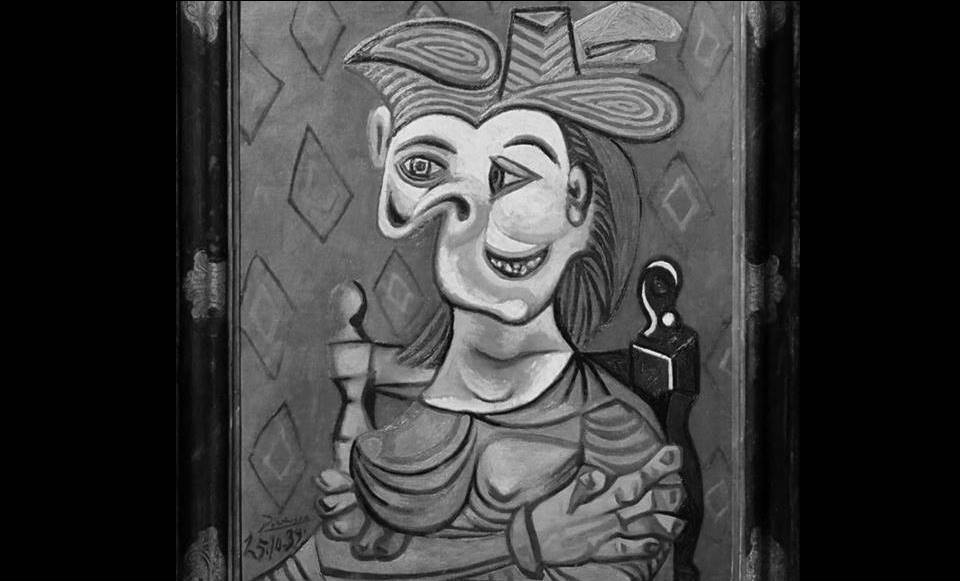
‘On Picasso’s Grotesque “Seated Woman in Blue Dress” Selling for $45 Million’ by Phillip Whidden

'On Picasso's Grotesque "Seated Woman in Blue Dress" Selling for $45 Million' by Phillip Whidden

‘The Port of Tears’ by James Sale

'Careless Dan' by Michael Harmon

Comments 3

  1. G. M. H. Thompson says:
    9 years ago

    Fascinating,– I had not heard of this– and this article is especially informative since it briefly outlines the history of translation and recommends what the author feels is the edition most true to the original.

    Reply
  2. James Sale says:
    9 years ago

    Fascinating, especially comparing the modern and older translations and its implications, and how the subtlest things reveal huge philosophical differences.

    Reply
  3. "Clear Dew" Ibuse says:
    9 years ago

    Mr. Philipp, thank you for reminding us of the importance of early literary texts. It is frequently true that the scholarly work of earlier centuries is more profound, and sometimes, as you have pointed out, more accurate, than that of later times. From the Kojiki itself of 712, poems from the legendary Emperor Ojin and the ill-fated Prince Kinashi no Karu are of most interest to me. The Man’yōshū, the “anthology of ten-thousand leaves,” of over 4,000 poems, published in the same century in 759, contains the work of my favourite Japanese poet Kakinomoto no Hitomaro.

    Reply

Leave a Reply Cancel reply

Your email address will not be published. Required fields are marked *


  1. Joseph S. Salemi on ‘Warfare by Remote Control’: A Poem by Paul A. FreemanAugust 8, 2026

    It's a matter of practicality, Paul. If your enemy has a new and effective weapon, you have to have it…

  2. Paul Freeman on ‘Good and Evil’: A Poem by Roy E. PetersonAugust 8, 2026

    Teachers and professors often take up these positions, I believe, so that they can pontificate from a position of power.…

  3. Paul Freeman on ‘The Story of a Plague’ and Other Poetry by Michael RobinsonAugust 8, 2026

    Unfortunately, pandemics happen, whether through a sudden mutation (Spanish flu, the Spanish king being the first prominent sufferer), man encountering…

  4. Paul Freeman on ‘Rain’ and Other Poems by Russel WinickAugust 8, 2026

    One reason I leave the Sahara every year for a month (though we do have downpours) is for some British…

  5. Paul Freeman on ‘Deliverance’ and Other Poetry by Peter VenableAugust 8, 2026

    Wow! Two contrasting pieces. We've probably all got into trouble in the water, one time or another, so Deliverance resonates.…

Subscribe to Daily Poems

Enter your email address to subscribe to this blog and receive notifications of new posts by email.

Join 1,606 other subscribers

Recent Poems

  • ‘Deliverance’ and Other Poetry by Peter Venable
  • ‘Rain’ and Other Poems by Russel Winick
  • ‘The Story of a Plague’ and Other Poetry by Michael Robinson
  • ‘Javert Derailed’: A Poem by Zanna Barton
  • ‘People Forget’: A Poem by James Sale
  • ‘Good and Evil’: A Poem by Roy E. Peterson
  • ‘The Royal Arse Hortillery’: A Poem on the Spoonerism, by Jeff Eardley
  • ‘Who Hears a Robot’s Prayer?’ and Other Poetry by Brian Yapko
  • The Society of Classical Poets 2026 Haiku Competition
  • Four Love Sonnets by Adam Sedia
  • ‘Rasputina Confers with Her Cohorts’: A Poem by Joseph S. Salemi
  • ‘Warfare by Remote Control’: A Poem by Paul A. Freeman
  • ‘The Passing’: A Poem by Margaret Brinton
  • ‘Of Webs and Whispers’: A Poem by Susan Jarvis Bryant
  • Poetry Book Review: Petrarch’s Canzoniere, Translated by A.M. Juster
  • ‘What Folly Dares’ and Other Love Poems by James A. Tweedie
  • ‘Allegrezza’ and Other Poetry by Rob Griffith
  • ‘The Lessons of Lot’: A Poem by Adam Wasem
  • ‘Prophecy and Divine Intervention in Virgil’s Aeneid’: An Essay by Kaitlyn Brown
  • ‘The Last Voyage of Barnaby Bear’: A Poem by Tashvi Reddy
  • ‘Impressions’ and Other Poems by Russel Winick
  • ‘The Reveal of the Rocks’: A Poem by Kyle Fiske
  • ‘Art Work’: A Poem by T.M. Moore
  • ‘A Strange Sun’: A Poem by Patricia Rogers Crozier
  • ‘Shave Off Those Whiskers’: A Poem by Roy E. Peterson
  • ‘The Man from China’: A Poem by Evan Mantyk
  • ‘The Ballad of the Ghost Mountain Boys’: A Poem by Rachel Lott
  • ‘The Threat of Virtue’: A Poem by Zumwalt
  • ‘A Poet at the Tower’ and Other Poetry by Michael C. Paul
  • ‘Florence Foster Jenkins’ and Other Poetry by Brian Yapko

Categories

  • Acrostic
  • Alexandroid
  • Alliterative
  • Art
  • Best Poems
  • Blank Verse
  • Chant Royal
  • Classical Poets Live
  • Clerihew
  • Covid-19
  • Deconstructing Communism
  • Educational
  • Epic
  • Epigrams and Proverbs
  • Essays
    • Interviews with Poets
    • Poetry Reviews
  • Featured
  • From the Society
  • Great Poets
    • Dante Alighieri
    • Edgar Allan Poe
    • Emily Dickinson
    • Geoffrey Chaucer
    • Henry Wadsworth Longfellow
    • Homer
    • John Keats
    • John Milton
    • Robert Frost
    • William Blake
    • William Shakespeare
    • William Wordsworth
  • Human Rights in China
  • Limerick
  • Love Poems
  • Music
  • Pantoum
  • Performing Arts
  • Poetry
    • Beauty
    • Children's Poems
    • Culture
    • Ekphrastic
    • Found Poems
    • High School Poets
    • Humor
    • Riddles
  • Poetry Challenge
  • Poetry Contests
  • Poetry Forms
    • Curtal Sonnet
    • Haiku
  • Poetry Readings
  • Rhupunt
  • Rondeau
  • Rondeau Redoublé
  • Rondel
  • Rubaiyat
  • Sapphic Verse
  • Satire
  • Science
  • Sestina
  • Shape Poems
  • Short Stories
  • Song Lyrics
  • Sonnet
  • Symposium
  • Terrorism
  • Terza Rima
  • The Environment
  • Translation
  • Triolet
  • Video
  • Villanelle

Quick Links

  • About Us
  • Submit Poetry
  • Become a Member
  • Members List
  • Support the Society
  • Advertisement Placement
  • Comments Policy
  • Terms of Use

Welcome Back!

Login to your account below

Forgotten Password?

Retrieve your password

Please enter your username or email address to reset your password.

Log In
No Result
View All Result
  • Poems
    • Beauty
    • Culture
    • Satire
    • Humor
    • Children’s
    • Art
    • Ekphrastic
    • Epic
    • Epigrams and Proverbs
    • Human Rights in China
    • Music
    • Performing Arts
    • Riddles
    • Science
    • Song Lyrics
    • The Environment
    • The Raven
    • Found Poems
    • High School Poets
    • Terrorism
    • Covid-19
  • Poetry Forms
    • Sonnet
    • Haiku
    • Limerick
    • Villanelle
    • Rondeau
    • Pantoum
    • Sestina
    • Triolet
    • Acrostic
    • Alexandroid
    • Alliterative
    • Blank Verse
    • Chant Royal
    • Clerihew
    • Rhupunt
    • Rondeau Redoublé
    • Rondel
    • Rubaiyat
    • Sapphic Verse
    • Shape Poems
    • Terza Rima
  • Great Poets
    • Geoffrey Chaucer
    • Emily Dickinson
    • Homer
    • Henry Wadsworth Longfellow
    • Dante Alighieri
    • John Keats
    • John Milton
    • Edgar Allan Poe
    • William Shakespeare
    • William Wordsworth
    • William Blake
    • Robert Frost
  • Love Poems
  • Contests
  • SCP Academy
    • Educational
    • Teaching Classical Poetry—A Guide for Educators
    • Poetry Forms
    • The SCP Journal
    • Books

© 2025 SCP. WebDesign by CODEC Prime.