• Submit Poetry
  • Support SCP
  • About Us
  • Members
  • Join
Saturday, July 18, 2026
Society of Classical Poets
  • Poems
    • Beauty
    • Culture
    • Satire
    • Humor
    • Children’s
    • Art
    • Ekphrastic
    • Epic
    • Epigrams and Proverbs
    • Human Rights in China
    • Music
    • Performing Arts
    • Riddles
    • Science
    • Song Lyrics
    • The Environment
    • The Raven
    • Found Poems
    • High School Poets
    • Terrorism
    • Covid-19
  • Poetry Forms
    • Sonnet
    • Haiku
    • Limerick
    • Villanelle
    • Rondeau
    • Pantoum
    • Sestina
    • Triolet
    • Acrostic
    • Alexandroid
    • Alliterative
    • Blank Verse
    • Chant Royal
    • Clerihew
    • Rhupunt
    • Rondeau Redoublé
    • Rondel
    • Rubaiyat
    • Sapphic Verse
    • Shape Poems
    • Terza Rima
  • Great Poets
    • Geoffrey Chaucer
    • Emily Dickinson
    • Homer
    • Henry Wadsworth Longfellow
    • Dante Alighieri
    • John Keats
    • John Milton
    • Edgar Allan Poe
    • William Shakespeare
    • William Wordsworth
    • William Blake
    • Robert Frost
  • Love Poems
  • Contests
  • SCP Academy
    • Educational
    • Teaching Classical Poetry—A Guide for Educators
    • Poetry Forms
    • The SCP Journal
    • Books
No Result
View All Result
Society of Classical Poets
  • Poems
    • Beauty
    • Culture
    • Satire
    • Humor
    • Children’s
    • Art
    • Ekphrastic
    • Epic
    • Epigrams and Proverbs
    • Human Rights in China
    • Music
    • Performing Arts
    • Riddles
    • Science
    • Song Lyrics
    • The Environment
    • The Raven
    • Found Poems
    • High School Poets
    • Terrorism
    • Covid-19
  • Poetry Forms
    • Sonnet
    • Haiku
    • Limerick
    • Villanelle
    • Rondeau
    • Pantoum
    • Sestina
    • Triolet
    • Acrostic
    • Alexandroid
    • Alliterative
    • Blank Verse
    • Chant Royal
    • Clerihew
    • Rhupunt
    • Rondeau Redoublé
    • Rondel
    • Rubaiyat
    • Sapphic Verse
    • Shape Poems
    • Terza Rima
  • Great Poets
    • Geoffrey Chaucer
    • Emily Dickinson
    • Homer
    • Henry Wadsworth Longfellow
    • Dante Alighieri
    • John Keats
    • John Milton
    • Edgar Allan Poe
    • William Shakespeare
    • William Wordsworth
    • William Blake
    • Robert Frost
  • Love Poems
  • Contests
  • SCP Academy
    • Educational
    • Teaching Classical Poetry—A Guide for Educators
    • Poetry Forms
    • The SCP Journal
    • Books
No Result
View All Result
Society of Classical Poets
No Result
View All Result
Home Poetry Culture

‘Fifth Glyph’: A Poem on the Letter E, by Paul A. Freeman

June 14, 2023
in Culture, Humor, Poetry
A A
26
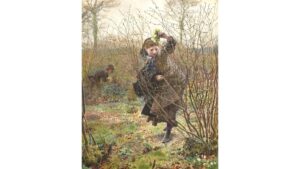
poems 'Fifth Glyph': A Poem on the Letter E, by Paul A. Freeman

.

Fifth Glyph

This glyph, in British talk, occurs most oft—
most common, too, writ down within our books.
Twixt ‘a’ and ‘z’ it’s fifth, not sat aloft
but low and unassuming in its looks.
An ‘o’ ajar, in small form, with a rod
slid inwards at a horizontal slant;
this symbol is industrial printing’s god,
dug in that no brash upstart can supplant.
In caps, a straight and standing pillar holds
a trio of blunt prongs all pointing right;
in Anglo-Saxon words this icon moulds
its myth of broad ubiquity and might.
__Oh tyrant glyph, undo your crafty smirk,
__I banish and dismiss you from this work.

First published in The Spectator magazine

.

.

Paul A. Freeman is the author of Rumours of Ophir, a crime novel which was taught in Zimbabwean high schools and has been translated into German. In addition to having two novels, a children’s book and an 18,000-word narrative poem (Robin Hood and Friar Tuck: Zombie Killers!) commercially published, Paul is the author of hundreds of published short stories, poems and articles.

ShareTweetPin
The Society of Classical Poets does not endorse any views expressed in individual poems or commentary.
Read Our Comments Policy Here

RandomPoems

‘What’s Left to Say?’ and Other Poetry by Joshua C. Frank
Culture

‘What’s Left to Say?’ and Other Poetry by Joshua C. Frank

December 13, 2023

. What’s Left to Say? a rhupunt  When women’s plans Are like a man’s, So they act trans, What’s left...

On the Recent Destruction of the Georgia Guidestones, by Susan Jarvis Bryant
Culture

On the Recent Destruction of the Georgia Guidestones, by Susan Jarvis Bryant

July 6, 2022

. America’s Most Mysterious Monument The first of the anonymously funded Georgia Guidestone’s guidelines: “Maintain humanity under 500,000,000” “The world...

Next Post
poem/coats/beauty

'The Moselle': A Poem on the European River, by Margaret Coats

poem/macdonald/love poems

'Emptiness': A Poem by Cathy McDonald

poem/dickey/culture

'Fracture Mechanics': A Poem by Stephen M. Dickey

Comments 26

  1. Roy Eugene Peterson says:
    3 years ago

    An apt description of the fifth glyph indeed. Imaginative visual.

    Reply
    • Paul Freeman says:
      3 years ago

      It seemed to take forever to write this one. Evan had a key piece of input after a lot of to-ing and fro-ing which eventually got the poem feeling right.

      Thanks for reading, Roy.

      Reply
  2. Julian D. Woodruff says:
    3 years ago

    Virtuosic, Paul! I know that a long, fictitious story (call it a … I can’t say what) with such a lack had found print; but unassuming though it is, writing such as yours, in my opinion, is just as difficult to pull off. My hat’s off to you!

    Reply
    • Paul Freeman says:
      3 years ago

      Thanks, Julian. That’s praise indeed.

      Reply
  3. Paul Freeman says:
    3 years ago

    Whenever I tried reworking parts of this poem, the odd ‘e’ (in the guise of a newly added word) would sneak in, so it seemed to take forever.

    Thanks for reading, Julian.

    Reply
  4. Margaret Coats says:
    3 years ago

    Shall I call this a tour-de-fors, Paul? I began to wonder what was going on when you said “British” rather than “English,” and when I got to “sat” which should have been “set,” I knew. It’s a riddul!

    Reply
    • Paul Freeman says:
      3 years ago

      Glad you liked it Margaret.

      Reply
  5. Tom Woodliff says:
    3 years ago

    That is so cool. A poem with nary an e. Bravo

    Reply
    • Paul Freeman says:
      3 years ago

      Thank you, Tom.

      Reply
  6. Mary Gardner says:
    3 years ago

    Paul, this is brilliant. Unlike Margaret, I didn’t catch on until the last line.

    Reply
    • Paul Freeman says:
      3 years ago

      Thanks, Mary.

      As I recall, I wrote the poem during lockdown – and it took me ages.

      Reply
  7. James Sale says:
    3 years ago

    Highly ingenious and difficult to do – well done!

    Reply
    • Paul Freeman says:
      3 years ago

      Thank you, James.

      Reply
  8. James A. Tweedie says:
    3 years ago

    Such writing as Paul has done so well is called a lipogram.

    In 1939, Ernest Vincent Wright wrote “Gadsby” a 50,000 word novel without using the letter “e.” And in 1969, Georges Perec did the same in French. His novel, “La Disparation,” has since been translated into English, German, Italian, Dutch, Swedish, Spanish, Turkish, Romanian, and Japanese, with each translation missing the “e” or an equivalent character.

    This would be a good challenge for us all to “give it a go.”

    Well done, Paul. You’ve set the bar high, indeed!

    Reply
    • Mary Gardner says:
      3 years ago

      Okay, I’ll start:

      Oh, what will you do, pray, if your car
      Stops, not warning its gas tank is low
      On a trip of a sojourn afar?
      Sorry, Buddy, no way you can go.
      Why’d you buy a run down jalopy?
      Hoopty’s dash has no dial to show “ ”!

      Reply
      • James A. Tweedie says:
        3 years ago

        Mary,

        Ha! What a funn__ po_m! Thanks for making th_ _ffort to provid_ us with som_ much-appr_ciat_d _nt_rtainm_nt!

        Reply
      • Paul Freeman says:
        3 years ago

        Nicely done, Mary.

        Writing without the letter ‘e’ looks deceptively easy, but is a real brain teaser.

        Reply
    • Joseph S. Salemi says:
      3 years ago

      The Iliad has 24 books, and the ancient Greek poet Nestor composed his own 24-book version of it, in which each book omitted the corresponding letter of the Greek alphabet (which has 24 letters.) Book 1 had no alpha, Book 2, had no beta, Book 3 had no gamma, etc.) Unfortunately the text has not survived. Some other Greek poet did the same thing with the Odyssey, but his name escapes me.

      Reply
    • Paul Freeman says:
      3 years ago

      Thank you for your comment, James, and for the background information on this type of writing.

      Reply
  9. Joshua C. Frank says:
    3 years ago

    Quite a charming poem, Paul.

    I noticed from early on in the poem that you were missing the letter E. Since it’s in so many words, that must have taken quite a bit of effort. After all, it’s at the beginning of everything and every end, and at the end of time and space and every tale (free bonus points to all who get the joke).

    Bit of trivia: in math, e is Euler’s number (e stands for his name), whose many mathematical definitions can be found here if anyone’s interested: https://en.wikipedia.org/wiki/E_(mathematical_constant)

    Reply
    • Paul Freeman says:
      3 years ago

      Thanks for commenting, Joshua, and for the ‘Euler’ reference.

      This thread has certainly led us in a number of interesting directions.

      Reply
  10. Paul Martin Freeman says:
    3 years ago

    Wonderful, Paul, and devilishly clever! A test of the poet’s craft passed with distinction!

    I could hear the Chaucer, too, particularly in line 4.

    Reply
    • Paul Freeman says:
      3 years ago

      Thanks, Paul.

      I’d actually forgotten about this poem until you started writing poems based on letters.

      Funnily enough, I reworked line 4 after an adjustment to line 3 suggested by Evan.

      Reply
      • Paul Martin Freeman says:
        3 years ago

        I recall your comment, which I’ve just re-read, about subbing fifth glyph. I had absolute no idea what you were talking about! But then I didn’t know what a schwa was until I looked it up!

        This website is an education in all kinds of ways!

        Reply
  11. Damian Robin says:
    3 years ago

    Fr-ery clever, Mr E-man.

    Reply
    • Damian Robin says:
      3 years ago

      And Mary Gardn’r.

      And all
      the other interesting examples concerning the extensively used (yet evidently in-essentially needed) letter e.

      There’s another potential challenge, James :
      Verse where every word of every line — or the whole poem — includes one specific letter.

      Reply

Leave a Reply Cancel reply

Your email address will not be published. Required fields are marked *

  1. Theresa Werba on ‘American Dreams’: A Poem by Adam SediaJuly 18, 2026

    Congrats on your Finalist win Adam, such an excellently-wrought and powerful poem!

  2. Theresa Werba on ‘The 51st State’: A Poem by James SaleJuly 18, 2026

    Congrats James on your Finalist win!!!

  3. Brian Yapko on ‘Americans Cross the Rubicon’: A July 4th Poem by Brian YapkoJuly 18, 2026

    Thank you very much indeed, Adam. The Civil War and Pearl Harbor were decisive enough. I wanted a full range…

  4. Theresa Werba on ‘Two Fateful American Coin Flips’: A Poem by James A. TweedieJuly 18, 2026

    Jim, congrats on your win!!!

  5. BDW on ‘For Those We Never Meet’: A Poem by Aneesh AgarwalJuly 18, 2026

    Mr. Agawal has generalized the largest labour insurrection in America from the early 20th century—1921, that cost the lives of…

Subscribe to Daily Poems

Enter your email address to subscribe to this blog and receive notifications of new posts by email.

Join 1,595 other subscribers

Recent Poems

  • Winners and Rankings of The Great American Poetry Competition
  • ‘The Gold Star Mother’: A Poem by Gerard Maritato
  • ‘An American Dash’: A Poem by Linda Ellis
  • ‘The Anonymous Soldier’: A Poem by Lucy Lind
  • ‘For Those We Never Meet’: A Poem by Aneesh Agarwal
  • ‘Ben Franklin’s Copper Fugio Cent’: A Poem by Geoffrey Smagacz
  • Three Brief Poems by Luxorius, Translated by Joseph S. Salemi
  • ‘The American Spirit’: A Poem by Dusty Grein
  • ‘The Ballad of Zebulon Pike’: A Poem by M.D. Skeen
  • ‘We Are the Ones’ and Other Poetry by Cheryl Corey
  • ‘My Pyjamas!’ and Other Poems by Susan Jarvis Bryant
  • ‘A Snowy Egret’: A Poem by Bruce Dale Wise
  • ‘The Swearing-in of Calvin Coolidge’: A Sonnet by Robert W. Crawford
  • ‘Ballad of the Sequoia’: A Poem by Lauren V. Leon
  • ‘The 51st State’: A Poem by James Sale
  • ‘La Uva’ (The Grape): A Poem by Michael Pietrack
  • ‘There’s Blood that Flows Within the Stripes’: A Poem by Lauren V. Leon
  • ‘Birdsong’: A Poem by Jeffrey Essmann
  • ‘The Melody That Lingers On’ and Other Poetry by John McPherson
  • ‘American Dreams’: A Poem by Adam Sedia
  • ‘An American Fabius’: A Poem by John Hernandez
  • ‘Vernal Clinic’ and Other Poetry by C.B. Anderson
  • ‘Omaha Beach’ and Other Poetry by Bradford Skow
  • ‘Music to Part the Veil’: A Poem by T.M. Moore
  • ‘A Gentleman’s Guide to Losing a War’ and Other Poetry by Arnon Peterson
  • ‘Black Shuck’: A Poem by Martin Briggs
  • ‘When the Last World War II Veteran Passes Away’: A Poem by N.S. Boone
  • ‘A Fallow Year at Worthy Farm’: A Poem by Paul A. Freeman
  • ‘Outstanding in Afghanistan’: A Poem by Jared S. Chang
  • ‘250 More’: A Poem by Miguel Moreno

Categories

  • Acrostic
  • Alexandroid
  • Alliterative
  • Art
  • Best Poems
  • Blank Verse
  • Chant Royal
  • Classical Poets Live
  • Clerihew
  • Covid-19
  • Deconstructing Communism
  • Educational
  • Epic
  • Epigrams and Proverbs
  • Essays
    • Interviews with Poets
    • Poetry Reviews
  • Featured
  • From the Society
  • Great Poets
    • Dante Alighieri
    • Edgar Allan Poe
    • Emily Dickinson
    • Geoffrey Chaucer
    • Henry Wadsworth Longfellow
    • Homer
    • John Keats
    • John Milton
    • Robert Frost
    • William Blake
    • William Shakespeare
    • William Wordsworth
  • Human Rights in China
  • Limerick
  • Love Poems
  • Music
  • Pantoum
  • Performing Arts
  • Poetry
    • Beauty
    • Children's Poems
    • Culture
    • Ekphrastic
    • Found Poems
    • High School Poets
    • Humor
    • Riddles
  • Poetry Challenge
  • Poetry Contests
  • Poetry Forms
    • Curtal Sonnet
    • Haiku
  • Poetry Readings
  • Rhupunt
  • Rondeau
  • Rondeau Redoublé
  • Rondel
  • Rubaiyat
  • Sapphic Verse
  • Satire
  • Science
  • Sestina
  • Shape Poems
  • Short Stories
  • Song Lyrics
  • Sonnet
  • Symposium
  • Terrorism
  • Terza Rima
  • The Environment
  • Translation
  • Triolet
  • Video
  • Villanelle

Quick Links

  • About Us
  • Submit Poetry
  • Become a Member
  • Members List
  • Support the Society
  • Advertisement Placement
  • Comments Policy
  • Terms of Use

Welcome Back!

Login to your account below

Forgotten Password?

Retrieve your password

Please enter your username or email address to reset your password.

Log In
No Result
View All Result
  • Poems
    • Beauty
    • Culture
    • Satire
    • Humor
    • Children’s
    • Art
    • Ekphrastic
    • Epic
    • Epigrams and Proverbs
    • Human Rights in China
    • Music
    • Performing Arts
    • Riddles
    • Science
    • Song Lyrics
    • The Environment
    • The Raven
    • Found Poems
    • High School Poets
    • Terrorism
    • Covid-19
  • Poetry Forms
    • Sonnet
    • Haiku
    • Limerick
    • Villanelle
    • Rondeau
    • Pantoum
    • Sestina
    • Triolet
    • Acrostic
    • Alexandroid
    • Alliterative
    • Blank Verse
    • Chant Royal
    • Clerihew
    • Rhupunt
    • Rondeau Redoublé
    • Rondel
    • Rubaiyat
    • Sapphic Verse
    • Shape Poems
    • Terza Rima
  • Great Poets
    • Geoffrey Chaucer
    • Emily Dickinson
    • Homer
    • Henry Wadsworth Longfellow
    • Dante Alighieri
    • John Keats
    • John Milton
    • Edgar Allan Poe
    • William Shakespeare
    • William Wordsworth
    • William Blake
    • Robert Frost
  • Love Poems
  • Contests
  • SCP Academy
    • Educational
    • Teaching Classical Poetry—A Guide for Educators
    • Poetry Forms
    • The SCP Journal
    • Books

© 2025 SCP. WebDesign by CODEC Prime.