• Submit Poetry
  • Support SCP
  • About Us
  • Members
  • Join
Saturday, July 18, 2026
Society of Classical Poets
  • Poems
    • Beauty
    • Culture
    • Satire
    • Humor
    • Children’s
    • Art
    • Ekphrastic
    • Epic
    • Epigrams and Proverbs
    • Human Rights in China
    • Music
    • Performing Arts
    • Riddles
    • Science
    • Song Lyrics
    • The Environment
    • The Raven
    • Found Poems
    • High School Poets
    • Terrorism
    • Covid-19
  • Poetry Forms
    • Sonnet
    • Haiku
    • Limerick
    • Villanelle
    • Rondeau
    • Pantoum
    • Sestina
    • Triolet
    • Acrostic
    • Alexandroid
    • Alliterative
    • Blank Verse
    • Chant Royal
    • Clerihew
    • Rhupunt
    • Rondeau Redoublé
    • Rondel
    • Rubaiyat
    • Sapphic Verse
    • Shape Poems
    • Terza Rima
  • Great Poets
    • Geoffrey Chaucer
    • Emily Dickinson
    • Homer
    • Henry Wadsworth Longfellow
    • Dante Alighieri
    • John Keats
    • John Milton
    • Edgar Allan Poe
    • William Shakespeare
    • William Wordsworth
    • William Blake
    • Robert Frost
  • Love Poems
  • Contests
  • SCP Academy
    • Educational
    • Teaching Classical Poetry—A Guide for Educators
    • Poetry Forms
    • The SCP Journal
    • Books
No Result
View All Result
Society of Classical Poets
  • Poems
    • Beauty
    • Culture
    • Satire
    • Humor
    • Children’s
    • Art
    • Ekphrastic
    • Epic
    • Epigrams and Proverbs
    • Human Rights in China
    • Music
    • Performing Arts
    • Riddles
    • Science
    • Song Lyrics
    • The Environment
    • The Raven
    • Found Poems
    • High School Poets
    • Terrorism
    • Covid-19
  • Poetry Forms
    • Sonnet
    • Haiku
    • Limerick
    • Villanelle
    • Rondeau
    • Pantoum
    • Sestina
    • Triolet
    • Acrostic
    • Alexandroid
    • Alliterative
    • Blank Verse
    • Chant Royal
    • Clerihew
    • Rhupunt
    • Rondeau Redoublé
    • Rondel
    • Rubaiyat
    • Sapphic Verse
    • Shape Poems
    • Terza Rima
  • Great Poets
    • Geoffrey Chaucer
    • Emily Dickinson
    • Homer
    • Henry Wadsworth Longfellow
    • Dante Alighieri
    • John Keats
    • John Milton
    • Edgar Allan Poe
    • William Shakespeare
    • William Wordsworth
    • William Blake
    • Robert Frost
  • Love Poems
  • Contests
  • SCP Academy
    • Educational
    • Teaching Classical Poetry—A Guide for Educators
    • Poetry Forms
    • The SCP Journal
    • Books
No Result
View All Result
Society of Classical Poets
No Result
View All Result
Home Love Poems

‘Just Like That’: A Poem by Anna J. Arredondo

June 22, 2024
in Love Poems, Poetry
A A
23
poems 'Just Like That': A Poem by Anna J. Arredondo

.

Just Like That

No special words, no passionate embrace;
No gazing, full of meanings, soul to soul.
Just casual talk, not even face to face;
Just mundane filling each of them their role.

Perhaps they did touch base—a text, a call:
“We’ll have the roast tonight. If you don’t mind,
Preheat the oven for me—that is all—
When you three get back home. And then, unwind!”

“No problem. I’m just pulling up outside
The school. Here come the kids, I’ve got to go.”
“’K, love you, bye.” The final call, the final ride—
But no one knew, to savor, take it slow.

The usual chatter, till the final curtain:
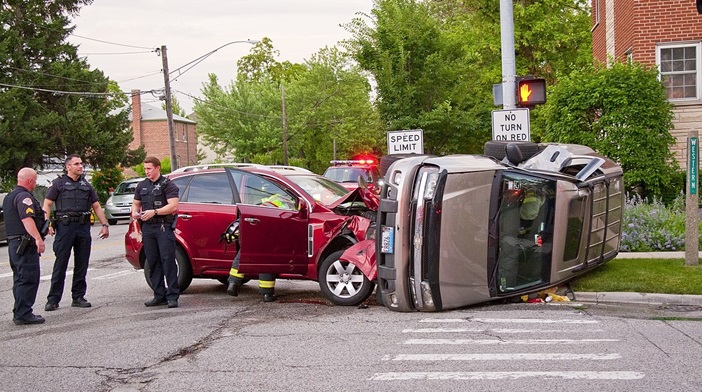
Blindsided by a fool who ran the red.
The witnesses, in shock, were very certain
He never saw it coming; now he’s dead.

She sits a widow in the ICU;
Her children, fatherless, repose nearby.
Too much at once, too numb, what can she do?
Too full of loss to think, to grieve, to cry.

__Back at the empty house,
_the empty oven waits to start,
But colder, darker, emptier her heart.

.

.

A Pennsylvania native now residing in Colorado, Anna J. Arredondo is an engineer by education, a home educator by choice, and by preference, a poet. She also has poems published (or forthcoming) in The Lyric, Time of Singing, Light, Blue Unicorn, Better Than Starbucks, and WestWard Quarterly.
ShareTweetPin
The Society of Classical Poets does not endorse any views expressed in individual poems or commentary.
Read Our Comments Policy Here

RandomPoems

poem/cooper/culture
Poetry

‘Some People Did Something’ by J.M. McBirnie

May 6, 2019

Some People Did Something On Rep. Omar's reducing the 9/11 terrorist attacks to "Some people did something" Some people swallowed...

‘Bear Spray’ and Other Poetry by Paul Burgess
Children's Poems

‘Bear Spray’ and Other Poetry by Paul Burgess

May 4, 2025

. Bear Spray My little brother took a dare To pepper spray a mama bear. It seems the spray was...

Next Post
‘Flamingo’: A Poem by Jeremiah Johnson

'Flamingo': A Poem by Jeremiah Johnson

‘On the Dine-and-Dash Phenomenon’: A Poem by Paul Freeman

'On the Dine-and-Dash Phenomenon': A Poem by Paul Freeman

‘The Plagiarising Poet’: A Poem by Drilon Bajrami

'The Plagiarising Poet': A Poem by Drilon Bajrami

Comments 23

  1. Roy Eugene Peterson says:
    2 years ago

    One of the saddest poems I have ever read. We must savor life while we have it and cherish those we love. You put your precious heart and soul into this one.

    Reply
    • Anna J. Arredondo says:
      2 years ago

      Thank you for your comment, Roy. Yes, I think I did.
      I actually submitted a trio of poems with this overarching theme of cherishing those we love while we still can, but only this one made it past the gatekeepers. I guess it sufficed to drive home the lesson…

      Reply
      • The Society says:
        2 years ago

        Dear Anna,

        Just to clarify, almost always I am the only gatekeeper. Very rarely do I seek outside feedback on website submissions. Also, I’ve added a clarifying point to our submissions page: “Poems may be previously published. However, poems that have not been previously published are given greater consideration.”

        Regards,
        Evan Mantyk,
        SCP Editor

        Reply
  2. Sally Cook says:
    2 years ago

    Excellent poem, Anna. I recall reading of this freaky accident. Anna, your poem says it all and so much more. It was certainly worthy of a poem and you showed this awful incident the respect it deserved.

    Reply
    • Anna J. Arredondo says:
      2 years ago

      Thank you, Sally. As it roiled in my mind throughout the day I heard of it, I too began to consider it worthy of a poem; by that evening I just had to write it.

      Reply
  3. Shamik Banerjee says:
    2 years ago

    This is truly a heartbreaking poem, and I still can’t unthink the very striking first stanza. Probably the most sentimental and grief-laden piece I’ve read in a long time. You gave us an important and often overlooked lesson, Anna: to cherish our loved ones and every moment we have with them. Sometimes, I’m startled by life and how it works. In one moment, one is someone’s all, the very next, he is a nobody. In one moment, a family is whole, in the next, it’s torn…

    Reply
    • Anna J. Arredondo says:
      2 years ago

      Thank you for your comment, Shamik. It’s far too easy for the lesson to fade quickly away in the humdrum of everyday life. It is good to be reminded often, preferably through less tragic means, to treasure the moments we have with our loved ones.

      Reply
  4. Brian A. Yapko says:
    2 years ago

    This is indeed a very sad poem, Anna. And a very sobering one. Accidents like this are far too common. Thank you for putting faces and feelings into what would otherwise be cold statistics. This is a good reminder that life can change in a heartbeat and that every moment is precious. You put your heart into this poem and it shows.

    Reply
    • Anna J. Arredondo says:
      2 years ago

      Thank you, Brian. Indeed, such accidents are far too common, to the point where we might take a moment to wince and exclaim, “oh, that’s terrible!” and then put it out of our mind (and necessarily so – no one can bear to walk around constantly bearing the weight of every stranger’s tragedy in their conscious thought). If this had been “just” a news story, that is what I would have done. And if it had been an acquaintance of mine, or close friend or relative, I probably wouldn’t have had the wherewithal to write a thing. This case was somewhere in between the two: the heartbreaking accident happened to friends of a friend, making it not directly personal, but still too close to home for me to brush it away. This poem is the product of my wrestling with their tragic loss – putting faces and feelings into it.

      Reply
  5. C.B. Anderson says:
    2 years ago

    Holy crap! This was as intense a reading experience as I have had in quite a while. Your approach to the reader was relentless, and I’m sure you buckled more than a few knees. If you keep writing stuff like this, then you will force many of us to the edges of our seats.

    Reply
    • Anna J. Arredondo says:
      2 years ago

      Thanks, C.B. I did have the sense it was sort of a punch in the gut kind of poem. Alas, I cannot write this intensely at will. Out of a hundred times that I am overwhelmed with the magnitude of some intense emotion or event and say to myself, “I just have to write about this!”, ninety-nine times (or more) – I don’t.

      Reply
  6. Julian D. Woodruff says:
    2 years ago

    A deeply felt poem with an accute sense of helplessness. Coming as it did for me right on the heels of a memorial service for an old friend, it hit especially hard.

    Reply
    • Anna J. Arredondo says:
      2 years ago

      Julian, I am sorry for your loss. I hope it didn’t hit too hard. To convey a sense of helplessness and impotence was my poetic intent, but my personal view (and I hope yours as well) is not one without hope. I know that the widow (the real one, not my fictionalized version) is a Christian, and trust that her Shepherd has been most palpably present with her through her horrible loss. Romans 15:13 “May the God of hope fill you with all joy and peace in believing, so that by the power of the Holy Spirit you may abound in hope.”

      Reply
  7. Cynthia Erlandson says:
    2 years ago

    This is such a good poem, Anna, beautifully and lovingly written. You were able to put your mind in the place of this family, and to imagine so realistically (“‘K, love you, bye.”) how their day might have been proceeding right before the tragedy happened. And after it happened, you empathize in a simple way appropriate for someone who (I assume) doesn’t know them. So well done, with the oven at the end echoing the dinner plan earlier in the poem.

    Reply
    • Anna J. Arredondo says:
      2 years ago

      Thank you so much, Cynthia. You have pointed out some of the things that I was hoping would come through. Any loss of a loved one is painful, period. But I was specifically trying to highlight the abruptness, unexpectedness, unpreparedness, etc. of an accident like this, and how surreal the previously mundane things seem in the face of tragedy. I’m glad you caught that with the oven…

      Reply
  8. Paul A. Freeman says:
    2 years ago

    I think we can all relate to the events of this poem. It must have been a difficult one to write, Anna.

    Reply
    • Anna J. Arredondo says:
      2 years ago

      Thanks for commenting, Paul. It is difficult subject matter to focus on, but finding a way to verbalize or encapsulate it in a poem was a kind of relief.

      Reply
      • Paul A. Freeman says:
        2 years ago

        I hear you, Anna. I have a number of prose pieces that didn’t exactly put subjects like this to bed, but put them into perspective and made them easier to bear.

        Reply
  9. Jeff Eardley says:
    2 years ago

    Heartbreaking and so sad to read. These accidents when folk never have a chance to say goodbye are the worst of all . You have written an amazing piece Anna. Thank you.

    Reply
    • Anna J. Arredondo says:
      2 years ago

      Thank you, Jeff!

      Reply
  10. Margaret Coats says:
    2 years ago

    While many comments have addressed the emotion of this poem and the difficulty of conveying it, I’ll try to say how it’s difficult in relation to lyric genre and Anna’s apparent aim. We’ve all read sad elegies for the deceased, and there are a thousand ways to write one. This poem deals with the special case of a sudden and unexpected death, but even that can hark back to much in literary history. Anna, however, appears to make the impossible attempt to describe emptiness as the immediate feeling of the person most closely involved. This is a “nothing” poem. The conclusion serves the purpose well, with the last three lines using the words, “empty, empty, emptier.” Psychologically, this state is vanishingly small, because human beings cannot think nothing when emotionally numb. They use predictable resources for coming to terms with the emptiness they confront. These resources are what Anna uses to make something of a poem. And this is a rare and excellent poem dealing with the bereaved person, not the deceased who nonetheless must take a major part in it.

    The shock of a death calls up (1) last words, (2) last meal, (3) blame for the cause, (4) exoneration of the deceased for any responsibility, (5) praise of the deceased for the last good done, (6) other persons who experience the shock. For (1), there is a need to have words even if there were none. Thus Anna’s poem makes up a possible conversation from “usual chatter.” “‘K, love you, bye” was heard over and over, and must serve as the significant last words. They are in fact good ones. For (2), though it seems incongruous, food and death are interrelated. Whether it was a real last meal or one planned, as here, it assumes great importance to memory. And great importance in this poem with the empty oven in suspended operation in the next to last line. It also helps with (5), because it shows the deceased husband’s final kind intent to allow his wife some rest while he prepared dinner. Then there’s anger and blame (3) for the fool who caused the death, and (4) exoneration by witnesses who render the accident victim blameless. Item (6) is the children who will process the event for years to come, but cannot at the moment enter into the emptiness of their mother.

    Anna, the poem is exceedingly well done. Even its shape shows the approach to finality. Ending lines of the quatrains get better and better as premonitions and declarations. The last stanza of three lines (trimeter, tetrameter, pentameter) seems to expand a void. It is, however, built with the basic blocks of human psychology that ultimately move on to comprehend tragedy.

    Reply
    • Anna J. Arredondo says:
      2 years ago

      Wow, Margaret, thank you for such a detailed and thorough analysis of my poem! Some of what you mentioned I may have done intentionally, while much must have been subconscious.
      One of the things you admired, I must point out, was thanks to Evan — in my submission, the last lines were a final couplet, with the first of the two lines being longer and breaking the pattern of pentameter. When I saw that it was broken into three lines (as you have pointed out), I pondered over it and decided that I liked it that way.
      Thank you again for taking the time to comment. I put a lot into this one, and it is gratifying to read your literary take on it.

      Reply
  11. David Whippman says:
    2 years ago

    Thank you for this moving poem. It brings home to us the fact that every death is a personal tragedy for someone. So much sorrow is avoidable, if people would only be careful and considerate.

    Reply

Leave a Reply Cancel reply

Your email address will not be published. Required fields are marked *

  1. Susan Jarvis Bryant on ‘My Pyjamas!’ and Other Poems by Susan Jarvis BryantJuly 18, 2026

    Adam, thank you very much for your appreciative and encouraging words. I hope your children enjoyed "My Pyjamas." I believe…

  2. Theresa Werba on ‘American Dreams’: A Poem by Adam SediaJuly 18, 2026

    Congrats on your Finalist win Adam, such an excellently-wrought and powerful poem!

  3. Theresa Werba on ‘The 51st State’: A Poem by James SaleJuly 18, 2026

    Congrats James on your Finalist win!!!

  4. Brian Yapko on ‘Americans Cross the Rubicon’: A July 4th Poem by Brian YapkoJuly 18, 2026

    Thank you very much indeed, Adam. The Civil War and Pearl Harbor were decisive enough. I wanted a full range…

  5. Theresa Werba on ‘Two Fateful American Coin Flips’: A Poem by James A. TweedieJuly 18, 2026

    Jim, congrats on your win!!!

Subscribe to Daily Poems

Enter your email address to subscribe to this blog and receive notifications of new posts by email.

Join 1,594 other subscribers

Recent Poems

  • Winners and Rankings of The Great American Poetry Competition
  • ‘The Gold Star Mother’: A Poem by Gerard Maritato
  • ‘An American Dash’: A Poem by Linda Ellis
  • ‘The Anonymous Soldier’: A Poem by Lucy Lind
  • ‘For Those We Never Meet’: A Poem by Aneesh Agarwal
  • ‘Ben Franklin’s Copper Fugio Cent’: A Poem by Geoffrey Smagacz
  • Three Brief Poems by Luxorius, Translated by Joseph S. Salemi
  • ‘The American Spirit’: A Poem by Dusty Grein
  • ‘The Ballad of Zebulon Pike’: A Poem by M.D. Skeen
  • ‘We Are the Ones’ and Other Poetry by Cheryl Corey
  • ‘My Pyjamas!’ and Other Poems by Susan Jarvis Bryant
  • ‘A Snowy Egret’: A Poem by Bruce Dale Wise
  • ‘The Swearing-in of Calvin Coolidge’: A Sonnet by Robert W. Crawford
  • ‘Ballad of the Sequoia’: A Poem by Lauren V. Leon
  • ‘The 51st State’: A Poem by James Sale
  • ‘La Uva’ (The Grape): A Poem by Michael Pietrack
  • ‘There’s Blood that Flows Within the Stripes’: A Poem by Lauren V. Leon
  • ‘Birdsong’: A Poem by Jeffrey Essmann
  • ‘The Melody That Lingers On’ and Other Poetry by John McPherson
  • ‘American Dreams’: A Poem by Adam Sedia
  • ‘An American Fabius’: A Poem by John Hernandez
  • ‘Vernal Clinic’ and Other Poetry by C.B. Anderson
  • ‘Omaha Beach’ and Other Poetry by Bradford Skow
  • ‘Music to Part the Veil’: A Poem by T.M. Moore
  • ‘A Gentleman’s Guide to Losing a War’ and Other Poetry by Arnon Peterson
  • ‘Black Shuck’: A Poem by Martin Briggs
  • ‘When the Last World War II Veteran Passes Away’: A Poem by N.S. Boone
  • ‘A Fallow Year at Worthy Farm’: A Poem by Paul A. Freeman
  • ‘Outstanding in Afghanistan’: A Poem by Jared S. Chang
  • ‘250 More’: A Poem by Miguel Moreno

Categories

  • Acrostic
  • Alexandroid
  • Alliterative
  • Art
  • Best Poems
  • Blank Verse
  • Chant Royal
  • Classical Poets Live
  • Clerihew
  • Covid-19
  • Deconstructing Communism
  • Educational
  • Epic
  • Epigrams and Proverbs
  • Essays
    • Interviews with Poets
    • Poetry Reviews
  • Featured
  • From the Society
  • Great Poets
    • Dante Alighieri
    • Edgar Allan Poe
    • Emily Dickinson
    • Geoffrey Chaucer
    • Henry Wadsworth Longfellow
    • Homer
    • John Keats
    • John Milton
    • Robert Frost
    • William Blake
    • William Shakespeare
    • William Wordsworth
  • Human Rights in China
  • Limerick
  • Love Poems
  • Music
  • Pantoum
  • Performing Arts
  • Poetry
    • Beauty
    • Children's Poems
    • Culture
    • Ekphrastic
    • Found Poems
    • High School Poets
    • Humor
    • Riddles
  • Poetry Challenge
  • Poetry Contests
  • Poetry Forms
    • Curtal Sonnet
    • Haiku
  • Poetry Readings
  • Rhupunt
  • Rondeau
  • Rondeau Redoublé
  • Rondel
  • Rubaiyat
  • Sapphic Verse
  • Satire
  • Science
  • Sestina
  • Shape Poems
  • Short Stories
  • Song Lyrics
  • Sonnet
  • Symposium
  • Terrorism
  • Terza Rima
  • The Environment
  • Translation
  • Triolet
  • Video
  • Villanelle

Quick Links

  • About Us
  • Submit Poetry
  • Become a Member
  • Members List
  • Support the Society
  • Advertisement Placement
  • Comments Policy
  • Terms of Use

Welcome Back!

Login to your account below

Forgotten Password?

Retrieve your password

Please enter your username or email address to reset your password.

Log In
No Result
View All Result
  • Poems
    • Beauty
    • Culture
    • Satire
    • Humor
    • Children’s
    • Art
    • Ekphrastic
    • Epic
    • Epigrams and Proverbs
    • Human Rights in China
    • Music
    • Performing Arts
    • Riddles
    • Science
    • Song Lyrics
    • The Environment
    • The Raven
    • Found Poems
    • High School Poets
    • Terrorism
    • Covid-19
  • Poetry Forms
    • Sonnet
    • Haiku
    • Limerick
    • Villanelle
    • Rondeau
    • Pantoum
    • Sestina
    • Triolet
    • Acrostic
    • Alexandroid
    • Alliterative
    • Blank Verse
    • Chant Royal
    • Clerihew
    • Rhupunt
    • Rondeau Redoublé
    • Rondel
    • Rubaiyat
    • Sapphic Verse
    • Shape Poems
    • Terza Rima
  • Great Poets
    • Geoffrey Chaucer
    • Emily Dickinson
    • Homer
    • Henry Wadsworth Longfellow
    • Dante Alighieri
    • John Keats
    • John Milton
    • Edgar Allan Poe
    • William Shakespeare
    • William Wordsworth
    • William Blake
    • Robert Frost
  • Love Poems
  • Contests
  • SCP Academy
    • Educational
    • Teaching Classical Poetry—A Guide for Educators
    • Poetry Forms
    • The SCP Journal
    • Books

© 2025 SCP. WebDesign by CODEC Prime.